Questões de Concurso
Sobre interpretação de texto | reading comprehension em inglês
Foram encontradas 12.997 questões
"One morning I shot an elephant in my pajamas. How he got into my pajamas I'll never know".
I.The man shot an elephant while he was wearing his pajamas.
II.The man shot an elephant that was wearing his pajamas.
III.The man shot an elephant because it was wearing his pajamas.
IV.The man shot an elephant but was wearing his pajamas.
We offer a customizable option which includes the Iconic Maid of the Mist, Cave of the Winds, Niagara Adventure Movie and Underground Railroad Museum and more. IF you would like to customize the tour to your specifications when the guides make contact with you they will go over all details. We believe in personal attention to our guests and we want to provide an ideal experience that you and your loved ones will never forget. Transportation from hotels and back is provided.
We will pick up guests at many different locations, the tour for the most part is outside the vehicle as we will guide you through the park and when the tour is over we will embark on a Wine Tour where you will see the country of Western New York and get tastings at some of our best wineries in the area.
Departure Point Goat Island, Niagara Falls, NY 14303, USA.
Duration 7–8 hours.
Additional Info
• Confirmation will be received at time of booking; • Not wheelchair accessible; • Stroller accessible; • Service animals allowed; • No heart problems or other serious medical conditions; • Travelers should have a moderate physical fitness.
(Available: https://niagararegionaltours.com. Adapted.)
Mark the option that matches text content.
One of California’s most formidable natural landscapes, Yosemite National Park features nearly 1,200 square miles of sheer awe: towering waterfalls, millennia-old sequoia trees, striking, daunting cliff faces and some of the most unique rock formations in the United States. But despite its enormous size, most of the tourist activity takes place within the 8-square-mile area of Yosemite Valley. Here you’ll find the park’s most famous landmarks – Half Dome and El Capitan – as well as excellent hiking trails through the natural monuments. Even inexperienced hikers can enjoy Yosemite: Guided tours and climbing lessons are available from local adventure outfitters. Just don’t expect to experience it by yourself. Like so many other American tourist destinations, crowds are the biggest snag to an enjoyable Yosemite vacation – approximately 4 million people visit each year. But if you go at the right time (and start your day a little earlier than usual), Mother Nature’s wonders will reveal themselves to you in a miraculous and serene way.
(Available: https://travel.usnews.com/Yosemite_CA. Adapted.)
According to the text, one of the drawbacks if you want to enjoy Yosemite as a tourist is:
For nature. For people. Let’s demand that the UN make it a universal human right to live on a healthy planet. It’s no secret: our natural world is in terrible shape. Our unsustainable system is causing climate chaos and putting over one million species at risk of extinction.
How can something as fundamental as life on Earth be treated with such neglect? We need to completely change the way we treat our home. We, as do all other living beings, deserve the right to a healthy natural world.
We call on the UN to:
• pass resolutions to recognize the right to a healthy environment at the UN Human Rights Council and at the UN General Assembly, include the right as an urgent topic at the UN Summit on Biodiversity, and incorporate the right in the post-2020 Global Biodiversity Framework;
• ultimately include the right to a healthy environment in the Universal Declaration of Human Rights.
Join us: sign the petition to make it a UN-recognised human right to live on a healthy planet. It may seem overwhelming, but it’s true: to emerge from these crises, to ensure our future and that of the planet, we need to entirely transform humanity’s relationship with nature. This human right helps make that happen.
(Available: https://1planet1right.org.)
The argumentative strategies employed in the building of a campaign follow precise techniques, developed around an aim. By analysing text data, it is possible to infer that the text’s purpose is to:
We offer a customizable option which includes the Iconic Maid of the Mist, Cave of the Winds, Niagara Adventure Movie and Underground Railroad Museum and more. IF you would like to customize the tour to your specifications when the guides make contact with you they will go over all details. We believe in personal attention to our guests and we want to provide an ideal experience that you and your loved ones will never forget. Transportation from hotels and back is provided.
We will pick up guests at many different locations, the tour for the most part is outside the vehicle as we will guide you through the park and when the tour is over we will embark on a Wine Tour where you will see the country of Western New York and get tastings at some of our best wineries in the area.
Departure Point Goat Island, Niagara Falls, NY 14303, USA.
Duration 7–8 hours.
Additional Info
• Confirmation will be received at time of booking; • Not wheelchair accessible; • Stroller accessible; • Service animals allowed; • No heart problems or other serious medical conditions; • Travelers should have a moderate physical fitness.
(Available: https://niagararegionaltours.com. Adapted.)
Mark the option that matches text content.
Why go to Yosemite (Yosemite Travel Guide, USA)
One of California’s most formidable natural landscapes, Yosemite National Park features nearly 1,200 square miles of sheer awe: towering waterfalls, millennia-old sequoia trees, striking, daunting cliff faces and some of the most unique rock formations in the United States. But despite its enormous size, most of the tourist activity takes place within the 8-square-mile area of Yosemite Valley. Here you’ll find the park’s most famous landmarks – Half Dome and El Capitan – as well as excellent hiking trails through the natural monuments. Even inexperienced hikers can enjoy Yosemite: Guided tours and climbing lessons are available from local adventure outfitters. Just don’t expect to experience it by yourself. Like so many other American tourist destinations, crowds are the biggest snag to an enjoyable Yosemite vacation – approximately 4 million people visit each year. But if you go at the right time (and start your day a little earlier than usual), Mother Nature’s wonders will reveal themselves to you in a miraculous and serene way.
(Available: https://travel.usnews.com/Yosemite_CA. Adapted.)
According to the text, one of the drawbacks if you want to enjoy Yosemite as a tourist is:
For nature. For people. Let’s demand that the UN make it a universal human right to live on a healthy planet. It’s no secret: our natural world is in terrible shape. Our unsustainable system is causing climate chaos and putting over one million species at risk of extinction.
How can something as fundamental as life on Earth be treated with such neglect? We need to completely change the way we treat our home. We, as do all other living beings, deserve the right to a healthy natural world.
We call on the UN to:
• pass resolutions to recognize the right to a healthy environment at the UN Human Rights Council and at the UN General Assembly, include the right as an urgent topic at the UN Summit on Biodiversity, and incorporate the right in the post-2020 Global Biodiversity Framework;
• ultimately include the right to a healthy environment in the Universal Declaration of Human Rights.
Join us: sign the petition to make it a UN-recognised human right to live on a healthy planet. It may seem overwhelming, but it’s true: to emerge from these crises, to ensure our future and that of the planet, we need to entirely transform humanity’s relationship with nature. This human right helps make that happen.
(Available: https://1planet1right.org.)
The argumentative strategies employed in the building of a campaign follow precise techniques, developed around an aim. By analysing text data, it is possible to infer that the text’s purpose is to:
TEXTIV- Text forquestion
QUOTATION
“Another important characteristic of the [National Curricular] Parameters that should not be overlooked is their emphasis on teacher's autonomy. This emphasis can be seen clearly in the fact that no content or method is imposed upon the teachers. What one can find are suggestions and relevant information for teachers to make their own decisions, taking into consideration the context within which they work. In other words, the Parameters do not force any teacher to limit their focus on the teaching of reading, if they believe they can go further than that” (ALMEIDA, 2012, p. 334).
(Source: ALMEIDA, Ricardo Luiz Teixeira de. The teaching of English as a foreign language in the context of Brazilian regular schools: a retrospective and prospective view of policies and practices. In: Revista Brasileira de Linguística Aplicada, Belo Horizonte, v. 12, nº 2, June, 2012, p. 331-348. Available at: th https://www.scielo.br/j/rbla/a/nNz3Jtj85xmms8MnNfwRpMn/?format=pdf&lang=en. Accessed on April 20 , 2022).
Based on the quotation by Almeida (2012), we may state that:
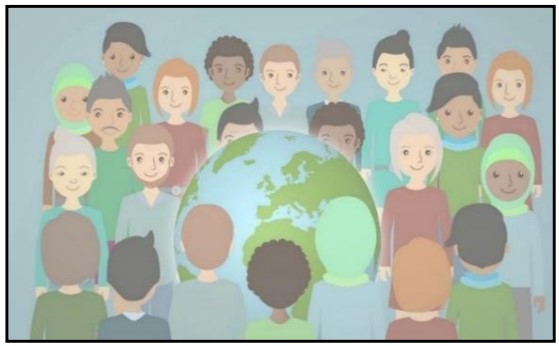
TEXTIII -

(Available at: https://br.pinterest.com/pin/251286854200451292/. Accessed on April 6 , 2022)
Answer question according to TEXTIII.
In agreement with the infographic, we may state that:
TEXTII – Text forquestion.
Foreign Language Teaching in Brazil: interfaces of the CLIL (Content and Language Integrated Learning) approach in remote teaching
(Ana Lúcia Farias da Silva - 01/12/2021)
FINAL CONSIDERATIONS
English Language Teaching, in the modality of remote teaching, with the full use of Virtual Learning Environments (VLE) has advanced and can be efficient with the development of language skills associated with these technological and didactic resources appropriate to each objective in foreign language teaching. However, the teacher should have good planning, carefully reflecting and analyzing the tool that best suited to his/her goal.
Moreover, we postulate as indispensable the teaching of the English Language (EL), as a way of access to universal cultural goods, academic and professional environments of the globalized world, also considering an inclusive formation that leads the student to expand their readings of the world.
Moreover, classes, in real time, help in the cognitive process in relation to playing, dialoguing, in addition to awakening sensitivities such as visual and auditory perceptions, necessary for learning. Despite some flexibility, the use of English contributed to welcoming students in the mother tongue, which did not impair the learning of the proposed contents, on the contrary, it brought the students closer to the teacher-researcher, enabling a better work in language teaching. The results were perceived in the formal evaluations and in the engagement of the students during the classes, corroborating the pedagogical work that goes beyond teaching the contents and also goes through the ability of the educator to welcome and relate to his students.
Despite a pandemic moment, extremely challenging, especially for foreign language teaching, especially English, this research emphasized the need to follow the advancement of digital technologies and transform new challenges into knowledge, to optimize the adaptability of individuals, in view of the emerging educational contexts that have already been configured as a new reality at this time.
It is concluded, therefore, that according to the study presented and the current readings on foreign language teaching, in interface with multiple methods and possibilities in VLE, the new technological resources contribute and stimulate new didactic-pedagogical perspectives, in this panorama of remote teaching, driven by the pandemic. That said, it is possible to offer a teaching of the EL, in bilingual programs, in primary schools in Brazil today, even in elementary school, distance and quality, with priority to the development of all the language skills that an apprentice must activate, for significant and efficient foreign language learning.
(Adapted from: https://www.nucleodoconhecimento.com.br/education/interfaces-of-the-content. th Accessed on April 10 , 2022).
Based on Text II, analyze the following sentences and check True (T) or False (F).
( ) Asynchronous classes facilitate the cognitive process regarding some tasks which are necessary for learning.
( ) Through ELlearning, in which students might expand their readings of the world, an inclusive formation may also take place.
( ) As final remarks, the author defends the positive aspects of new digital technologies developed during the pandemic as a way of fostering meaningful foreign language learning.
Choose the alternative with the CORRECTsequence:
TEXTII – Text forquestion.
Foreign Language Teaching in Brazil: interfaces of the CLIL (Content and Language Integrated Learning) approach in remote teaching
(Ana Lúcia Farias da Silva - 01/12/2021)
FINAL CONSIDERATIONS
English Language Teaching, in the modality of remote teaching, with the full use of Virtual Learning Environments (VLE) has advanced and can be efficient with the development of language skills associated with these technological and didactic resources appropriate to each objective in foreign language teaching. However, the teacher should have good planning, carefully reflecting and analyzing the tool that best suited to his/her goal.
Moreover, we postulate as indispensable the teaching of the English Language (EL), as a way of access to universal cultural goods, academic and professional environments of the globalized world, also considering an inclusive formation that leads the student to expand their readings of the world.
Moreover, classes, in real time, help in the cognitive process in relation to playing, dialoguing, in addition to awakening sensitivities such as visual and auditory perceptions, necessary for learning. Despite some flexibility, the use of English contributed to welcoming students in the mother tongue, which did not impair the learning of the proposed contents, on the contrary, it brought the students closer to the teacher-researcher, enabling a better work in language teaching. The results were perceived in the formal evaluations and in the engagement of the students during the classes, corroborating the pedagogical work that goes beyond teaching the contents and also goes through the ability of the educator to welcome and relate to his students.
Despite a pandemic moment, extremely challenging, especially for foreign language teaching, especially English, this research emphasized the need to follow the advancement of digital technologies and transform new challenges into knowledge, to optimize the adaptability of individuals, in view of the emerging educational contexts that have already been configured as a new reality at this time.
It is concluded, therefore, that according to the study presented and the current readings on foreign language teaching, in interface with multiple methods and possibilities in VLE, the new technological resources contribute and stimulate new didactic-pedagogical perspectives, in this panorama of remote teaching, driven by the pandemic. That said, it is possible to offer a teaching of the EL, in bilingual programs, in primary schools in Brazil today, even in elementary school, distance and quality, with priority to the development of all the language skills that an apprentice must activate, for significant and efficient foreign language learning.
(Adapted from: https://www.nucleodoconhecimento.com.br/education/interfaces-of-the-content. th Accessed on April 10 , 2022).
According to these final remarks, it is RIGHTto say that:
TEXTI –
Pandemic Language Teaching: insights from Brazilian and international teachers on the pivot to emergency remote instruction
(Sevilla-Pavon, A.; Finardi, K. R.)
ABSTRACT
This article reflects on the experiences of language teachers from Brazil, Spain, France, Cyprus, Costa Rica and Taiwan during the pivot to emergency remote/online instruction during the 2020 pandemic. The research question motivating the study was what language teachers' perceptions regarding online teaching during the pandemic were. Data were analyzed qualitatively, contrasting data from a questionnaire shared in an asynchronous online form with data from focus group interviews carried out via videoconferencing. The analysis of the questionnaire data showed that the vast majority of respondents used different digital technologies to teach online, both synchronously and asynchronously, but felt unprepared to work in this modality, mostly because of lack of institutional support and training. The analysis of the focus group interviews suggested that most teachers expressed concerns as to the limitations of online teaching for interaction and exams. In addition, some teachers displayed negative attitudes towards online teaching due to the lack of preparation and institutional support. This was aggravated by political implications of migrating to online education that could result in precariousness of the teacher profession. The positive aspects highlighted were the possibility of developing more self-directed and autonomous learning, as well as experimenting with different technologies and approaches. Overall, the analysis of the data suggests that, after the pandemic and with due preparation and support, some of the digital technologies and approaches experimented with will be incorporated into pedagogical practices in blended approaches, which represent a real trend and possibility for language teaching in the post-pandemic context.
Keywords: Online Language Teaching and Learning; Covid-19 pandemic; teachers' perceptions; Education & Educational Research; Linguistics. th
(Available at: https://pesquisa.bvsalud.org/global-literature-on-novel-coronavirus-2019-ncov/resource/pt/covidwho-1614384. Accessed on April 6 , 2022).
Answer question according to TEXTI.
TEXTI –
Pandemic Language Teaching: insights from Brazilian and international teachers on the pivot to emergency remote instruction
(Sevilla-Pavon, A.; Finardi, K. R.)
ABSTRACT
This article reflects on the experiences of language teachers from Brazil, Spain, France, Cyprus, Costa Rica and Taiwan during the pivot to emergency remote/online instruction during the 2020 pandemic. The research question motivating the study was what language teachers' perceptions regarding online teaching during the pandemic were. Data were analyzed qualitatively, contrasting data from a questionnaire shared in an asynchronous online form with data from focus group interviews carried out via videoconferencing. The analysis of the questionnaire data showed that the vast majority of respondents used different digital technologies to teach online, both synchronously and asynchronously, but felt unprepared to work in this modality, mostly because of lack of institutional support and training. The analysis of the focus group interviews suggested that most teachers expressed concerns as to the limitations of online teaching for interaction and exams. In addition, some teachers displayed negative attitudes towards online teaching due to the lack of preparation and institutional support. This was aggravated by political implications of migrating to online education that could result in precariousness of the teacher profession. The positive aspects highlighted were the possibility of developing more self-directed and autonomous learning, as well as experimenting with different technologies and approaches. Overall, the analysis of the data suggests that, after the pandemic and with due preparation and support, some of the digital technologies and approaches experimented with will be incorporated into pedagogical practices in blended approaches, which represent a real trend and possibility for language teaching in the post-pandemic context.
Keywords: Online Language Teaching and Learning; Covid-19 pandemic; teachers' perceptions; Education & Educational Research; Linguistics. th
(Available at: https://pesquisa.bvsalud.org/global-literature-on-novel-coronavirus-2019-ncov/resource/pt/covidwho-1614384. Accessed on April 6 , 2022).
Answer question according to TEXTI.
TEXTI –
Pandemic Language Teaching: insights from Brazilian and international teachers on the pivot to emergency remote instruction
(Sevilla-Pavon, A.; Finardi, K. R.)
ABSTRACT
This article reflects on the experiences of language teachers from Brazil, Spain, France, Cyprus, Costa Rica and Taiwan during the pivot to emergency remote/online instruction during the 2020 pandemic. The research question motivating the study was what language teachers' perceptions regarding online teaching during the pandemic were. Data were analyzed qualitatively, contrasting data from a questionnaire shared in an asynchronous online form with data from focus group interviews carried out via videoconferencing. The analysis of the questionnaire data showed that the vast majority of respondents used different digital technologies to teach online, both synchronously and asynchronously, but felt unprepared to work in this modality, mostly because of lack of institutional support and training. The analysis of the focus group interviews suggested that most teachers expressed concerns as to the limitations of online teaching for interaction and exams. In addition, some teachers displayed negative attitudes towards online teaching due to the lack of preparation and institutional support. This was aggravated by political implications of migrating to online education that could result in precariousness of the teacher profession. The positive aspects highlighted were the possibility of developing more self-directed and autonomous learning, as well as experimenting with different technologies and approaches. Overall, the analysis of the data suggests that, after the pandemic and with due preparation and support, some of the digital technologies and approaches experimented with will be incorporated into pedagogical practices in blended approaches, which represent a real trend and possibility for language teaching in the post-pandemic context.
Keywords: Online Language Teaching and Learning; Covid-19 pandemic; teachers' perceptions; Education & Educational Research; Linguistics. th
(Available at: https://pesquisa.bvsalud.org/global-literature-on-novel-coronavirus-2019-ncov/resource/pt/covidwho-1614384. Accessed on April 6 , 2022).
Answer question according to TEXTI.