Foram encontradas 135.752 questões

Resolva questões gratuitamente!

Junte-se a mais de 4 milhões de concurseiros!

Q3864340 Português
A Biblioteca de Alexandria não foi destruída pelo fogo, mas pelo esquecimento

Por Bruno Vaiano


"Há crimes piores do que queimar livros. Não lê-los é um deles." – Ray Bradbury.


    Três séculos antes de Cristo, Alexandre, o Grande, conquistou o Egito e mandou erguer, do zero, uma metrópole no litoral norte do país. Alexandria, batizada em homenagem a seu patrono desumilde, seria a nova capital da região. A estética faraônica clichê, dourada e azul, prevaleceu por lá (bem como o hábito egípcio de os nobres se casarem entre irmãos, à moda Cersei em Game of Thrones). Mas esse novo Egito Antigo, assim como o próprio Alexandre, tinha uma pinta grega inegável.

    O sucessor de Alexandre, o Grande, por aquelas bandas, nomeado Ptolomeu I, ordenou a construção de um centro de ensino e pesquisa em Alexandria para atrair a elite intelectual da época. Tipo uma versão helênica e antiquíssima do Instituto de Estudos Avançados de Princeton, onde monstros sagrados das exatas como Einstein, Gödel e Neumann trabalharam juntos na década de 1950.

    O nome dessa instituição era Mouseion. Em português, “Museu”. O significado original da palavra é “templo dedicado às musas” — as deusas do panteão grego que, na tradição helênica, inspiravam as artes, a literatura e a ciência. Essa também é a origem etimológica de “música”, diga-se. Compôs uma bela canção? Legal, mas não foi bem você. Tudo que é belo emana dessas divas – artistas são só os meros mortais que, volta e meia, têm o privilégio de receber um download de versos do Olimpo.

    A Biblioteca de Alexandria acabou se tornando o mais famoso dos prédios desse complexo. Bibliotecas não eram novidade. Já existiam na Suméria; são quase tão antigas quanto a escrita em si. Mas essa almejava um passo além: Ptolomeu queria uma cópia de cada obra já escrita na Terra. Por isso, os tripulantes de toda embarcação que aportava em Alexandria eram forçados, por decreto, a fornecer ao Museu os pergaminhos que tivessem a bordo – que então eram copiados por escribas e armazenados na coleção. Deu certo.

    Essa Harvard ptolomaica prosperou por séculos, e não acabou por causa de um incêndio – nem qualquer outro ato pontual de vandalismo. Júlio César danificou parte da coleção quando sitiou Alexandria e ateou fogo ao porto, em 48 a.C. Mas, nessa época, o Museu já havia perdido prestígio e os acadêmicos preferiam trabalhar em outros lugares.

    Em 297 d.C., quando Diocleciano incendiou a cidade novamente para conter uma rebelião, é provável que o prédio original da Biblioteca já não existisse mais: as últimas evidências inequívocas da contratação de funcionários datam de 260 d.C.

    Não era fácil sustentar um exército de bibliotecários e escribas copistas para manter a coleção atualizada, higiênica e catalogada. Bastava um fiapo de desinteresse coletivo para a coisa degringolar. O território egípcio mudou de mãos e crenças muitas vezes ao longo da História – os califados árabes vieram por último e estabeleceram sua capital intelectual em Bagdá, relegando Alexandria à periferia do avanço científico-tecnológico durante a Idade Média.

    O fato é que você não precisa atear fogo a um livro para queimá-lo. O conhecimento não desaparece da noite para o dia só porque seu suporte material foi destruído.

    Hoje, qualquer sebo parrudo contém mais conhecimento do que a Biblioteca de Alexandria. Mesmo assim, 73% dos estudantes brasileiros estão abaixo do nível de conhecimento sobre Matemática que a Organização para a Cooperação e Desenvolvimento Econômico (OCDE) considera mínimo para que se possa exercer a cidadania satisfatoriamente.

    Na avaliação de Leitura, são 50%. Em Ciências, 55%. Mais da metade da população em idade escolar do País, nas palavras dos organizadores do Programa Internacional de Avaliação de Estudantes (Pisa), tem algum prejuízo na hora de “participar plenamente da vida social, econômica e cívica em um mundo globalizado”.

    Pode soar o alarme: nossa biblioteca está (metaforicamente) em chamas.


Adaptado de: https://super.abril.com.br/historia/a-biblioteca-dealexandria-nao-foi-destruida-pelo-fogo-mas-pelo-esquecimento/. Acesso em: 28 mai. 2025.  
No trecho “[…] quando Diocleciano incendiou a cidade novamente para conter uma rebelião, é provável que o prédio original da Biblioteca já não existisse mais [...]”, a oração em destaque 
Alternativas
Q3832797 Inglês
Read text VII to answer question.


TEXT VII


"Divergent" is a dark and thrilling series of young adult science fiction books by American novelist Veronica Roth. The trilogy consists of "Divergent" (2011), "Insurgent" (2012), and "Allegiant" (2013), which were later adapted into 3 films.

It is set in a post-apocalyptic dystopian Chicago that has separated its population into five Factions, each defined by certain values. The Factions are Dauntless (the brave), Amity (the kind), Erudite (the intelligent), Abnegation (the selfless), and Candor (the honest). Each year, teenagers of a certain age take a placement test and then choose the Faction to which they will devote the rest of their lives. In Chapter 1, we are introduced to Beatrice Prior, who later changes her name to Tris, the protagonist and narrator of the story. As she sits in front of a mirror while her mother cuts her hair, she reflects on the life challenges she will have to face soon.


Chapter 1

THERE IS ONE mirror in my house. It is behind a sliding panel in the hallway upstairs. Our faction allows us to stand in front of it on the second day of every third month, the day my mother cuts my hair.

I sit on the stool and my mother stands behind me with the scissors, trimming. The strands fall on the floor in a dull, blond ring.

When she finishes, she pulls my hair away from my face and twists it into a knot. I note how calm she looks and how focused she is. She is well-practiced in the art of losing herself. I can't say the same of myself.

I sneak a look at my reflection when she isn't paying attention-not for the sake of vanity, but out of curiosity. A lot can happen to a person's appearance in three months.

In my reflection, I see a narrow face, wide, round eyes, and a long, thin nose -I still look like a little girl, though sometime in the last few months I turned sixteen. The other factions celebrate birthdays, but we don't. It would be self-indulgent.

(...) "So today is the day," she says.

"Yes," I reply.

"Are you nervous?"

I stare into my own eyes for a moment. Today is the day of the Aptitude test that will show me which of the five factions I belong in. And tomorrow, at the Choosing Ceremony, I will decide on a faction; I will decide the rest of my life; I will decide to stay with my family or abandon them.

"No," I say. "The tests don't have to change our choices."

"Right." She smiles. "Let's go eat breakfast."

"Thank you. For cutting my hair."

She kisses my cheek and slides the panel over the mirror. I think my mother could be beautiful, in a different world. Her body is thin beneath the gray robe. She has high cheekbones and long eyelashes, and when she lets her hair down at night, it hangs in waves over her shoulders. But she must hide that beauty in Abnegation.

We walk together to the kitchen. On these mornings when my brother makes breakfast, and my father's hand skims my hair as he reads the newspaper, and my mother hums as she clears the table - it is on these mornings that I feel guiltiest for wanting to leave them.


Adapted from https://genius.com/Veronica-roth-divergent-chapter- 1-annotated
It is correct to state that Tris:
Alternativas
Q3832796 Inglês
Read text VII to answer question.


TEXT VII


"Divergent" is a dark and thrilling series of young adult science fiction books by American novelist Veronica Roth. The trilogy consists of "Divergent" (2011), "Insurgent" (2012), and "Allegiant" (2013), which were later adapted into 3 films.

It is set in a post-apocalyptic dystopian Chicago that has separated its population into five Factions, each defined by certain values. The Factions are Dauntless (the brave), Amity (the kind), Erudite (the intelligent), Abnegation (the selfless), and Candor (the honest). Each year, teenagers of a certain age take a placement test and then choose the Faction to which they will devote the rest of their lives. In Chapter 1, we are introduced to Beatrice Prior, who later changes her name to Tris, the protagonist and narrator of the story. As she sits in front of a mirror while her mother cuts her hair, she reflects on the life challenges she will have to face soon.


Chapter 1

THERE IS ONE mirror in my house. It is behind a sliding panel in the hallway upstairs. Our faction allows us to stand in front of it on the second day of every third month, the day my mother cuts my hair.

I sit on the stool and my mother stands behind me with the scissors, trimming. The strands fall on the floor in a dull, blond ring.

When she finishes, she pulls my hair away from my face and twists it into a knot. I note how calm she looks and how focused she is. She is well-practiced in the art of losing herself. I can't say the same of myself.

I sneak a look at my reflection when she isn't paying attention-not for the sake of vanity, but out of curiosity. A lot can happen to a person's appearance in three months.

In my reflection, I see a narrow face, wide, round eyes, and a long, thin nose -I still look like a little girl, though sometime in the last few months I turned sixteen. The other factions celebrate birthdays, but we don't. It would be self-indulgent.

(...) "So today is the day," she says.

"Yes," I reply.

"Are you nervous?"

I stare into my own eyes for a moment. Today is the day of the Aptitude test that will show me which of the five factions I belong in. And tomorrow, at the Choosing Ceremony, I will decide on a faction; I will decide the rest of my life; I will decide to stay with my family or abandon them.

"No," I say. "The tests don't have to change our choices."

"Right." She smiles. "Let's go eat breakfast."

"Thank you. For cutting my hair."

She kisses my cheek and slides the panel over the mirror. I think my mother could be beautiful, in a different world. Her body is thin beneath the gray robe. She has high cheekbones and long eyelashes, and when she lets her hair down at night, it hangs in waves over her shoulders. But she must hide that beauty in Abnegation.

We walk together to the kitchen. On these mornings when my brother makes breakfast, and my father's hand skims my hair as he reads the newspaper, and my mother hums as she clears the table - it is on these mornings that I feel guiltiest for wanting to leave them.


Adapted from https://genius.com/Veronica-roth-divergent-chapter- 1-annotated
In the sentence, "The tests don't have to change our choices" (Chapter 1, line 29), "don't have to" implies "no obligation". Which modal verb expresses the opposite ideа of "don't have to"?
Alternativas
Q3832795 Inglês
Read text VII to answer question.


TEXT VII


"Divergent" is a dark and thrilling series of young adult science fiction books by American novelist Veronica Roth. The trilogy consists of "Divergent" (2011), "Insurgent" (2012), and "Allegiant" (2013), which were later adapted into 3 films.

It is set in a post-apocalyptic dystopian Chicago that has separated its population into five Factions, each defined by certain values. The Factions are Dauntless (the brave), Amity (the kind), Erudite (the intelligent), Abnegation (the selfless), and Candor (the honest). Each year, teenagers of a certain age take a placement test and then choose the Faction to which they will devote the rest of their lives. In Chapter 1, we are introduced to Beatrice Prior, who later changes her name to Tris, the protagonist and narrator of the story. As she sits in front of a mirror while her mother cuts her hair, she reflects on the life challenges she will have to face soon.


Chapter 1

THERE IS ONE mirror in my house. It is behind a sliding panel in the hallway upstairs. Our faction allows us to stand in front of it on the second day of every third month, the day my mother cuts my hair.

I sit on the stool and my mother stands behind me with the scissors, trimming. The strands fall on the floor in a dull, blond ring.

When she finishes, she pulls my hair away from my face and twists it into a knot. I note how calm she looks and how focused she is. She is well-practiced in the art of losing herself. I can't say the same of myself.

I sneak a look at my reflection when she isn't paying attention-not for the sake of vanity, but out of curiosity. A lot can happen to a person's appearance in three months.

In my reflection, I see a narrow face, wide, round eyes, and a long, thin nose -I still look like a little girl, though sometime in the last few months I turned sixteen. The other factions celebrate birthdays, but we don't. It would be self-indulgent.

(...) "So today is the day," she says.

"Yes," I reply.

"Are you nervous?"

I stare into my own eyes for a moment. Today is the day of the Aptitude test that will show me which of the five factions I belong in. And tomorrow, at the Choosing Ceremony, I will decide on a faction; I will decide the rest of my life; I will decide to stay with my family or abandon them.

"No," I say. "The tests don't have to change our choices."

"Right." She smiles. "Let's go eat breakfast."

"Thank you. For cutting my hair."

She kisses my cheek and slides the panel over the mirror. I think my mother could be beautiful, in a different world. Her body is thin beneath the gray robe. She has high cheekbones and long eyelashes, and when she lets her hair down at night, it hangs in waves over her shoulders. But she must hide that beauty in Abnegation.

We walk together to the kitchen. On these mornings when my brother makes breakfast, and my father's hand skims my hair as he reads the newspaper, and my mother hums as she clears the table - it is on these mornings that I feel guiltiest for wanting to leave them.


Adapted from https://genius.com/Veronica-roth-divergent-chapter- 1-annotated
It is correct to infer that people from Abnegation:
Alternativas
Q3832794 Inglês
Read text VII to answer question.


TEXT VII


"Divergent" is a dark and thrilling series of young adult science fiction books by American novelist Veronica Roth. The trilogy consists of "Divergent" (2011), "Insurgent" (2012), and "Allegiant" (2013), which were later adapted into 3 films.

It is set in a post-apocalyptic dystopian Chicago that has separated its population into five Factions, each defined by certain values. The Factions are Dauntless (the brave), Amity (the kind), Erudite (the intelligent), Abnegation (the selfless), and Candor (the honest). Each year, teenagers of a certain age take a placement test and then choose the Faction to which they will devote the rest of their lives. In Chapter 1, we are introduced to Beatrice Prior, who later changes her name to Tris, the protagonist and narrator of the story. As she sits in front of a mirror while her mother cuts her hair, she reflects on the life challenges she will have to face soon.


Chapter 1

THERE IS ONE mirror in my house. It is behind a sliding panel in the hallway upstairs. Our faction allows us to stand in front of it on the second day of every third month, the day my mother cuts my hair.

I sit on the stool and my mother stands behind me with the scissors, trimming. The strands fall on the floor in a dull, blond ring.

When she finishes, she pulls my hair away from my face and twists it into a knot. I note how calm she looks and how focused she is. She is well-practiced in the art of losing herself. I can't say the same of myself.

I sneak a look at my reflection when she isn't paying attention-not for the sake of vanity, but out of curiosity. A lot can happen to a person's appearance in three months.

In my reflection, I see a narrow face, wide, round eyes, and a long, thin nose -I still look like a little girl, though sometime in the last few months I turned sixteen. The other factions celebrate birthdays, but we don't. It would be self-indulgent.

(...) "So today is the day," she says.

"Yes," I reply.

"Are you nervous?"

I stare into my own eyes for a moment. Today is the day of the Aptitude test that will show me which of the five factions I belong in. And tomorrow, at the Choosing Ceremony, I will decide on a faction; I will decide the rest of my life; I will decide to stay with my family or abandon them.

"No," I say. "The tests don't have to change our choices."

"Right." She smiles. "Let's go eat breakfast."

"Thank you. For cutting my hair."

She kisses my cheek and slides the panel over the mirror. I think my mother could be beautiful, in a different world. Her body is thin beneath the gray robe. She has high cheekbones and long eyelashes, and when she lets her hair down at night, it hangs in waves over her shoulders. But she must hide that beauty in Abnegation.

We walk together to the kitchen. On these mornings when my brother makes breakfast, and my father's hand skims my hair as he reads the newspaper, and my mother hums as she clears the table - it is on these mornings that I feel guiltiest for wanting to leave them.


Adapted from https://genius.com/Veronica-roth-divergent-chapter- 1-annotated
All the statements below are correct about "Divergent" EXCEPT for:
Alternativas
Q3832793 Inglês
Read text VI to answer question.

TEXT VI
Q36.png (200×217)

In the picture about global warming, the word "cool" is used in multiple senses. Say which definitions are applicable and then mark the correct option.

I- Calm, free of tensions.
II- Lacking enthusiasm; unfriendly.
III- Become or cause to become less hot.
IV- Good or acceptable.
Alternativas
Q3832792 Inglês

Read text V to answer question.


TEXT V


US considers 'sun blocking' to cool the Earth


It sounds like something out of a sci-fi novel, but some researchers want to cool the earth by reflecting sunlight back into space. Sun blocking' technologies - also known as solar radiation modification (SRM) - could theoretically cool down the earth by reflecting sunlight back into space. One idea involves pumping sun-blocking particles into the upper atmosphere. This process of 'stratospheric aerosol injection' would involve planes spraying an aerosol like sulfur dioxide into the stratosphere. This mist of particles would reflect the sun back upwards, shading the earth. The method has already worked - although accidentally. When Mount Pinatubo in the Philippines erupted in 1991, it released thousands of tons of sulfur dioxide. The global temperature temporarily dropped by 0.5°C. In September 2022, researchers at Yale University argued that the injection method could hypothetically refreeze the poles.


A White House report published last Friday confirms that the US is open to researching SRM. "A programme of research into the scientific and societal implications of solar radiation modification (SRM) would enable better-informed decisions about the potential risks and benefits of SRM as a component. of climate policy, alongside the foundational elements of greenhouse gas emissions mitigation and adaptation it says. However, the report also clarifies that no decision has been made to "establish a comprehensive research programme focused on solar radiation modification."


In February, several news outlets reported that the UN wanted to 'explore' this technique. This could give the impression that the organisation had approved sun blocking as a viablé tool to fight climate change. Unfortunately for tech enthusiasts, this is not the case. The UN Environmental Program's recent report into SRM concludes that it is not currently a realistic or wise plan. "UNEP concurs with the panel that, at present, large-scale, or operational deployment of SRM technologies is not necessary, viable, prudent or sufficiently safe, given the limited scientific understanding and uncertainty about the potential impacts and unintended consequences," says UNEP's Chief Scientist Andrea Hinwood. "The review concludes that SRM cannot replace reducing greenhouse gas emissions." Nonetheless, the body doesn't rule out the method altogether, with the report concluding that their assessment of the technique "may change should climate actions remain insufficient".


Adapted from https://www.euronews.com/green/2023/07/05/sunblockers-us-scientists-aim-to-cool-the-earth-by-reflecting-sunlightinto-space


What type of text is it?
Alternativas
Q3832791 Inglês

Read text V to answer question.


TEXT V


US considers 'sun blocking' to cool the Earth


It sounds like something out of a sci-fi novel, but some researchers want to cool the earth by reflecting sunlight back into space. Sun blocking' technologies - also known as solar radiation modification (SRM) - could theoretically cool down the earth by reflecting sunlight back into space. One idea involves pumping sun-blocking particles into the upper atmosphere. This process of 'stratospheric aerosol injection' would involve planes spraying an aerosol like sulfur dioxide into the stratosphere. This mist of particles would reflect the sun back upwards, shading the earth. The method has already worked - although accidentally. When Mount Pinatubo in the Philippines erupted in 1991, it released thousands of tons of sulfur dioxide. The global temperature temporarily dropped by 0.5°C. In September 2022, researchers at Yale University argued that the injection method could hypothetically refreeze the poles.


A White House report published last Friday confirms that the US is open to researching SRM. "A programme of research into the scientific and societal implications of solar radiation modification (SRM) would enable better-informed decisions about the potential risks and benefits of SRM as a component. of climate policy, alongside the foundational elements of greenhouse gas emissions mitigation and adaptation it says. However, the report also clarifies that no decision has been made to "establish a comprehensive research programme focused on solar radiation modification."


In February, several news outlets reported that the UN wanted to 'explore' this technique. This could give the impression that the organisation had approved sun blocking as a viablé tool to fight climate change. Unfortunately for tech enthusiasts, this is not the case. The UN Environmental Program's recent report into SRM concludes that it is not currently a realistic or wise plan. "UNEP concurs with the panel that, at present, large-scale, or operational deployment of SRM technologies is not necessary, viable, prudent or sufficiently safe, given the limited scientific understanding and uncertainty about the potential impacts and unintended consequences," says UNEP's Chief Scientist Andrea Hinwood. "The review concludes that SRM cannot replace reducing greenhouse gas emissions." Nonetheless, the body doesn't rule out the method altogether, with the report concluding that their assessment of the technique "may change should climate actions remain insufficient".


Adapted from https://www.euronews.com/green/2023/07/05/sunblockers-us-scientists-aim-to-cool-the-earth-by-reflecting-sunlightinto-space


It may be inferred from the text that solar radiation modification:
Alternativas
Q3832790 Inglês
Read text IV to answer question.


TEXT IV


Fewer than 1 in 5 would give up their smartphone to mitigate climate change, YAF poll found


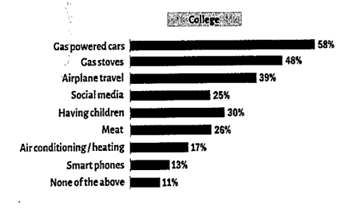
According to a poll published on Aug. 13, 2023 from the Young America's Foundation, two thirds of college students believe climate change is a threat to their generation, but fewer than one in five are willing to give up their smartphones to heip, a recent poll found. More college students would sacrifice having children and eating meat before giving up their cellphones.

The poll, facilitated by Echelon Insights, asked 812 college students in mid-July about a wide variety of topics, including environmental issues. According to the poll, 86 percent believe climate change is happening, and nearly two thirds, 67 percent, believe it is a threat for their generation. But when asked what they are willing to give up or significantly cut down on to "heip mitigate climate change," only one in five - or 13 percent - chose their smartphones.

Anthony Watts, senior fellow for environment and climate at the Heartland Institute, said the results did not surprise him. He said giving up a smartphone - "essentially a visual stimulation drug" - is like trying to end a drug addiction, and it isn't surprising that students are more willing to sacrifice almost anything else.


Willing to give up or significantly cut down on to mitigate climate change


Q32_33.png (345×210)

Adapted from Adaptado de https://www.thecollegefix.com/more-collegestudents-would-give-up-having-children-eating-meat-thancellphones-to-help-climate-poll/>
Among the students asked in the poll:
Alternativas
Q3832789 Inglês
Read text IV to answer question.


TEXT IV


Fewer than 1 in 5 would give up their smartphone to mitigate climate change, YAF poll found


According to a poll published on Aug. 13, 2023 from the Young America's Foundation, two thirds of college students believe climate change is a threat to their generation, but fewer than one in five are willing to give up their smartphones to heip, a recent poll found. More college students would sacrifice having children and eating meat before giving up their cellphones.

The poll, facilitated by Echelon Insights, asked 812 college students in mid-July about a wide variety of topics, including environmental issues. According to the poll, 86 percent believe climate change is happening, and nearly two thirds, 67 percent, believe it is a threat for their generation. But when asked what they are willing to give up or significantly cut down on to "heip mitigate climate change," only one in five - or 13 percent - chose their smartphones.

Anthony Watts, senior fellow for environment and climate at the Heartland Institute, said the results did not surprise him. He said giving up a smartphone - "essentially a visual stimulation drug" - is like trying to end a drug addiction, and it isn't surprising that students are more willing to sacrifice almost anything else.


Willing to give up or significantly cut down on to mitigate climate change


Q32_33.png (345×210)

Adapted from Adaptado de https://www.thecollegefix.com/more-collegestudents-would-give-up-having-children-eating-meat-thancellphones-to-help-climate-poll/>
It is correct to infer that the poll:
Alternativas
Q3832788 Inglês
Read Text III to answer questions.


TEXT III


Czech star gymnast dies after falling over 200 feet from mountain while attempting to take selfie


By Scott Thompson - Fox News
Updated August 26, 2024


The Daily Mail reports that 23-year-old Natalie Stichova was declared dead six days after falling 262 feet down Tegelberg Mountain in Bavaria, Germany, on Aug. 15.

A friend of the gymnast told Czech media that Stichova was trying to take a selfie when she fell. The person, who wanted to remain anonymous, said Stichova was close to the edge of the mountain when her foot appeared to slip while setting up for a photo in front of the castle.

"We will never find out whether she slipped or whether a piece of the rock edge broke off," the friend said, per the Daily Mail.

Stichova was reportedly with her boyfriend, David, and two friends ________ the time of the incident. Police said it was a challenging climb to reach the gymnast after her fall. Although Stichova was alive when first responders arrived, she was suffering from severe injuries.

The Daily Mail reports Stichova's family took her off life support due to irreversible brain damage ________ Aug. 21. She died ________ 5:30 a.m. that day.

"With deep sorrow, we announce that our wonderful friend, gymnast, rëpresentative, and coach, Natalie Stichova, has left us forever due to a tragic accident," Stichova's club, Sokol Pribram Sports Gymnastics, said in an official statement, per the Daily Mail. "We are extending our heartfelt condolences to her family and close friends, sending them strength and support."


Adapted from: <https://www.foxnews.com/sports/czech-stargymnast-dies-after-falling-over-200-feet-from-mountain-whileattempting-take-selfie-report>
In the extract "Although Stichova was alive when first responders arrived, she was suffering from severe injuries" (4th paragraph), "although" is used to express:
Alternativas
Q3832787 Inglês
Read Text III to answer questions.


TEXT III


Czech star gymnast dies after falling over 200 feet from mountain while attempting to take selfie


By Scott Thompson - Fox News
Updated August 26, 2024


The Daily Mail reports that 23-year-old Natalie Stichova was declared dead six days after falling 262 feet down Tegelberg Mountain in Bavaria, Germany, on Aug. 15.

A friend of the gymnast told Czech media that Stichova was trying to take a selfie when she fell. The person, who wanted to remain anonymous, said Stichova was close to the edge of the mountain when her foot appeared to slip while setting up for a photo in front of the castle.

"We will never find out whether she slipped or whether a piece of the rock edge broke off," the friend said, per the Daily Mail.

Stichova was reportedly with her boyfriend, David, and two friends ________ the time of the incident. Police said it was a challenging climb to reach the gymnast after her fall. Although Stichova was alive when first responders arrived, she was suffering from severe injuries.

The Daily Mail reports Stichova's family took her off life support due to irreversible brain damage ________ Aug. 21. She died ________ 5:30 a.m. that day.

"With deep sorrow, we announce that our wonderful friend, gymnast, rëpresentative, and coach, Natalie Stichova, has left us forever due to a tragic accident," Stichova's club, Sokol Pribram Sports Gymnastics, said in an official statement, per the Daily Mail. "We are extending our heartfelt condolences to her family and close friends, sending them strength and support."


Adapted from: <https://www.foxnews.com/sports/czech-stargymnast-dies-after-falling-over-200-feet-from-mountain-whileattempting-take-selfie-report>
Which word ending in_ing, extracted from the text, is used as an adjective? 
Alternativas
Q3832786 Inglês
Read Text III to answer questions.


TEXT III


Czech star gymnast dies after falling over 200 feet from mountain while attempting to take selfie


By Scott Thompson - Fox News
Updated August 26, 2024


The Daily Mail reports that 23-year-old Natalie Stichova was declared dead six days after falling 262 feet down Tegelberg Mountain in Bavaria, Germany, on Aug. 15.

A friend of the gymnast told Czech media that Stichova was trying to take a selfie when she fell. The person, who wanted to remain anonymous, said Stichova was close to the edge of the mountain when her foot appeared to slip while setting up for a photo in front of the castle.

"We will never find out whether she slipped or whether a piece of the rock edge broke off," the friend said, per the Daily Mail.

Stichova was reportedly with her boyfriend, David, and two friends ________ the time of the incident. Police said it was a challenging climb to reach the gymnast after her fall. Although Stichova was alive when first responders arrived, she was suffering from severe injuries.

The Daily Mail reports Stichova's family took her off life support due to irreversible brain damage ________ Aug. 21. She died ________ 5:30 a.m. that day.

"With deep sorrow, we announce that our wonderful friend, gymnast, rëpresentative, and coach, Natalie Stichova, has left us forever due to a tragic accident," Stichova's club, Sokol Pribram Sports Gymnastics, said in an official statement, per the Daily Mail. "We are extending our heartfelt condolences to her family and close friends, sending them strength and support."


Adapted from: <https://www.foxnews.com/sports/czech-stargymnast-dies-after-falling-over-200-feet-from-mountain-whileattempting-take-selfie-report>
Complete the three gaps in the 4th and 5th paragraphs with the missing prepositions. Then, mark the correct option, respectively.
Alternativas
Q3832785 Inglês
Read Text III to answer questions.


TEXT III


Czech star gymnast dies after falling over 200 feet from mountain while attempting to take selfie


By Scott Thompson - Fox News
Updated August 26, 2024


The Daily Mail reports that 23-year-old Natalie Stichova was declared dead six days after falling 262 feet down Tegelberg Mountain in Bavaria, Germany, on Aug. 15.

A friend of the gymnast told Czech media that Stichova was trying to take a selfie when she fell. The person, who wanted to remain anonymous, said Stichova was close to the edge of the mountain when her foot appeared to slip while setting up for a photo in front of the castle.

"We will never find out whether she slipped or whether a piece of the rock edge broke off," the friend said, per the Daily Mail.

Stichova was reportedly with her boyfriend, David, and two friends ________ the time of the incident. Police said it was a challenging climb to reach the gymnast after her fall. Although Stichova was alive when first responders arrived, she was suffering from severe injuries.

The Daily Mail reports Stichova's family took her off life support due to irreversible brain damage ________ Aug. 21. She died ________ 5:30 a.m. that day.

"With deep sorrow, we announce that our wonderful friend, gymnast, rëpresentative, and coach, Natalie Stichova, has left us forever due to a tragic accident," Stichova's club, Sokol Pribram Sports Gymnastics, said in an official statement, per the Daily Mail. "We are extending our heartfelt condolences to her family and close friends, sending them strength and support."


Adapted from: <https://www.foxnews.com/sports/czech-stargymnast-dies-after-falling-over-200-feet-from-mountain-whileattempting-take-selfie-report>
Mark the option in which the statement, in parenthesis, correctly explains the verb tense(s) used in the corresponding extracts from the text.
Alternativas
Q3832784 Inglês
Read Text II to answer question.


TEXT II


France to trial ban on mobile phones at school for children under 15


Kim Willsher - Paris
Tue 27 Aug 2024


France is to trial a ban on mobile phones at school pupils who are younger than 15, seeking to give children a "digital pause" that, if judged successful, could be rolled out nationwide from January.

Just under 200 secondary schools will take place in the experiment that will require youngsters to hand over phones on arrival at reception. It takes the prohibition on the devices further than a 2018 law that banned pupils at primary and secondary schools from using their phones on the premises but allowed them to keep possession of them.

Announcing the trial on Tuesday, the acting education minister, Nicole Belloubet, said the aim was to give youngsters a "digital pause". If the trial proves successful, the ban would be introduced in all schools from January, Belloubet said.

A commission set up by the president, Emmanuel Macron, expressed concern that the overexposure of children to screens was having a detrimental effect on their health and development. 

A 140-page report published in March concluded there was "a very clear consensus on the direct and indirect negative effects of digital devices on sleep, on being sedentary - a lack of physical activity and the risk of being overweight and even obese - as well as on sight". It said the "hyper" use of phones and other digital technology was not only bad for children but also for "society and civilisation".

The report recommended children's use of mobile phones be controlled in stages: no mobile phones before the age of at least 11, mobiles without internet access between 11 and 13, phones with internet but no access to social media before 15.

It also suggested children under three years old should not be exposed at all to digital devices, which it said were "not necessary for the healthy development of the child".

"We must put the digital tool in its place. Up to at least six years old a child has no need for a digital device to develop," Servane Mouton, a neurologist and neurophysiologist who was on the commission, said. "We have to teach parents once again how to play with their children." 

Banning phones in schools has long been debated across Europe. In countries where bans exist this is most often confined to their use and do not require children to hand them over.

In Germany there are no formal restrictions but most schools have prohibited the use of mobile phones and digital devices in classrooms except for education purposes. A quasi ban has been in place in Dutch secondary school classrooms since the beginning of this year, but as a recommendation and not a legal obligation. From this school year the directive will also apply to primary schools.

Italy was early to phone bans, introducing one in 2007, easing it in 2017 and reimposing it in 2022. It applies to all age groups.

In February this year, the British government issued guidance for schools "on prohibiting the use of mobile phones throughout the school day" but said it was for individual head teachers and leaders to decide on phone use policy.

Portugal is experimenting with a compromise by introducing a number of phone-free days at schools each month, while in Spain schools in some autonomous regions have imposed a ban but there is no nationwide prohibition.


Adapted from: <https://www.thequardian.com/world/article/2024/aug/27/franceto-trial-ban-on-mobile-phones-at-school-for-children-under-15>
The main purpose of the experiment in France is to:
Alternativas
Q3832783 Inglês
Read Text II to answer question.


TEXT II


France to trial ban on mobile phones at school for children under 15


Kim Willsher - Paris
Tue 27 Aug 2024


France is to trial a ban on mobile phones at school pupils who are younger than 15, seeking to give children a "digital pause" that, if judged successful, could be rolled out nationwide from January.

Just under 200 secondary schools will take place in the experiment that will require youngsters to hand over phones on arrival at reception. It takes the prohibition on the devices further than a 2018 law that banned pupils at primary and secondary schools from using their phones on the premises but allowed them to keep possession of them.

Announcing the trial on Tuesday, the acting education minister, Nicole Belloubet, said the aim was to give youngsters a "digital pause". If the trial proves successful, the ban would be introduced in all schools from January, Belloubet said.

A commission set up by the president, Emmanuel Macron, expressed concern that the overexposure of children to screens was having a detrimental effect on their health and development. 

A 140-page report published in March concluded there was "a very clear consensus on the direct and indirect negative effects of digital devices on sleep, on being sedentary - a lack of physical activity and the risk of being overweight and even obese - as well as on sight". It said the "hyper" use of phones and other digital technology was not only bad for children but also for "society and civilisation".

The report recommended children's use of mobile phones be controlled in stages: no mobile phones before the age of at least 11, mobiles without internet access between 11 and 13, phones with internet but no access to social media before 15.

It also suggested children under three years old should not be exposed at all to digital devices, which it said were "not necessary for the healthy development of the child".

"We must put the digital tool in its place. Up to at least six years old a child has no need for a digital device to develop," Servane Mouton, a neurologist and neurophysiologist who was on the commission, said. "We have to teach parents once again how to play with their children." 

Banning phones in schools has long been debated across Europe. In countries where bans exist this is most often confined to their use and do not require children to hand them over.

In Germany there are no formal restrictions but most schools have prohibited the use of mobile phones and digital devices in classrooms except for education purposes. A quasi ban has been in place in Dutch secondary school classrooms since the beginning of this year, but as a recommendation and not a legal obligation. From this school year the directive will also apply to primary schools.

Italy was early to phone bans, introducing one in 2007, easing it in 2017 and reimposing it in 2022. It applies to all age groups.

In February this year, the British government issued guidance for schools "on prohibiting the use of mobile phones throughout the school day" but said it was for individual head teachers and leaders to decide on phone use policy.

Portugal is experimenting with a compromise by introducing a number of phone-free days at schools each month, while in Spain schools in some autonomous regions have imposed a ban but there is no nationwide prohibition.


Adapted from: <https://www.thequardian.com/world/article/2024/aug/27/franceto-trial-ban-on-mobile-phones-at-school-for-children-under-15>
According to the text:
Alternativas
Q3832782 Inglês
Read Text II to answer question.


TEXT II


France to trial ban on mobile phones at school for children under 15


Kim Willsher - Paris
Tue 27 Aug 2024


France is to trial a ban on mobile phones at school pupils who are younger than 15, seeking to give children a "digital pause" that, if judged successful, could be rolled out nationwide from January.

Just under 200 secondary schools will take place in the experiment that will require youngsters to hand over phones on arrival at reception. It takes the prohibition on the devices further than a 2018 law that banned pupils at primary and secondary schools from using their phones on the premises but allowed them to keep possession of them.

Announcing the trial on Tuesday, the acting education minister, Nicole Belloubet, said the aim was to give youngsters a "digital pause". If the trial proves successful, the ban would be introduced in all schools from January, Belloubet said.

A commission set up by the president, Emmanuel Macron, expressed concern that the overexposure of children to screens was having a detrimental effect on their health and development. 

A 140-page report published in March concluded there was "a very clear consensus on the direct and indirect negative effects of digital devices on sleep, on being sedentary - a lack of physical activity and the risk of being overweight and even obese - as well as on sight". It said the "hyper" use of phones and other digital technology was not only bad for children but also for "society and civilisation".

The report recommended children's use of mobile phones be controlled in stages: no mobile phones before the age of at least 11, mobiles without internet access between 11 and 13, phones with internet but no access to social media before 15.

It also suggested children under three years old should not be exposed at all to digital devices, which it said were "not necessary for the healthy development of the child".

"We must put the digital tool in its place. Up to at least six years old a child has no need for a digital device to develop," Servane Mouton, a neurologist and neurophysiologist who was on the commission, said. "We have to teach parents once again how to play with their children." 

Banning phones in schools has long been debated across Europe. In countries where bans exist this is most often confined to their use and do not require children to hand them over.

In Germany there are no formal restrictions but most schools have prohibited the use of mobile phones and digital devices in classrooms except for education purposes. A quasi ban has been in place in Dutch secondary school classrooms since the beginning of this year, but as a recommendation and not a legal obligation. From this school year the directive will also apply to primary schools.

Italy was early to phone bans, introducing one in 2007, easing it in 2017 and reimposing it in 2022. It applies to all age groups.

In February this year, the British government issued guidance for schools "on prohibiting the use of mobile phones throughout the school day" but said it was for individual head teachers and leaders to decide on phone use policy.

Portugal is experimenting with a compromise by introducing a number of phone-free days at schools each month, while in Spain schools in some autonomous regions have imposed a ban but there is no nationwide prohibition.


Adapted from: <https://www.thequardian.com/world/article/2024/aug/27/franceto-trial-ban-on-mobile-phones-at-school-for-children-under-15>
It is correct to infer that in France:
Alternativas
Q3832781 Inglês
Read Text II to answer question.


TEXT II


France to trial ban on mobile phones at school for children under 15


Kim Willsher - Paris
Tue 27 Aug 2024


France is to trial a ban on mobile phones at school pupils who are younger than 15, seeking to give children a "digital pause" that, if judged successful, could be rolled out nationwide from January.

Just under 200 secondary schools will take place in the experiment that will require youngsters to hand over phones on arrival at reception. It takes the prohibition on the devices further than a 2018 law that banned pupils at primary and secondary schools from using their phones on the premises but allowed them to keep possession of them.

Announcing the trial on Tuesday, the acting education minister, Nicole Belloubet, said the aim was to give youngsters a "digital pause". If the trial proves successful, the ban would be introduced in all schools from January, Belloubet said.

A commission set up by the president, Emmanuel Macron, expressed concern that the overexposure of children to screens was having a detrimental effect on their health and development. 

A 140-page report published in March concluded there was "a very clear consensus on the direct and indirect negative effects of digital devices on sleep, on being sedentary - a lack of physical activity and the risk of being overweight and even obese - as well as on sight". It said the "hyper" use of phones and other digital technology was not only bad for children but also for "society and civilisation".

The report recommended children's use of mobile phones be controlled in stages: no mobile phones before the age of at least 11, mobiles without internet access between 11 and 13, phones with internet but no access to social media before 15.

It also suggested children under three years old should not be exposed at all to digital devices, which it said were "not necessary for the healthy development of the child".

"We must put the digital tool in its place. Up to at least six years old a child has no need for a digital device to develop," Servane Mouton, a neurologist and neurophysiologist who was on the commission, said. "We have to teach parents once again how to play with their children." 

Banning phones in schools has long been debated across Europe. In countries where bans exist this is most often confined to their use and do not require children to hand them over.

In Germany there are no formal restrictions but most schools have prohibited the use of mobile phones and digital devices in classrooms except for education purposes. A quasi ban has been in place in Dutch secondary school classrooms since the beginning of this year, but as a recommendation and not a legal obligation. From this school year the directive will also apply to primary schools.

Italy was early to phone bans, introducing one in 2007, easing it in 2017 and reimposing it in 2022. It applies to all age groups.

In February this year, the British government issued guidance for schools "on prohibiting the use of mobile phones throughout the school day" but said it was for individual head teachers and leaders to decide on phone use policy.

Portugal is experimenting with a compromise by introducing a number of phone-free days at schools each month, while in Spain schools in some autonomous regions have imposed a ban but there is no nationwide prohibition.


Adapted from: <https://www.thequardian.com/world/article/2024/aug/27/franceto-trial-ban-on-mobile-phones-at-school-for-children-under-15>
The pronouns in the sentence "(...) but allowed them to keep possession of them" (2nd paragraph) refer to, respectively:
Alternativas
Q3832780 Inglês
Read Text II to answer question.


TEXT II


France to trial ban on mobile phones at school for children under 15


Kim Willsher - Paris
Tue 27 Aug 2024


France is to trial a ban on mobile phones at school pupils who are younger than 15, seeking to give children a "digital pause" that, if judged successful, could be rolled out nationwide from January.

Just under 200 secondary schools will take place in the experiment that will require youngsters to hand over phones on arrival at reception. It takes the prohibition on the devices further than a 2018 law that banned pupils at primary and secondary schools from using their phones on the premises but allowed them to keep possession of them.

Announcing the trial on Tuesday, the acting education minister, Nicole Belloubet, said the aim was to give youngsters a "digital pause". If the trial proves successful, the ban would be introduced in all schools from January, Belloubet said.

A commission set up by the president, Emmanuel Macron, expressed concern that the overexposure of children to screens was having a detrimental effect on their health and development. 

A 140-page report published in March concluded there was "a very clear consensus on the direct and indirect negative effects of digital devices on sleep, on being sedentary - a lack of physical activity and the risk of being overweight and even obese - as well as on sight". It said the "hyper" use of phones and other digital technology was not only bad for children but also for "society and civilisation".

The report recommended children's use of mobile phones be controlled in stages: no mobile phones before the age of at least 11, mobiles without internet access between 11 and 13, phones with internet but no access to social media before 15.

It also suggested children under three years old should not be exposed at all to digital devices, which it said were "not necessary for the healthy development of the child".

"We must put the digital tool in its place. Up to at least six years old a child has no need for a digital device to develop," Servane Mouton, a neurologist and neurophysiologist who was on the commission, said. "We have to teach parents once again how to play with their children." 

Banning phones in schools has long been debated across Europe. In countries where bans exist this is most often confined to their use and do not require children to hand them over.

In Germany there are no formal restrictions but most schools have prohibited the use of mobile phones and digital devices in classrooms except for education purposes. A quasi ban has been in place in Dutch secondary school classrooms since the beginning of this year, but as a recommendation and not a legal obligation. From this school year the directive will also apply to primary schools.

Italy was early to phone bans, introducing one in 2007, easing it in 2017 and reimposing it in 2022. It applies to all age groups.

In February this year, the British government issued guidance for schools "on prohibiting the use of mobile phones throughout the school day" but said it was for individual head teachers and leaders to decide on phone use policy.

Portugal is experimenting with a compromise by introducing a number of phone-free days at schools each month, while in Spain schools in some autonomous regions have imposed a ban but there is no nationwide prohibition.


Adapted from: <https://www.thequardian.com/world/article/2024/aug/27/franceto-trial-ban-on-mobile-phones-at-school-for-children-under-15>
Mark the option in which the extract from the text contains an adverb in the comparative degree.
Alternativas
Q3832779 Inglês
Read Text I to answer question


TEXT I

Q21_22.png (370×361)
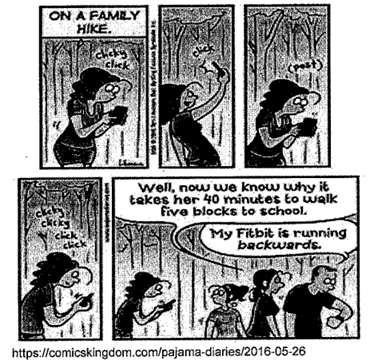
Mark the grammatically correct question for this sentence extracted from the cartoon: "it takes her 40 minutes to walk five blocks to school".
Alternativas
Respostas
941: C
942: D
943: B
944: D
945: C
946: B
947: A
948: D
949: D
950: D
951: E
952: C
953: A
954: E
955: E
956: C
957: A
958: C
959: B
960: B