Foram encontradas 1.189 questões
Resolva questões gratuitamente!
Junte-se a mais de 4 milhões de concurseiros!


Distribuição:
• Somente A: 3k+2;
• Somente B: 2k+5;
• Somente C: k+8;
• Somente A e B: 4k-3;
• Somente A e C: 2k+1;
• Somente B e C: k+4;
• Somente A, B e C: k-1;
• Nenhum dos três: 18.
Considere a parábola P definida por:
y = x2 - 4x + k
e a reta R definida por:
y = 2x + 1
Sabe-se que a reta R intersecta a parábola P em dois pontos distintos A e B, cuja distância entre si é igual a 2√5. O valor do parâmetro k é.
Para a região A, o modelo é HA (t) = -t2 + 8t + 100, válido para t ∈ [0,8].
Para a região B, o modelo é HB (t) = at2 + bt + c, cujos coeficientes são tais que:
Em 2020 (t = 0), o número de homicídios em B era 10% maior que o da região A.
Em 2022 (t = 2), o número de homicídios em B era igual ao de A.
Em 2024 (t = 4), o número de homicídios em B era 15% menor que o de A.
Além disso, um estudo socioeconômico aponta que a violência em uma região é considerada "crítica" quando a taxa de homicídios ultrapassa 110. As autoridades pretendem implementar um programa de intervenção na região que primeiro atingir esse patamar após 2020, pretendem também encerrar o programa quando a taxa cair para menos de 100 novamente. Com base nos modelos, em que ano cada região atinge o pico de homicídios e qual o valor máximo em cada uma?
Seja a expressão:
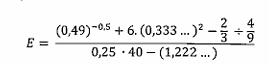
Qual é a razão entre a soma dos algarismos do denominador pela soma dos algarismos do numerador do resultado da expressão?
Observe a identidade abaixo:
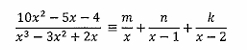
Os valores de m, n e k que tornam verdadeira essa identidade são tais que:
Considere a figura abaixo.
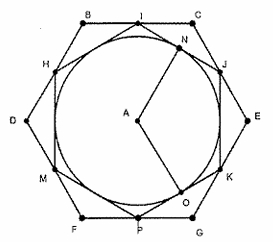
Considere que os hexágonos da figura acima são regulares e os pontos I, J, K, P, M, H, N, O são médios. Sabendo que o lado do hexágono BCEGFD é 8, calcule a razão entre a área do pentágono ANJKO e o hexágono BCEGFD e assinale a opção correta.
Examine a figura abaixo.
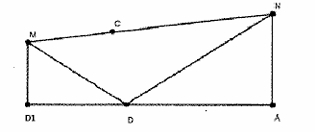
As Torres verticais de rádio da Marinha têm extremidades superiores nos pontos M e N, e bases no solo nos pontos D1 e A, respectivamente. As alturas das Torres são MD1 = a1 e NA = = a2. A onda de rádio propaga-se ao longo do segmento MN, enquanto a onda refletida no ponto D do solo segue a trajetória M-D-N. Sabe-se que os segmentos DM e DN formam, em D, ângulos iguais com o solo, sendo os ângulos MDD1 e NDA iguais a 30o. Além disso, a1 = 2m e a2= 4m. O ponto C pertence ao segmento MN e divide-o na razão  = ⅔. Assim, determine o comprimento DC e assinale a opção correta.
TEXT VI

In the picture about global warming, the word "cool" is used in multiple senses. Say which definitions are applicable and then mark the correct option.
I- Calm, free of tensions.
II- Lacking enthusiasm; unfriendly.
III- Become or cause to become less hot.
IV- Good or acceptable.
Read text V to answer question.
TEXT V
US considers 'sun blocking' to cool the Earth
It sounds like something out of a sci-fi novel, but some researchers want to cool the earth by reflecting sunlight back into space. Sun blocking' technologies - also known as solar radiation modification (SRM) - could theoretically cool down the earth by reflecting sunlight back into space. One idea involves pumping sun-blocking particles into the upper atmosphere. This process of 'stratospheric aerosol injection' would involve planes spraying an aerosol like sulfur dioxide into the stratosphere. This mist of particles would reflect the sun back upwards, shading the earth. The method has already worked - although accidentally. When Mount Pinatubo in the Philippines erupted in 1991, it released thousands of tons of sulfur dioxide. The global temperature temporarily dropped by 0.5°C. In September 2022, researchers at Yale University argued that the injection method could hypothetically refreeze the poles.
A White House report published last Friday confirms that the US is open to researching SRM. "A programme of research into the scientific and societal implications of solar radiation modification (SRM) would enable better-informed decisions about the potential risks and benefits of SRM as a component. of climate policy, alongside the foundational elements of greenhouse gas emissions mitigation and adaptation it says. However, the report also clarifies that no decision has been made to "establish a comprehensive research programme focused on solar radiation modification."
In February, several news outlets reported that the UN wanted to 'explore' this technique. This could give the impression that the organisation had approved sun blocking as a viablé tool to fight climate change. Unfortunately for tech enthusiasts, this is not the case. The UN Environmental Program's recent report into SRM concludes that it is not currently a realistic or wise plan. "UNEP concurs with the panel that, at present, large-scale, or operational deployment of SRM technologies is not necessary, viable, prudent or sufficiently safe, given the limited scientific understanding and uncertainty about the potential impacts and unintended consequences," says UNEP's Chief Scientist Andrea Hinwood. "The review concludes that SRM cannot replace reducing greenhouse gas emissions." Nonetheless, the body doesn't rule out the method altogether, with the report concluding that their assessment of the technique "may change should climate actions remain insufficient".
Adapted from https://www.euronews.com/green/2023/07/05/sunblockers-us-scientists-aim-to-cool-the-earth-by-reflecting-sunlightinto-space
Read text V to answer question.
TEXT V
US considers 'sun blocking' to cool the Earth
It sounds like something out of a sci-fi novel, but some researchers want to cool the earth by reflecting sunlight back into space. Sun blocking' technologies - also known as solar radiation modification (SRM) - could theoretically cool down the earth by reflecting sunlight back into space. One idea involves pumping sun-blocking particles into the upper atmosphere. This process of 'stratospheric aerosol injection' would involve planes spraying an aerosol like sulfur dioxide into the stratosphere. This mist of particles would reflect the sun back upwards, shading the earth. The method has already worked - although accidentally. When Mount Pinatubo in the Philippines erupted in 1991, it released thousands of tons of sulfur dioxide. The global temperature temporarily dropped by 0.5°C. In September 2022, researchers at Yale University argued that the injection method could hypothetically refreeze the poles.
A White House report published last Friday confirms that the US is open to researching SRM. "A programme of research into the scientific and societal implications of solar radiation modification (SRM) would enable better-informed decisions about the potential risks and benefits of SRM as a component. of climate policy, alongside the foundational elements of greenhouse gas emissions mitigation and adaptation it says. However, the report also clarifies that no decision has been made to "establish a comprehensive research programme focused on solar radiation modification."
In February, several news outlets reported that the UN wanted to 'explore' this technique. This could give the impression that the organisation had approved sun blocking as a viablé tool to fight climate change. Unfortunately for tech enthusiasts, this is not the case. The UN Environmental Program's recent report into SRM concludes that it is not currently a realistic or wise plan. "UNEP concurs with the panel that, at present, large-scale, or operational deployment of SRM technologies is not necessary, viable, prudent or sufficiently safe, given the limited scientific understanding and uncertainty about the potential impacts and unintended consequences," says UNEP's Chief Scientist Andrea Hinwood. "The review concludes that SRM cannot replace reducing greenhouse gas emissions." Nonetheless, the body doesn't rule out the method altogether, with the report concluding that their assessment of the technique "may change should climate actions remain insufficient".
Adapted from https://www.euronews.com/green/2023/07/05/sunblockers-us-scientists-aim-to-cool-the-earth-by-reflecting-sunlightinto-space

 Conheça nossos planos