Questões de Vestibular
Foram encontradas 75.429 questões
Resolva questões gratuitamente!
Junte-se a mais de 4 milhões de concurseiros!


Q3840985
Meio Ambiente
Leia o trecho a seguir.
O Programa Cidades Verdes Resilientes foi instituído pelo Decreto nº 12.041/2024 e tem como objetivo aumentar a qualidade ambiental e a resiliência das cidades brasileiras diante dos impactos da mudança do clima.
Disponível em: https://www.gov.br/mma/pt-br/assuntos/meio-ambiente-urbanorecursos-hidricos-qualidade-ambiental/cidades-verdes-resilientes.Acesso 01 Jul. 2025.
Sobre as ações de planejamento e gestão das cidades, segundo o Programa Cidades Verdes Resilientes, analise as afirmativas a seguir.
I. Ressalta o tema da mobilidade urbana sustentável como uma prioridade.
II. Identifica o problema da gestão de resíduos urbanos como um desafio a ser superado.
III. Desconsidera a capacidade de manutenção de recursos para as gerações futuras.
Está correto o que se afirma em:
O Programa Cidades Verdes Resilientes foi instituído pelo Decreto nº 12.041/2024 e tem como objetivo aumentar a qualidade ambiental e a resiliência das cidades brasileiras diante dos impactos da mudança do clima.
Disponível em: https://www.gov.br/mma/pt-br/assuntos/meio-ambiente-urbanorecursos-hidricos-qualidade-ambiental/cidades-verdes-resilientes.Acesso 01 Jul. 2025.
Sobre as ações de planejamento e gestão das cidades, segundo o Programa Cidades Verdes Resilientes, analise as afirmativas a seguir.
I. Ressalta o tema da mobilidade urbana sustentável como uma prioridade.
II. Identifica o problema da gestão de resíduos urbanos como um desafio a ser superado.
III. Desconsidera a capacidade de manutenção de recursos para as gerações futuras.
Está correto o que se afirma em:
Q3840984
História
Quando Juscelino Kubitschek apresentou seu plano de metas
prevendo crescimento de 50 anos em 5, o Brasil vivia um período
de baixa autoestima nacional. O otimismo e a liderança do
presidente, a postura de quem realmente seguia em frente com
seu projeto, e sua crença de que o Brasil poderia, sim, deixar de
ser subdesenvolvido mudaram de vez a "cara" da nação. O povo
então experimentou seus "anos dourados".
Adaptado de Noronha, Silvia. A herança da epopeia desenvolvimentista. Revista Rumos, dezembro, 2001, pp. 26-27.
Assinale a afirmativa que apresenta corretamente uma meta do governo de Juscelino Kubitschek para o desenvolvimento nacional.
Adaptado de Noronha, Silvia. A herança da epopeia desenvolvimentista. Revista Rumos, dezembro, 2001, pp. 26-27.
Assinale a afirmativa que apresenta corretamente uma meta do governo de Juscelino Kubitschek para o desenvolvimento nacional.
Q3840983
História
Observe a charge a seguir.
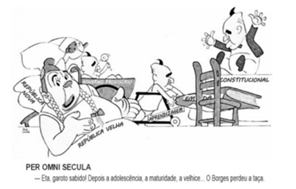
Fonte: Revista Careta. 03/04/1937.
Com base na charge, assinale a opção que interpreta corretamente os momentos da Era Vargas, conforme representados na imagem.
Fonte: Revista Careta. 03/04/1937.
Com base na charge, assinale a opção que interpreta corretamente os momentos da Era Vargas, conforme representados na imagem.
Q3840982
História
Leia o trecho a seguir.
John Sykes, fabricante de tecidos e empregado de William Cotton, mestre no acabamento de tecidos, declarou, em 6 de março de 1812, que um grupo de pessoas foi até a residência de seu patrão, bateu violentamente à porta e exigiu entrada, ameaçando arrombá-la caso não fossem atendidos. Para evitar isso, ele abriu a porta e cerca de 30 ou mais pessoas, com os rostos pintados ou disfarçados, entraram, e então vários deles pegaram velas e começaram a destruir as ferramentas, quebrando 10 pares de tesouras e uma máquina de escovagem. Um dos invasores, que parecia comandar o grupo, disse que se voltassem e encontrassem qualquer máquina instalada novamente, iriam explodir o local. Logo depois disso, todos se retiraram.
Adaptado de: https://www.nationalarchives.gov.uk/education/resources/why-didthe-luddites-protest/why-did-the-luddites-protest-source-1/
Com base na leitura do trecho, é correto afirmar que o Ludismo foi um movimento
John Sykes, fabricante de tecidos e empregado de William Cotton, mestre no acabamento de tecidos, declarou, em 6 de março de 1812, que um grupo de pessoas foi até a residência de seu patrão, bateu violentamente à porta e exigiu entrada, ameaçando arrombá-la caso não fossem atendidos. Para evitar isso, ele abriu a porta e cerca de 30 ou mais pessoas, com os rostos pintados ou disfarçados, entraram, e então vários deles pegaram velas e começaram a destruir as ferramentas, quebrando 10 pares de tesouras e uma máquina de escovagem. Um dos invasores, que parecia comandar o grupo, disse que se voltassem e encontrassem qualquer máquina instalada novamente, iriam explodir o local. Logo depois disso, todos se retiraram.
Adaptado de: https://www.nationalarchives.gov.uk/education/resources/why-didthe-luddites-protest/why-did-the-luddites-protest-source-1/
Com base na leitura do trecho, é correto afirmar que o Ludismo foi um movimento
Q3840981
História
Sobre as consequências da assinatura do Tratado de Latrão,
analise as afirmativas a seguir e assinale (V) para a verdadeira e
(F) para a falsa.
( ) Estabeleceu a fundação e garantiu a autonomia do Estado da Cidade do Vaticano, com definições de suas fronteiras.
( ) Prejudicou a imagem de Benito Mussolini perante a população, ao ceder às exigências da Igreja Católica.
( ) Encerrou o conflito histórico entre o Reino da Itália e a Santa Sé, iniciado durante o processo de unificação italiana.
As afirmativas são, respectivamente,
( ) Estabeleceu a fundação e garantiu a autonomia do Estado da Cidade do Vaticano, com definições de suas fronteiras.
( ) Prejudicou a imagem de Benito Mussolini perante a população, ao ceder às exigências da Igreja Católica.
( ) Encerrou o conflito histórico entre o Reino da Itália e a Santa Sé, iniciado durante o processo de unificação italiana.
As afirmativas são, respectivamente,
Q3840980
História
Observe o gráfico a seguir.
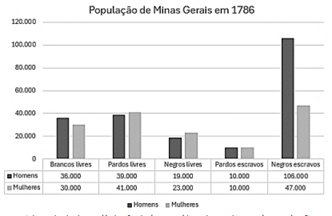
Adaptado de: https://atlas.fgv.br/marcos/descoberta-do-ouro/mapas/graficosproducao-de-ouro-e-populacao-mineira-no-sec-18
Com base nas informações do gráfico, assinale a opção que apresenta a interpretação correta dos dados.
Adaptado de: https://atlas.fgv.br/marcos/descoberta-do-ouro/mapas/graficosproducao-de-ouro-e-populacao-mineira-no-sec-18
Com base nas informações do gráfico, assinale a opção que apresenta a interpretação correta dos dados.
Q3840979
História
Sobre os objetivos das missões jesuíticas no período colonial
brasileiro, analise as afirmativas a seguir.
I. Promover a fé católica entre os povos indígenas, por meio da catequese e do ensino da doutrina religiosa.
II. Organizar um regime comunitário agrícola, baseado na exploração da mão de obra indígena.
III. Preservar a cultura e os modos de vida dos povos indígenas, por meio de sua proteção contra os interesses dos colonos.
Está correto o que se afirma em
I. Promover a fé católica entre os povos indígenas, por meio da catequese e do ensino da doutrina religiosa.
II. Organizar um regime comunitário agrícola, baseado na exploração da mão de obra indígena.
III. Preservar a cultura e os modos de vida dos povos indígenas, por meio de sua proteção contra os interesses dos colonos.
Está correto o que se afirma em
Q3840978
Português
Leia a entrevista a seguir.
Entrevistador: Alguns dos seus livros são lidos como narrativas, aproximam a historiografia de um género literário. No entanto, você sempre contestou a ideia, de que não há fronteiras nítidas entre narração de ficção e narração historiográfica…
Carlo Ginzburg: Na nossa tradição, a relação entre a narrativa de ficção e a narrativa histórica foi sempre de competição pela representação da realidade, já que a ficção também tem uma relação com a realidade. Procurei trabalhar sobre temas específicos, para mostrar como as técnicas usadas pelos romancistas podem ser interpretadas no plano histórico. Temos de perceber que a narração, e este é o ponto onde quero chegar, é um modo de relação com a realidade e que toda a experiência narrativa, mesmo o espaço em branco, tem implicações e potencialidades cognitivas, pode ser lida como um documento histórico. E o historiador não pode deixar de se interrogar sobre as formas narrativas que utiliza.
Adaptado de https://electramagazine.fundacaoedp.pt/editions/edicao-10/carloginzburg-o-historiador-como-detective.
Com base na entrevista, assinale a opção que, segundo Carlo Ginzburg, relaciona corretamente História e Literatura.
Entrevistador: Alguns dos seus livros são lidos como narrativas, aproximam a historiografia de um género literário. No entanto, você sempre contestou a ideia, de que não há fronteiras nítidas entre narração de ficção e narração historiográfica…
Carlo Ginzburg: Na nossa tradição, a relação entre a narrativa de ficção e a narrativa histórica foi sempre de competição pela representação da realidade, já que a ficção também tem uma relação com a realidade. Procurei trabalhar sobre temas específicos, para mostrar como as técnicas usadas pelos romancistas podem ser interpretadas no plano histórico. Temos de perceber que a narração, e este é o ponto onde quero chegar, é um modo de relação com a realidade e que toda a experiência narrativa, mesmo o espaço em branco, tem implicações e potencialidades cognitivas, pode ser lida como um documento histórico. E o historiador não pode deixar de se interrogar sobre as formas narrativas que utiliza.
Adaptado de https://electramagazine.fundacaoedp.pt/editions/edicao-10/carloginzburg-o-historiador-como-detective.
Com base na entrevista, assinale a opção que, segundo Carlo Ginzburg, relaciona corretamente História e Literatura.
Q3840977
História
Observe a imagem a seguir.
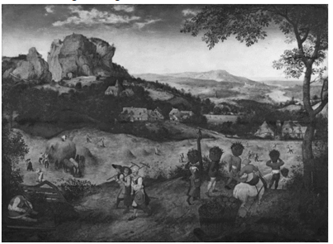
Fonte: Bruegel, Peter. A ceifa do feno. Praga, 1565. https://www.lobkowicz.cz/en/collection-highlights
No contexto do Renascimento, as relações entre campo e cidade assumiram novos significados, em comparação aos observados na época medieval, como destaca o historiador Jacques Le Goff:
De fato, o campo se torna muito mais associado à cidade do que havia sido na Idade Média, e a pintura representa essa nova dupla cidade-campo.
Fonte: Le Goff, Jacques. A história deve ser dividida em pedaços? São Paulo: Editora Unesp, 2015, p. 56.
Assinale a opção que apresenta corretamente as mudanças ocorridas nas relações entre cidade e campo, durante o Renascimento.
Fonte: Bruegel, Peter. A ceifa do feno. Praga, 1565. https://www.lobkowicz.cz/en/collection-highlights
No contexto do Renascimento, as relações entre campo e cidade assumiram novos significados, em comparação aos observados na época medieval, como destaca o historiador Jacques Le Goff:
De fato, o campo se torna muito mais associado à cidade do que havia sido na Idade Média, e a pintura representa essa nova dupla cidade-campo.
Fonte: Le Goff, Jacques. A história deve ser dividida em pedaços? São Paulo: Editora Unesp, 2015, p. 56.
Assinale a opção que apresenta corretamente as mudanças ocorridas nas relações entre cidade e campo, durante o Renascimento.
Q3840976
Inglês
Texto associado
Read Text III below and answer the question that follow it.
Text III
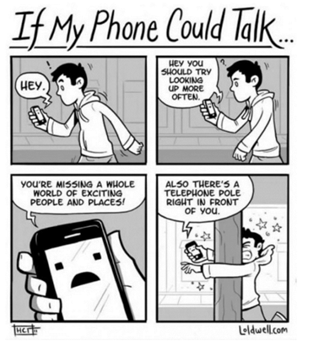
From:https://images.baklol.com/08753e49e68e27620affe1eb2c60c1441450870314. JPG
The sentence in the third panel implies that:
Q3840975
Inglês
Texto associado
Read Text III below and answer the question that follow it.
Text III
From:https://images.baklol.com/08753e49e68e27620affe1eb2c60c1441450870314. JPG
In the second panel, the phone
Q3840974
Inglês
Texto associado

Read Text II below and answer the question that
follow it.
Text II
From: https://cdn.quotesgram.com/img/31/9/1932969763-Thoreau-empathyquote.jpg
The phrasal verb “take place” in this poster means to
Q3840973
Inglês
Texto associado
Read Text II below and answer the question that
follow it.
Text II
From: https://cdn.quotesgram.com/img/31/9/1932969763-Thoreau-empathyquote.jpg
The opposite of “greater” in this context is
Q3840972
Inglês
Texto associado
Read Text II below and answer the question that
follow it.
Text II
From: https://cdn.quotesgram.com/img/31/9/1932969763-Thoreau-empathyquote.jpg
The function of the question proposed in this poster is to
Q3840971
Inglês
Texto associado
Read Text II below and answer the question that
follow it.
Text II
From: https://cdn.quotesgram.com/img/31/9/1932969763-Thoreau-empathyquote.jpg
This quotation implies that one should be
Q3840970
Inglês
Texto associado
Read Text I below and answer the question that
follow it.
Text I
Jonathan Haidt: How to make the 'anxious generation' happy
again
Academics researching wellbeing have for a long time almost
unanimously agreed on one thing: over the typical lifetime,
happiness tends to follow a U-shaped curve, peaking at 30,
plummeting at age 50, before spiking again after 70. It’s a pattern
replicated using data going back as far as the 1970s in almost 150
countries.
But around 2011, researchers noticed an astonishing reversal in
this trend. “This empirical regularity has been replaced by a
monotonic decrease in ill-being by age,” they reported in an
NBER working paper. In plain English, younger people today are
unhappier, both compared to previous generations and to their
older peers. Or, to quote the title of the most recent book from
Jonathan Haidt, Professor of Ethical Leadership at New York
University, they are the anxious generation […].
Today, rather than playing with their friends, kids stay at home
on their devices. Instead of hearing chatter and laughter in the
corridor of schools, we hear the gentle tapping of screens. The
social isolation many of us experienced during pandemic-induced
lockdowns was nothing new for children, Haidt said. “They began
social distancing as soon as they got smartphones.”
The good news for parents is that, while this trend is worrying, it
is not inevitable. There are things we can do. “We can turn this
around with four new norms,” Haidt proposed.
The first norm is a commitment to not give our children a
smartphone until they are at least 14. “Give them a flip-phone if
you want to, so they can call and text you,” he said. “But don’t
give the entire world access to your child.” The second is to not
allow our children to use social media until they are at least 16.
“Social media is wildly inappropriate for children — you have
strangers trying to talk to them, cyberbullying, explosive drama.”
The third norm is that schools should be a phone-free
environment. “All schools need to be phone free from bell to bell
— from the morning when kids arrive to the end when they
leave,” Haidt explained.
And finally, the fourth norm involves going back to a time where
parents felt more comfortable letting their kids walk to the shops
or play outside with friends. “The fourth norm is to give them
much more independence in the real world,” he said. “Ultimately,
our mission is to restore childhood: the kind of wonderful, fun,
exciting childhood we all had, which was full of conflicts, failures,
exploration, adventure, risk-taking, thrills and all those emotions
that you experienced not with your parents, but when you were
out, away from your secure home base.”
Adapted from https://www.weforum.org/stories/2025/01/jonathan-haidt-digitaltechnology-social-media-childhood/
When the author argues that the trend “is not inevitable” (4th
paragraph), he means that it is
Q3840969
Inglês
Texto associado
Read Text I below and answer the question that
follow it.
Text I
Jonathan Haidt: How to make the 'anxious generation' happy
again
Academics researching wellbeing have for a long time almost
unanimously agreed on one thing: over the typical lifetime,
happiness tends to follow a U-shaped curve, peaking at 30,
plummeting at age 50, before spiking again after 70. It’s a pattern
replicated using data going back as far as the 1970s in almost 150
countries.
But around 2011, researchers noticed an astonishing reversal in
this trend. “This empirical regularity has been replaced by a
monotonic decrease in ill-being by age,” they reported in an
NBER working paper. In plain English, younger people today are
unhappier, both compared to previous generations and to their
older peers. Or, to quote the title of the most recent book from
Jonathan Haidt, Professor of Ethical Leadership at New York
University, they are the anxious generation […].
Today, rather than playing with their friends, kids stay at home
on their devices. Instead of hearing chatter and laughter in the
corridor of schools, we hear the gentle tapping of screens. The
social isolation many of us experienced during pandemic-induced
lockdowns was nothing new for children, Haidt said. “They began
social distancing as soon as they got smartphones.”
The good news for parents is that, while this trend is worrying, it
is not inevitable. There are things we can do. “We can turn this
around with four new norms,” Haidt proposed.
The first norm is a commitment to not give our children a
smartphone until they are at least 14. “Give them a flip-phone if
you want to, so they can call and text you,” he said. “But don’t
give the entire world access to your child.” The second is to not
allow our children to use social media until they are at least 16.
“Social media is wildly inappropriate for children — you have
strangers trying to talk to them, cyberbullying, explosive drama.”
The third norm is that schools should be a phone-free
environment. “All schools need to be phone free from bell to bell
— from the morning when kids arrive to the end when they
leave,” Haidt explained.
And finally, the fourth norm involves going back to a time where
parents felt more comfortable letting their kids walk to the shops
or play outside with friends. “The fourth norm is to give them
much more independence in the real world,” he said. “Ultimately,
our mission is to restore childhood: the kind of wonderful, fun,
exciting childhood we all had, which was full of conflicts, failures,
exploration, adventure, risk-taking, thrills and all those emotions
that you experienced not with your parents, but when you were
out, away from your secure home base.”
Adapted from https://www.weforum.org/stories/2025/01/jonathan-haidt-digitaltechnology-social-media-childhood/
The word “chatter” (3rd paragraph) is a reference to the sound produced by the kids’:
Q3840968
Inglês
Texto associado
Read Text I below and answer the question that
follow it.
Text I
Jonathan Haidt: How to make the 'anxious generation' happy
again
Academics researching wellbeing have for a long time almost
unanimously agreed on one thing: over the typical lifetime,
happiness tends to follow a U-shaped curve, peaking at 30,
plummeting at age 50, before spiking again after 70. It’s a pattern
replicated using data going back as far as the 1970s in almost 150
countries.
But around 2011, researchers noticed an astonishing reversal in
this trend. “This empirical regularity has been replaced by a
monotonic decrease in ill-being by age,” they reported in an
NBER working paper. In plain English, younger people today are
unhappier, both compared to previous generations and to their
older peers. Or, to quote the title of the most recent book from
Jonathan Haidt, Professor of Ethical Leadership at New York
University, they are the anxious generation […].
Today, rather than playing with their friends, kids stay at home
on their devices. Instead of hearing chatter and laughter in the
corridor of schools, we hear the gentle tapping of screens. The
social isolation many of us experienced during pandemic-induced
lockdowns was nothing new for children, Haidt said. “They began
social distancing as soon as they got smartphones.”
The good news for parents is that, while this trend is worrying, it
is not inevitable. There are things we can do. “We can turn this
around with four new norms,” Haidt proposed.
The first norm is a commitment to not give our children a
smartphone until they are at least 14. “Give them a flip-phone if
you want to, so they can call and text you,” he said. “But don’t
give the entire world access to your child.” The second is to not
allow our children to use social media until they are at least 16.
“Social media is wildly inappropriate for children — you have
strangers trying to talk to them, cyberbullying, explosive drama.”
The third norm is that schools should be a phone-free
environment. “All schools need to be phone free from bell to bell
— from the morning when kids arrive to the end when they
leave,” Haidt explained.
And finally, the fourth norm involves going back to a time where
parents felt more comfortable letting their kids walk to the shops
or play outside with friends. “The fourth norm is to give them
much more independence in the real world,” he said. “Ultimately,
our mission is to restore childhood: the kind of wonderful, fun,
exciting childhood we all had, which was full of conflicts, failures,
exploration, adventure, risk-taking, thrills and all those emotions
that you experienced not with your parents, but when you were
out, away from your secure home base.”
Adapted from https://www.weforum.org/stories/2025/01/jonathan-haidt-digitaltechnology-social-media-childhood/
The phrase “as soon as” in “as soon as they got smartphones” (3rd
paragraph) indicates
Q3840967
Inglês
Texto associado
Read Text I below and answer the question that
follow it.
Text I
Jonathan Haidt: How to make the 'anxious generation' happy
again
Academics researching wellbeing have for a long time almost
unanimously agreed on one thing: over the typical lifetime,
happiness tends to follow a U-shaped curve, peaking at 30,
plummeting at age 50, before spiking again after 70. It’s a pattern
replicated using data going back as far as the 1970s in almost 150
countries.
But around 2011, researchers noticed an astonishing reversal in
this trend. “This empirical regularity has been replaced by a
monotonic decrease in ill-being by age,” they reported in an
NBER working paper. In plain English, younger people today are
unhappier, both compared to previous generations and to their
older peers. Or, to quote the title of the most recent book from
Jonathan Haidt, Professor of Ethical Leadership at New York
University, they are the anxious generation […].
Today, rather than playing with their friends, kids stay at home
on their devices. Instead of hearing chatter and laughter in the
corridor of schools, we hear the gentle tapping of screens. The
social isolation many of us experienced during pandemic-induced
lockdowns was nothing new for children, Haidt said. “They began
social distancing as soon as they got smartphones.”
The good news for parents is that, while this trend is worrying, it
is not inevitable. There are things we can do. “We can turn this
around with four new norms,” Haidt proposed.
The first norm is a commitment to not give our children a
smartphone until they are at least 14. “Give them a flip-phone if
you want to, so they can call and text you,” he said. “But don’t
give the entire world access to your child.” The second is to not
allow our children to use social media until they are at least 16.
“Social media is wildly inappropriate for children — you have
strangers trying to talk to them, cyberbullying, explosive drama.”
The third norm is that schools should be a phone-free
environment. “All schools need to be phone free from bell to bell
— from the morning when kids arrive to the end when they
leave,” Haidt explained.
And finally, the fourth norm involves going back to a time where
parents felt more comfortable letting their kids walk to the shops
or play outside with friends. “The fourth norm is to give them
much more independence in the real world,” he said. “Ultimately,
our mission is to restore childhood: the kind of wonderful, fun,
exciting childhood we all had, which was full of conflicts, failures,
exploration, adventure, risk-taking, thrills and all those emotions
that you experienced not with your parents, but when you were
out, away from your secure home base.”
Adapted from https://www.weforum.org/stories/2025/01/jonathan-haidt-digitaltechnology-social-media-childhood/
Based on Text I, mark the statements below as true (T) or false
(F).
( ) Happiness among young people has increased compared to previous years.
( ) Today, children prefer playing with their friends at school to using a smartphone.
( ) According to Haidt, social media is harmful to children.
The statements are, respectively:
( ) Happiness among young people has increased compared to previous years.
( ) Today, children prefer playing with their friends at school to using a smartphone.
( ) According to Haidt, social media is harmful to children.
The statements are, respectively:
Q3840966
Português
Texto associado
Texto III
Livros a Mancheias
Em muito boa hora importantes jornais brasileiros, a exemplo do
que já fazem publicações no estrangeiro, começaram a oferecer,
a título de brinde, obras do maior interesse cultural e artístico.
Saem, assim, semanalmente, cadernos de dicionários, de
enciclopédias, de atlas, com o propósito de enriquecer o
conhecimento de seus leitores e melhorar a biblioteca familiar,
hoje praticamente inexistente na maioria dos lares. Estamos, com
pesar, distantes daqueles tempos em que uma nutrida biblioteca
dentro de casa aumentava as informações oferecidas na escola
ou servia de lazer em horas de leitura nos grandes representantes
da literatura nacional e estrangeira.
BECHARA, Evanildo. Na Ponta da Língua, Editora Lucerna, RJ 20011
Nas opções a seguir, há dois termos unidos pela conjunção
aditiva e; assinale a alternativa em que o segundo termo está
englobado no primeiro.

 Conheça nossos planos