Questões de Vestibular Sobre inglês
Foram encontradas 6.367 questões



Considering this Instagram post by Turkish artist Ugur Gallenkus, known as Ugur Gallen, it can be verified that
I like my baby hair with baby hair and afros I like my negro nose with Jackson Five nostrils Earned all this money but they never take the country out me (…)
Disponível em: https://www.vagalume.com.br/beyonce/formation.html. Acesso em: 14 out. 2024.
This part of the song “Formation” shows
Leia o texto abaixo para responder a questão
The Chamber of Commerce Brazil-Canada (CCBC) hosted Canada Day 2024, aimed at providing opportunities for young Brazilians who wish to do an exchange program, study, and explore the Canadian job market. The event featured representatives from the Consulate General of Canada in Brazil, who highlighted the efficiency of visa processing, allowing students to begin their studies in the country.
During the event, experts from various universities and educational institutions in Canada shared information and provided clarifications for students, offering a comprehensive view of the available opportunities.
Canada leads the list of the most sought-after destinations by Brazilians for studying abroad. According to the 2023 Belta Survey released by the Brazilian Association of Exchange Agencies, the number of Brazilian students seeking to study abroad grew by 18% in 2022 compared to the pre-pandemic period. This is because the region offers excellent quality of life, safety, and academic options, as well as work opportunities during and after studies, and the possibility of obtaining permanent residency in Canada.
For those who are thinking about studying in Canada, it is essential to pay attention to the registration deadlines offered by the institutions and to prepare the documentation, such as sending transcripts, English test results and necessary proof of income. The institutions present at the event highlighted the importance of starting the application process in advance, as soon as each university opens its applications.
Furthermore, to obtain a student visa for Canada it is necessary to follow a series of steps after receiving the acceptance letter from the educational institution and the scholarship. There are different types of visa, each suited to specific situations: the SX-1, for shortterm courses (up to 24 weeks), which requires an acceptance letter; the V-1, a tourist visa that can also be used for courses of up to 24 weeks; and the S-1 Study Permit, required for courses longer than 24 weeks.
To speed up the process, it is recommended to seek help from an exchange agency that offers guidance and support during all stages. In addition to the acceptance letter, you must have a passport valid for at least six months, demonstrate family ties in your country of origin, prove your financial capacity to support yourself in Canada during the study period and send all the necessary documentation, detailing your plans. For courses lasting more than six months, a medical examination is also required.
Disponível em: ccbc.org.br/en/publicacoes/news-ccbc/canada-offers-great-study-opportunities-for-brazilians-who-want-to-do-an-exchange-program. 17 July 2024 / news CCBC [adapted]. Acesso em: 04 out. 2024.
Leia o texto abaixo para responder a questão
The Chamber of Commerce Brazil-Canada (CCBC) hosted Canada Day 2024, aimed at providing opportunities for young Brazilians who wish to do an exchange program, study, and explore the Canadian job market. The event featured representatives from the Consulate General of Canada in Brazil, who highlighted the efficiency of visa processing, allowing students to begin their studies in the country.
During the event, experts from various universities and educational institutions in Canada shared information and provided clarifications for students, offering a comprehensive view of the available opportunities.
Canada leads the list of the most sought-after destinations by Brazilians for studying abroad. According to the 2023 Belta Survey released by the Brazilian Association of Exchange Agencies, the number of Brazilian students seeking to study abroad grew by 18% in 2022 compared to the pre-pandemic period. This is because the region offers excellent quality of life, safety, and academic options, as well as work opportunities during and after studies, and the possibility of obtaining permanent residency in Canada.
For those who are thinking about studying in Canada, it is essential to pay attention to the registration deadlines offered by the institutions and to prepare the documentation, such as sending transcripts, English test results and necessary proof of income. The institutions present at the event highlighted the importance of starting the application process in advance, as soon as each university opens its applications.
Furthermore, to obtain a student visa for Canada it is necessary to follow a series of steps after receiving the acceptance letter from the educational institution and the scholarship. There are different types of visa, each suited to specific situations: the SX-1, for shortterm courses (up to 24 weeks), which requires an acceptance letter; the V-1, a tourist visa that can also be used for courses of up to 24 weeks; and the S-1 Study Permit, required for courses longer than 24 weeks.
To speed up the process, it is recommended to seek help from an exchange agency that offers guidance and support during all stages. In addition to the acceptance letter, you must have a passport valid for at least six months, demonstrate family ties in your country of origin, prove your financial capacity to support yourself in Canada during the study period and send all the necessary documentation, detailing your plans. For courses lasting more than six months, a medical examination is also required.
Disponível em: ccbc.org.br/en/publicacoes/news-ccbc/canada-offers-great-study-opportunities-for-brazilians-who-want-to-do-an-exchange-program. 17 July 2024 / news CCBC [adapted]. Acesso em: 04 out. 2024.

Disponível em: https://www.gocomics.com/aunty-acid/2024/03/08. Acesso em: 08 mar. 2024.
The conjunction “because” in the comic expresses
Leia o texto abaixo para responder à questão.
Child of the Dark: The Diary of Carolina Maria de Jesus
A powerful and gripping memoir depicting the harsh realities of life in the favelas of Brazil in the 1950s, and one woman's resilience in the face of poverty, racism, and social inequality.
Living in poverty in a Brazilian favela, or "slum," Carolina tried to scrape together a living by collecting recyclables. Among the trash, she found notebooks and papers that she salvaged to write on, and she used these found papers to craft novels, poetry, plays, letters to authorities--as well as her own journal.
In this stunning diary of perseverance in the face of adversity, violence, and starvation, Carolina Maria de Jesus offers a firsthand account of life in the streets of São Paulo that, upon its first publication over 50 years ago, drew international attention to the plight of the poor.
A unique historical account and a critical work in the canon of Afro-Brazilian literature, Child of the Dark offers an essential perspective on the realities and cruelties of life in a favela at the beginning of the "modernization" of the city of São Paulo. Its themes of struggles against marginalization, classism, and racism continue to resonate today.
Includes eight pages of photographs and an afterword by Robert M. Levine
Translated from the Portuguese by David S. Clair
Disponível em: https://www.amazon.com/ Child-Dark-Diary-Carolina-Maria/dp/0451529103. Acesso em: 08 mar. 2024.
Leia o poema abaixo para responder à questão.
The giver (for Berdis) by James Baldwin
1 If the hope of giving
2 is to love the living,
3 the giver risks madness
4 in the act of giving.
5 Some such lesson I seemed to see
6 in the faces that surrounded me.
7 Needy and blind, unhopeful, unlifted,
8 what gift would give them the gift to be gifted?
9 The giver is no less adrift
10 than those who are clamouring for the gift.
11 If they cannot claim it, if it is not there,
12 if their empty fingers beat the empty air
13 and the giver goes down on his knees in prayer
14 knows that all of his giving has been for naught
15 and that nothing was ever what he thought
16 and turns in his guilty bed to stare
17 at the starving multitudes standing there
18 and rises from bed to curse at heaven,
19 he must yet understand that to whom much is given
20 much will be taken, and justly so:
21 I cannot tell how much I owe.
Leia o poema abaixo para responder à questão.
The giver (for Berdis) by James Baldwin
1 If the hope of giving
2 is to love the living,
3 the giver risks madness
4 in the act of giving.
5 Some such lesson I seemed to see
6 in the faces that surrounded me.
7 Needy and blind, unhopeful, unlifted,
8 what gift would give them the gift to be gifted?
9 The giver is no less adrift
10 than those who are clamouring for the gift.
11 If they cannot claim it, if it is not there,
12 if their empty fingers beat the empty air
13 and the giver goes down on his knees in prayer
14 knows that all of his giving has been for naught
15 and that nothing was ever what he thought
16 and turns in his guilty bed to stare
17 at the starving multitudes standing there
18 and rises from bed to curse at heaven,
19 he must yet understand that to whom much is given
20 much will be taken, and justly so:
21 I cannot tell how much I owe.
“Do No Harm” is a gripping memoir written by renowned neurosurgeon Henry Marsh. Published in 2014, this book takes readers on a remarkable journey into the world of neurosurgery, offering a glimpse into the high stakes and complex nature of this critical medical profession. The quotes that follow are part of this book:
I - "An effective doctor operates not just with their scalpel, but with their words, their presence, and their healing touch” (Marsh, 2014).
II - “To be a doctor is to be a lifelong student, forever humbled by the complexity and mystery of the human body” (Marsh, 2014).
Disponível em: https://www.bookey.app/quote-book/do-no-harm. Acesso em: 4 mar. 2024. [Adaptado].
Considering quotes I and II, it can be stated that
The information the doctors is expressing is:
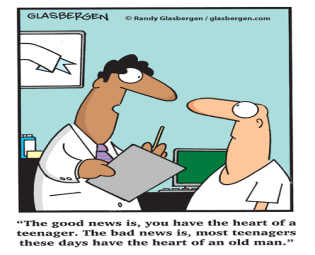
Disponível em: https://www.glasbergen.com/. Acesso em: 4 mar. 2024
Making family medicine a more attractive specialty: strategies to address the shortage of primary care specialists in Brazil
Primary Health Care (PHC) is often the first level of the health system and is responsible for the coordination of medical and interdisciplinary care. As the preferred entry point to the Brazilian Unified Health System (SUS), PHC is of fundamental importance and is present in all regions of the country. It aims to enable access to health care and ensures the coordination and completeness of care. This structure can treat approximately 80% of the overall need related to diseases presented in the Basic Health Units.
Despite its importance, the valorization of PHC and Family Medicine (FM) as a discipline and a public policy has not been prioritized in most Brazilian educational institutions. According to the study on medical demography carried out by the Regional Medical Council of São Paulo (CREMESP), Brazil had 500,000 physicians in 2020, but with unequal distribution among the nation’s five regions, and a concentration of professionals in the capital cities compared to the countryside.
This issue is faced by many countries. In the United States (US) of 8,116 primary care postgraduate training positions (which includes pediatrics, internal medicine, and family doctors), 42 percent were filled by graduates of U.S. medical schools and the American Association of Medical Colleges (AAMC) projects a shortage of 21,100 to 55,200 primary care physicians (PCP) by 2034. In Europe, where PCP was traditionally respected and recognized, the lack of General Practitioners (GP) is also increasing and is a matter of concern. Workload and a lack of perceived prestige associated with the PCP track can make primary care less attractive. These sorts of misconceptions, along with lower salaries, burnout, and difficult career advancement makes primary care a difficult specialty to attract and retain doctors.
For Feuerwerker, vacancies in Brazilian institutions are the result of several elements: the encouragement of distinctive specialties and institutions, the historical misunderstanding and importance of the practice, and the increased incentive of specialization in medical education. The lack of investments in supplies and infrastructure in primary care, career development concerns, and low salaries, and the valorization of the formation of FM doctors in the work of the EFS also contribute to difficulty in retaining these positions in Brazil.
With the aim to reduce the vacancy rate in the medical residency programs for FM, some Brazilian health departments introduced reforms and additional financing for FM training. In 2020, the region of Campinas, where we work, introduced a program called “More Doctors for the City of Campinas” (PMMC), which established a partnership between public and private higher education institutions, hospitals, and Urgency/Emergency Units with a novel post-graduation proposal for FM. It created a program to support the training of specialists in family medicine, stimulate research, and expand care in Basic Health Units, and has since resulted in a 50% decrease in vacancies.
One of the successful elements of the Campinas program, together with quality of medical training, is that it helps bring medical classroom training closer to the community and everyday social reality. PMMC-trained physicians are aware of how their work impacts the local community and its particular health needs. The program has resulted in care that is more responsive to community needs, especially from the perspective of adopting a care model that prioritizes health promotion, disease prevention, diagnosis, and treatment in an integrated manner. However, for the EFS to continue to innovate and improve its response capacity to contemporary health problems, it must invest heavily in professional training, the rational incorporation of information and communication technologies, and the creation of appropriate working conditions for multidisciplinary teams.
Disponível em: https://speakingofmedicine.plos.org/2023/01/13/. Acesso em: 4 mar. 2024. [Adaptado].
Making family medicine a more attractive specialty: strategies to address the shortage of primary care specialists in Brazil
Primary Health Care (PHC) is often the first level of the health system and is responsible for the coordination of medical and interdisciplinary care. As the preferred entry point to the Brazilian Unified Health System (SUS), PHC is of fundamental importance and is present in all regions of the country. It aims to enable access to health care and ensures the coordination and completeness of care. This structure can treat approximately 80% of the overall need related to diseases presented in the Basic Health Units.
Despite its importance, the valorization of PHC and Family Medicine (FM) as a discipline and a public policy has not been prioritized in most Brazilian educational institutions. According to the study on medical demography carried out by the Regional Medical Council of São Paulo (CREMESP), Brazil had 500,000 physicians in 2020, but with unequal distribution among the nation’s five regions, and a concentration of professionals in the capital cities compared to the countryside.
This issue is faced by many countries. In the United States (US) of 8,116 primary care postgraduate training positions (which includes pediatrics, internal medicine, and family doctors), 42 percent were filled by graduates of U.S. medical schools and the American Association of Medical Colleges (AAMC) projects a shortage of 21,100 to 55,200 primary care physicians (PCP) by 2034. In Europe, where PCP was traditionally respected and recognized, the lack of General Practitioners (GP) is also increasing and is a matter of concern. Workload and a lack of perceived prestige associated with the PCP track can make primary care less attractive. These sorts of misconceptions, along with lower salaries, burnout, and difficult career advancement makes primary care a difficult specialty to attract and retain doctors.
For Feuerwerker, vacancies in Brazilian institutions are the result of several elements: the encouragement of distinctive specialties and institutions, the historical misunderstanding and importance of the practice, and the increased incentive of specialization in medical education. The lack of investments in supplies and infrastructure in primary care, career development concerns, and low salaries, and the valorization of the formation of FM doctors in the work of the EFS also contribute to difficulty in retaining these positions in Brazil.
With the aim to reduce the vacancy rate in the medical residency programs for FM, some Brazilian health departments introduced reforms and additional financing for FM training. In 2020, the region of Campinas, where we work, introduced a program called “More Doctors for the City of Campinas” (PMMC), which established a partnership between public and private higher education institutions, hospitals, and Urgency/Emergency Units with a novel post-graduation proposal for FM. It created a program to support the training of specialists in family medicine, stimulate research, and expand care in Basic Health Units, and has since resulted in a 50% decrease in vacancies.
One of the successful elements of the Campinas program, together with quality of medical training, is that it helps bring medical classroom training closer to the community and everyday social reality. PMMC-trained physicians are aware of how their work impacts the local community and its particular health needs. The program has resulted in care that is more responsive to community needs, especially from the perspective of adopting a care model that prioritizes health promotion, disease prevention, diagnosis, and treatment in an integrated manner. However, for the EFS to continue to innovate and improve its response capacity to contemporary health problems, it must invest heavily in professional training, the rational incorporation of information and communication technologies, and the creation of appropriate working conditions for multidisciplinary teams.
Disponível em: https://speakingofmedicine.plos.org/2023/01/13/. Acesso em: 4 mar. 2024. [Adaptado].
Making family medicine a more attractive specialty: strategies to address the shortage of primary care specialists in Brazil
Primary Health Care (PHC) is often the first level of the health system and is responsible for the coordination of medical and interdisciplinary care. As the preferred entry point to the Brazilian Unified Health System (SUS), PHC is of fundamental importance and is present in all regions of the country. It aims to enable access to health care and ensures the coordination and completeness of care. This structure can treat approximately 80% of the overall need related to diseases presented in the Basic Health Units.
Despite its importance, the valorization of PHC and Family Medicine (FM) as a discipline and a public policy has not been prioritized in most Brazilian educational institutions. According to the study on medical demography carried out by the Regional Medical Council of São Paulo (CREMESP), Brazil had 500,000 physicians in 2020, but with unequal distribution among the nation’s five regions, and a concentration of professionals in the capital cities compared to the countryside.
This issue is faced by many countries. In the United States (US) of 8,116 primary care postgraduate training positions (which includes pediatrics, internal medicine, and family doctors), 42 percent were filled by graduates of U.S. medical schools and the American Association of Medical Colleges (AAMC) projects a shortage of 21,100 to 55,200 primary care physicians (PCP) by 2034. In Europe, where PCP was traditionally respected and recognized, the lack of General Practitioners (GP) is also increasing and is a matter of concern. Workload and a lack of perceived prestige associated with the PCP track can make primary care less attractive. These sorts of misconceptions, along with lower salaries, burnout, and difficult career advancement makes primary care a difficult specialty to attract and retain doctors.
For Feuerwerker, vacancies in Brazilian institutions are the result of several elements: the encouragement of distinctive specialties and institutions, the historical misunderstanding and importance of the practice, and the increased incentive of specialization in medical education. The lack of investments in supplies and infrastructure in primary care, career development concerns, and low salaries, and the valorization of the formation of FM doctors in the work of the EFS also contribute to difficulty in retaining these positions in Brazil.
With the aim to reduce the vacancy rate in the medical residency programs for FM, some Brazilian health departments introduced reforms and additional financing for FM training. In 2020, the region of Campinas, where we work, introduced a program called “More Doctors for the City of Campinas” (PMMC), which established a partnership between public and private higher education institutions, hospitals, and Urgency/Emergency Units with a novel post-graduation proposal for FM. It created a program to support the training of specialists in family medicine, stimulate research, and expand care in Basic Health Units, and has since resulted in a 50% decrease in vacancies.
One of the successful elements of the Campinas program, together with quality of medical training, is that it helps bring medical classroom training closer to the community and everyday social reality. PMMC-trained physicians are aware of how their work impacts the local community and its particular health needs. The program has resulted in care that is more responsive to community needs, especially from the perspective of adopting a care model that prioritizes health promotion, disease prevention, diagnosis, and treatment in an integrated manner. However, for the EFS to continue to innovate and improve its response capacity to contemporary health problems, it must invest heavily in professional training, the rational incorporation of information and communication technologies, and the creation of appropriate working conditions for multidisciplinary teams.
Disponível em: https://speakingofmedicine.plos.org/2023/01/13/. Acesso em: 4 mar. 2024. [Adaptado].
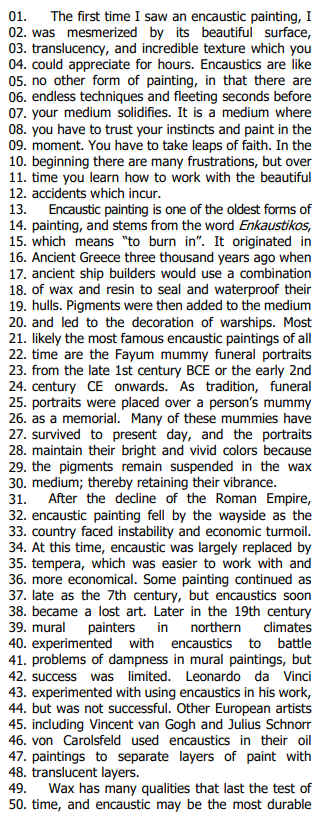
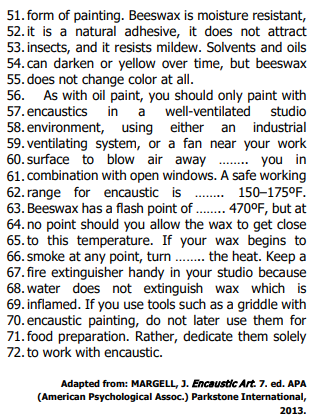
Consider the following proposals of replacement for the expression fell by the wayside (l. 32) to be substituted.
I - became unhabitual.
II - fell into disuse.
III - was prohibited.
In the given context, which would retain the meaning of the original expression?
Mark the statements about the use of the word which with T (true) or F (false) according to the text.
( ) The word which (l. 03) could well be omitted with no significant change in meaning.
( ) Replacing which (l. 15) with that would, with no further changes, result in a grammatically accurate sentence.
( ) The removal of the word which from line 35 would require no further change to the sentence.
How should the sequence read from top to bottom?
Each painting technique has its pros and cons. Read the list of pros below.
I - Encaustic painting allows the artist to have full control and achieve pre-planned results.
II - Pigmented wax forms the primary medium of encaustics, to which other bindings can also be added.
III - Encaustics are fungus free.
Which pros are mentioned in the text as representative of encaustic painting?
Read the following assertions about encaustic painting.
I - Encaustic painting does not blend with other painting techniques.
II - Encaustics are considered cost-effective and easy to handle in the studio.
III - Encaustic painting requires strict safety measures.
Which assertions are correct?

 Conheça nossos planos