Questões de Vestibular Sobre inglês
Foram encontradas 6.365 questões


At Hwaban, Mihyun Han with her husband, Key Kim, will present their take on Korean fare, traditional and personalized with modern touches. The serene, neutral-toned dining room with pale brick walls, accented by dark furniture, is the setting for their varied menu. Some of the small plates to start are shrimp or scallop, an organic egg with king crab in a pine nut sauce, and pan-seared zucchini with shrimp in a soy sauce. More substantial dishes include poached lemon sole with vegetables, chicken with root vegetables, and grilled New York strip steak with Korean mountain greens and mustard dressing. Classics like bibimbap, kimchi stew with pork belly, and galbi (short ribs) are also served, and there is a set array of dishes called Hwaban Table. The name of the restaurant means “as beautiful as a flower,” and there are floral elements in the dining room and on some plates.
(Florence Fabricant. www.nytimes.com, 14.08.2018. Adaptado.)
At Hwaban, Mihyun Han with her husband, Key Kim, will present their take on Korean fare, traditional and personalized with modern touches. The serene, neutral-toned dining room with pale brick walls, accented by dark furniture, is the setting for their varied menu. Some of the small plates to start are shrimp or scallop, an organic egg with king crab in a pine nut sauce, and pan-seared zucchini with shrimp in a soy sauce. More substantial dishes include poached lemon sole with vegetables, chicken with root vegetables, and grilled New York strip steak with Korean mountain greens and mustard dressing. Classics like bibimbap, kimchi stew with pork belly, and galbi (short ribs) are also served, and there is a set array of dishes called Hwaban Table. The name of the restaurant means “as beautiful as a flower,” and there are floral elements in the dining room and on some plates.
(Florence Fabricant. www.nytimes.com, 14.08.2018. Adaptado.)
Fake news can distort people’s beliefs even after being debunked. A study recently published in the journal Intelligence suggests that some people may have an especially difficult time rejecting misinformation. Asked to rate a fictitious person on a range of character traits, people who scored low on a test of cognitive ability continued to be influenced by damaging information about the person even after they were explicitly told the information was false. The study is significant because it identifies what may be a major risk factor for vulnerability to fake news.
One possible explanation for this finding is based on the theory that a person’s cognitive ability reflects how well they can regulate the contents of working memory – their “mental workspace” for processing information. First proposed by the cognitive psychologists Lynn Hasher and Rose Zacks, this theory holds that some people are more prone to “mental clutter” than other people. In other words, some people are less able to discard (or “inhibit”) information from their working memory that is no longer relevant to the task at hand, or information that has been discredited. Research on cognitive aging indicates that, in adulthood, this ability declines considerably with advancing age, suggesting that older adults may also be especially vulnerable to fake news. Another reason why cognitive ability may predict vulnerability to fake news is that it correlates highly with education. Through education, people may develop meta-cognitive skills – strategies for monitoring and regulating one’s own thinking – that can be used to combat the effects of misinformation.
(www.scientificamerican.com, 06.02.2018. Adaptado.)
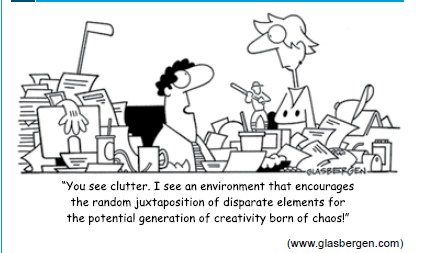
A partir da associação entre o texto e o cartum, depreende-
-se que a expressão “mental clutter”, empregada no segundo
parágrafo do texto, significa
Fake news can distort people’s beliefs even after being debunked. A study recently published in the journal Intelligence suggests that some people may have an especially difficult time rejecting misinformation. Asked to rate a fictitious person on a range of character traits, people who scored low on a test of cognitive ability continued to be influenced by damaging information about the person even after they were explicitly told the information was false. The study is significant because it identifies what may be a major risk factor for vulnerability to fake news.
One possible explanation for this finding is based on the theory that a person’s cognitive ability reflects how well they can regulate the contents of working memory – their “mental workspace” for processing information. First proposed by the cognitive psychologists Lynn Hasher and Rose Zacks, this theory holds that some people are more prone to “mental clutter” than other people. In other words, some people are less able to discard (or “inhibit”) information from their working memory that is no longer relevant to the task at hand, or information that has been discredited. Research on cognitive aging indicates that, in adulthood, this ability declines considerably with advancing age, suggesting that older adults may also be especially vulnerable to fake news. Another reason why cognitive ability may predict vulnerability to fake news is that it correlates highly with education. Through education, people may develop meta-cognitive skills – strategies for monitoring and regulating one’s own thinking – that can be used to combat the effects of misinformation.
(www.scientificamerican.com, 06.02.2018. Adaptado.)
Fake news can distort people’s beliefs even after being debunked. A study recently published in the journal Intelligence suggests that some people may have an especially difficult time rejecting misinformation. Asked to rate a fictitious person on a range of character traits, people who scored low on a test of cognitive ability continued to be influenced by damaging information about the person even after they were explicitly told the information was false. The study is significant because it identifies what may be a major risk factor for vulnerability to fake news.
One possible explanation for this finding is based on the theory that a person’s cognitive ability reflects how well they can regulate the contents of working memory – their “mental workspace” for processing information. First proposed by the cognitive psychologists Lynn Hasher and Rose Zacks, this theory holds that some people are more prone to “mental clutter” than other people. In other words, some people are less able to discard (or “inhibit”) information from their working memory that is no longer relevant to the task at hand, or information that has been discredited. Research on cognitive aging indicates that, in adulthood, this ability declines considerably with advancing age, suggesting that older adults may also be especially vulnerable to fake news. Another reason why cognitive ability may predict vulnerability to fake news is that it correlates highly with education. Through education, people may develop meta-cognitive skills – strategies for monitoring and regulating one’s own thinking – that can be used to combat the effects of misinformation.
(www.scientificamerican.com, 06.02.2018. Adaptado.)
INSTRUÇÃO: Para responder à questão, considere o texto abaixo.

I - “Th brain's neuroplasticity” (l. 02) é a contração de “has”.
II - “It´s often said” (l. 04) é a contração de “is”.
III - “one 's brain” (l. 28) é a contração do “genitive case”.
Quais estão corretas?
INSTRUÇÃO: Para responder à questão, considere o texto abaixo.

he new labeling system has been proposed because
( ) consumers have difficulty understanding the various now-existing labels.
( ) the nutritional information about foods will be immediately grasped by its color.
( ) people prefer to look at a package’s back or sides.
( ) colors are likely to give misleading information about foods.
The correct sequence, from top to bottom, is
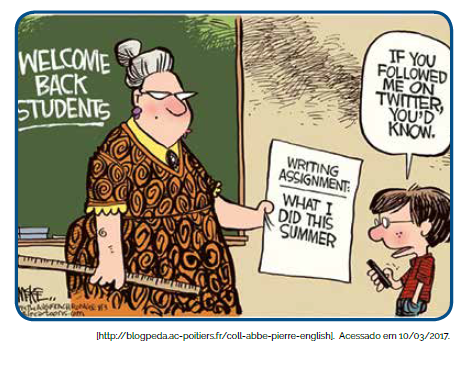
• A imagem permite inferir que:
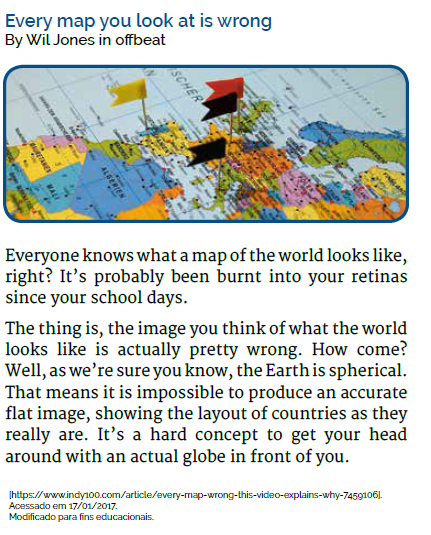
• De acordo com o texto:
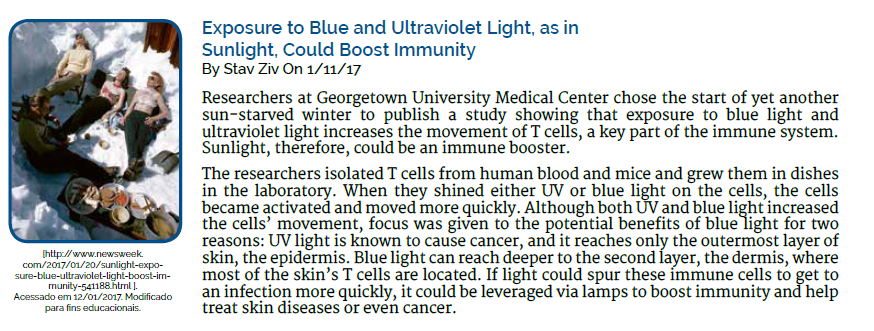
• Assinale a alternativa que corresponde à informação contida no texto
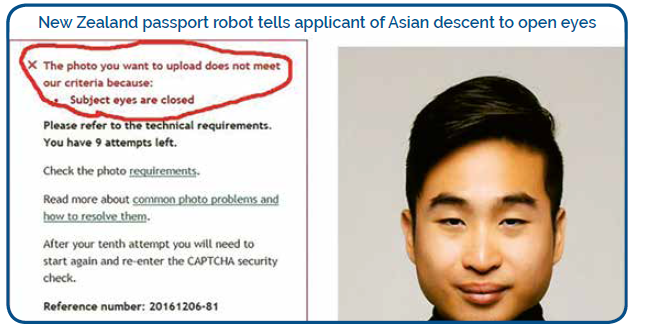
• O candidato não conseguiu colocar a foto no passaporte porque
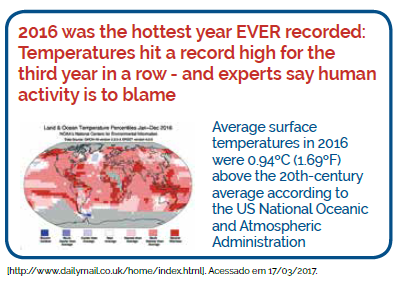
• Assinale a alternativa que corresponde à
informação NÃO contida no texto.
The following advertisement refers to question.

The following advertisement refers to question.


And the show is just beginning. “The Mahler Project is immense,” says Deborah Borda, president and chief executive of the L.A. Phil. “When we planned it, I don’t think the two of us completely took in how big it would turn out to be.” It is the kind of bar-raising command performance that audiences have come to expect from the Venezuelan wunderkind – a musician who, whether taking on a Sibelius violin concerto or a Strauss symphony, makes a policy of raising the roof whenever he performs.
The grueling project also underscores Dudamel’s commitment to El Sistema – “The System” – Venezuela’s tough-love musical-outreach program for youth that made the conductor what he is and still counts him as its most forward face. “An orchestra is a model for an ideal global society – a symbol,” he says in his heavily accented English. “You have to create harmony. Everyone has to listen to each other, this large, complex group of people with different personalities that has to communicate. You have to have discipline. This is where The System works! The point is not to build better musicians. It’s to build better citizens, to see children building their lives from music.”
And the show is just beginning. “The Mahler Project is immense,” says Deborah Borda, president and chief executive of the L.A. Phil. “When we planned it, I don’t think the two of us completely took in how big it would turn out to be.” It is the kind of bar-raising command performance that audiences have come to expect from the Venezuelan wunderkind – a musician who, whether taking on a Sibelius violin concerto or a Strauss symphony, makes a policy of raising the roof whenever he performs.
The grueling project also underscores Dudamel’s commitment to El Sistema – “The System” – Venezuela’s tough-love musical-outreach program for youth that made the conductor what he is and still counts him as its most forward face. “An orchestra is a model for an ideal global society – a symbol,” he says in his heavily accented English. “You have to create harmony. Everyone has to listen to each other, this large, complex group of people with different personalities that has to communicate. You have to have discipline. This is where The System works! The point is not to build better musicians. It’s to build better citizens, to see children building their lives from music.”
According to the text, Gustavo Dudamel



 Conheça nossos planos