Questões de Concurso
Para analista de gestão corporativa
Foram encontradas 625 questões
Resolva questões gratuitamente!
Junte-se a mais de 4 milhões de concurseiros!


I.A publicidade dos atos administrativos permite que a sociedade acompanhe e fiscalize a atuação do poder público, promovendo transparência e controle social. Porque
II.O princípio da publicidade garante que todos os atos da Administração Pública sejam divulgados, sem exceção, garantindo desta forma o acesso universal e irrestrito às informações públicas.
A respeito dessas asserções, assinale a opção correta:
O texto seguinte servirá de base para responder a questão.
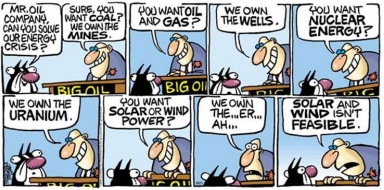
Mother Goose and Grimm cartoon, by Mike Peter
O texto seguinte servirá de base para responder a questão.
Mother Goose and Grimm cartoon, by Mike Peter
O texto seguinte servirá de base para responder a questão.
Mother Goose and Grimm cartoon, by Mike Peter
You want solar or wind power? are acceptable forms in colloquial English. In standard English, however, the word order of those sentences is applied for the affirmatives. The option with the correct interrogative word order is:
Biden administration, in its last days, proposes new protections for Arctic Alaska land
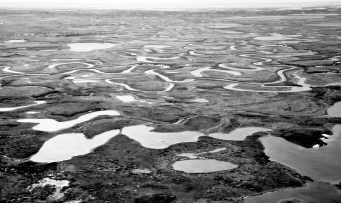
Lakes and connecting streams in the northeastern part of the National Petroleum Reserve in Alaska, June 2014.
Four days before President Joe Biden is set to leave office, his administration recommended that about 3 million more acres in Alaska's western Arctic be protected from development and issued a guideline, effective immediately, requiring additional protections for traditional Native subsistence harvests of fish, caribou and other resources.
The new recommendations and guidance, which apply to the 23-million-acre National Petroleum Reserve in Alaska, run counter to President-elect Donald Trump's expressed plans to expand oil drilling in the Arctic and elsewhere and to overturn Biden administration environmental policies more broadly.
The recommendations for additional land to be protected as part of what are termed "special areas" and the guidance for elevating the importance of subsistence and tribal consultation could be ignored or scrapped by the incoming Trump administration.
The northeastern part of the reserve is the area considered most likely to hold oil and where development has spread in recent years. There is already production in that area, and the most notable production expected in the future is from ConocoPhillips' Willow project. Willow won Biden administration approval in 2023. Production is expected to start by the end of the decade and peak at 180,000 barrels per day; current production from all North Slope fields amounts to less than 470,000 barrels per day.
Like the existing Teshekpuk special area, which holds important habitat for caribou, fish and migratory birds, the village of Nuiqsut is in the general area of the reserve's northeastern corner, where new oil development has occurred. Nuiqsut is so close that oilfield infrastructure can be seen from the village.
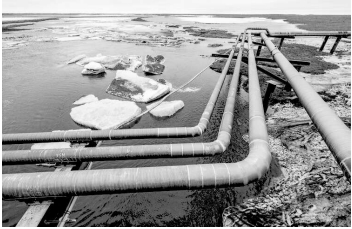
Pipelines extend across the landscape outside Nuiqsut, Alaska, May 2019.
"But at the same time, I think we and our partners have also made it abundantly clear that we're going to keep fighting, and keep fighting for protections in the Western Arctic," she said.
(From ROSEN, Yereth. Biden administration, in its last days, proposes new protections for Arctic Alaska land, Alaska Beacon, January 17, 2025. In
alaskabeacon.com/2025/01/17/biden-administration-in-its-last-days-pro poses-new-protections-for-arctic-alaska-land/, accessed on February 19th, 2025)
Biden administration, in its last days, proposes new protections for Arctic Alaska land
Lakes and connecting streams in the northeastern part of the National Petroleum Reserve in Alaska, June 2014.
Four days before President Joe Biden is set to leave office, his administration recommended that about 3 million more acres in Alaska's western Arctic be protected from development and issued a guideline, effective immediately, requiring additional protections for traditional Native subsistence harvests of fish, caribou and other resources.
The new recommendations and guidance, which apply to the 23-million-acre National Petroleum Reserve in Alaska, run counter to President-elect Donald Trump's expressed plans to expand oil drilling in the Arctic and elsewhere and to overturn Biden administration environmental policies more broadly.
The recommendations for additional land to be protected as part of what are termed "special areas" and the guidance for elevating the importance of subsistence and tribal consultation could be ignored or scrapped by the incoming Trump administration.
The northeastern part of the reserve is the area considered most likely to hold oil and where development has spread in recent years. There is already production in that area, and the most notable production expected in the future is from ConocoPhillips' Willow project. Willow won Biden administration approval in 2023. Production is expected to start by the end of the decade and peak at 180,000 barrels per day; current production from all North Slope fields amounts to less than 470,000 barrels per day.
Like the existing Teshekpuk special area, which holds important habitat for caribou, fish and migratory birds, the village of Nuiqsut is in the general area of the reserve's northeastern corner, where new oil development has occurred. Nuiqsut is so close that oilfield infrastructure can be seen from the village.
Pipelines extend across the landscape outside Nuiqsut, Alaska, May 2019.
"But at the same time, I think we and our partners have also made it abundantly clear that we're going to keep fighting, and keep fighting for protections in the Western Arctic," she said.
(From ROSEN, Yereth. Biden administration, in its last days, proposes new protections for Arctic Alaska land, Alaska Beacon, January 17, 2025. In
alaskabeacon.com/2025/01/17/biden-administration-in-its-last-days-pro poses-new-protections-for-arctic-alaska-land/, accessed on February 19th, 2025)
Biden administration, in its last days, proposes new protections for Arctic Alaska land
Lakes and connecting streams in the northeastern part of the National Petroleum Reserve in Alaska, June 2014.
Four days before President Joe Biden is set to leave office, his administration recommended that about 3 million more acres in Alaska's western Arctic be protected from development and issued a guideline, effective immediately, requiring additional protections for traditional Native subsistence harvests of fish, caribou and other resources.
The new recommendations and guidance, which apply to the 23-million-acre National Petroleum Reserve in Alaska, run counter to President-elect Donald Trump's expressed plans to expand oil drilling in the Arctic and elsewhere and to overturn Biden administration environmental policies more broadly.
The recommendations for additional land to be protected as part of what are termed "special areas" and the guidance for elevating the importance of subsistence and tribal consultation could be ignored or scrapped by the incoming Trump administration.
The northeastern part of the reserve is the area considered most likely to hold oil and where development has spread in recent years. There is already production in that area, and the most notable production expected in the future is from ConocoPhillips' Willow project. Willow won Biden administration approval in 2023. Production is expected to start by the end of the decade and peak at 180,000 barrels per day; current production from all North Slope fields amounts to less than 470,000 barrels per day.
Like the existing Teshekpuk special area, which holds important habitat for caribou, fish and migratory birds, the village of Nuiqsut is in the general area of the reserve's northeastern corner, where new oil development has occurred. Nuiqsut is so close that oilfield infrastructure can be seen from the village.
Pipelines extend across the landscape outside Nuiqsut, Alaska, May 2019.
"But at the same time, I think we and our partners have also made it abundantly clear that we're going to keep fighting, and keep fighting for protections in the Western Arctic," she said.
(From ROSEN, Yereth. Biden administration, in its last days, proposes new protections for Arctic Alaska land, Alaska Beacon, January 17, 2025. In
alaskabeacon.com/2025/01/17/biden-administration-in-its-last-days-pro poses-new-protections-for-arctic-alaska-land/, accessed on February 19th, 2025)
Biden administration, in its last days, proposes new protections for Arctic Alaska land
Lakes and connecting streams in the northeastern part of the National Petroleum Reserve in Alaska, June 2014.
Four days before President Joe Biden is set to leave office, his administration recommended that about 3 million more acres in Alaska's western Arctic be protected from development and issued a guideline, effective immediately, requiring additional protections for traditional Native subsistence harvests of fish, caribou and other resources.
The new recommendations and guidance, which apply to the 23-million-acre National Petroleum Reserve in Alaska, run counter to President-elect Donald Trump's expressed plans to expand oil drilling in the Arctic and elsewhere and to overturn Biden administration environmental policies more broadly.
The recommendations for additional land to be protected as part of what are termed "special areas" and the guidance for elevating the importance of subsistence and tribal consultation could be ignored or scrapped by the incoming Trump administration.
The northeastern part of the reserve is the area considered most likely to hold oil and where development has spread in recent years. There is already production in that area, and the most notable production expected in the future is from ConocoPhillips' Willow project. Willow won Biden administration approval in 2023. Production is expected to start by the end of the decade and peak at 180,000 barrels per day; current production from all North Slope fields amounts to less than 470,000 barrels per day.
Like the existing Teshekpuk special area, which holds important habitat for caribou, fish and migratory birds, the village of Nuiqsut is in the general area of the reserve's northeastern corner, where new oil development has occurred. Nuiqsut is so close that oilfield infrastructure can be seen from the village.
Pipelines extend across the landscape outside Nuiqsut, Alaska, May 2019.
"But at the same time, I think we and our partners have also made it abundantly clear that we're going to keep fighting, and keep fighting for protections in the Western Arctic," she said.
(From ROSEN, Yereth. Biden administration, in its last days, proposes new protections for Arctic Alaska land, Alaska Beacon, January 17, 2025. In
alaskabeacon.com/2025/01/17/biden-administration-in-its-last-days-pro poses-new-protections-for-arctic-alaska-land/, accessed on February 19th, 2025)
Biden administration, in its last days, proposes new protections for Arctic Alaska land
Lakes and connecting streams in the northeastern part of the National Petroleum Reserve in Alaska, June 2014.
Four days before President Joe Biden is set to leave office, his administration recommended that about 3 million more acres in Alaska's western Arctic be protected from development and issued a guideline, effective immediately, requiring additional protections for traditional Native subsistence harvests of fish, caribou and other resources.
The new recommendations and guidance, which apply to the 23-million-acre National Petroleum Reserve in Alaska, run counter to President-elect Donald Trump's expressed plans to expand oil drilling in the Arctic and elsewhere and to overturn Biden administration environmental policies more broadly.
The recommendations for additional land to be protected as part of what are termed "special areas" and the guidance for elevating the importance of subsistence and tribal consultation could be ignored or scrapped by the incoming Trump administration.
The northeastern part of the reserve is the area considered most likely to hold oil and where development has spread in recent years. There is already production in that area, and the most notable production expected in the future is from ConocoPhillips' Willow project. Willow won Biden administration approval in 2023. Production is expected to start by the end of the decade and peak at 180,000 barrels per day; current production from all North Slope fields amounts to less than 470,000 barrels per day.
Like the existing Teshekpuk special area, which holds important habitat for caribou, fish and migratory birds, the village of Nuiqsut is in the general area of the reserve's northeastern corner, where new oil development has occurred. Nuiqsut is so close that oilfield infrastructure can be seen from the village.
Pipelines extend across the landscape outside Nuiqsut, Alaska, May 2019.
"But at the same time, I think we and our partners have also made it abundantly clear that we're going to keep fighting, and keep fighting for protections in the Western Arctic," she said.
(From ROSEN, Yereth. Biden administration, in its last days, proposes new protections for Arctic Alaska land, Alaska Beacon, January 17, 2025. In
alaskabeacon.com/2025/01/17/biden-administration-in-its-last-days-pro poses-new-protections-for-arctic-alaska-land/, accessed on February 19th, 2025)

 Conheça nossos planos