Questões de Concurso
Para professor - inglês
Foram encontradas 31.244 questões
Resolva questões gratuitamente!
Junte-se a mais de 4 milhões de concurseiros!


Ano: 2023
Banca:
Avança SP
Órgão:
Prefeitura de Ubatuba - SP
Prova:
Avança SP - 2023 - Prefeitura de Ubatuba - SP - Professor de Educação Básica II - Inglês |
Q3556092
Inglês
Match the authors with their notable literary
works:
(I) William Shakespeare
(II) Charles Dickens
(III) James Joyce
(IV) Emily Bronte
(V) T. S. Eliot
A) "A Tale of Two Cities"
B) "Dubliners"
C) "The Wasteland"
D) "Romeo and Juliet"
E) "Wuthering Heights"
Choose the correct option that makes the appropriate association.
(I) William Shakespeare
(II) Charles Dickens
(III) James Joyce
(IV) Emily Bronte
(V) T. S. Eliot
A) "A Tale of Two Cities"
B) "Dubliners"
C) "The Wasteland"
D) "Romeo and Juliet"
E) "Wuthering Heights"
Choose the correct option that makes the appropriate association.
Ano: 2023
Banca:
Avança SP
Órgão:
Prefeitura de Ubatuba - SP
Prova:
Avança SP - 2023 - Prefeitura de Ubatuba - SP - Professor de Educação Básica II - Inglês |
Q3556091
Inglês
Choose the correct verb form to complete the
sentence: "The group of students _______
excited about the upcoming trip."
Ano: 2023
Banca:
Avança SP
Órgão:
Prefeitura de Ubatuba - SP
Prova:
Avança SP - 2023 - Prefeitura de Ubatuba - SP - Professor de Educação Básica II - Inglês |
Q3556090
Inglês
In the sentence "She will have finished her
homework by 6 PM," which verb tense is used
for the action?
Ano: 2023
Banca:
Avança SP
Órgão:
Prefeitura de Ubatuba - SP
Prova:
Avança SP - 2023 - Prefeitura de Ubatuba - SP - Professor de Educação Básica II - Inglês |
Q3556089
Inglês
The definite article is used before a noun to
indicate that the identity of the noun is known to
the reader. Which of the following is a definite
article?
Ano: 2023
Banca:
Avança SP
Órgão:
Prefeitura de Ubatuba - SP
Prova:
Avança SP - 2023 - Prefeitura de Ubatuba - SP - Professor de Educação Básica II - Inglês |
Q3556088
Inglês
Choose the correct preposition to complete the
sentence: "He's allergic _____ cats."
Ano: 2023
Banca:
Avança SP
Órgão:
Prefeitura de Ubatuba - SP
Prova:
Avança SP - 2023 - Prefeitura de Ubatuba - SP - Professor de Educação Básica II - Inglês |
Q3556087
Inglês
In the sentence "The book was read by John,"
which voice is being used?
Ano: 2023
Banca:
Avança SP
Órgão:
Prefeitura de Ubatuba - SP
Prova:
Avança SP - 2023 - Prefeitura de Ubatuba - SP - Professor de Educação Básica II - Inglês |
Q3556086
Inglês
When teaching English reading comprehension,
what should instructors emphasize to help
students better understand the structure and
organization of texts?
Ano: 2023
Banca:
Avança SP
Órgão:
Prefeitura de Ubatuba - SP
Prova:
Avança SP - 2023 - Prefeitura de Ubatuba - SP - Professor de Educação Básica II - Inglês |
Q3556085
Pedagogia
What is one key theoretical concept that underlies
the teaching and learning of the English language,
emphasizing the importance of students' prior
knowledge and experiences?
Ano: 2023
Banca:
Avança SP
Órgão:
Prefeitura de Ubatuba - SP
Prova:
Avança SP - 2023 - Prefeitura de Ubatuba - SP - Professor de Educação Básica II - Inglês |
Q3556084
Inglês
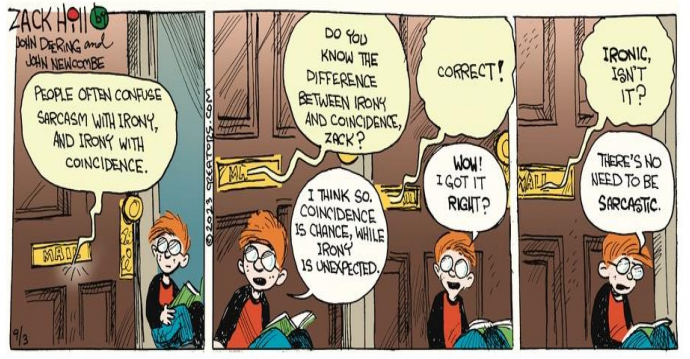 Zack Hill by John Deering and John Newcombe for September 03, 2023
What does Zack Hill accuse the mailbox of when it responds with "Ironic, isn't it?" in the comic strip?
Ano: 2023
Banca:
Avança SP
Órgão:
Prefeitura de Ubatuba - SP
Prova:
Avança SP - 2023 - Prefeitura de Ubatuba - SP - Professor de Educação Básica II - Inglês |
Q3556083
Inglês
Texto associado
Read the text to answer question.
“Once upon a midnight dreary, while I pondered,
weak and weary,
Over many a quaint and curious volume of
forgotten lore,
While I nodded, nearly napping, suddenly there
came a tapping,
As of someone gently rapping, rapping at my
chamber door.
Tis some visitor," I muttered, "tapping at my
chamber door —
Only this, and nothing more."
Ah, distinctly I remember it was in the bleak
December,
And each separate dying ember wrought its ghost
upon the floor.
Eagerly I wished the morrow; — vainly I had
sought to borrow
From my books surcease of sorrow — sorrow for
the lost Lenore —
For the rare and radiant maiden whom the angels
name Lenore —
Nameless here for evermore.
And the silken sad uncertain rustling of each
purple curtain
Thrilled me — filled me with fantastic terrors
never felt before;
So that now, to still the beating of my heart, I
stood repeating,
Tis some visitor entreating entrance at my
chamber door —
Some late visitor entreating entrance at my
chamber door; —
This is it, and nothing more."
Presently my soul grew stronger; hesitating
then no longer,
Sir," said I, "or Madam, truly your forgiveness I
implore;
But the fact is I was napping, and so gently you
came rapping,
And so faintly you came tapping, tapping at my
chamber door,
That I scarce was sure I heard you"— here I
opened wide the door; —
Darkness there, and nothing more.
Deep into that darkness peering, long I
stood there wondering, fearing,
Doubting, dreaming dreams no mortals ever
dared to dream before;
But the silence was unbroken, and the stillness
gave no token,
And the only word there spoken was the
whispered word, "Lenore?"
This I whispered, and an echo murmured back the
word, "Lenore!" —
Merely this, and nothing more.
Back into the chamber turning, all my soul
within me burning,
Soon again I heard a tapping somewhat louder
than before.
Surely," said I, "surely that is something at my
window lattice:
Let me see, then, what thereat is, and this mystery
explore —
Let my heart be still a moment and this mystery
explore; —
'Tis the wind and nothing more."
Open here I flung the shutter, when, with
many a flirt and flutter,
In there stepped a stately raven of the saintly days
of yore;
Not the least obeisance made he;
not a minute
stopped or stayed he;
But, with mien of lord or lady, perched above my
chamber door —
Perched upon a bust of Pallas just above my
chamber door —
Perched, and sat, and nothing more.
Then this ebony bird beguiling my sad
fancy into smiling,
By the grave and stern decorum of the
countenance it wore.
Though thy crest be shorn and shaven, thou," I
said, "art sure no craven,
Ghastly grim and ancient raven wandering from
the Nightly shore —
Tell me what thy lordly name is on the Night's
Plutonian shore!"
Quoth the Raven, "Nevermore."
Much I marveled this ungainly fowl to hear
discourse so plainly,
Though its answer little meaning— little
relevancy bore;
For we cannot help agreeing that no living human
being
Ever yet was blest with seeing bird above his
chamber door —
Bird or beast upon the sculptured bust above his
chamber door,
With such name as "Nevermore.”
― Edgar Allan Poe, The Raven
What is the ultimate effect of the raven on the narrator?
Ano: 2023
Banca:
Avança SP
Órgão:
Prefeitura de Ubatuba - SP
Prova:
Avança SP - 2023 - Prefeitura de Ubatuba - SP - Professor de Educação Básica II - Inglês |
Q3556082
Inglês
Texto associado
Read the text to answer question.
“Once upon a midnight dreary, while I pondered,
weak and weary,
Over many a quaint and curious volume of
forgotten lore,
While I nodded, nearly napping, suddenly there
came a tapping,
As of someone gently rapping, rapping at my
chamber door.
Tis some visitor," I muttered, "tapping at my
chamber door —
Only this, and nothing more."
Ah, distinctly I remember it was in the bleak
December,
And each separate dying ember wrought its ghost
upon the floor.
Eagerly I wished the morrow; — vainly I had
sought to borrow
From my books surcease of sorrow — sorrow for
the lost Lenore —
For the rare and radiant maiden whom the angels
name Lenore —
Nameless here for evermore.
And the silken sad uncertain rustling of each
purple curtain
Thrilled me — filled me with fantastic terrors
never felt before;
So that now, to still the beating of my heart, I
stood repeating,
Tis some visitor entreating entrance at my
chamber door —
Some late visitor entreating entrance at my
chamber door; —
This is it, and nothing more."
Presently my soul grew stronger; hesitating
then no longer,
Sir," said I, "or Madam, truly your forgiveness I
implore;
But the fact is I was napping, and so gently you
came rapping,
And so faintly you came tapping, tapping at my
chamber door,
That I scarce was sure I heard you"— here I
opened wide the door; —
Darkness there, and nothing more.
Deep into that darkness peering, long I
stood there wondering, fearing,
Doubting, dreaming dreams no mortals ever
dared to dream before;
But the silence was unbroken, and the stillness
gave no token,
And the only word there spoken was the
whispered word, "Lenore?"
This I whispered, and an echo murmured back the
word, "Lenore!" —
Merely this, and nothing more.
Back into the chamber turning, all my soul
within me burning,
Soon again I heard a tapping somewhat louder
than before.
Surely," said I, "surely that is something at my
window lattice:
Let me see, then, what thereat is, and this mystery
explore —
Let my heart be still a moment and this mystery
explore; —
'Tis the wind and nothing more."
Open here I flung the shutter, when, with
many a flirt and flutter,
In there stepped a stately raven of the saintly days
of yore;
Not the least obeisance made he;
not a minute
stopped or stayed he;
But, with mien of lord or lady, perched above my
chamber door —
Perched upon a bust of Pallas just above my
chamber door —
Perched, and sat, and nothing more.
Then this ebony bird beguiling my sad
fancy into smiling,
By the grave and stern decorum of the
countenance it wore.
Though thy crest be shorn and shaven, thou," I
said, "art sure no craven,
Ghastly grim and ancient raven wandering from
the Nightly shore —
Tell me what thy lordly name is on the Night's
Plutonian shore!"
Quoth the Raven, "Nevermore."
Much I marveled this ungainly fowl to hear
discourse so plainly,
Though its answer little meaning— little
relevancy bore;
For we cannot help agreeing that no living human
being
Ever yet was blest with seeing bird above his
chamber door —
Bird or beast upon the sculptured bust above his
chamber door,
With such name as "Nevermore.”
― Edgar Allan Poe, The Raven
How does the narrator feel when the raven enters his chamber?
Ano: 2023
Banca:
Avança SP
Órgão:
Prefeitura de Ubatuba - SP
Prova:
Avança SP - 2023 - Prefeitura de Ubatuba - SP - Professor de Educação Básica II - Inglês |
Q3556081
Inglês
Texto associado
Read the text to answer question.
“Once upon a midnight dreary, while I pondered,
weak and weary,
Over many a quaint and curious volume of
forgotten lore,
While I nodded, nearly napping, suddenly there
came a tapping,
As of someone gently rapping, rapping at my
chamber door.
Tis some visitor," I muttered, "tapping at my
chamber door —
Only this, and nothing more."
Ah, distinctly I remember it was in the bleak
December,
And each separate dying ember wrought its ghost
upon the floor.
Eagerly I wished the morrow; — vainly I had
sought to borrow
From my books surcease of sorrow — sorrow for
the lost Lenore —
For the rare and radiant maiden whom the angels
name Lenore —
Nameless here for evermore.
And the silken sad uncertain rustling of each
purple curtain
Thrilled me — filled me with fantastic terrors
never felt before;
So that now, to still the beating of my heart, I
stood repeating,
Tis some visitor entreating entrance at my
chamber door —
Some late visitor entreating entrance at my
chamber door; —
This is it, and nothing more."
Presently my soul grew stronger; hesitating
then no longer,
Sir," said I, "or Madam, truly your forgiveness I
implore;
But the fact is I was napping, and so gently you
came rapping,
And so faintly you came tapping, tapping at my
chamber door,
That I scarce was sure I heard you"— here I
opened wide the door; —
Darkness there, and nothing more.
Deep into that darkness peering, long I
stood there wondering, fearing,
Doubting, dreaming dreams no mortals ever
dared to dream before;
But the silence was unbroken, and the stillness
gave no token,
And the only word there spoken was the
whispered word, "Lenore?"
This I whispered, and an echo murmured back the
word, "Lenore!" —
Merely this, and nothing more.
Back into the chamber turning, all my soul
within me burning,
Soon again I heard a tapping somewhat louder
than before.
Surely," said I, "surely that is something at my
window lattice:
Let me see, then, what thereat is, and this mystery
explore —
Let my heart be still a moment and this mystery
explore; —
'Tis the wind and nothing more."
Open here I flung the shutter, when, with
many a flirt and flutter,
In there stepped a stately raven of the saintly days
of yore;
Not the least obeisance made he;
not a minute
stopped or stayed he;
But, with mien of lord or lady, perched above my
chamber door —
Perched upon a bust of Pallas just above my
chamber door —
Perched, and sat, and nothing more.
Then this ebony bird beguiling my sad
fancy into smiling,
By the grave and stern decorum of the
countenance it wore.
Though thy crest be shorn and shaven, thou," I
said, "art sure no craven,
Ghastly grim and ancient raven wandering from
the Nightly shore —
Tell me what thy lordly name is on the Night's
Plutonian shore!"
Quoth the Raven, "Nevermore."
Much I marveled this ungainly fowl to hear
discourse so plainly,
Though its answer little meaning— little
relevancy bore;
For we cannot help agreeing that no living human
being
Ever yet was blest with seeing bird above his
chamber door —
Bird or beast upon the sculptured bust above his
chamber door,
With such name as "Nevermore.”
― Edgar Allan Poe, The Raven
Which literary element contributes to the dark
atmosphere of the poem?
Ano: 2023
Banca:
Avança SP
Órgão:
Prefeitura de Ubatuba - SP
Prova:
Avança SP - 2023 - Prefeitura de Ubatuba - SP - Professor de Educação Básica II - Inglês |
Q3556080
Inglês
Texto associado
Read the text to answer question.
“Once upon a midnight dreary, while I pondered,
weak and weary,
Over many a quaint and curious volume of
forgotten lore,
While I nodded, nearly napping, suddenly there
came a tapping,
As of someone gently rapping, rapping at my
chamber door.
Tis some visitor," I muttered, "tapping at my
chamber door —
Only this, and nothing more."
Ah, distinctly I remember it was in the bleak
December,
And each separate dying ember wrought its ghost
upon the floor.
Eagerly I wished the morrow; — vainly I had
sought to borrow
From my books surcease of sorrow — sorrow for
the lost Lenore —
For the rare and radiant maiden whom the angels
name Lenore —
Nameless here for evermore.
And the silken sad uncertain rustling of each
purple curtain
Thrilled me — filled me with fantastic terrors
never felt before;
So that now, to still the beating of my heart, I
stood repeating,
Tis some visitor entreating entrance at my
chamber door —
Some late visitor entreating entrance at my
chamber door; —
This is it, and nothing more."
Presently my soul grew stronger; hesitating
then no longer,
Sir," said I, "or Madam, truly your forgiveness I
implore;
But the fact is I was napping, and so gently you
came rapping,
And so faintly you came tapping, tapping at my
chamber door,
That I scarce was sure I heard you"— here I
opened wide the door; —
Darkness there, and nothing more.
Deep into that darkness peering, long I
stood there wondering, fearing,
Doubting, dreaming dreams no mortals ever
dared to dream before;
But the silence was unbroken, and the stillness
gave no token,
And the only word there spoken was the
whispered word, "Lenore?"
This I whispered, and an echo murmured back the
word, "Lenore!" —
Merely this, and nothing more.
Back into the chamber turning, all my soul
within me burning,
Soon again I heard a tapping somewhat louder
than before.
Surely," said I, "surely that is something at my
window lattice:
Let me see, then, what thereat is, and this mystery
explore —
Let my heart be still a moment and this mystery
explore; —
'Tis the wind and nothing more."
Open here I flung the shutter, when, with
many a flirt and flutter,
In there stepped a stately raven of the saintly days
of yore;
Not the least obeisance made he;
not a minute
stopped or stayed he;
But, with mien of lord or lady, perched above my
chamber door —
Perched upon a bust of Pallas just above my
chamber door —
Perched, and sat, and nothing more.
Then this ebony bird beguiling my sad
fancy into smiling,
By the grave and stern decorum of the
countenance it wore.
Though thy crest be shorn and shaven, thou," I
said, "art sure no craven,
Ghastly grim and ancient raven wandering from
the Nightly shore —
Tell me what thy lordly name is on the Night's
Plutonian shore!"
Quoth the Raven, "Nevermore."
Much I marveled this ungainly fowl to hear
discourse so plainly,
Though its answer little meaning— little
relevancy bore;
For we cannot help agreeing that no living human
being
Ever yet was blest with seeing bird above his
chamber door —
Bird or beast upon the sculptured bust above his
chamber door,
With such name as "Nevermore.”
― Edgar Allan Poe, The Raven
What is the emotional state of the narrator at the
beginning of the poem?
Ano: 2023
Banca:
Avança SP
Órgão:
Prefeitura de Ubatuba - SP
Prova:
Avança SP - 2023 - Prefeitura de Ubatuba - SP - Professor de Educação Básica II - Inglês |
Q3556079
Inglês
Texto associado
Read the text to answer question.
“Once upon a midnight dreary, while I pondered,
weak and weary,
Over many a quaint and curious volume of
forgotten lore,
While I nodded, nearly napping, suddenly there
came a tapping,
As of someone gently rapping, rapping at my
chamber door.
Tis some visitor," I muttered, "tapping at my
chamber door —
Only this, and nothing more."
Ah, distinctly I remember it was in the bleak
December,
And each separate dying ember wrought its ghost
upon the floor.
Eagerly I wished the morrow; — vainly I had
sought to borrow
From my books surcease of sorrow — sorrow for
the lost Lenore —
For the rare and radiant maiden whom the angels
name Lenore —
Nameless here for evermore.
And the silken sad uncertain rustling of each
purple curtain
Thrilled me — filled me with fantastic terrors
never felt before;
So that now, to still the beating of my heart, I
stood repeating,
Tis some visitor entreating entrance at my
chamber door —
Some late visitor entreating entrance at my
chamber door; —
This is it, and nothing more."
Presently my soul grew stronger; hesitating
then no longer,
Sir," said I, "or Madam, truly your forgiveness I
implore;
But the fact is I was napping, and so gently you
came rapping,
And so faintly you came tapping, tapping at my
chamber door,
That I scarce was sure I heard you"— here I
opened wide the door; —
Darkness there, and nothing more.
Deep into that darkness peering, long I
stood there wondering, fearing,
Doubting, dreaming dreams no mortals ever
dared to dream before;
But the silence was unbroken, and the stillness
gave no token,
And the only word there spoken was the
whispered word, "Lenore?"
This I whispered, and an echo murmured back the
word, "Lenore!" —
Merely this, and nothing more.
Back into the chamber turning, all my soul
within me burning,
Soon again I heard a tapping somewhat louder
than before.
Surely," said I, "surely that is something at my
window lattice:
Let me see, then, what thereat is, and this mystery
explore —
Let my heart be still a moment and this mystery
explore; —
'Tis the wind and nothing more."
Open here I flung the shutter, when, with
many a flirt and flutter,
In there stepped a stately raven of the saintly days
of yore;
Not the least obeisance made he;
not a minute
stopped or stayed he;
But, with mien of lord or lady, perched above my
chamber door —
Perched upon a bust of Pallas just above my
chamber door —
Perched, and sat, and nothing more.
Then this ebony bird beguiling my sad
fancy into smiling,
By the grave and stern decorum of the
countenance it wore.
Though thy crest be shorn and shaven, thou," I
said, "art sure no craven,
Ghastly grim and ancient raven wandering from
the Nightly shore —
Tell me what thy lordly name is on the Night's
Plutonian shore!"
Quoth the Raven, "Nevermore."
Much I marveled this ungainly fowl to hear
discourse so plainly,
Though its answer little meaning— little
relevancy bore;
For we cannot help agreeing that no living human
being
Ever yet was blest with seeing bird above his
chamber door —
Bird or beast upon the sculptured bust above his
chamber door,
With such name as "Nevermore.”
― Edgar Allan Poe, The Raven
What effect does the repetition of the word
"Nevermore" have in the poem "The Raven"?
Ano: 2023
Banca:
Avança SP
Órgão:
Prefeitura de Ubatuba - SP
Prova:
Avança SP - 2023 - Prefeitura de Ubatuba - SP - Professor de Educação Básica II - Inglês |
Q3556078
Inglês
Texto associado
Read the text to answer question.
“Once upon a midnight dreary, while I pondered,
weak and weary,
Over many a quaint and curious volume of
forgotten lore,
While I nodded, nearly napping, suddenly there
came a tapping,
As of someone gently rapping, rapping at my
chamber door.
Tis some visitor," I muttered, "tapping at my
chamber door —
Only this, and nothing more."
Ah, distinctly I remember it was in the bleak
December,
And each separate dying ember wrought its ghost
upon the floor.
Eagerly I wished the morrow; — vainly I had
sought to borrow
From my books surcease of sorrow — sorrow for
the lost Lenore —
For the rare and radiant maiden whom the angels
name Lenore —
Nameless here for evermore.
And the silken sad uncertain rustling of each
purple curtain
Thrilled me — filled me with fantastic terrors
never felt before;
So that now, to still the beating of my heart, I
stood repeating,
Tis some visitor entreating entrance at my
chamber door —
Some late visitor entreating entrance at my
chamber door; —
This is it, and nothing more."
Presently my soul grew stronger; hesitating
then no longer,
Sir," said I, "or Madam, truly your forgiveness I
implore;
But the fact is I was napping, and so gently you
came rapping,
And so faintly you came tapping, tapping at my
chamber door,
That I scarce was sure I heard you"— here I
opened wide the door; —
Darkness there, and nothing more.
Deep into that darkness peering, long I
stood there wondering, fearing,
Doubting, dreaming dreams no mortals ever
dared to dream before;
But the silence was unbroken, and the stillness
gave no token,
And the only word there spoken was the
whispered word, "Lenore?"
This I whispered, and an echo murmured back the
word, "Lenore!" —
Merely this, and nothing more.
Back into the chamber turning, all my soul
within me burning,
Soon again I heard a tapping somewhat louder
than before.
Surely," said I, "surely that is something at my
window lattice:
Let me see, then, what thereat is, and this mystery
explore —
Let my heart be still a moment and this mystery
explore; —
'Tis the wind and nothing more."
Open here I flung the shutter, when, with
many a flirt and flutter,
In there stepped a stately raven of the saintly days
of yore;
Not the least obeisance made he;
not a minute
stopped or stayed he;
But, with mien of lord or lady, perched above my
chamber door —
Perched upon a bust of Pallas just above my
chamber door —
Perched, and sat, and nothing more.
Then this ebony bird beguiling my sad
fancy into smiling,
By the grave and stern decorum of the
countenance it wore.
Though thy crest be shorn and shaven, thou," I
said, "art sure no craven,
Ghastly grim and ancient raven wandering from
the Nightly shore —
Tell me what thy lordly name is on the Night's
Plutonian shore!"
Quoth the Raven, "Nevermore."
Much I marveled this ungainly fowl to hear
discourse so plainly,
Though its answer little meaning— little
relevancy bore;
For we cannot help agreeing that no living human
being
Ever yet was blest with seeing bird above his
chamber door —
Bird or beast upon the sculptured bust above his
chamber door,
With such name as "Nevermore.”
― Edgar Allan Poe, The Raven
What is the central theme of Edgar Allan Poe's
poem "The Raven"?
Ano: 2023
Banca:
Avança SP
Órgão:
Prefeitura de Ubatuba - SP
Provas:
Avança SP - 2023 - Prefeitura de Ubatuba - SP - Professor de Educação Básica II - Geografia
|
Avança SP - 2023 - Prefeitura de Ubatuba - SP - Professor de Educação Básica II - Inglês |
Avança SP - 2023 - Prefeitura de Ubatuba - SP - Professor de Educação Básica II - Matemática |
Q3555932
Pedagogia
De acordo com a Resolução CNE/CEB 05/2009
– Diretrizes Curriculares Nacionais para a
Educação Infantil. Brasília: CNE, 2009. Assinale
a alternativa incorreta.
Ano: 2023
Banca:
Avança SP
Órgão:
Prefeitura de Ubatuba - SP
Provas:
Avança SP - 2023 - Prefeitura de Ubatuba - SP - Professor de Educação Básica II - Geografia
|
Avança SP - 2023 - Prefeitura de Ubatuba - SP - Professor de Educação Básica II - Inglês |
Avança SP - 2023 - Prefeitura de Ubatuba - SP - Professor de Educação Básica II - Matemática |
Q3555931
Pedagogia
De acordo com Resolução CNE/CEB 07/2010 –
Diretrizes Curriculares Nacionais para o Ensino
Fundamental de 9 (nove) anos. Brasília: CNE,
2010. Analise as afirmativas abaixo atribuindo
(V) para Verdadeira e (F) para Falsa, em seguida
assinale a alternativa com a sequência correta.
( ) O Ensino Fundamental se traduz como um direito público objetivo de cada um e como dever do Estado e da família na sua oferta a todos.
( ) É dever do Estado garantir a oferta do Ensino Fundamental privado, gratuito e de qualidade, sem requisito de seleção.
( ) A educação de qualidade, como um direito fundamental, é, antes de tudo, relevante, pertinente e equitativa.
( ) O Ensino Fundamental se traduz como um direito público objetivo de cada um e como dever do Estado e da família na sua oferta a todos.
( ) É dever do Estado garantir a oferta do Ensino Fundamental privado, gratuito e de qualidade, sem requisito de seleção.
( ) A educação de qualidade, como um direito fundamental, é, antes de tudo, relevante, pertinente e equitativa.
Ano: 2023
Banca:
Avança SP
Órgão:
Prefeitura de Ubatuba - SP
Provas:
Avança SP - 2023 - Prefeitura de Ubatuba - SP - Professor de Educação Básica II - Geografia
|
Avança SP - 2023 - Prefeitura de Ubatuba - SP - Professor de Educação Básica II - Inglês |
Avança SP - 2023 - Prefeitura de Ubatuba - SP - Professor de Educação Básica II - Matemática |
Q3555930
Pedagogia
De acordo com a Lei de Diretrizes e Bases da
Educação Nacional, analise os itens a seguir.
I - O dever do Estado com educação escolar pública será efetivado mediante a garantia de educação básica obrigatória e gratuita dos 4 (quatro) aos 17 (dezessete) anos de idade.
II - O poder público, na esfera de sua competência federativa, deverá recensear anualmente as crianças e adolescentes em idade escolar, bem como os jovens e adultos que não concluíram a educação básica.
III - Para garantir o cumprimento da obrigatoriedade de ensino, o Poder Público criará formas alternativas de acesso aos diferentes níveis de ensino, independentemente da escolarização anterior.
IV - Os estabelecimentos de ensino, respeitadas as normas comuns e as do seu sistema de ensino, terão a incumbência de elaborar e executar sua proposta pedagógica.
Estão corretas as assertivas:
I - O dever do Estado com educação escolar pública será efetivado mediante a garantia de educação básica obrigatória e gratuita dos 4 (quatro) aos 17 (dezessete) anos de idade.
II - O poder público, na esfera de sua competência federativa, deverá recensear anualmente as crianças e adolescentes em idade escolar, bem como os jovens e adultos que não concluíram a educação básica.
III - Para garantir o cumprimento da obrigatoriedade de ensino, o Poder Público criará formas alternativas de acesso aos diferentes níveis de ensino, independentemente da escolarização anterior.
IV - Os estabelecimentos de ensino, respeitadas as normas comuns e as do seu sistema de ensino, terão a incumbência de elaborar e executar sua proposta pedagógica.
Estão corretas as assertivas:
Ano: 2023
Banca:
Avança SP
Órgão:
Prefeitura de Ubatuba - SP
Provas:
Avança SP - 2023 - Prefeitura de Ubatuba - SP - Professor de Educação Básica II - Geografia
|
Avança SP - 2023 - Prefeitura de Ubatuba - SP - Professor de Educação Básica II - Inglês |
Avança SP - 2023 - Prefeitura de Ubatuba - SP - Professor de Educação Básica II - Matemática |
Q3555929
Direito Constitucional
Analise os itens a seguir de acordo Constituição
Federal/88 e assinale a alternativa correta.
I – A educação, direito de todos e dever do Estado e da família, será promovida e incentivada com a colaboração da sociedade, visando ao pleno desenvolvimento da pessoa, seu preparo para o exercício da cidadania e sua qualificação para o trabalho.
II – A União aplicará, anualmente, nunca menos de doze, e os Estados, o Distrito Federal e os Municípios vinte e cinco por cento, no mínimo, da receita resultante de impostos, compreendida a proveniente de transferências, na manutenção e desenvolvimento do ensino.
I – A educação, direito de todos e dever do Estado e da família, será promovida e incentivada com a colaboração da sociedade, visando ao pleno desenvolvimento da pessoa, seu preparo para o exercício da cidadania e sua qualificação para o trabalho.
II – A União aplicará, anualmente, nunca menos de doze, e os Estados, o Distrito Federal e os Municípios vinte e cinco por cento, no mínimo, da receita resultante de impostos, compreendida a proveniente de transferências, na manutenção e desenvolvimento do ensino.
Ano: 2023
Banca:
Avança SP
Órgão:
Prefeitura de Ubatuba - SP
Provas:
Avança SP - 2023 - Prefeitura de Ubatuba - SP - Professor de Educação Básica II - Geografia
|
Avança SP - 2023 - Prefeitura de Ubatuba - SP - Professor de Educação Básica II - Inglês |
Avança SP - 2023 - Prefeitura de Ubatuba - SP - Professor de Educação Básica II - Matemática |
Q3555928
Direito da Criança e do Adolescente - Estatuto da Criança e do Adolescente (ECA) - Lei nº 8.069 de 1990
Assinale a alternativa incorreta de acordo
Estatuto da Criança e do Adolescente.

 Conheça nossos planos