Foram encontradas 1.666 questões
Resolva questões gratuitamente!
Junte-se a mais de 4 milhões de concurseiros!


As técnicas de plantio impactam de diferentes formas o solo, sendo que algumas conservam mais as características físicas do solo e devem ser aplicadas. Considere as recomendações de I a V.
I. Adubo verde não deve ser usado em áreas de cultivo intensivo, pois há maior uso de arado, grade em implementos para seu plantio aumenta a compactação do solo.
II. Grade pesada provoca a quebra da camada compactada em subsuperfície chamada "pede-grade".
III. Plantio direto é recomendado mesmo com a aplicação de herbicidas.
IV. Crotalária não deve ser usada como adubo verde em lavouras de milho mecanizada, pois suas sementes se misturam aos grãos colhidos por colheitadeiras de plataforma.
V. Capina com enxada rotativa deve ser evitado por facilitar a erosão devido a desagregação de partículas.
São recomendações para o preparo do solo APENAS:
Uma das opções para a produção de energia a baixo custo nas áreas rurais é o biogás. Apesar de ser conhecido há muito tempo, só mais recentemente os processos de obtenção de biogás vêm se desenvolvendo.
As figuras abaixo apresentam 2 tipos de biodigestores.
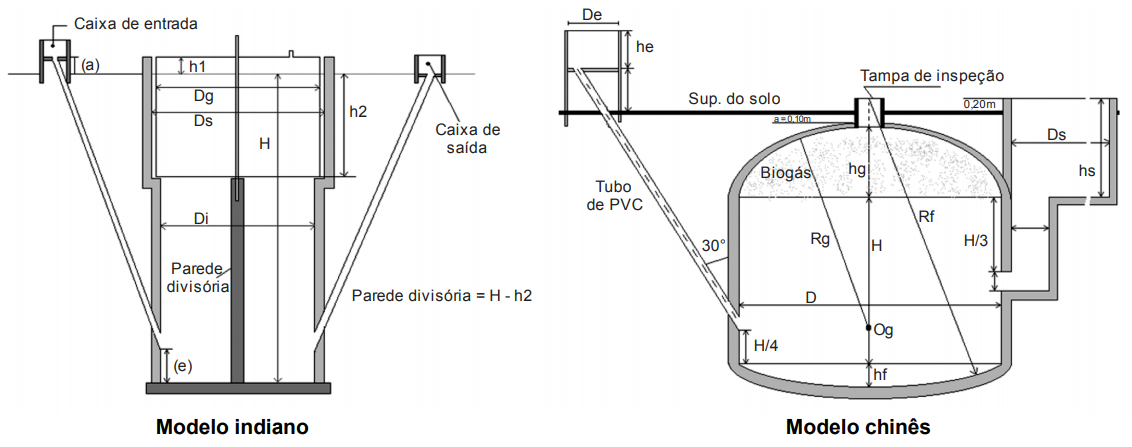
O modelo
A Legislação Federal (Lei no 9.974/2000 e Decreto no 4.074/2002) determina que a destinação correta das embalagens vazias de defensivos agrícolas cabe a todos os agentes atuantes na produção agrícola: agricultores, canais de distribuição/cooperativas, indústria fabricante e poder público.
As embalagens de defensivos agrícolas são classificadas em dois grandes grupos: laváveis e não laváveis. As embalagens laváveis são rígidas (plásticas, metálicas ou de vidro) e servem para acondicionar formulações líquidas para serem diluídas em água.
As embalagens plásticas rígidas vazias de defensivos agrícolas colocadas no mercado são as do tipo lavável e podem ser recicladas, desde que corretamente limpas. O Instituto Nacional de Processamento de Embalagens Vazias (Inpev) instrui que:
Considere as figuras A, B e C que representam três aparelhos digestivos.
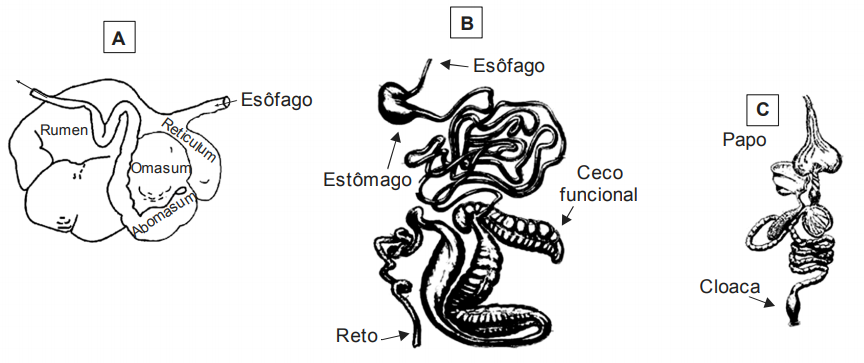
Com base nas estruturas indicadas em cada figura, considere as correlações entre os aparelhos digestivos A, B, e C e os animais indicados a seguir:
I. A-búfalo; B-coelho; C-pato
II. A-herbívoro; B-lhama; C-cabra
III. A-boi; B-muar; C-galinha
IV. A-onívoro; B-herbívoro; C-coelho
Está correto o que se relaciona APENAS em
Atenção: Para responder à questão, considere a descrição de sistemas de senhas abaixo.
− Cada senha, do sistema de senhas J, é formada por duas letras dentre as 10 primeiras letras do alfabeto seguidas de três algarismos ímpares.
− Cada senha, do sistema de senhas K, é formada por três letras vogais seguidas de dois algarismos diferentes.
− Cada senha, do sistema de senhas L, é formada por uma letra dentre as dez primeiras consoantes, seguida por duas letras vogais diferentes e ainda seguidas por dois algarismos diferentes dentre os oito primeiros algarismos.
Donald Trump on Monday proposed collapsing the federal income tax rate from seven brackets down to three and called for allowing child-care expenses to be exempt from taxation in a speech allies hope will help the GOP presidential nominee turn the page on a tumultuous period some Republicans fear has severely damaged his campaign.
Overall, Trump offered few new details behind his economic vision, which he unveiled as a candidate last year. One notable exception was his call to enable families to "fully deduct" child-care expenses from their taxes. Some such expenses are already deductible; experts say that the additional amounts will largely benefit middle- and upper middle-class families.
On tax rates, business mogul said he would work with House Republicans and use the same three brackets they have proposed: 12 percent, 25 percent and 33 percent. Previously, Trump proposed tax brackets of 0 percent, 10 percent, 20 percent and 25 percent.
"For many American workers, their tax rate will be zero," said Trump.
The GOP nominee continued to leave large question marks about how he would pay for his plans and avoid ballooning the federal budget deficit. He included no new details on how he would limit the cost of his tax reform plan, which analysts have estimated would reduce federal revenues by as much as $10 trillion over a decade. His child-care expense plan would presumably raise that cost even further.
Trump released a tax plan last year that would reduce the top income tax rate from 39.6 percent to 25 percent and bring down the top corporate rate from 35 percent to 15 percent. The plan would eliminate the estate tax and reduce tax rates to 10 percent for households earning $100,000 or less.
Trump also did not spell out any federal spending cuts. In his remarks, Trump said he would offer more details in the coming weeks.
(Adapted from https://www.washingtonpost.com/news/post-politics/wp/2016/08/08/trump-to-call-for-excluding-child-care-costs-from-taxation-as- hetries-to-turn-the-page-on-a-bruising-week/?wpisrc=nl_evening&wpmm=1)
Donald Trump on Monday proposed collapsing the federal income tax rate from seven brackets down to three and called for allowing child-care expenses to be exempt from taxation in a speech allies hope will help the GOP presidential nominee turn the page on a tumultuous period some Republicans fear has severely damaged his campaign.
Overall, Trump offered few new details behind his economic vision, which he unveiled as a candidate last year. One notable exception was his call to enable families to "fully deduct" child-care expenses from their taxes. Some such expenses are already deductible; experts say that the additional amounts will largely benefit middle- and upper middle-class families.
On tax rates, business mogul said he would work with House Republicans and use the same three brackets they have proposed: 12 percent, 25 percent and 33 percent. Previously, Trump proposed tax brackets of 0 percent, 10 percent, 20 percent and 25 percent.
"For many American workers, their tax rate will be zero," said Trump.
The GOP nominee continued to leave large question marks about how he would pay for his plans and avoid ballooning the federal budget deficit. He included no new details on how he would limit the cost of his tax reform plan, which analysts have estimated would reduce federal revenues by as much as $10 trillion over a decade. His child-care expense plan would presumably raise that cost even further.
Trump released a tax plan last year that would reduce the top income tax rate from 39.6 percent to 25 percent and bring down the top corporate rate from 35 percent to 15 percent. The plan would eliminate the estate tax and reduce tax rates to 10 percent for households earning $100,000 or less.
Trump also did not spell out any federal spending cuts. In his remarks, Trump said he would offer more details in the coming weeks.
(Adapted from https://www.washingtonpost.com/news/post-politics/wp/2016/08/08/trump-to-call-for-excluding-child-care-costs-from-taxation-as- hetries-to-turn-the-page-on-a-bruising-week/?wpisrc=nl_evening&wpmm=1)
Donald Trump on Monday proposed collapsing the federal income tax rate from seven brackets down to three and called for allowing child-care expenses to be exempt from taxation in a speech allies hope will help the GOP presidential nominee turn the page on a tumultuous period some Republicans fear has severely damaged his campaign.
Overall, Trump offered few new details behind his economic vision, which he unveiled as a candidate last year. One notable exception was his call to enable families to "fully deduct" child-care expenses from their taxes. Some such expenses are already deductible; experts say that the additional amounts will largely benefit middle- and upper middle-class families.
On tax rates, business mogul said he would work with House Republicans and use the same three brackets they have proposed: 12 percent, 25 percent and 33 percent. Previously, Trump proposed tax brackets of 0 percent, 10 percent, 20 percent and 25 percent.
"For many American workers, their tax rate will be zero," said Trump.
The GOP nominee continued to leave large question marks about how he would pay for his plans and avoid ballooning the federal budget deficit. He included no new details on how he would limit the cost of his tax reform plan, which analysts have estimated would reduce federal revenues by as much as $10 trillion over a decade. His child-care expense plan would presumably raise that cost even further.
Trump released a tax plan last year that would reduce the top income tax rate from 39.6 percent to 25 percent and bring down the top corporate rate from 35 percent to 15 percent. The plan would eliminate the estate tax and reduce tax rates to 10 percent for households earning $100,000 or less.
Trump also did not spell out any federal spending cuts. In his remarks, Trump said he would offer more details in the coming weeks.
(Adapted from https://www.washingtonpost.com/news/post-politics/wp/2016/08/08/trump-to-call-for-excluding-child-care-costs-from-taxation-as- hetries-to-turn-the-page-on-a-bruising-week/?wpisrc=nl_evening&wpmm=1)
Donald Trump on Monday proposed collapsing the federal income tax rate from seven brackets down to three and called for allowing child-care expenses to be exempt from taxation in a speech allies hope will help the GOP presidential nominee turn the page on a tumultuous period some Republicans fear has severely damaged his campaign.
Overall, Trump offered few new details behind his economic vision, which he unveiled as a candidate last year. One notable exception was his call to enable families to "fully deduct" child-care expenses from their taxes. Some such expenses are already deductible; experts say that the additional amounts will largely benefit middle- and upper middle-class families.
On tax rates, business mogul said he would work with House Republicans and use the same three brackets they have proposed: 12 percent, 25 percent and 33 percent. Previously, Trump proposed tax brackets of 0 percent, 10 percent, 20 percent and 25 percent.
"For many American workers, their tax rate will be zero," said Trump.
The GOP nominee continued to leave large question marks about how he would pay for his plans and avoid ballooning the federal budget deficit. He included no new details on how he would limit the cost of his tax reform plan, which analysts have estimated would reduce federal revenues by as much as $10 trillion over a decade. His child-care expense plan would presumably raise that cost even further.
Trump released a tax plan last year that would reduce the top income tax rate from 39.6 percent to 25 percent and bring down the top corporate rate from 35 percent to 15 percent. The plan would eliminate the estate tax and reduce tax rates to 10 percent for households earning $100,000 or less.
Trump also did not spell out any federal spending cuts. In his remarks, Trump said he would offer more details in the coming weeks.
(Adapted from https://www.washingtonpost.com/news/post-politics/wp/2016/08/08/trump-to-call-for-excluding-child-care-costs-from-taxation-as- hetries-to-turn-the-page-on-a-bruising-week/?wpisrc=nl_evening&wpmm=1)
Goods in transit refers to merchandise and other inventory items that have been shipped by the seller, but have ..I.. been received by the purchaser. To illustrate goods in transit, let's use the following example. Company J ships a truckload of merchandise on December 30 to Customer K, which is located 2,000 miles away. The truckload of merchandise arrives at Customer K on January 2. Between December 30 and January 2, the truckload of merchandise is goods in transit. The goods in transit requires special attention if the companies issue financial statements as of December 31. The reason is that the merchandise is the inventory of one of the two companies. However, the merchandise is not physically present at either company. One of the two companies must add the cost of the goods in transit to the cost of the inventory that it has in its possession.
The terms of the sale will indicate which company should report the goods in transit as its inventory as of December 31. If the terms are FOB shipping point, the seller (Company J) will record a December sale and receivable, and ..II.. include the goods in transit as its inventory. On December 31, Customer K is the owner of the goods in transit and will need to report a purchase, a payable, and must add the cost of the goods in transit to the cost of the inventory which is in its possession.
If the terms of the sale are FOB destination, Company J will not have a sale and receivable until January 2. This means Company J must report the cost of the goods in transit in its inventory on December 31. (Customer K will not have a purchase, payable, or inventory of these goods until January 2.)
(Adapted from http://www.accountingcoach.com/blog/what-are-goods-in-transit)
Goods in transit refers to merchandise and other inventory items that have been shipped by the seller, but have ..I.. been received by the purchaser. To illustrate goods in transit, let's use the following example. Company J ships a truckload of merchandise on December 30 to Customer K, which is located 2,000 miles away. The truckload of merchandise arrives at Customer K on January 2. Between December 30 and January 2, the truckload of merchandise is goods in transit. The goods in transit requires special attention if the companies issue financial statements as of December 31. The reason is that the merchandise is the inventory of one of the two companies. However, the merchandise is not physically present at either company. One of the two companies must add the cost of the goods in transit to the cost of the inventory that it has in its possession.
The terms of the sale will indicate which company should report the goods in transit as its inventory as of December 31. If the terms are FOB shipping point, the seller (Company J) will record a December sale and receivable, and ..II.. include the goods in transit as its inventory. On December 31, Customer K is the owner of the goods in transit and will need to report a purchase, a payable, and must add the cost of the goods in transit to the cost of the inventory which is in its possession.
If the terms of the sale are FOB destination, Company J will not have a sale and receivable until January 2. This means Company J must report the cost of the goods in transit in its inventory on December 31. (Customer K will not have a purchase, payable, or inventory of these goods until January 2.)
(Adapted from http://www.accountingcoach.com/blog/what-are-goods-in-transit)
Goods in transit refers to merchandise and other inventory items that have been shipped by the seller, but have ..I.. been received by the purchaser. To illustrate goods in transit, let's use the following example. Company J ships a truckload of merchandise on December 30 to Customer K, which is located 2,000 miles away. The truckload of merchandise arrives at Customer K on January 2. Between December 30 and January 2, the truckload of merchandise is goods in transit. The goods in transit requires special attention if the companies issue financial statements as of December 31. The reason is that the merchandise is the inventory of one of the two companies. However, the merchandise is not physically present at either company. One of the two companies must add the cost of the goods in transit to the cost of the inventory that it has in its possession.
The terms of the sale will indicate which company should report the goods in transit as its inventory as of December 31. If the terms are FOB shipping point, the seller (Company J) will record a December sale and receivable, and ..II.. include the goods in transit as its inventory. On December 31, Customer K is the owner of the goods in transit and will need to report a purchase, a payable, and must add the cost of the goods in transit to the cost of the inventory which is in its possession.
If the terms of the sale are FOB destination, Company J will not have a sale and receivable until January 2. This means Company J must report the cost of the goods in transit in its inventory on December 31. (Customer K will not have a purchase, payable, or inventory of these goods until January 2.)
(Adapted from http://www.accountingcoach.com/blog/what-are-goods-in-transit)
Goods in transit refers to merchandise and other inventory items that have been shipped by the seller, but have ..I.. been received by the purchaser. To illustrate goods in transit, let's use the following example. Company J ships a truckload of merchandise on December 30 to Customer K, which is located 2,000 miles away. The truckload of merchandise arrives at Customer K on January 2. Between December 30 and January 2, the truckload of merchandise is goods in transit. The goods in transit requires special attention if the companies issue financial statements as of December 31. The reason is that the merchandise is the inventory of one of the two companies. However, the merchandise is not physically present at either company. One of the two companies must add the cost of the goods in transit to the cost of the inventory that it has in its possession.
The terms of the sale will indicate which company should report the goods in transit as its inventory as of December 31. If the terms are FOB shipping point, the seller (Company J) will record a December sale and receivable, and ..II.. include the goods in transit as its inventory. On December 31, Customer K is the owner of the goods in transit and will need to report a purchase, a payable, and must add the cost of the goods in transit to the cost of the inventory which is in its possession.
If the terms of the sale are FOB destination, Company J will not have a sale and receivable until January 2. This means Company J must report the cost of the goods in transit in its inventory on December 31. (Customer K will not have a purchase, payable, or inventory of these goods until January 2.)
(Adapted from http://www.accountingcoach.com/blog/what-are-goods-in-transit)

 Conheça nossos planos