Questões de Concurso
Comentadas para analista de pesquisa energética - petróleo - abastecimento
Foram encontradas 93 questões
Resolva questões gratuitamente!
Junte-se a mais de 4 milhões de concurseiros!


Diferentemente da norma do regime de concessão, na partilha os contratos serão assinados em nome da União pelo(a)
I - Empresa estrangeira pode participar da licitação, mas, se vencedora, deverá constituir empresa segundo as leis brasileiras.
II - Empresa estrangeira pode participar da licitação, isoladamente ou em consórcio, vedada a participação em consórcio com empresa brasileira.
III - Empresa (nacional ou estrangeira) que integre um consórcio não pode concorrer isoladamente no processo licitatório relativo a um mesmo bloco.
É correto APENAS o que se afirma em
Dentre as formas de participação governamental, são obrigatórias:
O financiamento de projetos ambientais relacionados com a indústria do petróleo e do gás é proveniente do(a)
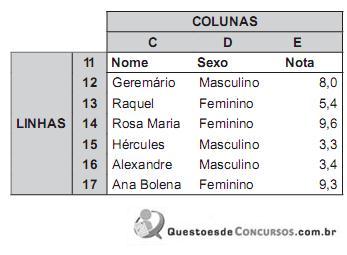
Considere que a região “C12:E17” de uma pasta de uma planilha Excel esteja preenchida com os textos e valores apresentados.
A célula D19 da mesma pasta está preenchida com a fórmula
=SOMASE($E$12:$E$17;”>5”;$E$12:$E$17)
O valor esperado para a célula D19 é
Cabe(m) à ANP, no âmbito da Lei no 12.351/2010, o(s) seguinte(s) procedimento(s):
I - Toda exploração de petróleo e gás natural na chamada plataforma continental é de exclusividade da União, cabendo sua administração à ANP.
II - Um dos motivos de extinção da concessão de exploração é ter a fase de exploração terminada, sem ter sido feita qualquer descoberta de caráter comercial, conforme determinado em contrato.
III - A devolução das áreas de exploração poderá implicar ônus para a União, conferindo ao concessionário o direito de indenização pelos serviços, imóveis, poços e bens reversíveis, os quais serão incorporados ao patrimônio da União, após o pagamento de justa indenização.
IV - O edital de licitação será acompanhado de minuta básica que conterá, entre outros itens, o bloco objeto da concessão e a expressa indicação, cabendo à cessionária o pagamento de indenizações por possíveis desapropriações.
V - A participação de consórcios em licitação para exploração e produção de petróleo e gás natural é um ato discricionário da ANP e, quando for permitido, deverá constar, entre outros itens do edital, a proibição de uma mesma empresa participar em outro consórcio ou isoladamente na licitação de um mesmo bloco.
São corretas APENAS as afirmativas
É uma solução válida e apropriada para esse tipo de problema a
I – As macros no Word são utilizadas para transportar gráficos vetoriais, garantindo, assim, qualidade na impressão.
II – É recomendável verificar esse documento no antivírus, uma vez que macros podem conter código malicioso.
III – É possível utilizar, no desenvolvimento de macros, VBA para colocar texto em um cabeçalho ou rodapé.
Está correto o que se afirma em
Reducing the dependence on oil
Ildo Sauer, Gas and Energy Director, Petrobras.
Brazil's energy sector is following the worldwide
tendency towards greater diversification of primary energy
sources and the increased use of natural gas and
biofuels. There are several reasons for this change. The
most important are the environmental restrictions that
are gradually being adopted in the world's principal
energy-consuming markets and the need to reduce the
dependence on oil, set against a scenario of accelerated
depletion in oil reserves and escalating prices.
The share of gas in Brazilian primary energy
consumption has more than doubled in a short period,
increasing from 4.1% in 1999 to 8.9% in 2004, and this
share is forecast to rise to 12% by 2010.
Over the past two decades, the world gas industry
has experienced a structural and regulatory
transformation. These changes have altered the strategic
behaviour of gas firms, with an intensification of
competition, the search for diversification (especially in
the case of power generation) and the internationalisation
of industry activities. Together, these changes have
radically changed the economic environment and the level
of competition in the industry.
Brazil's gas industry is characterised by its late
development, although in recent years, internal supply
imports and demand have grown significantly - the
growth trajectory of recent years exceeds that of countries
with more mature markets, such as Spain, Argentina,
the UK and the US. And the outlook is positive for
continued growth over the next few years, particularly
when set against the investment plans already
announced in Brazil.
The country has a small transportation network
concentrated near the coast. The distribution network is
concentrated in the major consumption centres.
Domestic gas sources are largely offshore in the Campos
basin and Bolivia provides imports. Given the degree
of gas penetration in the country's primary energy
consumption, the industry is poorly developed when
compared with other countries. The industry requires
heavy investment in expanding the transport and
distribution (T&D) networks, as well as in diversifying and
increasing its supplies. Such investments are necessary
for realising the industry's enormous potential.
Another key industry highlight is the changing profile
of gas supply. A large part of the gas produced
domestically to date has been associated with oil
production. The latter diluting or even totally absorbing
the costs of exploiting the gas. In most cases, gas
production was feasible only in conjunction with oil
production activities. However, the country's latest gas
finds are non-associated. Thus, an exclusively dedicated
structure must be developed to produce this gas -
translating into a significant rise in production costs. This
is more significant when analysed against the high costs
associated with the market for exploration and production
(E&P) sector equipment. In recent years, the leasing costs
of drilling rigs and E&P equipment have been climbing in
parallel with escalating oil prices. This directly affects endconsumer
prices.
In a world of primary energy consumption
diversification, of greater environmental restrictions and
the reduced dependence on oil, Brazil has been seeking
to develop alternative energy sources - principally natural
gas and biofuels. The gas industry holds enormous
potential for Brazil, although there is still a long way to go
before it reaches maturity and major investment is
required.
p.29-31 (adapted)
"Natural gas is fast becoming the economic and environmental fuel of choice. The last 30 years have seen the global industry almost triple in size and similar growth can be expected in the next 30, as national governments and global industry look to gas to ensure the stability and diversity of their energy supplies."
This comment by Linda Cook, Executive Director of a British Gas and Power Company, reproduces a similar idea to that in the following segment from Ildo Sauer's text:
Reducing the dependence on oil
Ildo Sauer, Gas and Energy Director, Petrobras.
Brazil's energy sector is following the worldwide
tendency towards greater diversification of primary energy
sources and the increased use of natural gas and
biofuels. There are several reasons for this change. The
most important are the environmental restrictions that
are gradually being adopted in the world's principal
energy-consuming markets and the need to reduce the
dependence on oil, set against a scenario of accelerated
depletion in oil reserves and escalating prices.
The share of gas in Brazilian primary energy
consumption has more than doubled in a short period,
increasing from 4.1% in 1999 to 8.9% in 2004, and this
share is forecast to rise to 12% by 2010.
Over the past two decades, the world gas industry
has experienced a structural and regulatory
transformation. These changes have altered the strategic
behaviour of gas firms, with an intensification of
competition, the search for diversification (especially in
the case of power generation) and the internationalisation
of industry activities. Together, these changes have
radically changed the economic environment and the level
of competition in the industry.
Brazil's gas industry is characterised by its late
development, although in recent years, internal supply
imports and demand have grown significantly - the
growth trajectory of recent years exceeds that of countries
with more mature markets, such as Spain, Argentina,
the UK and the US. And the outlook is positive for
continued growth over the next few years, particularly
when set against the investment plans already
announced in Brazil.
The country has a small transportation network
concentrated near the coast. The distribution network is
concentrated in the major consumption centres.
Domestic gas sources are largely offshore in the Campos
basin and Bolivia provides imports. Given the degree
of gas penetration in the country's primary energy
consumption, the industry is poorly developed when
compared with other countries. The industry requires
heavy investment in expanding the transport and
distribution (T&D) networks, as well as in diversifying and
increasing its supplies. Such investments are necessary
for realising the industry's enormous potential.
Another key industry highlight is the changing profile
of gas supply. A large part of the gas produced
domestically to date has been associated with oil
production. The latter diluting or even totally absorbing
the costs of exploiting the gas. In most cases, gas
production was feasible only in conjunction with oil
production activities. However, the country's latest gas
finds are non-associated. Thus, an exclusively dedicated
structure must be developed to produce this gas -
translating into a significant rise in production costs. This
is more significant when analysed against the high costs
associated with the market for exploration and production
(E&P) sector equipment. In recent years, the leasing costs
of drilling rigs and E&P equipment have been climbing in
parallel with escalating oil prices. This directly affects endconsumer
prices.
In a world of primary energy consumption
diversification, of greater environmental restrictions and
the reduced dependence on oil, Brazil has been seeking
to develop alternative energy sources - principally natural
gas and biofuels. The gas industry holds enormous
potential for Brazil, although there is still a long way to go
before it reaches maturity and major investment is
required.
p.29-31 (adapted)
Reducing the dependence on oil
Ildo Sauer, Gas and Energy Director, Petrobras.
Brazil's energy sector is following the worldwide
tendency towards greater diversification of primary energy
sources and the increased use of natural gas and
biofuels. There are several reasons for this change. The
most important are the environmental restrictions that
are gradually being adopted in the world's principal
energy-consuming markets and the need to reduce the
dependence on oil, set against a scenario of accelerated
depletion in oil reserves and escalating prices.
The share of gas in Brazilian primary energy
consumption has more than doubled in a short period,
increasing from 4.1% in 1999 to 8.9% in 2004, and this
share is forecast to rise to 12% by 2010.
Over the past two decades, the world gas industry
has experienced a structural and regulatory
transformation. These changes have altered the strategic
behaviour of gas firms, with an intensification of
competition, the search for diversification (especially in
the case of power generation) and the internationalisation
of industry activities. Together, these changes have
radically changed the economic environment and the level
of competition in the industry.
Brazil's gas industry is characterised by its late
development, although in recent years, internal supply
imports and demand have grown significantly - the
growth trajectory of recent years exceeds that of countries
with more mature markets, such as Spain, Argentina,
the UK and the US. And the outlook is positive for
continued growth over the next few years, particularly
when set against the investment plans already
announced in Brazil.
The country has a small transportation network
concentrated near the coast. The distribution network is
concentrated in the major consumption centres.
Domestic gas sources are largely offshore in the Campos
basin and Bolivia provides imports. Given the degree
of gas penetration in the country's primary energy
consumption, the industry is poorly developed when
compared with other countries. The industry requires
heavy investment in expanding the transport and
distribution (T&D) networks, as well as in diversifying and
increasing its supplies. Such investments are necessary
for realising the industry's enormous potential.
Another key industry highlight is the changing profile
of gas supply. A large part of the gas produced
domestically to date has been associated with oil
production. The latter diluting or even totally absorbing
the costs of exploiting the gas. In most cases, gas
production was feasible only in conjunction with oil
production activities. However, the country's latest gas
finds are non-associated. Thus, an exclusively dedicated
structure must be developed to produce this gas -
translating into a significant rise in production costs. This
is more significant when analysed against the high costs
associated with the market for exploration and production
(E&P) sector equipment. In recent years, the leasing costs
of drilling rigs and E&P equipment have been climbing in
parallel with escalating oil prices. This directly affects endconsumer
prices.
In a world of primary energy consumption
diversification, of greater environmental restrictions and
the reduced dependence on oil, Brazil has been seeking
to develop alternative energy sources - principally natural
gas and biofuels. The gas industry holds enormous
potential for Brazil, although there is still a long way to go
before it reaches maturity and major investment is
required.
p.29-31 (adapted)
Reducing the dependence on oil
Ildo Sauer, Gas and Energy Director, Petrobras.
Brazil's energy sector is following the worldwide
tendency towards greater diversification of primary energy
sources and the increased use of natural gas and
biofuels. There are several reasons for this change. The
most important are the environmental restrictions that
are gradually being adopted in the world's principal
energy-consuming markets and the need to reduce the
dependence on oil, set against a scenario of accelerated
depletion in oil reserves and escalating prices.
The share of gas in Brazilian primary energy
consumption has more than doubled in a short period,
increasing from 4.1% in 1999 to 8.9% in 2004, and this
share is forecast to rise to 12% by 2010.
Over the past two decades, the world gas industry
has experienced a structural and regulatory
transformation. These changes have altered the strategic
behaviour of gas firms, with an intensification of
competition, the search for diversification (especially in
the case of power generation) and the internationalisation
of industry activities. Together, these changes have
radically changed the economic environment and the level
of competition in the industry.
Brazil's gas industry is characterised by its late
development, although in recent years, internal supply
imports and demand have grown significantly - the
growth trajectory of recent years exceeds that of countries
with more mature markets, such as Spain, Argentina,
the UK and the US. And the outlook is positive for
continued growth over the next few years, particularly
when set against the investment plans already
announced in Brazil.
The country has a small transportation network
concentrated near the coast. The distribution network is
concentrated in the major consumption centres.
Domestic gas sources are largely offshore in the Campos
basin and Bolivia provides imports. Given the degree
of gas penetration in the country's primary energy
consumption, the industry is poorly developed when
compared with other countries. The industry requires
heavy investment in expanding the transport and
distribution (T&D) networks, as well as in diversifying and
increasing its supplies. Such investments are necessary
for realising the industry's enormous potential.
Another key industry highlight is the changing profile
of gas supply. A large part of the gas produced
domestically to date has been associated with oil
production. The latter diluting or even totally absorbing
the costs of exploiting the gas. In most cases, gas
production was feasible only in conjunction with oil
production activities. However, the country's latest gas
finds are non-associated. Thus, an exclusively dedicated
structure must be developed to produce this gas -
translating into a significant rise in production costs. This
is more significant when analysed against the high costs
associated with the market for exploration and production
(E&P) sector equipment. In recent years, the leasing costs
of drilling rigs and E&P equipment have been climbing in
parallel with escalating oil prices. This directly affects endconsumer
prices.
In a world of primary energy consumption
diversification, of greater environmental restrictions and
the reduced dependence on oil, Brazil has been seeking
to develop alternative energy sources - principally natural
gas and biofuels. The gas industry holds enormous
potential for Brazil, although there is still a long way to go
before it reaches maturity and major investment is
required.
p.29-31 (adapted)
Reducing the dependence on oil
Ildo Sauer, Gas and Energy Director, Petrobras.
Brazil's energy sector is following the worldwide
tendency towards greater diversification of primary energy
sources and the increased use of natural gas and
biofuels. There are several reasons for this change. The
most important are the environmental restrictions that
are gradually being adopted in the world's principal
energy-consuming markets and the need to reduce the
dependence on oil, set against a scenario of accelerated
depletion in oil reserves and escalating prices.
The share of gas in Brazilian primary energy
consumption has more than doubled in a short period,
increasing from 4.1% in 1999 to 8.9% in 2004, and this
share is forecast to rise to 12% by 2010.
Over the past two decades, the world gas industry
has experienced a structural and regulatory
transformation. These changes have altered the strategic
behaviour of gas firms, with an intensification of
competition, the search for diversification (especially in
the case of power generation) and the internationalisation
of industry activities. Together, these changes have
radically changed the economic environment and the level
of competition in the industry.
Brazil's gas industry is characterised by its late
development, although in recent years, internal supply
imports and demand have grown significantly - the
growth trajectory of recent years exceeds that of countries
with more mature markets, such as Spain, Argentina,
the UK and the US. And the outlook is positive for
continued growth over the next few years, particularly
when set against the investment plans already
announced in Brazil.
The country has a small transportation network
concentrated near the coast. The distribution network is
concentrated in the major consumption centres.
Domestic gas sources are largely offshore in the Campos
basin and Bolivia provides imports. Given the degree
of gas penetration in the country's primary energy
consumption, the industry is poorly developed when
compared with other countries. The industry requires
heavy investment in expanding the transport and
distribution (T&D) networks, as well as in diversifying and
increasing its supplies. Such investments are necessary
for realising the industry's enormous potential.
Another key industry highlight is the changing profile
of gas supply. A large part of the gas produced
domestically to date has been associated with oil
production. The latter diluting or even totally absorbing
the costs of exploiting the gas. In most cases, gas
production was feasible only in conjunction with oil
production activities. However, the country's latest gas
finds are non-associated. Thus, an exclusively dedicated
structure must be developed to produce this gas -
translating into a significant rise in production costs. This
is more significant when analysed against the high costs
associated with the market for exploration and production
(E&P) sector equipment. In recent years, the leasing costs
of drilling rigs and E&P equipment have been climbing in
parallel with escalating oil prices. This directly affects endconsumer
prices.
In a world of primary energy consumption
diversification, of greater environmental restrictions and
the reduced dependence on oil, Brazil has been seeking
to develop alternative energy sources - principally natural
gas and biofuels. The gas industry holds enormous
potential for Brazil, although there is still a long way to go
before it reaches maturity and major investment is
required.
p.29-31 (adapted)

 Conheça nossos planos