Foram encontradas 24.682 questões
Resolva questões gratuitamente!
Junte-se a mais de 4 milhões de concurseiros!


[...] uma sociedade em que o consumo desenfreado parece ser a cada dia mais comum, seguindo uma lógica como: "compro, logo existo".
(_) As pessoas perderam sua individualidade atualmente devido ao consumo desenfreado.
(_) Apesar do poder da propaganda, o homem tem o poder de lutar contra ela.
(_) Deve-se proibir que artistas famosos façam propagandas nas grandes mídias.
Better Now
Post Malone
You probably think that you are better now , better now
You only say that 'cause I'm not around, not around
You know I never meant to let you down, let you down
Woulda gave you anything, woulda gave you everything
You know I say that I am better now , better now
I only say that 'cause you're not around, not around
You know I never meant to let you down, let you down
Woulda gave you anything, woulda gave you everything. [...]
Disponível em: https://www.vagalume.com.br/post-malone/better-now.html> . Acesso em: 21 mar. 2020.
Todos os termos sublinhados no fragmento da música são no fragmento da música são
How to use technology to help teachers be better and to make life better for teachers
Teachers matter enormously to student learning. deliver Teachers matter enormously to student learning. Teachers Teachers impart model students’ long-term academic knowledge. Teachers impart socioemotional skills. Good teachers boost students’ long life outcomes. Teachers can inspire (and in another in some cases, sadly, teachers outcomes. Teachers can inspire (and in another demonstration of their importance, in some cases, sadly, teachers can disappoint or even abuse).
Yet teachers, often lionized and occasionally villainized people. They enter the profession for a wide range of reasons, they have their own families to feed, and – like most professionals – they respond to incentives, support, accountability, and the quality of the management around them occasionally villainized, are people. They enter the profession for a wide range of reasons, like most professionals they respond to incentives, support, accountability, and the . In short, they are part of . In short, they are
Disponível em: <https://blogs.worldbank.org/education/how-use-technology-technology-help-teachers-be-better-and-make-life-better-teachers>. Acesso em 20 jan. 2023. (Adaptado)
O pronome sublinhado no texto (them) faz referência a
Silent letters in English
The English language is full of words whose written form can , in English we rarely The English language is full of words whose written form can be deceptive. Unlike a language like Spanish, in English we rarely sound out all the letters that we see.
The result is a series of words which are written in a way which seems very different from their sound. Lots of these strange ‘silent’ letters are due to the history of the English only has it absorbed plenty of vocabulary from invaders, like French, Latin and Norse, but the eventual standardization of sounds in the English language has meant that certain words, whilst keeping their older forms of spelling, have The result is a series of words which are written in a way which seems very different from their sound. Lots of these strange ‘silent’ letters are due to the history of the English language. Not only has it absorbed plenty of vocabulary from invaders, like French, Latin and Norse, but the eventual standardization of sounds in the English language has meant that certain words, whilst keeping their older forms of spelling, have had their sounds refined and softened. [...]
Disponível em: <https://englishlive.ef.com/blog/language-lab/silent-pronounce/>. Acesso em: 22 mar. 2020. (Adaptado).
Assinale a alternativa cujas letras sublinhadas são todas sem som.
What U.S. Health Care Workers
Need to Fight Coronavirus
With respirator masks in short supply across the country, the C.D.C. recently updated its recommendations for health care workers. If respirators are not available, the agency says standard medical masks can be used instead for most coronavirus patient care. These looser-fitting masks protect against droplet transmission from coughs and sneezes, but do not filter out airborne pathogens. [...]
Disponível em: <https://www.nytimes.com/interactive/2020/03/11/us/virus-health-workers.html> . Acesso em: 21 mar. 2020. (Adaptado).
O termo sublinhado (droplet) significa
Dadas as afirmativas,
I. It is time for you to come clean about what really happened.
II. The game was boring, but it suddenly came to life .
III. The Supreme Court came to a decision yesterday.
IV. Summer is almost coming to end in the United States.
verifica-se que os trechos em destaque estão corretos em
From learning recovery to education transformation
What needs to happen to recover learning post
Over the past three years, the pandemic has brought profound disruptions to children’s learning, exacerbating the pre existing global learning crisis. We need to act urgently to recover learning and seize this opportunity to build education systems back better.
Yet, new findings from the fourth round of the Survey on National Education Responses to Covid-19 School Closures show that many countries are still not taking targeted and proven steps to address learning loss. As the Transforming Education Summit takes place in New York, 16–19 September 2022, further reflection and stocktaking is required to transform education to ensure Sustainable Development Goal 4 can be achieved.
From Learning Recovery to Education Transformation joint report by the OECD, Unesco, Unesco Institute for Statis UNICEF and the World Bank explores how countries are progressing in the RAPID actions to recover learning: Reach every child and keep them in school; Assess learning levels regularly; Prioritize teaching the fundamentals; Increase the efficiency of instruction; and Develop psychosocial health and wellbeing. We find that while countries have made some progress to implement measures that address learning recovery, we must amplify our efforts to urgently mitigate the effects of the pandemic on children’s learning and overall well-being. However, given the magnitude of the challenge, for learning recovery to be effective, equitable and sustainable, it also has to be transformational. [...] From Learning Recovery to Education Transformation, a new joint report by the OECD, Unesco, Unesco Institute for Statistics, explores how countries are actions to recover learning: Reach every child and keep them in school; Assess learning levels Prioritize teaching the fundamentals; Increase the efficiency of instruction; and Develop psychosocial health and wellbeing. We find that while countries have made some progress to implement measures that address learning recovery, we must orts to urgently mitigate the effects of the pandemic being. However, given the magnitude of the challenge, for learning recovery to be effective, equitable and sustainable, it also has to be transformational. [...]
Disponível em: https://www.unicef.org/blog/learning-recovery-education-transformation> . Acesso em: 18 jan. 2023.
De acordo com o texto, assinale a alternativa a correta.
Community service is work _________________ by a person or group of people that benefits others. You do not get paid to perform community service, but volunteer your time. [...]
Disponível em: <https://blog.prepscholar.com/129-examples-of-community-service-projects>. Acesso em: 21 mar. 2020. (Adaptado).
Assinale a alternativa que preenche corretamente a lacuna:
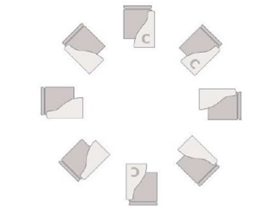
Sabendo que Pedro é canhoto e os outros dois são destros, admitindo que todos sempre se sentam em carteiras apropriadas a sua característica, de quantas formas diferentes os três podem sentar na sala?
eu não te explico.
O que não te cabe
jamais há de compreender.
Aquilo que sufoca
é o que transborda.
Abre a janela, entra.
Não fica, vive."
ARANTES, Ana Claudia Quintana. Mundo dentro. Rio de Janeiro: Sextante, 2022. р. 117.
No poema, as palavras destacadas são classificadas como pronomes. A partir dessa informação, assinale a alternativa que apresenta um pronome demonstrativo.
I. "A lembrança chega misturada com episódios agarrados aqui e ali, em romances. Dificilmente prefiro a realidade à ficção".
II. "Embora houvesse desvantagens, os negócios não iam mal. E foi exatamente por me correr a vida quase bem que a mulherinha me inspirou interesse".
III. "Mas se viam sombras e silêncio. O vozeirão de Vitória era um murmúrio abafado. Talvez o mamoeiro, o monte de lixo, as roseiras me passassem despercebidos".
IV. "De toda aquela vida, deveria haver vagos indícios no meu espírito. Saíram do entorpecimento recordações que a imaginação completou".
verifica-se que, de acordo com a norma culta da língua, a correção gramatical está(ão) correta(s) em
GAARDER, Jostein. O mundo de Sofia. São Paulo: Companhia das Letras, 1995, p. 63
De acordo com a norma culta da língua, assinale a alternativa cuja proposta mantém a correção gramatical.
A torneira seca
(mas pior: a falta
de sede)
A luz apagada (mas pior: o gosto
do escuro)
A porta fechada
(mas pior: a chave
por dentro).
PAES, José Paulo. O melhor poeta da minha rua. São Paulo: Ática, 2008.
Em todos os versos desse poema, as duas figuras de linguagem que predominam são
Disponível em: <https:/www.al.sp.gov.br/repositorio/legislacao/lei/1997/lei-9502-11.03.1997.html>. Acesso em: 11 jan. 2023.
Há, nessa lei, um emprego condenável do demonstrativo "mesmo". Assinale a alternativa em cuja frase o emprego desse pronome está correto.

 Conheça nossos planos