Questões de Concurso Público CRM-ES 2025 para Analista de Tecnologia da Informação
Foram encontradas 50 questões


Um gestor público decidiu contratar diretamente uma empresa para realizar um serviço de manutenção emergencial em uma repartição, alegando urgência. Contudo, não houve, nos autos, demonstração objetiva de que a situação era imprevisível e que a demora na contratação por licitação causaria grave prejuízo ao atendimento. O gestor público foi, então, responsabilizado com base na Lei de Improbidade Administrativa.
Com base nessa situação hipotética, assinale a opção correta, acerca da conduta do gestor.
Uma empresa protocolou um requerimento no CRM‑ES solicitando providências da Administração em relação à conduta de prestadores de serviço do Conselho, que afetaram a sua esfera jurídica. Após análise, o pedido foi indeferido, sob a alegação de que a documentação apresentada era insuficiente. O departamento jurídico da empresa, discordando da decisão, decide interpor recurso administrativo.
Com base nessa situação hipotética e considerando que a decisão da Administração pode gerar sanções e que o recurso se sujeita somente às disposições da Lei nº 9.784/99, assinale a opção correta.
Cryptography is the process of hiding or coding information so that only the person a message was intended for can read it. The art of cryptography has been used to code messages for thousands of years and continues to be used in bank cards, computer passwords, and ecommerce. Modern cryptography techniques include algorithms and ciphers that enable the encryption and decryption of information, such as 128‑bit and 256‑bit encryption keys. Modern ciphers, such as the Advanced Encryption Standard (AES), are considered virtually unbreakable.
A common cryptography definition is the practice of coding information to ensure only the person that a message was written for can read and process the information. This cybersecurity practice, also known as cryptology, combines various disciplines like computer science, engineering, and mathematics to create complex codes that hide the true meaning of a message. Cryptography can be traced all the way back to ancient Egyptian hieroglyphics but remains vital to securing communication and information in transit and preventing it from being read by untrusted parties. It uses algorithms and mathematical concepts to transform messages into difficult‑to‑decipher codes through techniques like cryptographic keys and digital signing to protect data privacy, credit card transactions, email, and web browsing.
Cryptography remains important to protecting data and users, ensuring confidentiality, and preventing cyber criminals from intercepting sensitive corporate information. Individuals and organizations use cryptography on a daily basis to protect their privacy and keep their conversations and data confidential. The technique ensures confidentiality by encrypting sent messages using an algorithm with a key only known to the sender and recipient. A common example of this is the messaging tool WhatsApp, which encrypts conversations between people to ensure they cannot be hacked or intercepted. It also secures browsing, such as with virtual private networks (VPNs), which use encrypted tunnels, asymmetric encryption, and public and private shared keys.
Similar to how cryptography can confirm the authenticity of a message, it can also prove the integrity of the information being sent and received. The technology also ensures information is not altered while in storage or during transit between the sender and the intended recipient. For example, digital signatures can detect forgery or tampering in software distribution and financial transactions.Cryptography confirms accountability and responsibility from the sender of a message, which means they cannot later deny their intentions when they created or transmitted information. Digital signatures are a good example of this, as they ensure a sender cannot claim a message, contract, or document they created to be fraudulent. Furthermore, in email nonrepudiation, email tracking makes sure the sender cannot deny sending a message and a recipient cannot deny receiving it.
There are many types of cryptographic algorithms available. They vary in complexity and security, depending on the type of communication and the sensitivity of the information being shared.
Internet:
Cryptography is the process of hiding or coding information so that only the person a message was intended for can read it. The art of cryptography has been used to code messages for thousands of years and continues to be used in bank cards, computer passwords, and ecommerce. Modern cryptography techniques include algorithms and ciphers that enable the encryption and decryption of information, such as 128‑bit and 256‑bit encryption keys. Modern ciphers, such as the Advanced Encryption Standard (AES), are considered virtually unbreakable.
A common cryptography definition is the practice of coding information to ensure only the person that a message was written for can read and process the information. This cybersecurity practice, also known as cryptology, combines various disciplines like computer science, engineering, and mathematics to create complex codes that hide the true meaning of a message. Cryptography can be traced all the way back to ancient Egyptian hieroglyphics but remains vital to securing communication and information in transit and preventing it from being read by untrusted parties. It uses algorithms and mathematical concepts to transform messages into difficult‑to‑decipher codes through techniques like cryptographic keys and digital signing to protect data privacy, credit card transactions, email, and web browsing.
Cryptography remains important to protecting data and users, ensuring confidentiality, and preventing cyber criminals from intercepting sensitive corporate information. Individuals and organizations use cryptography on a daily basis to protect their privacy and keep their conversations and data confidential. The technique ensures confidentiality by encrypting sent messages using an algorithm with a key only known to the sender and recipient. A common example of this is the messaging tool WhatsApp, which encrypts conversations between people to ensure they cannot be hacked or intercepted. It also secures browsing, such as with virtual private networks (VPNs), which use encrypted tunnels, asymmetric encryption, and public and private shared keys.
Similar to how cryptography can confirm the authenticity of a message, it can also prove the integrity of the information being sent and received. The technology also ensures information is not altered while in storage or during transit between the sender and the intended recipient. For example, digital signatures can detect forgery or tampering in software distribution and financial transactions.Cryptography confirms accountability and responsibility from the sender of a message, which means they cannot later deny their intentions when they created or transmitted information. Digital signatures are a good example of this, as they ensure a sender cannot claim a message, contract, or document they created to be fraudulent. Furthermore, in email nonrepudiation, email tracking makes sure the sender cannot deny sending a message and a recipient cannot deny receiving it.
There are many types of cryptographic algorithms available. They vary in complexity and security, depending on the type of communication and the sensitivity of the information being shared.
Internet:
Cryptography is the process of hiding or coding information so that only the person a message was intended for can read it. The art of cryptography has been used to code messages for thousands of years and continues to be used in bank cards, computer passwords, and ecommerce. Modern cryptography techniques include algorithms and ciphers that enable the encryption and decryption of information, such as 128‑bit and 256‑bit encryption keys. Modern ciphers, such as the Advanced Encryption Standard (AES), are considered virtually unbreakable.
A common cryptography definition is the practice of coding information to ensure only the person that a message was written for can read and process the information. This cybersecurity practice, also known as cryptology, combines various disciplines like computer science, engineering, and mathematics to create complex codes that hide the true meaning of a message. Cryptography can be traced all the way back to ancient Egyptian hieroglyphics but remains vital to securing communication and information in transit and preventing it from being read by untrusted parties. It uses algorithms and mathematical concepts to transform messages into difficult‑to‑decipher codes through techniques like cryptographic keys and digital signing to protect data privacy, credit card transactions, email, and web browsing.
Cryptography remains important to protecting data and users, ensuring confidentiality, and preventing cyber criminals from intercepting sensitive corporate information. Individuals and organizations use cryptography on a daily basis to protect their privacy and keep their conversations and data confidential. The technique ensures confidentiality by encrypting sent messages using an algorithm with a key only known to the sender and recipient. A common example of this is the messaging tool WhatsApp, which encrypts conversations between people to ensure they cannot be hacked or intercepted. It also secures browsing, such as with virtual private networks (VPNs), which use encrypted tunnels, asymmetric encryption, and public and private shared keys.
Similar to how cryptography can confirm the authenticity of a message, it can also prove the integrity of the information being sent and received. The technology also ensures information is not altered while in storage or during transit between the sender and the intended recipient. For example, digital signatures can detect forgery or tampering in software distribution and financial transactions.Cryptography confirms accountability and responsibility from the sender of a message, which means they cannot later deny their intentions when they created or transmitted information. Digital signatures are a good example of this, as they ensure a sender cannot claim a message, contract, or document they created to be fraudulent. Furthermore, in email nonrepudiation, email tracking makes sure the sender cannot deny sending a message and a recipient cannot deny receiving it.
There are many types of cryptographic algorithms available. They vary in complexity and security, depending on the type of communication and the sensitivity of the information being shared.
Internet:
Cryptography is the process of hiding or coding information so that only the person a message was intended for can read it. The art of cryptography has been used to code messages for thousands of years and continues to be used in bank cards, computer passwords, and ecommerce. Modern cryptography techniques include algorithms and ciphers that enable the encryption and decryption of information, such as 128‑bit and 256‑bit encryption keys. Modern ciphers, such as the Advanced Encryption Standard (AES), are considered virtually unbreakable.
A common cryptography definition is the practice of coding information to ensure only the person that a message was written for can read and process the information. This cybersecurity practice, also known as cryptology, combines various disciplines like computer science, engineering, and mathematics to create complex codes that hide the true meaning of a message. Cryptography can be traced all the way back to ancient Egyptian hieroglyphics but remains vital to securing communication and information in transit and preventing it from being read by untrusted parties. It uses algorithms and mathematical concepts to transform messages into difficult‑to‑decipher codes through techniques like cryptographic keys and digital signing to protect data privacy, credit card transactions, email, and web browsing.
Cryptography remains important to protecting data and users, ensuring confidentiality, and preventing cyber criminals from intercepting sensitive corporate information. Individuals and organizations use cryptography on a daily basis to protect their privacy and keep their conversations and data confidential. The technique ensures confidentiality by encrypting sent messages using an algorithm with a key only known to the sender and recipient. A common example of this is the messaging tool WhatsApp, which encrypts conversations between people to ensure they cannot be hacked or intercepted. It also secures browsing, such as with virtual private networks (VPNs), which use encrypted tunnels, asymmetric encryption, and public and private shared keys.
Similar to how cryptography can confirm the authenticity of a message, it can also prove the integrity of the information being sent and received. The technology also ensures information is not altered while in storage or during transit between the sender and the intended recipient. For example, digital signatures can detect forgery or tampering in software distribution and financial transactions.Cryptography confirms accountability and responsibility from the sender of a message, which means they cannot later deny their intentions when they created or transmitted information. Digital signatures are a good example of this, as they ensure a sender cannot claim a message, contract, or document they created to be fraudulent. Furthermore, in email nonrepudiation, email tracking makes sure the sender cannot deny sending a message and a recipient cannot deny receiving it.
There are many types of cryptographic algorithms available. They vary in complexity and security, depending on the type of communication and the sensitivity of the information being shared.
Internet:
Cryptography is the process of hiding or coding information so that only the person a message was intended for can read it. The art of cryptography has been used to code messages for thousands of years and continues to be used in bank cards, computer passwords, and ecommerce. Modern cryptography techniques include algorithms and ciphers that enable the encryption and decryption of information, such as 128‑bit and 256‑bit encryption keys. Modern ciphers, such as the Advanced Encryption Standard (AES), are considered virtually unbreakable.
A common cryptography definition is the practice of coding information to ensure only the person that a message was written for can read and process the information. This cybersecurity practice, also known as cryptology, combines various disciplines like computer science, engineering, and mathematics to create complex codes that hide the true meaning of a message. Cryptography can be traced all the way back to ancient Egyptian hieroglyphics but remains vital to securing communication and information in transit and preventing it from being read by untrusted parties. It uses algorithms and mathematical concepts to transform messages into difficult‑to‑decipher codes through techniques like cryptographic keys and digital signing to protect data privacy, credit card transactions, email, and web browsing.
Cryptography remains important to protecting data and users, ensuring confidentiality, and preventing cyber criminals from intercepting sensitive corporate information. Individuals and organizations use cryptography on a daily basis to protect their privacy and keep their conversations and data confidential. The technique ensures confidentiality by encrypting sent messages using an algorithm with a key only known to the sender and recipient. A common example of this is the messaging tool WhatsApp, which encrypts conversations between people to ensure they cannot be hacked or intercepted. It also secures browsing, such as with virtual private networks (VPNs), which use encrypted tunnels, asymmetric encryption, and public and private shared keys.
Similar to how cryptography can confirm the authenticity of a message, it can also prove the integrity of the information being sent and received. The technology also ensures information is not altered while in storage or during transit between the sender and the intended recipient. For example, digital signatures can detect forgery or tampering in software distribution and financial transactions.Cryptography confirms accountability and responsibility from the sender of a message, which means they cannot later deny their intentions when they created or transmitted information. Digital signatures are a good example of this, as they ensure a sender cannot claim a message, contract, or document they created to be fraudulent. Furthermore, in email nonrepudiation, email tracking makes sure the sender cannot deny sending a message and a recipient cannot deny receiving it.
There are many types of cryptographic algorithms available. They vary in complexity and security, depending on the type of communication and the sensitivity of the information being shared.
Internet:
No banco de dados do Conselho Regional de Medicina (CRM) de certo estado da federação, há as tabelas Medico, Especialidade, Medico_Especialidade e Pagamento. Essas tabelas estão descritas conforme os quadros a seguir.
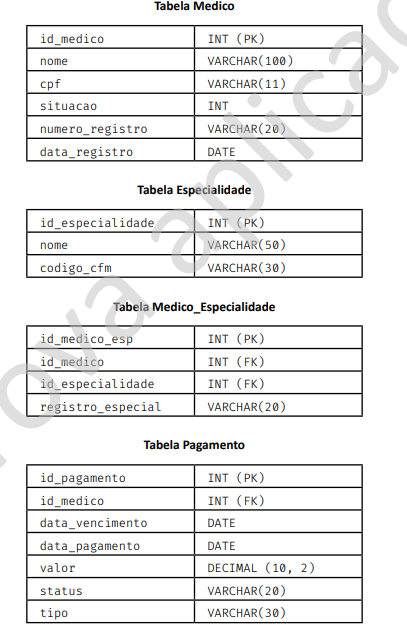
Na tabela Medico, o atributo situacao será do tipo inteiro e o número 0 corresponderá à situação em que o registro está “inativo”, 1, à situação em que o registro está “ativo”, e 2, à situação em que o registro está “suspenso”. Na tabela Especialidade, o atributo codigo_cfm corresponde ao código da especialidade no Conselho Federal de Medicina. Na tabela Medico_Especialidade, o atributo registro_especial corresponde ao número do registro de qualificação de especialista. Na tabela Pagamento, o atributo status pode receber os valores “pago”, “pendente” e “atrasado”, e o atributo tipo pode receber os valores “anuidade”, “multa” e “taxa de registro”

 Conheça nossos planos