Questões de Concurso
Sobre vocabulário | vocabulary em inglês
Foram encontradas 3.149 questões


Complete the sentences and mark the CORRECT alternative.
I.Please give me a _________ of pie.
II.The railway _________ is expensive.
III.Mary and her sisters have got very _________ looks.
Choose the right option that best completes the sentences:
I.The boy ___________ to be another person.
II.The school ___________ are very strict.
I.We´d better run, ________ we will arrive late.
II.I saw John with his girlfriend last night. ________ John, did you know he´s going to marry next month?
I.The game ended in a tie. II.I need to tie my hair back. III.I hate wearing a tie when I have to get dressed up.
Choose the option that contains the synonym of the words in bold.
TEXTIV- Text forquestion
QUOTATION
“Another important characteristic of the [National Curricular] Parameters that should not be overlooked is their emphasis on teacher's autonomy. This emphasis can be seen clearly in the fact that no content or method is imposed upon the teachers. What one can find are suggestions and relevant information for teachers to make their own decisions, taking into consideration the context within which they work. In other words, the Parameters do not force any teacher to limit their focus on the teaching of reading, if they believe they can go further than that” (ALMEIDA, 2012, p. 334).
(Source: ALMEIDA, Ricardo Luiz Teixeira de. The teaching of English as a foreign language in the context of Brazilian regular schools: a retrospective and prospective view of policies and practices. In: Revista Brasileira de Linguística Aplicada, Belo Horizonte, v. 12, nº 2, June, 2012, p. 331-348. Available at: th https://www.scielo.br/j/rbla/a/nNz3Jtj85xmms8MnNfwRpMn/?format=pdf&lang=en. Accessed on April 20 , 2022).
The word “overlooked” in the passage “Another important characteristic of the [National Curricular] Parameters that should not be overlooked is their emphasis on teacher's autonomy” is a SYNONYM of:
TEXTIII -
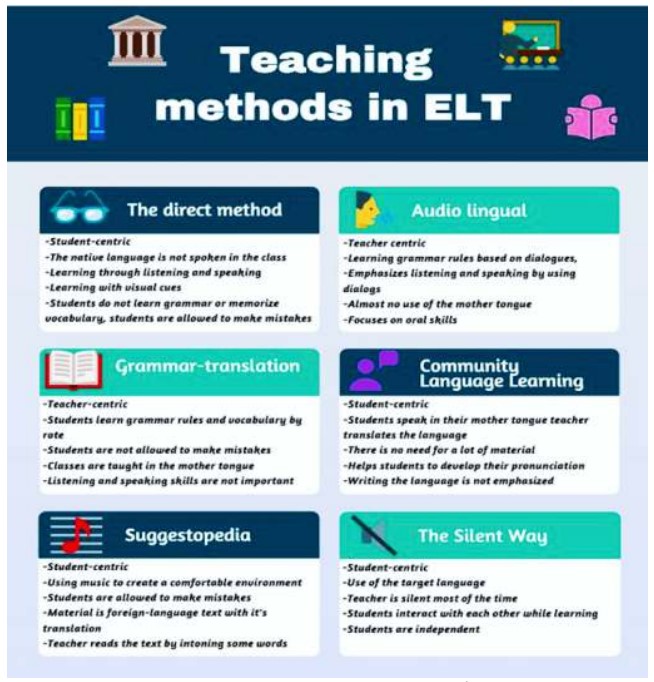
(Available at: https://br.pinterest.com/pin/251286854200451292/. Accessed on April 6 , 2022)
Answer question according to TEXTIII.
The expression “by rote” means:
TEXTII – Text forquestion.
Foreign Language Teaching in Brazil: interfaces of the CLIL (Content and Language Integrated Learning) approach in remote teaching
(Ana Lúcia Farias da Silva - 01/12/2021)
FINAL CONSIDERATIONS
English Language Teaching, in the modality of remote teaching, with the full use of Virtual Learning Environments (VLE) has advanced and can be efficient with the development of language skills associated with these technological and didactic resources appropriate to each objective in foreign language teaching. However, the teacher should have good planning, carefully reflecting and analyzing the tool that best suited to his/her goal.
Moreover, we postulate as indispensable the teaching of the English Language (EL), as a way of access to universal cultural goods, academic and professional environments of the globalized world, also considering an inclusive formation that leads the student to expand their readings of the world.
Moreover, classes, in real time, help in the cognitive process in relation to playing, dialoguing, in addition to awakening sensitivities such as visual and auditory perceptions, necessary for learning. Despite some flexibility, the use of English contributed to welcoming students in the mother tongue, which did not impair the learning of the proposed contents, on the contrary, it brought the students closer to the teacher-researcher, enabling a better work in language teaching. The results were perceived in the formal evaluations and in the engagement of the students during the classes, corroborating the pedagogical work that goes beyond teaching the contents and also goes through the ability of the educator to welcome and relate to his students.
Despite a pandemic moment, extremely challenging, especially for foreign language teaching, especially English, this research emphasized the need to follow the advancement of digital technologies and transform new challenges into knowledge, to optimize the adaptability of individuals, in view of the emerging educational contexts that have already been configured as a new reality at this time.
It is concluded, therefore, that according to the study presented and the current readings on foreign language teaching, in interface with multiple methods and possibilities in VLE, the new technological resources contribute and stimulate new didactic-pedagogical perspectives, in this panorama of remote teaching, driven by the pandemic. That said, it is possible to offer a teaching of the EL, in bilingual programs, in primary schools in Brazil today, even in elementary school, distance and quality, with priority to the development of all the language skills that an apprentice must activate, for significant and efficient foreign language learning.
(Adapted from: https://www.nucleodoconhecimento.com.br/education/interfaces-of-the-content. th Accessed on April 10 , 2022).
The word “impair” in the passage “[…] which did not impair the learning of the proposed contents […]” is the OPPOSITE of:
I.As diferenças entre o inglês britânico e norte-americano estão somente relacionadas à questão de sotaque e pronúncia.
II.Por conta da grande produção e difusão de filmes, séries e músicas, o inglês americano sempre foi mais popular do que o inglês britânico.
III.Enquanto no inglês americano fala-se closet para armário, no inglês britânico fala-se wardrobe.
Está (ão) CORRETA (S) a (s) seguinte (s) proposição (ões).
Consider the sentences below:
I. I hired a maid last week.
II. I made my own boat.
The words in bold are:
Consider the sentence below:
"Today is Sunday and I'm off duty."
The synonym for OFF DUTY is:
I.The word "perks" (4º§) could be translated as "benefícios".
II.The word "plowing" (2º§) can be an adverb.
III.The word "shrinking" (4º§) could be replaced by "lengthen".
Which one(s) is(are) correct?
O texto seguinte servirá de base para responder à questão.
(1º§)Clothing of Ancient Romans were generally simple but that doesn't mean it didn't change through time, although slowly. Roman clothing consisted of toga, tunic and stola.
(2º§)The most commonly used material for their clothing was wool but they also used and produced linen and hemp. The production of these fibers was very similar. After the harvest the fibers were immersed in water and then aired. After that, fibers were pressed mechanically with a mallet and smoothed with large combs. Fibers were then spun and woven on looms.
(3º§)While wool, hemp and hemp were produced on the Roman territory, silk and cotton were imported from China and India. Because they were very expensive, they were reserved for higher classes. From exotic materials, Romans also used wild silk that is collected from the wild after the insect had eaten its way out; and sea silk that comes from the endemic "noble pen shell" that lives only in Mediterranean. Although we think that all roman clothes were white (because of the statues), Romans dyed theirs clothes in purple, indigo, red, yellow and other colors. Leather was used for protection against poor weather (from leather were made heavy coats for Roman soldiers), but its primary use was in footwear and belts. Animal skins were also worn by soldiers. Legionaries wore bearskins while Praetorians preferred feline skins.
(4º§)Toga was probably the most significant item in the ancient Roman wardrobe. It was made of wool and was designed under the influence of the Etruscans and their clothes. Basically the toga was a large blanket, draped over the body, leaving one arm free. Reason why the free citizens were required to wear togas was to differ from slaves who wore tunics. Togas were forbidden for foreigners and fro exiled Romans.
(5º§)Tunic is adopted from the Greeks and was worn by everybody citizens, slaves and non-Romans and by both genres. Wearer's status in Roman society was shown with color and decorations of the tunic. It was worn as a shirt or a gown or as undergarments.
(6º§)Stola was traditional clothing of Roman women made of linen, cotton or wool. It was reserved for women since 2nd century BC when the toga started to be clothing reserved for men. It was a long, pleated dress, worn over a tunic. It generally had no sleeves but there were versions with shorter and longer sleeves. Sleeveless version was fastened by clasps at the shoulders. It also had belts or two that held stola.
(7º§)From the late Republic to the end of the Western empire, clothing of Ancient Rome slowly changed. After the Diocletian's reforms, clothing worn by soldiers and non-military members of government became very decorated. Their tunics and cloaks were decorated with woven or embellished strips and circular roundels. Silk was used more than ever. Bureaucrats started using pieces of clothing that were before reserved only for military. People started wearing even the trousers which was before that considered as a sign of cultural decay because only barbarians wore trousers at that time.
http://www.historyofclothing.com/
http://www.historyofclothing.com/
"From exotic materials, Romans also used wild silk that is collected from the wild after the insect had eaten its way out ." (3º§)
The word in bold can be translated as:

 Conheça nossos planos