Questões de Concurso
Sobre vocabulário | vocabulary em inglês
Foram encontradas 3.149 questões


O texto seguinte servirá de base para responder à questão.
(1º§)Clothing of Ancient Romans were generally simple but that doesn't mean it didn't change through time, although slowly. Roman clothing consisted of toga, tunic and stola.
(2º§)The most commonly used material for their clothing was wool but they also used and produced linen and hemp. The production of these fibers was very similar. After the harvest the fibers were immersed in water and then aired. After that, fibers were pressed mechanically with a mallet and smoothed with large combs. Fibers were then spun and woven on looms.
(3º§)While wool, hemp and hemp were produced on the Roman territory, silk and cotton were imported from China and India. Because they were very expensive, they were reserved for higher classes. From exotic materials, Romans also used wild silk that is collected from the wild after the insect had eaten its way out; and sea silk that comes from the endemic "noble pen shell" that lives only in Mediterranean. Although we think that all roman clothes were white (because of the statues), Romans dyed theirs clothes in purple, indigo, red, yellow and other colors. Leather was used for protection against poor weather (from leather were made heavy coats for Roman soldiers), but its primary use was in footwear and belts. Animal skins were also worn by soldiers. Legionaries wore bearskins while Praetorians preferred feline skins.
(4º§)Toga was probably the most significant item in the ancient Roman wardrobe. It was made of wool and was designed under the influence of the Etruscans and their clothes. Basically the toga was a large blanket, draped over the body, leaving one arm free. Reason why the free citizens were required to wear togas was to differ from slaves who wore tunics. Togas were forbidden for foreigners and fro exiled Romans.
(5º§)Tunic is adopted from the Greeks and was worn by everybody citizens, slaves and non-Romans and by both genres. Wearer's status in Roman society was shown with color and decorations of the tunic. It was worn as a shirt or a gown or as undergarments.
(6º§)Stola was traditional clothing of Roman women made of linen, cotton or wool. It was reserved for women since 2nd century BC when the toga started to be clothing reserved for men. It was a long, pleated dress, worn over a tunic. It generally had no sleeves but there were versions with shorter and longer sleeves. Sleeveless version was fastened by clasps at the shoulders. It also had belts or two that held stola.
(7º§)From the late Republic to the end of the Western empire, clothing of Ancient Rome slowly changed. After the Diocletian's reforms, clothing worn by soldiers and non-military members of government became very decorated. Their tunics and cloaks were decorated with woven or embellished strips and circular roundels. Silk was used more than ever. Bureaucrats started using pieces of clothing that were before reserved only for military. People started wearing even the trousers which was before that considered as a sign of cultural decay because only barbarians wore trousers at that time.
http://www.historyofclothing.com/
http://www.historyofclothing.com/
Consider the text and the following assertives:
I.The word "looms" (2º§) could be translated as "teares".
II.The word "also" (3º§) can be a noun.
III.The word "clasps" (6º§) could be replaced by "regards".
Which one(s) is(are) correct?
TEXTV-
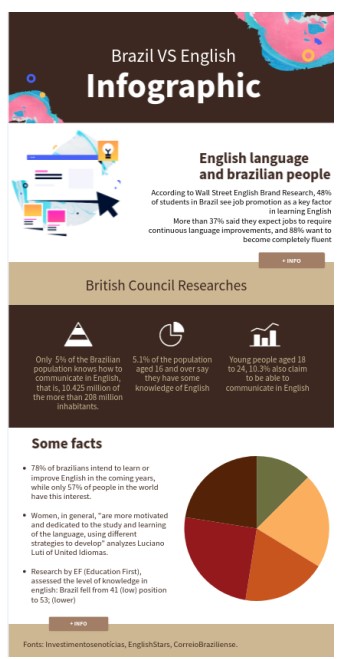
(by Cecismoura – May 28, 2021) Available from: https://view.genial.ly/60b17af8a30a0b0d332783d4/interactive-content-infografico-english-vs-brazil. Accessed on January 10th, 2022.
Answer question according to TEXT V.
TEXT I –
The crisis of the new coronavirus made access to education difficult for black and poor students. In English teaching, it is necessary to consider issues that have already distanced this group from learning the language, such as: difficulty in accessing technology, lack of monitoring by a family member, black girls and housework and representativeness in English teaching.
Newsroom11 / Nov. 2021
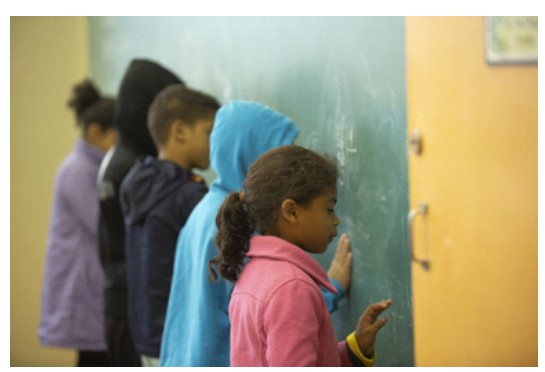
If inequality was already a reality in Brazilian education, in 2020, due to the Covid-19 pandemic — with closed schools and the adoption of remote education — the situation worsened even more. The report by the United Nations Children's Fund (UNICEF), “Scenarios of School Exclusion in Brazil”, points out that, at the end of 2020, more than 5 million Brazilian students aged 6 to 17 were without access to schools.
Of this total, more than 40% were represented by children aged 6 to 10 years, an age group in which education was almost universal in the country before the crisis of the new coronavirus. In this scenario, young people from poor, black, brown and indigenous families were the most affected.
Another data, presented by PNAD Covid, a survey by the Brazilian Institute of Geography and Statistics (IBGE), points out the supply of materials for attending classes from home: among white students in elementary school, 89% received school activities in the pandemic, among black and brown students this percentage drops to 77%.
It is a worrying context and, based on this information, we can make a cut about the exclusion of black children and teenagers and even girls in education, more specifically in English teaching. What factors further hindered these students' access to knowledge of the language? What were the problems already faced in language learning before the pandemic?
Adapted from: https://www.inglesnasescolas.org/en/headline/teaching-english-to-girls-and-black-students-problems-faced-even-before-the-pandemic/. Accessed on January 24th, 2022.
Answer question according to TEXT I.
In the sentence “What factors further hindered these students' access to knowledge of the language?” (in bold) the word “hindered” can be replaced by
I.I will wave when I see you in the parade.
II.Will there be another wave of illness in the spring?
III.I dream of surfing the perfect wave.
Choose the option that contains the synonym:
I.The can came full of worms.
II.A drop of blood fell on the sheet.
Considering the context of each sentence, mark the alternative that presents the translation of the words in bold.
I.I think she´ll ______when she knows that.
II.He has______all the book.
Choose the correct alternative.
I.___________, I have been living with my parents.
II.I have an ___________ with a___________.
Choose the right option that best completes the sentences:
Identify the pairs of words as "Homophones" or "Homonyms".
I.Poor - Pour.
II.Tire - Tire.
III.Two - Too.
Choose the correct alternative.
I.The word "reboot" (8º§) could be translated as "reiniciar".
II.The word "update" (6º§) can be an adverb.
III.The word "flaws" (3º§) could be replaced by "glee".
Which one(s) is(are) CORRECT?
Choose the CORRECT answer.
“She is an amazing writer. Her first book _________ in 2005.”
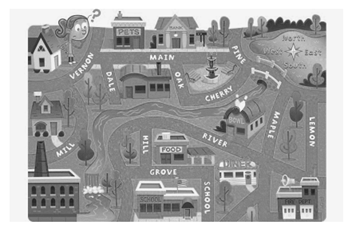
The _________ is on the corner of Maple and River Street.”
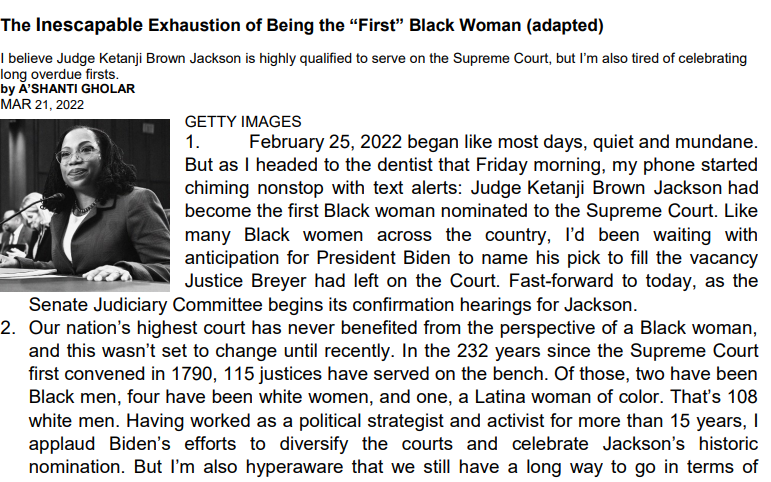
The words in bold, in the context, mean:
In:
1. “… Second, a month or two into the pandemic…” (Paragraph 11).
2. “…Our ancestors sat around fires for hundreds of thousands of years, but I had somehow lost this ancient custom.” (Paragraph 11).
3. “… With cookies, Earl Grey, juice for the kids and sometimes a shot of bourbon…” (Paragraph 07).
The words in bold are all:
Like A Rolling Stone
Once upon a time you dressed so fine
You threw the bums a dime in your prime, didn’t you?
People’d call, say, “Beware doll, you're bound to fall”
You thought they were all kidding you
You used to laugh about
Everybody that was hanging out
Now you don’t talk so loud
Now you don’t seem so proud
About having to be scrounging for your next meal
How does it feel?
How does it feel
To be without a home
Like a complete unknown
Like a rolling stone?
Bob Dylan. 1965.
Text 15A3
Life for researchers whose first language is not English may get quite hard. Many academics assume that their research students come to them fully formed, but every student has to learn the culture of their discipline. For those who don’t speak English as a first language, the challenge is especially daunting.
Mentors need to spend more time helping students to understand the conventions of scientific writing and the expectations of various journals. There’s an art to turning a PhD thesis into a journal article. Without guidance, a student will not be able to do it properly.
Institutions need to do a lot more to support and prepare international students. It’s not enough to hire a specialist in academic writing. Such specialists often have backgrounds in the humanities or social science, and students also need assistance from scientists who can help them to write for their specific disciplines.
I sympathize with students who are trying to learn English on top of everything else because I started out in life speaking another language. My family and I were refugees who fled Hungary during the revolution of 1956.
English speakers have become the gatekeepers of science. By keeping those gates closed, we’re missing out on a lot of perspectives and a lot of good research.
Chris Woolston and Joana Osório. When English is not your mother tongue. Internet: <www.nature.com> (adapted).
Experts say climate change is driving more extreme weather events like the rainfall in Jackson.
Com base no fragmento do texto, assinale a alternativa que apresenta, corretamente, o antônimo da palavra “driving”.

 Conheça nossos planos