Questões de Concurso Sobre verbos | verbs em inglês

Foram encontradas 2.952 questões

Q2070722 Inglês
Complete the sentence below.
"I X the exam if I Y hard."
Mark the CORRECT alternative that corresponds to X and Y respectively.
Alternativas
Q2070721 Inglês
Complete the sentences below correctly.
A: We X have any food.
B: I know. I Y buy some when the movie is over.
Choose the CORRECT alternative that corresponds to X and Y respectively.
Alternativas
Q2037141 Inglês

The Amazon Forest


The Amazon is often called the lungs of the earth and produces 20% of the world’s oxygen. For this reason, many people are trying to stop deforestation in the rainforest. Brazil, for example, is working hard to help the rainforest survive.


A few years ago, the Brazilian government put forward a plan called ARPA (Amazon Region Protected Areas). It had the support of many international agencies, including the World Bank, and the German Development Bank, KfW. The main aim was to build new areas of protected rainforest, maintain areas of the rainforest that hadn’t yet been destroyed, and stop deforestation. Deforestation contributes greatly to global warming because carbon dioxide is released into the atmosphere when trees get cut down and burned.


One of the first areas to be recognized as part of ARPA was the Tumucumaque Mountains National Park. It is 38,800 km2 and is the same size as Switzerland, a small country in Central Europe. It’s the world’s largest protected tropical national park, and the second largest national park. It is home to certain species of jaguar, eagle, and lizard, which can only survive in the rainforest. Many of these species are under threat from climate change and deforestation.


In order to work in the park, conservationists need a reliable map. However, no map existed, and they didn’t have enough knowledge to make one on their own. They came up with the idea of involving local tribes to help them, combining modern and ancient methods to produce a map. The tribes learned to use global positioning system handsets (GPS), in conjunction with their local knowledge of the area, which included fishing and hunting grounds, and places of historical or mythical importance. Aerial photos were a 20useful aid in the process as well. This method of map-making is now the key to the future of rainforests, in Brazil and the rest of the world too.

Analyze the sentences according to structure and grammar use.
1. The (‘s) in “The Amazon is often called the lungs of the earth and produces 20% of the world’s oxygen.”, is the contraction for the verb to be (is).
2. In “In order to work in the park, conservationists need a reliable map. However, no map existed, and they didn’t have enough knowledge to make one on their own.”, the underlined pronouns refer to ‘conservationists’
3. The phrasal verb ‘cut down’, in the second paragraph, means to reduce the amount.
4. The negative form of “They came up with the idea of involving local tribes to help them, combining modern and ancient methods to produce a map.” is They didn’t come up with the idea of involving local tribes to help them, combining modern and ancient methods to not produce a map.
Choose the alternative which presents the correct sentences.
Alternativas
Q2037137 Inglês

The Amazon Forest


The Amazon is often called the lungs of the earth and produces 20% of the world’s oxygen. For this reason, many people are trying to stop deforestation in the rainforest. Brazil, for example, is working hard to help the rainforest survive.


A few years ago, the Brazilian government put forward a plan called ARPA (Amazon Region Protected Areas). It had the support of many international agencies, including the World Bank, and the German Development Bank, KfW. The main aim was to build new areas of protected rainforest, maintain areas of the rainforest that hadn’t yet been destroyed, and stop deforestation. Deforestation contributes greatly to global warming because carbon dioxide is released into the atmosphere when trees get cut down and burned.


One of the first areas to be recognized as part of ARPA was the Tumucumaque Mountains National Park. It is 38,800 km2 and is the same size as Switzerland, a small country in Central Europe. It’s the world’s largest protected tropical national park, and the second largest national park. It is home to certain species of jaguar, eagle, and lizard, which can only survive in the rainforest. Many of these species are under threat from climate change and deforestation.


In order to work in the park, conservationists need a reliable map. However, no map existed, and they didn’t have enough knowledge to make one on their own. They came up with the idea of involving local tribes to help them, combining modern and ancient methods to produce a map. The tribes learned to use global positioning system handsets (GPS), in conjunction with their local knowledge of the area, which included fishing and hunting grounds, and places of historical or mythical importance. Aerial photos were a 20useful aid in the process as well. This method of map-making is now the key to the future of rainforests, in Brazil and the rest of the world too.

In the sentence “The main aim was to build new areas of protected rainforest, maintain areas of the rainforest that hadn’t yet been destroyed, and stop deforestation.”, the underlined words are in the: 
Alternativas
Q2022977 Inglês

Text 4A1-II

You know a nun when you see one. The uniform, known as a habit, is a dead giveaway. But the outfit you’re picturing in your head might look very different from the one worn by the sisters at your local convent. And yet, each ensemble’s meaning is immediately clear. That’s because nuns abide by a sartorial system that is at once endlessly adaptable and instantly recognizable.
That’s an impressive feat for any visual system. In the case of nuns’ habits, that system relies on a standardized combination of symbolic elements. “It’s really a kit of parts”, says Lucienne Roberts, cofounder of a British publishing house devoted to design’s more esoteric subjects. For their latest book, Looking Good: A Visual Guide to the Nun’s Habit, Roberts worked with her team to dissect the dress of nuns from some 40 Catholic orders. The result is a fascinating work of reference on a subject to which you've almost certainly never paid much mind.
The book begins by cataloguing the various components that typically comprise a nun's habit. These may include things like veils, rosaries, tunics, medals, coifs (the cap worn under the veil), and sandals. It's a collection from which each religious order draws some, but not all, of its impeccable elements. This section provides the reader with a visual framework which relies on simple cues to distinguish between religious families.
For instance, many orders of nuns wear some form of girdle, be it a belt, a cord, or a cincture. Each type and subtype of garment carries specific connotations. Franciscan nuns, for instance, favor a cord over a leather belt, to reflect their order's devotion to poverty. Its four knots, plainly visible in the book as an illustration of the Franciscan garb, represent the order's vows of chastity, poverty, obedience, and enclosure.
These are the kinds of minutiae encoded in the book's pages, which the authors color code to differentiate between the various orders. Even the nuns' orientation on the page is significant; some face towards the reader, while others face away. This is to distinguish between sisterhoods that are active in their communities from ones that live cloistered lives, respectively. The book itself, like the habits it analyzes, is a form of information design.

Internet: <www.wired.com>(adapted). 
Parts of speech are traditional classes of words (such as adjectives, adverbs, etc.) that are distinguished according to the kind of idea denoted and the function performed in a sentence.
On the basis of this definition, it is correct to say that the words “almost” (last sentence of the second paragraph), “favor” (third sentence of the fourth paragraph), “which” (first sentence of the last paragraph) and “between” (third sentence of the last paragraph), which were taken from text 4A1-II, are, respectively, 
Alternativas
Q2021558 Inglês

A Mayor on Easter Island Is Up in Arms After a Runaway Pickup Truck Knocked Over a Sacred Statue


(1º§)Archaeologists have long assumed that the ancient society that erected the colossal Moai figures on Chile's Rapa Nui, better known as Easter Island, collapsed many centuries ago. Now, a new study indicates that the islanders' civilization was still going strong when Europeans arrived in 1722.
(2º§)The island was settled in the 13th century by Polynesians, and is known __ the famed Easter Island "heads" (many of the bodies have been buried by erosion over the centuries).
(3º§)The research, which appears in the Journal of Archaeological Science, contests the accepted timeline that the Easter Island society was already in decline by the year 1600 and its massive stone statues left to fall into disrepair.
(4º§)Conducting radiocarbon dating on 11 sites __ Easter Island, the authors determined the timeline of each monument's construction. Their findings indicate that Easter Islanders were still actively building new Moai figures, and maintaining existing ones, up until at least 1750.s of fresh water-a precious resource. As well as moments to their ancestors, it turns out they may have also served a more utilitarian purpose.
(5º§)Further supporting these results are historical documents __ the island's first European visitors. Written accounts from the Dutch explorers who arrived in 1722 found that the monuments were in active ritual use, with no signs of decline, and the same goes for the Spaniards who landed in 1770. It was only in 1774 that James Cook found the giant statues in ruins and the figures knocked over.
(6º§)"The way we interpret our results and this sequence of historical accounts is that the notion of a pre-European collapse of monument construction is no longer supported," lead author Robert DiNapoli told Archaeology & Arts.
(7º§)"Once Europeans arrive on the island, there are many documented tragic events due to disease, murder, slave raiding and other conflicts," added co-author Carl Lipo. "The degree to which [the Rapa Nui people's] cultural heritage was passed on-and is still present today through language, arts, and cultural practices-is quite notable and impressive. I think this degree of resilience has been overlooked due to the collapse narrative and deserves recognition."

777281144
ews.artnet.com/art-world/rapa-nui-easter-island-study-demise-1772814
Consider the following assertives:
I.The word "deserves" (7º§) could be translated as "merece".
II.The word "degree" (7º§) is a verb.
III.The word "raiding" (7º§) could be replaced by "framing".

Which one(s) is(are) correct?
Alternativas
Q2021557 Inglês

A Mayor on Easter Island Is Up in Arms After a Runaway Pickup Truck Knocked Over a Sacred Statue


(1º§)Archaeologists have long assumed that the ancient society that erected the colossal Moai figures on Chile's Rapa Nui, better known as Easter Island, collapsed many centuries ago. Now, a new study indicates that the islanders' civilization was still going strong when Europeans arrived in 1722.
(2º§)The island was settled in the 13th century by Polynesians, and is known __ the famed Easter Island "heads" (many of the bodies have been buried by erosion over the centuries).
(3º§)The research, which appears in the Journal of Archaeological Science, contests the accepted timeline that the Easter Island society was already in decline by the year 1600 and its massive stone statues left to fall into disrepair.
(4º§)Conducting radiocarbon dating on 11 sites __ Easter Island, the authors determined the timeline of each monument's construction. Their findings indicate that Easter Islanders were still actively building new Moai figures, and maintaining existing ones, up until at least 1750.s of fresh water-a precious resource. As well as moments to their ancestors, it turns out they may have also served a more utilitarian purpose.
(5º§)Further supporting these results are historical documents __ the island's first European visitors. Written accounts from the Dutch explorers who arrived in 1722 found that the monuments were in active ritual use, with no signs of decline, and the same goes for the Spaniards who landed in 1770. It was only in 1774 that James Cook found the giant statues in ruins and the figures knocked over.
(6º§)"The way we interpret our results and this sequence of historical accounts is that the notion of a pre-European collapse of monument construction is no longer supported," lead author Robert DiNapoli told Archaeology & Arts.
(7º§)"Once Europeans arrive on the island, there are many documented tragic events due to disease, murder, slave raiding and other conflicts," added co-author Carl Lipo. "The degree to which [the Rapa Nui people's] cultural heritage was passed on-and is still present today through language, arts, and cultural practices-is quite notable and impressive. I think this degree of resilience has been overlooked due to the collapse narrative and deserves recognition."

777281144
ews.artnet.com/art-world/rapa-nui-easter-island-study-demise-1772814
"[...] (many of the bodies have been buried by erosion over the centuries)." (2º§)
Which verb tense the sentence above is?
Alternativas
Q2016708 Inglês
Activities for raising awareness of diversity

    Our first goal as language teachers is always to encourage our learners to make use of their developing language. Giving them a genuine communicative purpose and making it personal to them are two good ways of achieving this. For students beginning their journey to greater self-awareness, teachers could devise an inventory of learning skills for them to rate themselves on. This could include items such as ‘I keep my notes in order’, ‘I always make a note of homework and the date it should be done’ or whatever is appropriate to their level. Students could rate themselves privately, but then discuss with other students which ones they find most challenging, exchanging tips about how they could improve these aspects of learning. From these discussions, it will probably become clear that some students have already got good study strategies in place, even if some of them seem a little unusual. Revisiting the checklist later in the course helps learners to reflect on how they have improved and what they still need to work on. […]

    Making use of materials that include a diverse range of characters is another great way of initiating discussion and raising awareness of the issues. There may be no explicit mention made in the text of this diversity, thereby sending the implicit message that this is just how the world is. Students may see characters that they can relate to more easily, and feel more included generally. Other materials, such as the ‘Adventures on Inkling Island’ comic strips, explicitly showcase the daily challenges and talents of neurodiverse people, demonstrating that being different can be a strength in some situations.

    A powerful way of enabling people to understand how it might feel to be in the minority on a daily basis, whether in terms of physical abilities or cognitive function, is to set up experiential activities which challenge the participants to perform unusual tasks in conditions that make their usual way of working impossible. As well as being a fun way of introducing the topic for further discussion, these activities are usually very memorable and drive home the message that – in the vast majority of cases – lack of success in academic tasks is not due to laziness or stupidity.


Adapted from: https://www.teachingenglish.org.uk/article/raising-awarenessdiversity-language-classroom 
The modal in “how it might feel to be in the minority” (3rd paragraph) indicates
Alternativas
Q2016705 Inglês
Activities for raising awareness of diversity

    Our first goal as language teachers is always to encourage our learners to make use of their developing language. Giving them a genuine communicative purpose and making it personal to them are two good ways of achieving this. For students beginning their journey to greater self-awareness, teachers could devise an inventory of learning skills for them to rate themselves on. This could include items such as ‘I keep my notes in order’, ‘I always make a note of homework and the date it should be done’ or whatever is appropriate to their level. Students could rate themselves privately, but then discuss with other students which ones they find most challenging, exchanging tips about how they could improve these aspects of learning. From these discussions, it will probably become clear that some students have already got good study strategies in place, even if some of them seem a little unusual. Revisiting the checklist later in the course helps learners to reflect on how they have improved and what they still need to work on. […]

    Making use of materials that include a diverse range of characters is another great way of initiating discussion and raising awareness of the issues. There may be no explicit mention made in the text of this diversity, thereby sending the implicit message that this is just how the world is. Students may see characters that they can relate to more easily, and feel more included generally. Other materials, such as the ‘Adventures on Inkling Island’ comic strips, explicitly showcase the daily challenges and talents of neurodiverse people, demonstrating that being different can be a strength in some situations.

    A powerful way of enabling people to understand how it might feel to be in the minority on a daily basis, whether in terms of physical abilities or cognitive function, is to set up experiential activities which challenge the participants to perform unusual tasks in conditions that make their usual way of working impossible. As well as being a fun way of introducing the topic for further discussion, these activities are usually very memorable and drive home the message that – in the vast majority of cases – lack of success in academic tasks is not due to laziness or stupidity.


Adapted from: https://www.teachingenglish.org.uk/article/raising-awarenessdiversity-language-classroom 
The underlined word in “make use of their developing language” (1st paragraph) is a(n) 
Alternativas
Q2016698 Inglês
Critical Literacy

    Critical literacies are not new among scholars and researchers in literacy education. However, due to different theoretical bases, there is no unique definition of “critical literacy”. In their broadest sense, critical literacies refer to the ability to read texts going beyond their superficial meaning. That is, it implies approaching texts in a reflective way to understand working ideologies such as power, inequality, and injustice. In the realm of critical literacy, text is understood as a “vehicle through which individuals communicate with one another using the codes and conventions of society” (Robinson & Robinson, 2003, p. 3). Texts, in this sense, can be either songs, novels, poems, conversations, pictures, movies, and so on. […]

    Hence, the critical literacies approach is generally contrasted with functional literacy. The former views literacy as a social practice, while the latter views literacy as the mastery of linguistic skills. In addition, Manning (1999) developed a framework to distinguish critical literacies from functional literacy by establishing the difference between their respective ideology purpose, literacy curriculum, and instruction. On the one hand, the main objective of functional literacy is to produce skilled workers for the marketplace. Consequently, the curriculum is restrictive and the instruction is individualistic and competitive. On the other hand, for critical literacies, texts are not neutral but marked by power messages, dominating interests, and hidden agendas. In order to deconstruct these texts and unveil their ideological messages and power relationships, the curriculum is to employ materials from the everyday world as text and analytic tools.

    Critical scholars have overtly supported the idea that there is not a single procedure for incorporating critical literacies into the classroom, given that the particularities of the context where the foreign language is taught differ from one another. Thus, an approach to critical literacies “needs to be continually redefined in practice” (Comber, 2001, p. 274).


Adapted from: Jiménez, M.C. G. and Gutiérrez, C.P. “Engaging English as a Foreign Language Students in Critical Literacy Practices: The Case of a Teacher at a Private University” available at http://www.scielo.org.co/scielo.php?script= sci_arttext&pid=S1657-07902019000100091&lng=en&nrm=iso
The verb phrase in “where the foreign language is taught” (3rd paragraph) is in the
Alternativas
Q2013444 Inglês
Identify the alternatives below as ( T ) true or ( F ) false.
( ) The underlined word in “… it helps to know more about hot air balloons themselves.“ is a relative pronoun.
( ) The preposition in the following sentence “…keeping the balloon floating above the ground.” means that the balloon is floating over the ground.
( ) The words ‘actually’, ‘push’, and ‘major’ mean in Portuguese: ‘atualmente’, puxar’ and ‘maior’.
( ) The negative form of “A hot air balloon has three major parts: the basket, the burner, and the envelope.” is “A hot balloon doesn’t have three major parts: the basket, the burner, and the envelope.”
( ) The tense used in the question “Have you ever wondered what keeps a hot air balloon flying?”, is an example of Past Perfect.

Choose the alternative which presents the correct sequence, from top to bottom.
Alternativas
Q2009394 Inglês
Read the following sentences and complete, respectively, with the appropriate phrasal verb.
I. “Our sofa is really old. We need to ___ it.”
II. “After showing James the pie charts and diagrams,
I was finally able to ___ him.” III. “I feel sorry for Andrew. His brother's always ___ him even when he’s done nothing wrong.
IV. If Mel thinks she's going to ___ being late again, she's terribly mistaken!” 
Alternativas
Q2009393 Inglês
Read the following sentences and complete, respectively, with the appropriate verbs/adjectives.
I. “Jennifer does chores ______ because she doesn’t trust others to do them right.” II. “This is the first time I’ve ______ this | seen him so angry | seen this | heard about it.” III. “The teacher asked _______ coat was on the floor but no one answered.” IV. “If I had ______ up earlier this morning, I wouldn’t have caught him red-handed.”
Alternativas
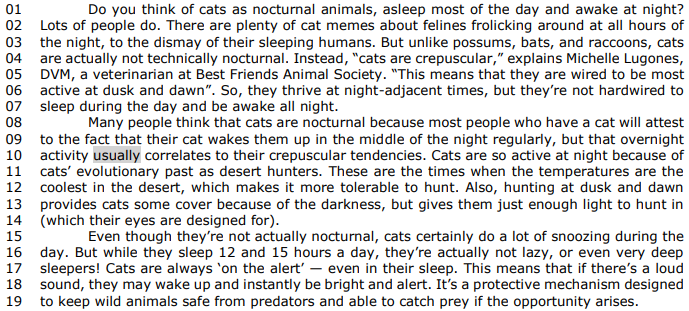
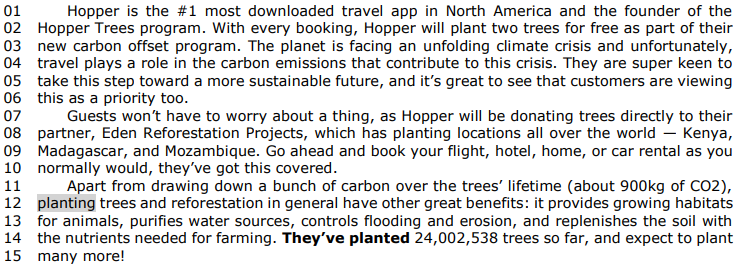
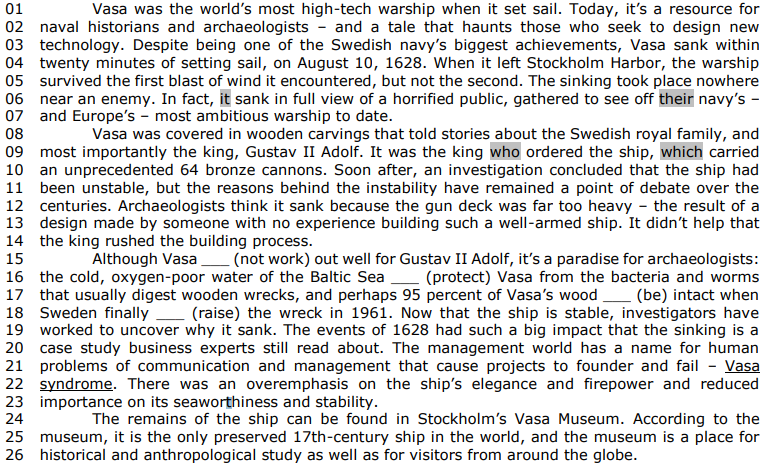
Q2005953 Inglês

inf_texto.png (387×636)

Internet: <www.nortechplus.com>.

Choose the alternative that presents extracts from the text in the simple past and in the present perfect tenses, respectively. 
Alternativas
Q1976227 Inglês

In case you have a frozen screen, you should restart the computer. Doing so gives your system a chance to reset and start fresh. The best way to restart a frozen computer is to hold the power button down for five to 10 seconds.

Internet: <https://www.asurion.com/>.


In the text above, the modal verb “should” expresses  

Alternativas
Q1976223 Inglês
In the cartoon, the word “taught” is 
Alternativas
Q1975997 Inglês
Considering the sentences and grammatical structures from the text, choose the incorrect alternative. 
Alternativas
Q1975993 Inglês

Internet: <www.aireagle.edu.pk>. 

According to the cartoon above, choose the correct alternative. 
Alternativas
Q1975103 Inglês
Text for the item from.


Sean Coughlan. Narcissists ‘horrible people but happy’.
Internet: <https://www.bbc.com> (adapted).
Based on the text, judge the item from. 

The term “might” (line 8) is a modal verb and can be correctly replaced by should, without a change in meaning. 
Alternativas
Q1975100 Inglês
Text for the item from.


Sean Coughlan. Narcissists ‘horrible people but happy’.
Internet: <https://www.bbc.com> (adapted).
Based on the text, judge the item from. 

In “people might infuriate others but are less likely to be stressed or depressed” (lines 8 and 9), the verbs “stressed” and “depressed” are both in the Simple Past tense and refer to “people”.
Alternativas
Respostas
1661: B
1662: D
1663: B
1664: A
1665: A
1666: D
1667: D
1668: A
1669: D
1670: C
1671: C
1672: B
1673: B
1674: C
1675: D
1676: D
1677: C
1678: B
1679: E
1680: E