Questões de Concurso
Sobre sinônimos | synonyms em inglês
Foram encontradas 1.624 questões


Text V
Language Assessment and the new Literacy Studies
Some Final Remarks
Planning language assessment from a structuralist view of language has been a fairly easy task, since it aims at testing the correct use of grammar and lexical structures. This has been a very comfortable way to evaluate students’ performance in many regular schools or language institutes due to the stability of standardized answers. From the perspective of the new literacy studies, the comfort of teaching and assessing objective and homogeneous linguistic contents is replaced by a wider spectrum of language teaching and assessing possibilities, whose key elements turn to be difference and critique. Typical activities based on this new approach would enable students to make and negotiate meanings in a much more flexible way, corroborating the novel notion of unstable, dynamic, collaborative and distributed knowledge.
The inclusion of contents of such nature in language assessments may be, at a first glance, a very laborious process due to the fact we are simply not accustomed to that. Actually, we sometimes find ourselves deprived from the teaching skills necessary to apply a more critical teaching approach, a fact that is much the results of our positivist educational background.
Nonetheless, since the emergent digital epistemology will require subject more capable of designing and redesigning meaning critically towards a great deal of representational modes, we need to reconsider our teaching approaches, go further and seek theories that take such issues into account. By redefining the notions of language and knowledge, we, thus, assume that the new literacy studies from the last decades may offer very good insights to the field of foreign language teaching.
The re-conceptualization of language assessment according to the new literacies project presented in this paper does not intend to suggest prompt fixed answers, but it takes the risk of outlining possible activities, signaling certain changes regarding its characteristics and contents, as previously shared.
The increasing importance of the new literacy and multiliteracies studies and their fruitful theoretical insight for the rethinking of pedagogical issues invite us to review our foreign language teaching practices in a different perspective. By sharing some of our local findings, we attempt to corroborate the collaborative and distributed knowledge discussed by the literacies theory itself and hope to be contributing to the new educational demands of the emerging epistemological basis.
From: DUBOC, A.P.M. Language Assessment and the new Literacy Studies. Lenguaje
37 (1), 2009. pp. 159-178, p. 175-176.
Text I
Nurturing Multimodalism
[…]
New learning collaborations call on the teacher as learner, and the learner as teacher. The teacher is a lifelong learner; this is simply more apparent in the Information Age. In instances of best practice, collaborative learning partnerships are forged between and among teachers for strategic, bottom-up, in-house professional development. This allows teachers to share in reflective, on-going, contextualized learning, tailored to their collective knowledge. This sharing also includes the learner as teacher. ELT typically employs learner-centered activities: these can include learners sharing their knowledge of strategic digital literacies with others in the classrooms.
The digital universe, so threatening to adult notions of socially sanctioned literacies, is intuitive to children, who have been socialized into it, and for whom digital literacies are exploratory play. Adults may find new ways of communicating digitally to be quite baffling and confronting of our communicative expertise; children do not. Instant messaging systems, such as MSN, AOL, ICQ, for example, provide as natural a medium for communicating to them as telephones did for the baby-boomer generation. It is not fair for the teacher to treat Information and Communication Technologies as auxiliary communication with learners for whom it is mainstream and primary.
Learning spaces are important. Although teachers seldom have much individual say in the layout of teaching spaces, collaborative relationships may help to encourage integrated digitization, where computers are not segregated in laboratories but are interspersed throughout the school environment. In digitally infused curricula, postmodern literacies do not supplant but complement modern literacies, so that access to information is driven by purpose and content rather than by the media available.
Adapted from: LOTHERINGTON, H. From literacy to multiliteracies in ELT. In:
CUMMINS, J.; DAVISON, C. (Eds.) International Handbook of English Language
Teaching. New York: Springer, 2007, p. 820. Available at:
https://www.researchgate.net/publication/226802846_From_Literacy_to_Multiliter
acies_in_ELT
Instruction: answer question based on the following text.
4 easy ways to make your holidays more eco-friendly

(Available at: https://www.nationalgeographic.com/environment/article/4-easy-ways-to-make-your-holidaysmore-eco-friendly – text especially adapted for this test).
Use the following text to answer questions
TEXT
Homework: one word that makes the heart of many a parent sink and is guaranteed, at any given time, to be causing rows in homes around the world. The homework debate has raged for decades. How much homework should kids get? How involved should parents be? And does it really matter if it doesn't get done? Recent years have seen a swell of support for ditching homework altogether; more than one teacher has gone semi-viral for sharing a nohomework policy that prioritizes family time, outdoor play, and early bedtimes. And some schools have adopted no-homework programs, encouraging students to enjoy their evening free time and in some cases lengthening the school day to provide more classroom instruction.
Unbeknownst to many, there is an unofficial homework standard, the "10-minute rule" that was first proposed by Duke University psychology professor Harris Cooper and is supported by the National PTA and the National Education Association. It's simple: a daily maximum of 10 minutes of homework per grade level. (First graders do 10 minutes of homework each night; second graders do 20 minutes; third graders do 30 minutes, and so on.)
Cooper is responsible for the most comprehensive research on homework to date. His 2006 meta-analysis, published in the Review of Educational Research, found evidence that students who did homework performed better in school. However, the correlation was stronger for students in seventh through 12th grade. In earlier grades, the relationship between homework and performance was weak. But Cooper's analysis shows correlation, not causation. It begs the question: Does homework lead to achievement, or do high achievers simply do more homework? Undoubtedly, some kids are less likely to kick up a stink about doing homework than others. Others actually want to do homework. The point being, they're all different.
Instruction: answer the question based on the following text.

Consider the following assertives:
I.The word "oatmeal" could be translated as "aveia" (14º§).
II.The word "once" is a preposition (11º§).
III.The word "replenishing" could be replaced by "outshine" (11º§).
Which one(s) is(are) CORRECT?
RICHARDS, J. C. & RODGERS, T. Approaches and methods in language teaching. New York: Cambridge University Press, 2001. P. 33
The word “bewildered” expressed in the text may be replaced, without changing the meaning, by the word
I.The game ended in a tie. II.I need to tie my hair back. III.I hate wearing a tie when I have to get dressed up.
Choose the option that contains the synonym of the words in bold.
TEXTIV- Text forquestion
QUOTATION
“Another important characteristic of the [National Curricular] Parameters that should not be overlooked is their emphasis on teacher's autonomy. This emphasis can be seen clearly in the fact that no content or method is imposed upon the teachers. What one can find are suggestions and relevant information for teachers to make their own decisions, taking into consideration the context within which they work. In other words, the Parameters do not force any teacher to limit their focus on the teaching of reading, if they believe they can go further than that” (ALMEIDA, 2012, p. 334).
(Source: ALMEIDA, Ricardo Luiz Teixeira de. The teaching of English as a foreign language in the context of Brazilian regular schools: a retrospective and prospective view of policies and practices. In: Revista Brasileira de Linguística Aplicada, Belo Horizonte, v. 12, nº 2, June, 2012, p. 331-348. Available at: th https://www.scielo.br/j/rbla/a/nNz3Jtj85xmms8MnNfwRpMn/?format=pdf&lang=en. Accessed on April 20 , 2022).
The word “overlooked” in the passage “Another important characteristic of the [National Curricular] Parameters that should not be overlooked is their emphasis on teacher's autonomy” is a SYNONYM of:
Source: Reuters.com
Mark the alternative that presents a synonym of the word in bold.
Consider the sentence below:
"Today is Sunday and I'm off duty."
The synonym for OFF DUTY is:
TEXT I –
The crisis of the new coronavirus made access to education difficult for black and poor students. In English teaching, it is necessary to consider issues that have already distanced this group from learning the language, such as: difficulty in accessing technology, lack of monitoring by a family member, black girls and housework and representativeness in English teaching.
Newsroom11 / Nov. 2021
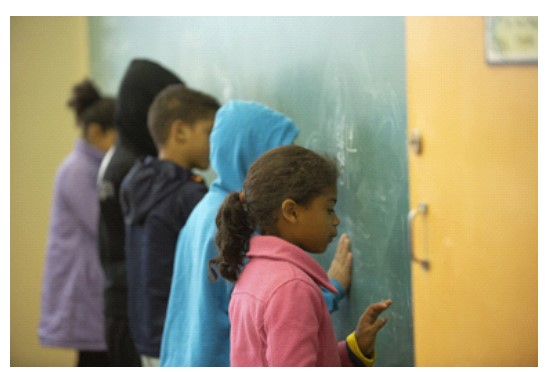
If inequality was already a reality in Brazilian education, in 2020, due to the Covid-19 pandemic — with closed schools and the adoption of remote education — the situation worsened even more. The report by the United Nations Children's Fund (UNICEF), “Scenarios of School Exclusion in Brazil”, points out that, at the end of 2020, more than 5 million Brazilian students aged 6 to 17 were without access to schools.
Of this total, more than 40% were represented by children aged 6 to 10 years, an age group in which education was almost universal in the country before the crisis of the new coronavirus. In this scenario, young people from poor, black, brown and indigenous families were the most affected.
Another data, presented by PNAD Covid, a survey by the Brazilian Institute of Geography and Statistics (IBGE), points out the supply of materials for attending classes from home: among white students in elementary school, 89% received school activities in the pandemic, among black and brown students this percentage drops to 77%.
It is a worrying context and, based on this information, we can make a cut about the exclusion of black children and teenagers and even girls in education, more specifically in English teaching. What factors further hindered these students' access to knowledge of the language? What were the problems already faced in language learning before the pandemic?
Adapted from: https://www.inglesnasescolas.org/en/headline/teaching-english-to-girls-and-black-students-problems-faced-even-before-the-pandemic/. Accessed on January 24th, 2022.
Answer question according to TEXT I.
In the sentence “What factors further hindered these students' access to knowledge of the language?” (in bold) the word “hindered” can be replaced by
I.I will wave when I see you in the parade.
II.Will there be another wave of illness in the spring?
III.I dream of surfing the perfect wave.
Choose the option that contains the synonym:

 Conheça nossos planos