Questões de Concurso
Sobre sinônimos | synonyms em inglês
Foram encontradas 1.586 questões


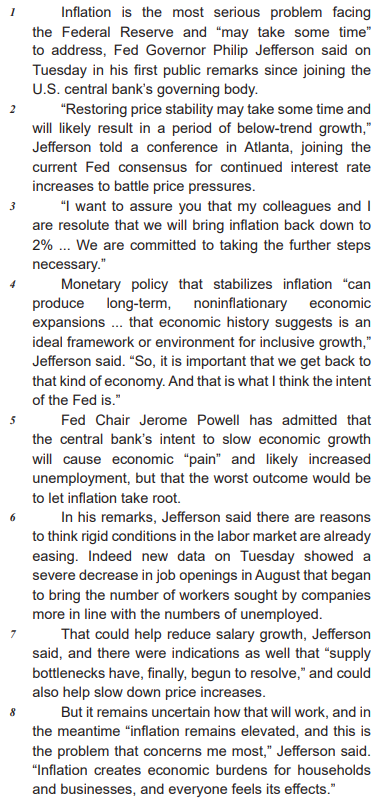

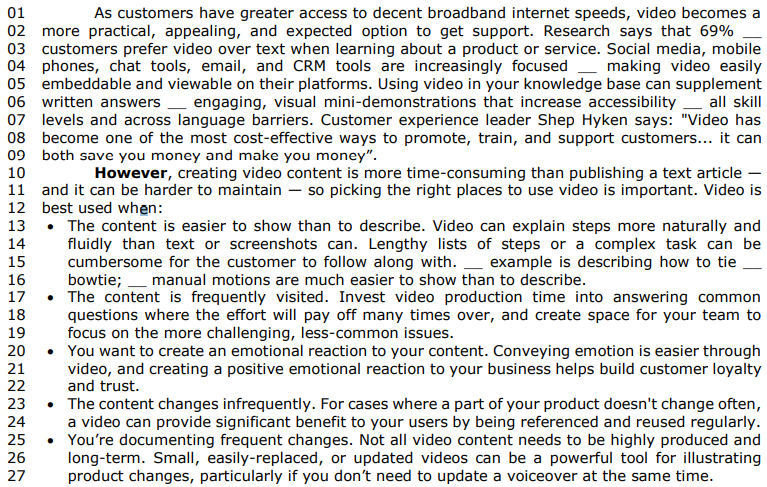
I. Its past form is “could”. II. It could be replaced by “must” with no significative changes in meaning. III. It expresses permission.
Which statements are correct?
Text I
Trust and audit
Trust is what auditors sell. They review the accuracy, adequacy or propriety of other people’s work. Financial statement audits are prepared for the owners of a company and presented publically to provide assurance to the market and the wider public. Public service audits are presented to governing bodies and, in some cases, directly to parliament.
It is the independent scepticism of the auditor that allows shareholders and the public to be confident that they are being given a true and fair account of the organisation in question. The auditor’s signature pledges his or her reputational capital so that the audited body’s public statements can be trusted. […]
Given the fundamental importance of trust, should auditors not then feel immensely valuable in the context of declining trust? Not so. Among our interviewees, a consensus emerged that the audit profession is under-producing trust at a critical time. One aspect of the problem is the quietness of audit: it is a profession that literally goes about its work behind the scenes. The face and processes of the auditor are rarely seen in the organisations they scrutinise, and relatively rarely in the outside world. Yet, if we listen to the mounting evidence of the importance of social capital, we know that frequent and reliable contacts between groups are important to strengthening and expanding trust.
So what can be done? Our research suggests that more frequent dialogue with audit committees and a more ambitious outward facing role for the sector’s leadership would be welcome. But we think more is needed. Audit for the 21st century should be understood and designed as primarily a confidence building process within the audited organisation and across its stakeholders. If the audit is a way of ensuring the client’s accountability, much more needs to be done to make the audit itself exemplary in its openness and inclusiveness.
Instead of an audit report being a trust-producing product, the audit process could become a trust-producing practice in which the auditor uses his or her position as a trusted intermediary to broker rigorous learning across all dimensions of the organisation and its stakeholders. The views of investors, staff, suppliers and customers could routinely be considered, as could questions from the general public; online technologies offer numerous opportunities to inform, involve and invite.
From being a service that consists almost exclusively of external investigation by a warranted professional, auditing needs to become more co-productive, with the auditor’s role expanding to include that of an expert convenor who is willing to share the tools of enquiry. Audit could move from ‘black box’ to ‘glass box’.
But the profession will still struggle to secure trust unless it can stake a stronger claim to supporting improvement. Does it increase the economic, social or environmental value of the organisations it reviews? It is one thing to believe in the accuracy of a financial statement audit, but it is another thing to believe in its utility.
Adapted from: https://auditfutures.net/pdf/AuditFutures-RSA-EnlighteningProfessions.pdf
Adding ethics to public finance
Evolutionary moral psychologists point the way to garnering broader support for fiscal policies
Policy decisions on taxation and public expenditures intrinsically reflect moral choices. How much of your hard-earned money is it fair for the state to collect through taxes? Should the rich pay more? Should the state provide basic public services such as education and health care for free to all citizens? And so on.
Economists and public finance practitioners have traditionally focused on economic efficiency. When considering distributional issues, they have generally steered clear of moral considerations, perhaps fearing these could be seen as subjective. However, recent work by evolutionary moral psychologists suggests that policies can be better designed and muster broader support if policymakers consider the full range of moral perspectives on public finance. A few pioneering empirical applications of this approach in the field of economics have shown promise.
For the most part, economists have customarily analyzed redistribution in a way that requires users to provide their own preferences with regard to inequality: Tell economists how much you care about inequality, and they can tell you how much redistribution is appropriate through the tax and benefit system. People (or families or households) have usually been considered as individuals, and the only relevant characteristics for these exercises have been their incomes, wealth, or spending potential.
There are two — understandable but not fully satisfactory — reasons for this approach. First, economists often wish to be viewed as objective social scientists. Second, most public finance scholars have been educated in a tradition steeped in values of societies that are WEIRD (Western, Educated, Industrialized, Rich, and Democratic). In this context, individuals are at the center of the analysis, and morality is fundamentally about the golden rule — treat other people the way that you would want them to treat you, regardless of who those people are. These are crucial but ultimately insufficient perspectives on how humans make moral choices.
Evolutionary moral psychologists during the past couple of decades have shown that, faced with a moral dilemma, humans decide quickly what seems right or wrong based on instinct and later justify their decision through more deliberate reasoning. Based on evidence presented by these researchers, our instincts in the moral domain evolved as a way of fostering cooperation within a group, to help ensure survival. This modern perspective harks back to two moral philosophers of the Scottish Enlightenment — David Hume and Adam Smith — who noted that sentiments are integral to people’s views on right and wrong. But most later philosophers in the Western tradition sought to base morality on reason alone.
Moral psychologists have recently shown that many people draw on moral perspectives that go well beyond the golden rule. Community, authority, divinity, purity, loyalty, and sanctity are important considerations not only in many non-Western countries, but also among politically influential segments of the population in advanced economies, as emphasized by proponents of moral foundations theory.
Regardless of whether one agrees with those broader moral perspectives, familiarity with them makes it easier to understand the underlying motivations for various groups’ positions in debates on public policies. Such understanding may help in the design of policies that can muster support from a wide range of groups with differing moral values.
Adapted from: https://www.imf.org/en/Publications/fandd/issues/2022/03/Addingethics-to-public-finance-Mauro
(Maya Angelou.) I’ve got the children to tend The clothes to mend The floor to mop The food to shop Then the chicken to fry The baby to dry I got company to feed The garden to weed I've got shirts to press The tots to dress The cane to be cut I gotta clean up this hut Then see about the sick And the cotton to pick. Shine on me, sunshine Rain on me, rain Fall softly, dewdrops And cool my brow again. Storm, blow me from here with your fiercest wind Let me float across the sky ‘til I can rest again, fall gently, snowflakes, Cover me with white cold icy kisses and let me rest tonight. Sun, rain, curving sky, mountain, oceans, leaf and stone You're all that I can call my own. (Available: http://www.aquaculturewithoutfrontiers.org.)
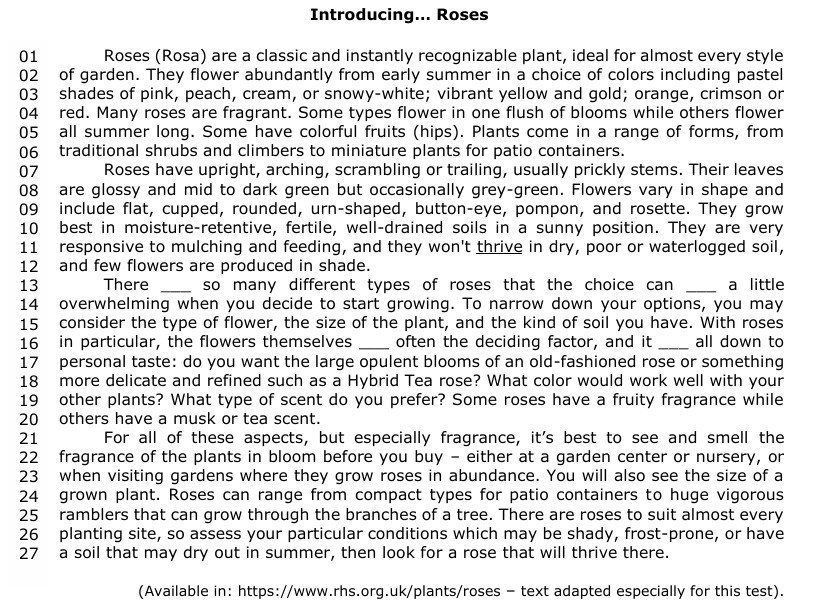
In “Fall softly, dewdrops” and “Let me float across the sky ‘til I can rest again, fall gently, snowflakes” the words GENTLY and SOFTLY convey the concept of:
Text V
Language Assessment and the new Literacy Studies
Some Final Remarks
Planning language assessment from a structuralist view of language has been a fairly easy task, since it aims at testing the correct use of grammar and lexical structures. This has been a very comfortable way to evaluate students’ performance in many regular schools or language institutes due to the stability of standardized answers. From the perspective of the new literacy studies, the comfort of teaching and assessing objective and homogeneous linguistic contents is replaced by a wider spectrum of language teaching and assessing possibilities, whose key elements turn to be difference and critique. Typical activities based on this new approach would enable students to make and negotiate meanings in a much more flexible way, corroborating the novel notion of unstable, dynamic, collaborative and distributed knowledge.
The inclusion of contents of such nature in language assessments may be, at a first glance, a very laborious process due to the fact we are simply not accustomed to that. Actually, we sometimes find ourselves deprived from the teaching skills necessary to apply a more critical teaching approach, a fact that is much the results of our positivist educational background.
Nonetheless, since the emergent digital epistemology will require subject more capable of designing and redesigning meaning critically towards a great deal of representational modes, we need to reconsider our teaching approaches, go further and seek theories that take such issues into account. By redefining the notions of language and knowledge, we, thus, assume that the new literacy studies from the last decades may offer very good insights to the field of foreign language teaching.
The re-conceptualization of language assessment according to the new literacies project presented in this paper does not intend to suggest prompt fixed answers, but it takes the risk of outlining possible activities, signaling certain changes regarding its characteristics and contents, as previously shared.
The increasing importance of the new literacy and multiliteracies studies and their fruitful theoretical insight for the rethinking of pedagogical issues invite us to review our foreign language teaching practices in a different perspective. By sharing some of our local findings, we attempt to corroborate the collaborative and distributed knowledge discussed by the literacies theory itself and hope to be contributing to the new educational demands of the emerging epistemological basis.
From: DUBOC, A.P.M. Language Assessment and the new Literacy Studies. Lenguaje
37 (1), 2009. pp. 159-178, p. 175-176.
Text V
Language Assessment and the new Literacy Studies
Some Final Remarks
Planning language assessment from a structuralist view of language has been a fairly easy task, since it aims at testing the correct use of grammar and lexical structures. This has been a very comfortable way to evaluate students’ performance in many regular schools or language institutes due to the stability of standardized answers. From the perspective of the new literacy studies, the comfort of teaching and assessing objective and homogeneous linguistic contents is replaced by a wider spectrum of language teaching and assessing possibilities, whose key elements turn to be difference and critique. Typical activities based on this new approach would enable students to make and negotiate meanings in a much more flexible way, corroborating the novel notion of unstable, dynamic, collaborative and distributed knowledge.
The inclusion of contents of such nature in language assessments may be, at a first glance, a very laborious process due to the fact we are simply not accustomed to that. Actually, we sometimes find ourselves deprived from the teaching skills necessary to apply a more critical teaching approach, a fact that is much the results of our positivist educational background.
Nonetheless, since the emergent digital epistemology will require subject more capable of designing and redesigning meaning critically towards a great deal of representational modes, we need to reconsider our teaching approaches, go further and seek theories that take such issues into account. By redefining the notions of language and knowledge, we, thus, assume that the new literacy studies from the last decades may offer very good insights to the field of foreign language teaching.
The re-conceptualization of language assessment according to the new literacies project presented in this paper does not intend to suggest prompt fixed answers, but it takes the risk of outlining possible activities, signaling certain changes regarding its characteristics and contents, as previously shared.
The increasing importance of the new literacy and multiliteracies studies and their fruitful theoretical insight for the rethinking of pedagogical issues invite us to review our foreign language teaching practices in a different perspective. By sharing some of our local findings, we attempt to corroborate the collaborative and distributed knowledge discussed by the literacies theory itself and hope to be contributing to the new educational demands of the emerging epistemological basis.
From: DUBOC, A.P.M. Language Assessment and the new Literacy Studies. Lenguaje
37 (1), 2009. pp. 159-178, p. 175-176.
Text I
Nurturing Multimodalism
[…]
New learning collaborations call on the teacher as learner, and the learner as teacher. The teacher is a lifelong learner; this is simply more apparent in the Information Age. In instances of best practice, collaborative learning partnerships are forged between and among teachers for strategic, bottom-up, in-house professional development. This allows teachers to share in reflective, on-going, contextualized learning, tailored to their collective knowledge. This sharing also includes the learner as teacher. ELT typically employs learner-centered activities: these can include learners sharing their knowledge of strategic digital literacies with others in the classrooms.
The digital universe, so threatening to adult notions of socially sanctioned literacies, is intuitive to children, who have been socialized into it, and for whom digital literacies are exploratory play. Adults may find new ways of communicating digitally to be quite baffling and confronting of our communicative expertise; children do not. Instant messaging systems, such as MSN, AOL, ICQ, for example, provide as natural a medium for communicating to them as telephones did for the baby-boomer generation. It is not fair for the teacher to treat Information and Communication Technologies as auxiliary communication with learners for whom it is mainstream and primary.
Learning spaces are important. Although teachers seldom have much individual say in the layout of teaching spaces, collaborative relationships may help to encourage integrated digitization, where computers are not segregated in laboratories but are interspersed throughout the school environment. In digitally infused curricula, postmodern literacies do not supplant but complement modern literacies, so that access to information is driven by purpose and content rather than by the media available.
Adapted from: LOTHERINGTON, H. From literacy to multiliteracies in ELT. In:
CUMMINS, J.; DAVISON, C. (Eds.) International Handbook of English Language
Teaching. New York: Springer, 2007, p. 820. Available at:
https://www.researchgate.net/publication/226802846_From_Literacy_to_Multiliter
acies_in_ELT
Instruction: answer the question based on the following text.

Consider the following assertives:
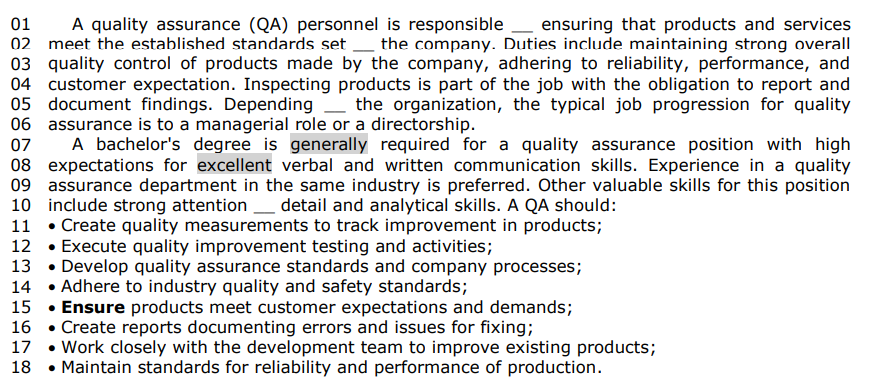
I.The word "oatmeal" could be translated as "aveia" (14º§).
II.The word "once" is a preposition (11º§).
III.The word "replenishing" could be replaced by "outshine" (11º§).
Which one(s) is(are) CORRECT?
RICHARDS, J. C. & RODGERS, T. Approaches and methods in language teaching. New York: Cambridge University Press, 2001. P. 33
The word “bewildered” expressed in the text may be replaced, without changing the meaning, by the word

 Conheça nossos planos