Questões de Concurso
Sobre interpretação de texto | reading comprehension em inglês
Foram encontradas 12.687 questões


Leia o texto a seguir.
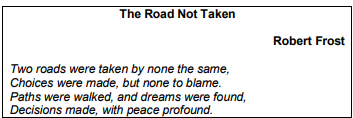
Texto inspirado em FROST, Robert. The Road Not Taken. (1916). [Adaptado].
No trecho apresentado, o uso da Passive Voice (voz passiva) contribui para mostrar que:
Observe a imagem a seguir.
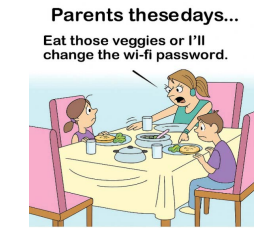
INGLÊS PARA TODOS. Charges. Disponível em: https://ingles-paratodos1.webnode.page/charges/. Acesso em: 11 out. 2025.
A charge apresentada realiza uma crítica a qual aspecto da sociedade contemporânea?
"The methods and approaches used in foreign language teaching are generally aimed at improving the basic language skills of the language. Speaking, listening, reading and writing are expressed in four basic language skills. In the literature, listening and reading are perceptual skills, speaking and writing are expressed as production skills."
Based on the text, and considering the relationship between skill development and text−context comprehension, which of the statements below is correct?
I.Productive skills (speaking and writing) require integrating linguistic knowledge with context and communicative purpose.
II.The balance between perceptive and productive skills is essential for learners to understand and construct meaning across different contexts.
III.Reading and listening comprehension depend solely on decoding linguistic forms, not on contextual interpretation.
It is correct what is stated in:
"Children's literature is a valuable tool to raise intercultural awareness in language classrooms. Through stories, learners can explore differences and similarities between cultures, and challenge stereotypes. Literature helps them develop empathy, curiosity, and respect for others." (Ibrahim, 2021. The role of children's literature in developing intercultural awareness in ELT. Nord University, p. 5).
(__)Children's literature can serve as a medium to challenge stereotypes and promote empathy.
(__)Intercultural awareness is limited to understanding vocabulary and grammar within texts.
(__)Stories that include cultural differences can foster curiosity and respect among learners.
(__)Avoiding cultural content in English stories enhances students' intercultural competence.
(__)The use of literature in ELT connects linguistic learning with emotional and cultural growth.
Text 1
Smatphones are banned in Brazilian Schools
Brazil’s president has signed a law to limit smartphone use in schools, starting in February. This rule will apply to elementary and high schools across the country. Phones will only be allowed in emergencies, for educational activities, or for students with disabilities. The goal is to help students focus better and reduce distractions caused by phones.
Officials explained that children are using the internet at younger ages, which makes it harder for parents to monitor them. Limiting smartphones at school can help students concentrate on studying. A recent survey found that nearly two-thirds of Brazilians support banning smartphones in schools, and over threequarters believe these devices are harmful for kids.
Some families and students agree with the move, saying it will encourage more interaction and help classmates focus better. However, others believe it won’t solve all school issues, like bullying and harassment.
As of 2023, about two-thirds of Brazilian schools already limit smartphone use, while 28% ban them completely. Some states, such as Rio de Janeiro and Goias, have passed local laws restricting phones in schools, but enforcement has been challenging. In Sao Paulo, discussions are ongoing about banning phones in both public and private schools.
Globally, concerns ______________ smartphone use ______________ children have led to similar measures. Countries ______________ China, France, and parts of the U.S. have introduced restrictions to reduce distractions and protect children’s mental health. A report ______________ UNESCO found that one in four countries has already limited smartphone use in schools.
Adapted from: https://en.islcollective.com
1. New smartphone’s rules were created to help students focus better.
2. Over three-quarters of Brazilians think phones are harmful for kids.
3. Officials think smartphones are a problem for children because they are expensive for families.
4. If the law passes in São Paulo both public and private schools will ban phones.
Choose the alternative which contains the correct affirmatives.
Text 1
Smatphones are banned in Brazilian Schools
Brazil’s president has signed a law to limit smartphone use in schools, starting in February. This rule will apply to elementary and high schools across the country. Phones will only be allowed in emergencies, for educational activities, or for students with disabilities. The goal is to help students focus better and reduce distractions caused by phones.
Officials explained that children are using the internet at younger ages, which makes it harder for parents to monitor them. Limiting smartphones at school can help students concentrate on studying. A recent survey found that nearly two-thirds of Brazilians support banning smartphones in schools, and over threequarters believe these devices are harmful for kids.
Some families and students agree with the move, saying it will encourage more interaction and help classmates focus better. However, others believe it won’t solve all school issues, like bullying and harassment.
As of 2023, about two-thirds of Brazilian schools already limit smartphone use, while 28% ban them completely. Some states, such as Rio de Janeiro and Goias, have passed local laws restricting phones in schools, but enforcement has been challenging. In Sao Paulo, discussions are ongoing about banning phones in both public and private schools.
Globally, concerns ______________ smartphone use ______________ children have led to similar measures. Countries ______________ China, France, and parts of the U.S. have introduced restrictions to reduce distractions and protect children’s mental health. A report ______________ UNESCO found that one in four countries has already limited smartphone use in schools.
Adapted from: https://en.islcollective.com
Text 1
Smatphones are banned in Brazilian Schools
Brazil’s president has signed a law to limit smartphone use in schools, starting in February. This rule will apply to elementary and high schools across the country. Phones will only be allowed in emergencies, for educational activities, or for students with disabilities. The goal is to help students focus better and reduce distractions caused by phones.
Officials explained that children are using the internet at younger ages, which makes it harder for parents to monitor them. Limiting smartphones at school can help students concentrate on studying. A recent survey found that nearly two-thirds of Brazilians support banning smartphones in schools, and over threequarters believe these devices are harmful for kids.
Some families and students agree with the move, saying it will encourage more interaction and help classmates focus better. However, others believe it won’t solve all school issues, like bullying and harassment.
As of 2023, about two-thirds of Brazilian schools already limit smartphone use, while 28% ban them completely. Some states, such as Rio de Janeiro and Goias, have passed local laws restricting phones in schools, but enforcement has been challenging. In Sao Paulo, discussions are ongoing about banning phones in both public and private schools.
Globally, concerns ______________ smartphone use ______________ children have led to similar measures. Countries ______________ China, France, and parts of the U.S. have introduced restrictions to reduce distractions and protect children’s mental health. A report ______________ UNESCO found that one in four countries has already limited smartphone use in schools.
Adapted from: https://en.islcollective.com
( ) Brazil created the new smartphone rule to encourage parents to by smartphones.
( ) Two-thirds of Brazilians support banning smartphones in schools.
( ) Schools around the world have no rules about phones.
( ) Some students agree that limiting phones will help them focus.
Choose the alternative which presents the correct sequence, from top to bottom.
Para responder a questão, leia o texto a seguir:
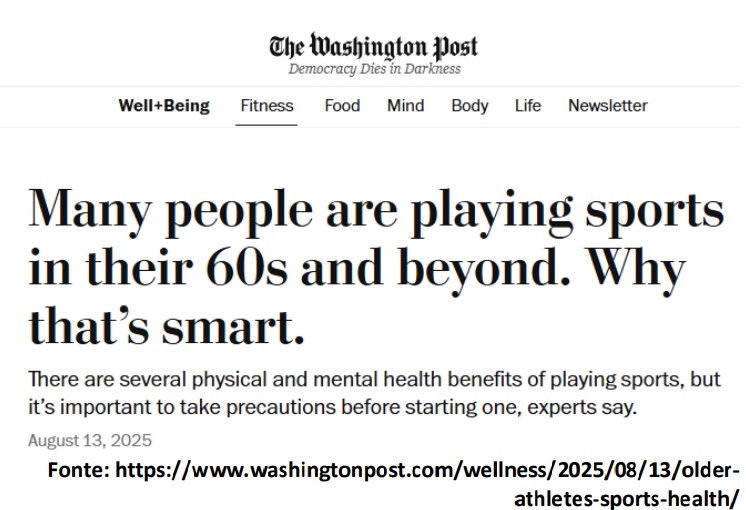
What do experts recommend before starting to play a sport?
Para responder a questão, leia o texto a seguir:
What is one main benefit mentioned in the text about playing sports?
Para responder a questão, leia o texto a seguir:
According to the headline, what are many people in their 60s and older doing?
I. The Seattle school district is suing social media companies.
II. Social media companies, such as Meta, Google, Snap and TikTok, have to pay damages to American families.
III. Facebook is unaware of Instagram’s potential negative effects.
The CORRECT statements are:
Ultimately, the decision to ban mobile phones in schools should be made, considering the specific needs and context of the school, the age and maturity of the students, and the potential for alternative solutions to (1)__________ concerns about mobile phone use. While banning cellphones can lead to increased focus, reduced bullying, and better social interaction, it can also limit access to valuable learning tools and hinder communication during emergencies. Educational institutions must consider these factors (2)__________ and strive to find a balanced approach that maximizes the (3)__________ while mitigating the disadvantages. Instead of a complete ban, schools could explore alternatives like designated phone zones, (4)__________ restrictions, or educational programs addressing responsible phone use. Open communication and dialogue among students, teachers, parents, and administrators are crucial to finding a balanced approach within the educational (5)__________.
Read Text A and answer the question.
Text A
Brazil joins growing list of countries banning cellphones in schools
(1) A bill that bans students from using cellphones in schools was signed into law in Brazil on Monday, the latest example of lawmakers limiting young people’s use of personal technology in the classroom, amongst growing concern about its effect on education and wellbeing.
(2) Brazil’s Education Ministry said in a statement that the law “aims to safeguard the mental, physical and psychological health of children and adolescents.” The law prohibits all students in public and private elementary and secondary schools from using portable electronic devices throughout the school day, the ministry said, though it allows for their educational use and some other exceptions.
(3) Brazil joins several countries that have banned the personal use of cellphones in schools — including the Netherlands, Italy, and France — though there are questions as to whether phone bans are effective in achieving their aims.
(4) On the one hand, the U.N. Educational, Scientific and Cultural Organization (UNESCO) recommended in 2023 that smartphones only be allowed during class time for learning activities. “Even just having a mobile phone nearby with notifications coming through is enough to result in students losing their attention from the task at hand,” it said in a statement.
(5) Despite the concern, an August (2024) global literature review by researchers at three universities in Queensland, Australia, found that there have been limited high-quality studies on the issue. “The evidence for banning mobile phones for the mental health and well-being of students is inconclusive and based only on anecdotes or perceptions, rather than the recorded incidence of mental illness,” authors Marilyn Campbell, professor of early-childhood and inclusive education at the Queensland University of Technology. “Mobile phones are an integral part of our lives,” they added. “We need to be teaching children about appropriate use of phones, rather than simply banning them.”
(Adapted from: https://www.washingtonpost.com/world/2025/01/14/brazil-cellphoneschool-ban/
Read Text A and answer the question.
Text A
Brazil joins growing list of countries banning cellphones in schools
(1) A bill that bans students from using cellphones in schools was signed into law in Brazil on Monday, the latest example of lawmakers limiting young people’s use of personal technology in the classroom, amongst growing concern about its effect on education and wellbeing.
(2) Brazil’s Education Ministry said in a statement that the law “aims to safeguard the mental, physical and psychological health of children and adolescents.” The law prohibits all students in public and private elementary and secondary schools from using portable electronic devices throughout the school day, the ministry said, though it allows for their educational use and some other exceptions.
(3) Brazil joins several countries that have banned the personal use of cellphones in schools — including the Netherlands, Italy, and France — though there are questions as to whether phone bans are effective in achieving their aims.
(4) On the one hand, the U.N. Educational, Scientific and Cultural Organization (UNESCO) recommended in 2023 that smartphones only be allowed during class time for learning activities. “Even just having a mobile phone nearby with notifications coming through is enough to result in students losing their attention from the task at hand,” it said in a statement.
(5) Despite the concern, an August (2024) global literature review by researchers at three universities in Queensland, Australia, found that there have been limited high-quality studies on the issue. “The evidence for banning mobile phones for the mental health and well-being of students is inconclusive and based only on anecdotes or perceptions, rather than the recorded incidence of mental illness,” authors Marilyn Campbell, professor of early-childhood and inclusive education at the Queensland University of Technology. “Mobile phones are an integral part of our lives,” they added. “We need to be teaching children about appropriate use of phones, rather than simply banning them.”
(Adapted from: https://www.washingtonpost.com/world/2025/01/14/brazil-cellphoneschool-ban/
The expressions phrasal verb and prepositional verb refer to verbs combined with an adverbial or prepositional particle, creating a unit whose overall meaning is often distinct from the meanings of its individual components. In “Despite initial opposition, the committee finally accepted the proposal after several rounds of negotiation”, the verb accepted can be most appropriately replaced by the phrasal verb:
“Climate change remains one of the most pressing issues facing humanity today. If governments worldwide commit to reducing greenhouse gas emissions, there is a chance that global temperature increases can be limited to safer levels. However, if current trends continue unchecked, the consequences will be catastrophic, affecting ecosystems and societies alike. Scientists emphasize that, if early mitigation measures had been implemented decades ago, the severity of current impacts could have been significantly reduced.”
The sentence which correctly uses a conditional structure and maintains the intended meaning based on the context above is:
“At the commencement of each academic year, students are required to complete the registration dossier, presenting certified copies of identity documents and proof of residence at the administration desk. Staff will process applications according to the published timetable; adherence to these deadlines is mandatory to secure course placement. Students are expected to observe punctuality, comply with curricular requirements, and consult their tutors proactively should difficulties arise. It is imperative that laboratory protocols and library regulations be respected: noncompliance may lead to restricted access or disciplinary measures. These procedural directives are issued to ensure the orderly functioning of the school and to guarantee equitable access to educational resources”.
Indicate which textual typology predominates throughout the text above, taking into account its communicative purpose within the school environment.
“In the recent publication, the committee reviewed several proposals aimed at improving urban sustainability. While the majority favored the initiative led by the Green Future Foundation, it was the economic feasibility report submitted by the independent consultants that ultimately influenced their decision. Despite some reservations, the board members acknowledged that it was comprehensive and thoroughly researched, lending credibility to the project”.
In the sentence “Despite some reservations, the board members acknowledged that it was comprehensive and thoroughly researched, lending credibility to the project”, the pronoun “it” most logically refers to:
"Children Wading, painted by Scottish artist Robert Gemmell Hutchison in 1918, was stolen during a museum heist in Glasgow in 1989. Thieves deactivated an alarm system and climbed through an upstairs window into the Haggs Castle Museum of Childhood. The painting was only rediscovered decades later when it unexpectedly surfaced at an auction house and was identified via the Art Loss Register." (BBC News)
The sentence which correctly uses the passive voice while preserving the original meaning of the excerpt above is:

 Conheça nossos planos