Questões de Concurso
Sobre interpretação de texto | reading comprehension em inglês
Foram encontradas 12.687 questões


INSTRUCTION: Read the comic strip to answer question.

Available at: https://www.gocomics.com/peanuts/1970/01/26. Accessed on: Oct. 10, 2022.
Text CB2A2
Anyone who has interacted with superbot ChatGPT or image generator DALL-E might be wondering what the future of artificial intelligence (AI) holds for humanity.
ChatGPT is an AI program that generates text in a very human-like manner when asked questions. Just ask DALL-E or similar programs to create a picture of a French bulldog driving a pink convertible and voila: you’ll see several versions in seconds.
Science fiction in the mid-20th century created good-natured AI such as the computer on Star Trek helping the Enterprise crew, as well as its evil twin set on destroying its creators like HAL in Arthur C. Clarke’s famous book (or Stanley Kubrick’s 1968 film adaptation) 2001: A Space Odyssey. In 2023, however, we’re surrounded by AI that’s far more mundane than those examples. The virtual assistant in your smartphone, the airline chatbot and the robot vacuum cleaning your floors don’t seem to have any aspirations to rise above humanity and have been designed to help us.
We should be prepared for bigger things to come than games, better chatbots or photo generators. Connectivity is key: think of AI as a general-purpose innovation like electricity that powers and connects other technologies, including sensors, robots, genomic devices and 3D printers. AI’s use will only intensify and accelerate as faster computing technology is developed, along with greater sensors capturing data, often called the Internet of Things (IoT). In the future, AI will be interwoven in virtually every aspect of commercial and personal activities.
Peter Marber. Artificial Intelligence: Why Should We Care?.
Internet:
Considering the linguistic and semantic aspects of text CB2A2, judge the following item.
In the second sentence of the last paragraph, if the phrase
“Connectivity is key” were rewritten as “The key to
connectivity is”, there would be no difference in the meaning
of the sentence.
Text CB2A2
Anyone who has interacted with superbot ChatGPT or image generator DALL-E might be wondering what the future of artificial intelligence (AI) holds for humanity.
ChatGPT is an AI program that generates text in a very human-like manner when asked questions. Just ask DALL-E or similar programs to create a picture of a French bulldog driving a pink convertible and voila: you’ll see several versions in seconds.
Science fiction in the mid-20th century created good-natured AI such as the computer on Star Trek helping the Enterprise crew, as well as its evil twin set on destroying its creators like HAL in Arthur C. Clarke’s famous book (or Stanley Kubrick’s 1968 film adaptation) 2001: A Space Odyssey. In 2023, however, we’re surrounded by AI that’s far more mundane than those examples. The virtual assistant in your smartphone, the airline chatbot and the robot vacuum cleaning your floors don’t seem to have any aspirations to rise above humanity and have been designed to help us.
We should be prepared for bigger things to come than games, better chatbots or photo generators. Connectivity is key: think of AI as a general-purpose innovation like electricity that powers and connects other technologies, including sensors, robots, genomic devices and 3D printers. AI’s use will only intensify and accelerate as faster computing technology is developed, along with greater sensors capturing data, often called the Internet of Things (IoT). In the future, AI will be interwoven in virtually every aspect of commercial and personal activities.
Peter Marber. Artificial Intelligence: Why Should We Care?.
Internet:
Considering the linguistic and semantic aspects of text CB2A2, judge the following item.
The adverb “virtually”, as used in the last sentence of text,
means nearly.
Text CB2A2
Anyone who has interacted with superbot ChatGPT or image generator DALL-E might be wondering what the future of artificial intelligence (AI) holds for humanity.
ChatGPT is an AI program that generates text in a very human-like manner when asked questions. Just ask DALL-E or similar programs to create a picture of a French bulldog driving a pink convertible and voila: you’ll see several versions in seconds.
Science fiction in the mid-20th century created good-natured AI such as the computer on Star Trek helping the Enterprise crew, as well as its evil twin set on destroying its creators like HAL in Arthur C. Clarke’s famous book (or Stanley Kubrick’s 1968 film adaptation) 2001: A Space Odyssey. In 2023, however, we’re surrounded by AI that’s far more mundane than those examples. The virtual assistant in your smartphone, the airline chatbot and the robot vacuum cleaning your floors don’t seem to have any aspirations to rise above humanity and have been designed to help us.
We should be prepared for bigger things to come than games, better chatbots or photo generators. Connectivity is key: think of AI as a general-purpose innovation like electricity that powers and connects other technologies, including sensors, robots, genomic devices and 3D printers. AI’s use will only intensify and accelerate as faster computing technology is developed, along with greater sensors capturing data, often called the Internet of Things (IoT). In the future, AI will be interwoven in virtually every aspect of commercial and personal activities.
Peter Marber. Artificial Intelligence: Why Should We Care?.
Internet:
Considering the linguistic and semantic aspects of text CB2A2, judge the following item.
The word “wonder”, in the first paragraph, is used here in the
sense of “decide”.
Text CB2A2
Anyone who has interacted with superbot ChatGPT or image generator DALL-E might be wondering what the future of artificial intelligence (AI) holds for humanity.
ChatGPT is an AI program that generates text in a very human-like manner when asked questions. Just ask DALL-E or similar programs to create a picture of a French bulldog driving a pink convertible and voila: you’ll see several versions in seconds.
Science fiction in the mid-20th century created good-natured AI such as the computer on Star Trek helping the Enterprise crew, as well as its evil twin set on destroying its creators like HAL in Arthur C. Clarke’s famous book (or Stanley Kubrick’s 1968 film adaptation) 2001: A Space Odyssey. In 2023, however, we’re surrounded by AI that’s far more mundane than those examples. The virtual assistant in your smartphone, the airline chatbot and the robot vacuum cleaning your floors don’t seem to have any aspirations to rise above humanity and have been designed to help us.
We should be prepared for bigger things to come than games, better chatbots or photo generators. Connectivity is key: think of AI as a general-purpose innovation like electricity that powers and connects other technologies, including sensors, robots, genomic devices and 3D printers. AI’s use will only intensify and accelerate as faster computing technology is developed, along with greater sensors capturing data, often called the Internet of Things (IoT). In the future, AI will be interwoven in virtually every aspect of commercial and personal activities.
Peter Marber. Artificial Intelligence: Why Should We Care?.
Internet:
Judge the following item according to the information given in text CB2A2.
Interaction with existing AI prompts questions about the
future of humanity.
Read the following text and answer the question:
Everyone loves avocados – never trust anyone who doesn’t. Though we can’t get enough of the fruit, most people are missing out on a vital part of it. Although the seeds take up a large piece of the center, they’re generally thrown away after the avocado is opened. Yes, this part of the fruit may not seem appetizing, but there are some reasons you should consider indulging it before throwing it away. Within the seed are various acids, such as palmitic acid and oleic acid. While the thought of consuming acids may seem a little dangerous, not all acids are harmful to you in the proper amounts. These acids are known as lipids, and they can help protect your cells, DNA, and proteins from damage. The avocado seed is more beneficial than the other parts of the fruit when it comes to fighting diabetes and premature aging.
Lipids in avocado seeds are also known to help with inflammation. The more of these good acids you
consume, the more your body is well adapted to fighting inflammation in the long run. This means
better support against certain chronic illnesses; this will impact your quality of life significantly.
Cancer is a disease that many people fear, mainly because there’s no absolute cure for it at the moment.
Of course, it is impossible to make your body immune to the illness; there are ways for you to lower
the risk of getting it. The lipids inside avocado seeds are allegedly able to stop cancer cells from
spreading. It has a distinct impact on cancer cells in the colon and liver, although it may be effective
against the disease in any part of the body. These benefits are undoubted; just make sure you find a
way to eat the avocado seeds safely. And remember, they may help, but they are not a complete antidote
to preventing diseases.
Read the following text and answer the question:
Everyone loves avocados – never trust anyone who doesn’t. Though we can’t get enough of the fruit, most people are missing out on a vital part of it. Although the seeds take up a large piece of the center, they’re generally thrown away after the avocado is opened. Yes, this part of the fruit may not seem appetizing, but there are some reasons you should consider indulging it before throwing it away. Within the seed are various acids, such as palmitic acid and oleic acid. While the thought of consuming acids may seem a little dangerous, not all acids are harmful to you in the proper amounts. These acids are known as lipids, and they can help protect your cells, DNA, and proteins from damage. The avocado seed is more beneficial than the other parts of the fruit when it comes to fighting diabetes and premature aging.
Lipids in avocado seeds are also known to help with inflammation. The more of these good acids you
consume, the more your body is well adapted to fighting inflammation in the long run. This means
better support against certain chronic illnesses; this will impact your quality of life significantly.
Cancer is a disease that many people fear, mainly because there’s no absolute cure for it at the moment.
Of course, it is impossible to make your body immune to the illness; there are ways for you to lower
the risk of getting it. The lipids inside avocado seeds are allegedly able to stop cancer cells from
spreading. It has a distinct impact on cancer cells in the colon and liver, although it may be effective
against the disease in any part of the body. These benefits are undoubted; just make sure you find a
way to eat the avocado seeds safely. And remember, they may help, but they are not a complete antidote
to preventing diseases.
Read the following text and answer the question:
Everyone loves avocados – never trust anyone who doesn’t. Though we can’t get enough of the fruit, most people are missing out on a vital part of it. Although the seeds take up a large piece of the center, they’re generally thrown away after the avocado is opened. Yes, this part of the fruit may not seem appetizing, but there are some reasons you should consider indulging it before throwing it away. Within the seed are various acids, such as palmitic acid and oleic acid. While the thought of consuming acids may seem a little dangerous, not all acids are harmful to you in the proper amounts. These acids are known as lipids, and they can help protect your cells, DNA, and proteins from damage. The avocado seed is more beneficial than the other parts of the fruit when it comes to fighting diabetes and premature aging.
Lipids in avocado seeds are also known to help with inflammation. The more of these good acids you
consume, the more your body is well adapted to fighting inflammation in the long run. This means
better support against certain chronic illnesses; this will impact your quality of life significantly.
Cancer is a disease that many people fear, mainly because there’s no absolute cure for it at the moment.
Of course, it is impossible to make your body immune to the illness; there are ways for you to lower
the risk of getting it. The lipids inside avocado seeds are allegedly able to stop cancer cells from
spreading. It has a distinct impact on cancer cells in the colon and liver, although it may be effective
against the disease in any part of the body. These benefits are undoubted; just make sure you find a
way to eat the avocado seeds safely. And remember, they may help, but they are not a complete antidote
to preventing diseases.
Read the following text and answer the question:
Everyone loves avocados – never trust anyone who doesn’t. Though we can’t get enough of the fruit, most people are missing out on a vital part of it. Although the seeds take up a large piece of the center, they’re generally thrown away after the avocado is opened. Yes, this part of the fruit may not seem appetizing, but there are some reasons you should consider indulging it before throwing it away. Within the seed are various acids, such as palmitic acid and oleic acid. While the thought of consuming acids may seem a little dangerous, not all acids are harmful to you in the proper amounts. These acids are known as lipids, and they can help protect your cells, DNA, and proteins from damage. The avocado seed is more beneficial than the other parts of the fruit when it comes to fighting diabetes and premature aging.
Lipids in avocado seeds are also known to help with inflammation. The more of these good acids you
consume, the more your body is well adapted to fighting inflammation in the long run. This means
better support against certain chronic illnesses; this will impact your quality of life significantly.
Cancer is a disease that many people fear, mainly because there’s no absolute cure for it at the moment.
Of course, it is impossible to make your body immune to the illness; there are ways for you to lower
the risk of getting it. The lipids inside avocado seeds are allegedly able to stop cancer cells from
spreading. It has a distinct impact on cancer cells in the colon and liver, although it may be effective
against the disease in any part of the body. These benefits are undoubted; just make sure you find a
way to eat the avocado seeds safely. And remember, they may help, but they are not a complete antidote
to preventing diseases.

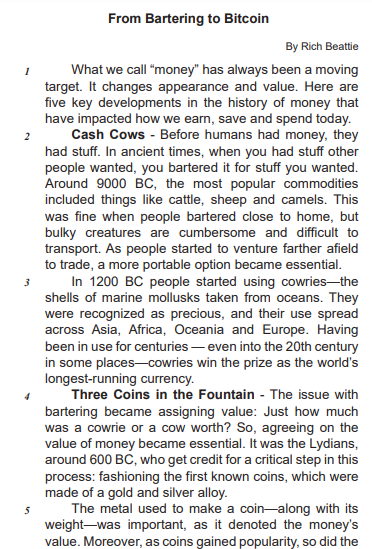
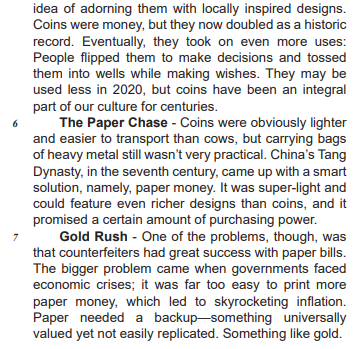
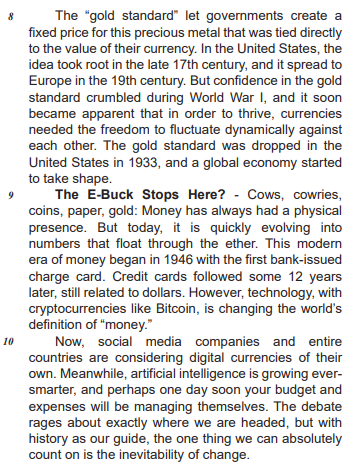
Available at: https://www.synchronybank.com/blog/brief-history-of-money/. Retrieved on: Sept 10, 2022. Adapted.
Available at: https://www.synchronybank.com/blog/brief-history-of-money/. Retrieved on: Sept 10, 2022. Adapted.
Available at: https://www.synchronybank.com/blog/brief-history-of-money/. Retrieved on: Sept 10, 2022. Adapted.
Available at: https://www.synchronybank.com/blog/brief-history-of-money/. Retrieved on: Sept 10, 2022. Adapted.
Emma: What do you want?
Horace: How do I gain your sister's trust?
Emma: Sit down! I'll tell you how to do it.
We can say that Horace is:
The 1920s: 'Young women took the struggle for freedom into their personal lives
(1º§) Two years after the Representation of the People Act 1918, the Times published grave warnings against moves to extend voting rights to women under 30. Mature females might now engage with politics, but the "scantily clad, jazzing flapper to whom a dance, a new hat or a man with a car is of more importance than the fate of nations" must never be entrusted with a vote.
(2º§) The fast, frivolous flapper of the 20s was partially a cultural stereotype, but she was also a focus of serious debate. With her short skirts and cigarettes, her cocktails, sexiness and sass, she was not only offensive to the men at the Times, but also a concern to older feminists, who saw in her pleasure-seeking, taboo-breaking ways a younger generation's disregard of all for which the suffragettes had fought.
(3º§) But if the politics of feminism seemed less important to the "flapper generation", this was partly because young women were taking the struggle for freedom into their personal lives. Ideas of duty, sacrifice and the greater good had been debunked by the recent war; for this generation, morality resided in being true to one's self, not to a cause. Towards the end of the decade, some feminists would argue that women's great achievement in the 20s was learning to value their individuality.
(4º§) Personal freedoms remained dependent on public reform and active UK feminists such as the Six Point Group continued to campaign. Women were given electoral equality with men in 1928; legislation brought equality in inheritance rights and unemployment benefits; and women profited from the Sex Discrimination (Removal) Act, which, in 1919, had given them access to professions such as law.
(5º§) Changes in work patterns were dramatic, with a third of unmarried women moving into paid employment across an expanding range of jobs in medicine, education and industry. Mass employment also made women a consumer power. Fashion was one of several industries that expanded rapidly to meet their demands. While the Times considered clothes a frivolity, for women they were a daily marker of liberation: rising hemlines, sportswear and even trousers made their generation physically freer than any in modern history.
(6º§) Sexual mores were also changing. While double standards persisted, a significant number of women were beginning to claim the same licence as men. There were small steps of encouragement, too, with divorce made easier by the Matrimonial Causes Act 1923 and contraception made more readily available by the Marie Stopes mail-order service. The flapper generation may have been comparatively apolitical and self-absorbed, but, as they puzzled out what freedom meant and tested their personal limits, they were broaching issues that would be hotly debated during the 60s and 70s.
Judith Mackrell is the Guardian's dance critic and the author of books including Flappers: Six Women of a Dangerous Generation
wwoomeenntok--he-srugggeefofrreeedom-innoother-personnallves0s-young-women-took-the-struggle-for-freedom-into-their-personal-lives
The 1920s: 'Young women took the struggle for freedom into their personal lives
(1º§) Two years after the Representation of the People Act 1918, the Times published grave warnings against moves to extend voting rights to women under 30. Mature females might now engage with politics, but the "scantily clad, jazzing flapper to whom a dance, a new hat or a man with a car is of more importance than the fate of nations" must never be entrusted with a vote.
(2º§) The fast, frivolous flapper of the 20s was partially a cultural stereotype, but she was also a focus of serious debate. With her short skirts and cigarettes, her cocktails, sexiness and sass, she was not only offensive to the men at the Times, but also a concern to older feminists, who saw in her pleasure-seeking, taboo-breaking ways a younger generation's disregard of all for which the suffragettes had fought.
(3º§) But if the politics of feminism seemed less important to the "flapper generation", this was partly because young women were taking the struggle for freedom into their personal lives. Ideas of duty, sacrifice and the greater good had been debunked by the recent war; for this generation, morality resided in being true to one's self, not to a cause. Towards the end of the decade, some feminists would argue that women's great achievement in the 20s was learning to value their individuality.
(4º§) Personal freedoms remained dependent on public reform and active UK feminists such as the Six Point Group continued to campaign. Women were given electoral equality with men in 1928; legislation brought equality in inheritance rights and unemployment benefits; and women profited from the Sex Discrimination (Removal) Act, which, in 1919, had given them access to professions such as law.
(5º§) Changes in work patterns were dramatic, with a third of unmarried women moving into paid employment across an expanding range of jobs in medicine, education and industry. Mass employment also made women a consumer power. Fashion was one of several industries that expanded rapidly to meet their demands. While the Times considered clothes a frivolity, for women they were a daily marker of liberation: rising hemlines, sportswear and even trousers made their generation physically freer than any in modern history.
(6º§) Sexual mores were also changing. While double standards persisted, a significant number of women were beginning to claim the same licence as men. There were small steps of encouragement, too, with divorce made easier by the Matrimonial Causes Act 1923 and contraception made more readily available by the Marie Stopes mail-order service. The flapper generation may have been comparatively apolitical and self-absorbed, but, as they puzzled out what freedom meant and tested their personal limits, they were broaching issues that would be hotly debated during the 60s and 70s.
Judith Mackrell is the Guardian's dance critic and the author of books including Flappers: Six Women of a Dangerous Generation
wwoomeenntok--he-srugggeefofrreeedom-innoother-personnallves0s-young-women-took-the-struggle-for-freedom-into-their-personal-lives
The 1920s: 'Young women took the struggle for freedom into their personal lives
(1º§) Two years after the Representation of the People Act 1918, the Times published grave warnings against moves to extend voting rights to women under 30. Mature females might now engage with politics, but the "scantily clad, jazzing flapper to whom a dance, a new hat or a man with a car is of more importance than the fate of nations" must never be entrusted with a vote.
(2º§) The fast, frivolous flapper of the 20s was partially a cultural stereotype, but she was also a focus of serious debate. With her short skirts and cigarettes, her cocktails, sexiness and sass, she was not only offensive to the men at the Times, but also a concern to older feminists, who saw in her pleasure-seeking, taboo-breaking ways a younger generation's disregard of all for which the suffragettes had fought.
(3º§) But if the politics of feminism seemed less important to the "flapper generation", this was partly because young women were taking the struggle for freedom into their personal lives. Ideas of duty, sacrifice and the greater good had been debunked by the recent war; for this generation, morality resided in being true to one's self, not to a cause. Towards the end of the decade, some feminists would argue that women's great achievement in the 20s was learning to value their individuality.
(4º§) Personal freedoms remained dependent on public reform and active UK feminists such as the Six Point Group continued to campaign. Women were given electoral equality with men in 1928; legislation brought equality in inheritance rights and unemployment benefits; and women profited from the Sex Discrimination (Removal) Act, which, in 1919, had given them access to professions such as law.
(5º§) Changes in work patterns were dramatic, with a third of unmarried women moving into paid employment across an expanding range of jobs in medicine, education and industry. Mass employment also made women a consumer power. Fashion was one of several industries that expanded rapidly to meet their demands. While the Times considered clothes a frivolity, for women they were a daily marker of liberation: rising hemlines, sportswear and even trousers made their generation physically freer than any in modern history.
(6º§) Sexual mores were also changing. While double standards persisted, a significant number of women were beginning to claim the same licence as men. There were small steps of encouragement, too, with divorce made easier by the Matrimonial Causes Act 1923 and contraception made more readily available by the Marie Stopes mail-order service. The flapper generation may have been comparatively apolitical and self-absorbed, but, as they puzzled out what freedom meant and tested their personal limits, they were broaching issues that would be hotly debated during the 60s and 70s.
Judith Mackrell is the Guardian's dance critic and the author of books including Flappers: Six Women of a Dangerous Generation
wwoomeenntok--he-srugggeefofrreeedom-innoother-personnallves0s-young-women-took-the-struggle-for-freedom-into-their-personal-lives

 Conheça nossos planos