Questões de Concurso
Sobre aspectos linguísticos | linguistic aspects em inglês
Foram encontradas 1.058 questões


Salesman: Madam, how may I help you?
Customer: I’m looking for a leather purse.
Salesman: What size do you prefer?
Customer: Medium.
Salesman: What about the brand?
Customer: Maybe an Italian one in red.
Salesman: It won’t be a problem. The section on the left has new famous Italian arrivals but I’m not sure we have all of them in red.
Customer: The variety there seems far less. Anyway I will see the second, fourth and sixth red Italian ones on the first row to start with.
The cartoon analysis and observation enables one to state that:

(Available in: https://www.cartoonstock.com)
The featured figure of speech in the image is:
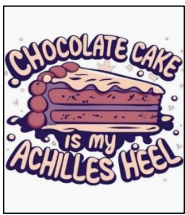
(Available in: https://www.redbubble.com)
A survey released on Thursday (18) by MapBiomas shows that, in 2022, 77% of the illegal mining areas in the Brazilian Amazon were less than 500 meters away from water streams, such as rivers and lakes. According to satellite images recently revealed, the Amazon had 186,000 hectares of illegal mining areas near water streams, out of a total of 241,000 hectares occupied by illegal miners (known in Brazil as “garimpeiros”) in the region. At the time, the Amazon accounted for 92% of all the area mined in the country. “The proximity of gold mines to watercourses is the DNA of mining activities in the Amazon, especially gold, which is almost always linked to rivers and their alluvial deposits. While deforestation is confined to the area mined, the siltation caused by mining near the edges of rivers and other water streams coupled with the contamination of water by mercury, and more recently by cyanide, reach much larger areas,” said Cesar Diniz, a technical coordinator of mining mapping at MapBiomas. The survey also showed that around 10% of the area mined in the Amazon (25,100 hectares) is located within Indigenous Lands, especially in the Kayapó, Munduruku and Yanomami lands. MapBiomas points out that Indigenous lands are the best-preserved areas in the Amazon: from 1985 to 2022, they lost less than 1% of their native vegetation, compared to 26% recorded in private areas.
(Available in: https://www.brasildefato.com.br/. Accessed in: April/2014.)
“My friend is dead, my neighbor is dead, my love, the darling of my soul, is dead.”
(A Tale of Two Cities, Charles Dickens.)
“Buddy, you’re a boy, make a big noise Playing in the street, gonna be a big man someday Buddy, you’re a young man, hard man Shouting in the street, gonna take on the world someday.”
(We Will Rock You, Queen.)
“We will be able to work together, to pray together, to struggle together, to go to jail together, to stand up for freedom together knowing that we will be free one day.”
(I Have a Dream, Martin Luther King.)
“I came to win, to fight, to conquer, to thrive. I came to win, to survive, to prosper, to rise.”
(Fly, Nicki Minaj.)
“… and that government of the people, by the people, for the people shall not perish from the Earth.”
(Gettysburg Address, Abraham Lincoln.)
“We saw no houses, no smoke, no footprints, no boats, no people.”
(Lord of the Flies, William Golding.)
Consider verbal and non-verbal language to answer the following:

The English language facet targeted is:
Read the poem to answer the following question:

If I would have told my 18 year-old self that someday I'd work with (and become great friends with) Matthew Lillard, enjoy meals and social deduction games with Kevin Williamson, and have a relaxed, casual dinner with Neve Campbell… I frankly would never have believed it.
I. Use of spoken and informal language.
II. Non-standard use of past unreal conditional structure.
III. Commas to enhance formality.
IV.Conversational tone as a way to create a sense of familiarity.
The correct items are:
NO MAN'S LAND
Mystery of world's only stretch of unclaimed land with NO laws that farmer tried to seize to make daughter a princess
Hidden deep in the African desert lies one of the strangest pieces of land on Earth — not for its beauty, wealth, or strategic value, but because no country wants it.
Bir Tawil is a 2,060-square-kilometre patch of barren desert between Egypt and Sudan, which remains an unusual geopolitical anomaly after decades of being unclaimed.
Those daring to go there face a tough journey, driving through remote desert roads past relics of gold mines and, at times, crossing paths with armed gangs and bandits.
Bir Tawil has long been a quirky favourite for small, often tongue-in-cheek, self-declared "countries" - usually founded by ordinary people across the globe.
With no laws, the land has even drawn would-be "kings," including a US dad who trekked there to fulfil his young daughter's wish of becoming a princess.
Jeremiah Heaton, a Virginia farmer, planted a flag and declared Bir Tawil the "Kingdom of North Sudan" so that his daughter Emily could have a royal title. While the move had no legal bearing, it sparked global interest and debate over land claims and the nature of sovereignty.
As the dad tells it, Emily had casually asked if she could be a princess, and Heaton, wanting to make her dream come true, started looking for a way to make that happen. While most parents might have gently explained the impracticality of such a request, Heaton took it as a challenge. He began researching unclaimed land where he could theoretically establish a kingdom for Emily, at the time aged six.
In June 2014, Heaton headed to northeastern Africa, reaching Bir Tawil after a challenging journey through the desert. With a homemade blue flag bearing a crown symbol and the name "Heaton," he ceremoniously planted it in the sand, declaring Bir Tawil the "Kingdom of North Sudan" and himself its king. He immediately proclaimed Emily to be a princess, therefore "granting" her the royal title she had wished for.
In 2017, Suyash Dixit, an IT entrepreneur from Indore, India, also claimed Bir Tawil as his own, naming it the "Kingdom of Dixit." After a challenging journey across the desert, he planted a flag, declared himself king, and even "appointed" his father as prime minister. He posted his claim and experience on social media, where it garnered significant attention and sparked a wave of jokes and memes.
There are rumours, though largely unsubstantiated, that Bir Tawil contains hidden gold deposits.
While Egypt and Sudan have both had ancient ties to gold mining, particularly in the Nubian Desert, Bir Tawil itself is rarely studied or mined. These rumours, however, have attracted a few treasure hunters and adventurers over the years, hoping to uncover hidden riches in the desert.
Some have even joked about Bir Tawil as a potential "backup homeland" for populations affected by natural disasters. While obviously impractical, the idea underscores the paradox of unclaimed land in a time when territorial disputes are common.
Despite several stunts and theories, Bir Tawil remains unclaimed due to a unique border dispute between Egypt and Sudan.
The journey to Bir Tawil is lengthy and can take anywhere from two days to a week, depending on the starting point, route, and conditions. Due to its isolation and extreme desert environment, the journey requires careful planning, local knowledge, and permission from authorities in Egypt or Sudan.
Most travellers begin in Aswan, Egypt, or Khartoum, Sudan, as these are the nearest large cities with transportation infrastructure. From Aswan, the trip typically involves a long desert drive heading southward toward the Egypt-Sudan border.
Both countries monitor the border area closely, with visitors needing permits and a good guide familiar with the region. Egypt, in particular, restricts movement near the border, especially in sensitive zones close to the Hala'ib Triangle.
The trip to Bir Tawil from either Egypt or Sudan covers hundreds of kilometres across remote, rugged desert terrain. Explorers often follow dirt tracks used by nomadic tribes, miners, or military patrols, though few roads are mapped or maintained. The drive can take days and usually involves off-road vehicles capable of handling deep sand and rough trails.
There are no towns, water sources, or services along the way, so travellers must bring ample water, food, fuel, and spare parts. And to make matters worse, armed gangs, smugglers, and bandits often prey upon those venturing in the desert, particularly along less-monitored routes.
The origins of this unclaimed desert stretch back to British colonial rule in the late 19th and early 20th centuries, when overlapping boundary lines inadvertently left Bir Tawil in a legal limbo.
In 1899, while both Egypt and Sudan were under British administration, a formal border was established along the 22nd parallel north. This placed Bir Tawil, an arid and resource-poor patch of desert, in Egyptian territory, while a more valuable area, the Hala'ib Triangle, was assigned to Sudan.
But in 1902, the British changed the boundary to fit the local tribes' movements, putting Bir Tawil in Sudan instead and giving Egypt control over the fertile Hala'ib Triangle.
When Egypt and Sudan became independent, each country wanted the Hala'ib Triangle because it has good land and access to the Red Sea.
Egypt claims it based on the 1899 line, while Sudan uses the 1902 line to support its claim. Bir Tawil, a barren desert with no resources, has no value to either country.
To claim the Hala'ib Triangle, each country must reject Bir Tawil — because they can't claim both under their chosen boundary line. So by claiming Hala'ib, they essentially "give away" Bir Tawil, leaving it unwanted.
The territory is therefore unclaimed because Egypt and Sudan only want the valuable land next to it, not Bir Tawil itself.
For now, Bir Tawil endures as a strange relic of colonial history and an unlikely symbol of modern-day geopolitics — a land still ungoverned and, in all likelihood, destined to remain unclaimed.
Source:
https://www.thesun.co.uk/news/30658172/bir-tawil-land-that-bel ongs-to-no-nation/ (adapted)
https://www.thesun.co.uk/news/30658172/bir-tawil-land-that-belongs-to-no-nation/
NO MAN'S LAND
Mystery of world's only stretch of unclaimed land with NO laws that farmer tried to seize to make daughter a princess
Hidden deep in the African desert lies one of the strangest pieces of land on Earth — not for its beauty, wealth, or strategic value, but because no country wants it.
Bir Tawil is a 2,060-square-kilometre patch of barren desert between Egypt and Sudan, which remains an unusual geopolitical anomaly after decades of being unclaimed.
Those daring to go there face a tough journey, driving through remote desert roads past relics of gold mines and, at times, crossing paths with armed gangs and bandits.
Bir Tawil has long been a quirky favourite for small, often tongue-in-cheek, self-declared "countries" - usually founded by ordinary people across the globe.
With no laws, the land has even drawn would-be "kings," including a US dad who trekked there to fulfil his young daughter's wish of becoming a princess.
Jeremiah Heaton, a Virginia farmer, planted a flag and declared Bir Tawil the "Kingdom of North Sudan" so that his daughter Emily could have a royal title. While the move had no legal bearing, it sparked global interest and debate over land claims and the nature of sovereignty.
As the dad tells it, Emily had casually asked if she could be a princess, and Heaton, wanting to make her dream come true, started looking for a way to make that happen. While most parents might have gently explained the impracticality of such a request, Heaton took it as a challenge. He began researching unclaimed land where he could theoretically establish a kingdom for Emily, at the time aged six.
In June 2014, Heaton headed to northeastern Africa, reaching Bir Tawil after a challenging journey through the desert. With a homemade blue flag bearing a crown symbol and the name "Heaton," he ceremoniously planted it in the sand, declaring Bir Tawil the "Kingdom of North Sudan" and himself its king. He immediately proclaimed Emily to be a princess, therefore "granting" her the royal title she had wished for.
In 2017, Suyash Dixit, an IT entrepreneur from Indore, India, also claimed Bir Tawil as his own, naming it the "Kingdom of Dixit." After a challenging journey across the desert, he planted a flag, declared himself king, and even "appointed" his father as prime minister. He posted his claim and experience on social media, where it garnered significant attention and sparked a wave of jokes and memes.
There are rumours, though largely unsubstantiated, that Bir Tawil contains hidden gold deposits.
While Egypt and Sudan have both had ancient ties to gold mining, particularly in the Nubian Desert, Bir Tawil itself is rarely studied or mined. These rumours, however, have attracted a few treasure hunters and adventurers over the years, hoping to uncover hidden riches in the desert.
Some have even joked about Bir Tawil as a potential "backup homeland" for populations affected by natural disasters. While obviously impractical, the idea underscores the paradox of unclaimed land in a time when territorial disputes are common.
Despite several stunts and theories, Bir Tawil remains unclaimed due to a unique border dispute between Egypt and Sudan.
The journey to Bir Tawil is lengthy and can take anywhere from two days to a week, depending on the starting point, route, and conditions. Due to its isolation and extreme desert environment, the journey requires careful planning, local knowledge, and permission from authorities in Egypt or Sudan.
Most travellers begin in Aswan, Egypt, or Khartoum, Sudan, as these are the nearest large cities with transportation infrastructure. From Aswan, the trip typically involves a long desert drive heading southward toward the Egypt-Sudan border.
Both countries monitor the border area closely, with visitors needing permits and a good guide familiar with the region. Egypt, in particular, restricts movement near the border, especially in sensitive zones close to the Hala'ib Triangle.
The trip to Bir Tawil from either Egypt or Sudan covers hundreds of kilometres across remote, rugged desert terrain. Explorers often follow dirt tracks used by nomadic tribes, miners, or military patrols, though few roads are mapped or maintained. The drive can take days and usually involves off-road vehicles capable of handling deep sand and rough trails.
There are no towns, water sources, or services along the way, so travellers must bring ample water, food, fuel, and spare parts. And to make matters worse, armed gangs, smugglers, and bandits often prey upon those venturing in the desert, particularly along less-monitored routes.
The origins of this unclaimed desert stretch back to British colonial rule in the late 19th and early 20th centuries, when overlapping boundary lines inadvertently left Bir Tawil in a legal limbo.
In 1899, while both Egypt and Sudan were under British administration, a formal border was established along the 22nd parallel north. This placed Bir Tawil, an arid and resource-poor patch of desert, in Egyptian territory, while a more valuable area, the Hala'ib Triangle, was assigned to Sudan.
But in 1902, the British changed the boundary to fit the local tribes' movements, putting Bir Tawil in Sudan instead and giving Egypt control over the fertile Hala'ib Triangle.
When Egypt and Sudan became independent, each country wanted the Hala'ib Triangle because it has good land and access to the Red Sea.
Egypt claims it based on the 1899 line, while Sudan uses the 1902 line to support its claim. Bir Tawil, a barren desert with no resources, has no value to either country.
To claim the Hala'ib Triangle, each country must reject Bir Tawil — because they can't claim both under their chosen boundary line. So by claiming Hala'ib, they essentially "give away" Bir Tawil, leaving it unwanted.
The territory is therefore unclaimed because Egypt and Sudan only want the valuable land next to it, not Bir Tawil itself.
For now, Bir Tawil endures as a strange relic of colonial history and an unlikely symbol of modern-day geopolitics — a land still ungoverned and, in all likelihood, destined to remain unclaimed.
Source:
https://www.thesun.co.uk/news/30658172/bir-tawil-land-that-bel ongs-to-no-nation/ (adapted)
https://www.thesun.co.uk/news/30658172/bir-tawil-land-that-belongs-to-no-nation/
The teacher presents the following sentences to her students for analysis:
I'll read the book tomorrow.
He read the book yesterday.
The wind blew fiercely through the open window.
She had to wind the clock before going to bed.
After discussing the examples, the teacher asks the students:
Which of the following activities would best help learners understand and differentiate homophones and homographs in practical language use?
Magi Richani is the founder of San Francisco-based Nobell Foods, a startup company developing a new kind of cheese made from soybeans. She says plant-based cheese not only accommodates people who can’t consume dairy, but it also could be key to more sustainable food production worldwide. “The reality is that when you raise an animal for food, it’s not just the animals, you are actually growing crops, you are clearing land, and you’re raising the animal for years so it builds biomass,” Richani explained. “It’s an extremely inefficient supply chain.”
Nobell is particularly focused on creating plant-based casein, which is a protein produced when a cow gives birth and is present in the milk for its offspring. It is the ingredient that gives dairy cheese its unique stretchy texture. If Nobell is able to go to market and have the kind of impact it’s hoping to, then plant-based cheese could help us stretch toward a more sustainable future.
Internet: <newsweek.com> (adapted).
Based on the ideas presented in the previous text as well as its linguistic aspects, judge the following item.
The words “stretch” (last sentence of the text) and “stretchy” (second sentence of the last paragraph), although similar, convey different meanings: “stretchy” refers to a concrete sensation, whereas “stretch” is used in a metaphorical abstract way.

 Conheça nossos planos