Questões de Concurso Sobre aspectos linguísticos | linguistic aspects em inglês

Foram encontradas 1.058 questões

Q3143797 Inglês
Find the word with a distinct initial sound:
Alternativas
Q3139903 Inglês
Who votes for the Academy Awards?

        After the glitzy red-carpet arrivals, the feel-good montages, and the host’s opening roast, the Oscars ceremony switches to its raison d’être: revealing the previous year’s highest achievers in cinema. One after another, the presenters list the nominees, open a lavish envelope, and reveal the winner in each category. The champions breathlessly accept their awards and, over and over, effusively thank their mothers, God, and the academy... What is this obscure body? The academy—that is, the Academy of Motion Picture Arts and Sciences—is the organization that votes for the Oscar winners.
        The academy is an exclusive Hollywood institution that has its own governing body, 17 separate branches, and a thorough rule book on membership eligibility and voting processes. Since 2016, when the board announced that it would diversify its membership, the academy has grown to about 8,000 members. It doesn’t publicize the names of all those members, but each spring it releases a list of the individuals it has invited to join its ranks.
        The rest of the academy members are not listed, but we can guess who a few are by looking at some of the requirements to join the institution. To qualify, an individual must work in the film industry. This means that neither individuals who work exclusively in television nor members of the press may join. Oscar nominees are often considered for membership automatically, while other candidates must be sponsored by two active members of the branch they wish to join. Each branch also has its own specific requirements.

Encyclopaedia Britannica. Adaptation.
According to the general American accent standard, the “th” sound in “thorough” is the same as the one in: 
Alternativas
Q4328792 Inglês
Read the following sentence: “She speaks English perfectly” and mark the alternative that presents the correct grammatical classification of these words. 
Alternativas
Q3910313 Inglês

Leia o texto a seguir e responda à questão.


2.png (538×309)


The Emily Dickinson Museum’s Annual Tell


It Slant Poetry Festival is an event with international reach that celebrates Emily Dickinson’s poetic legacy and the contemporary creativity she and her work continues to inspire from the place she called home.


The Festival is named for Dickinson’s poem, “Tell all the truth but tell it slant,” emphasizing the revolutionary power of poetry to shift our perspective and reveal new truths. Festival organizers are focused on presenting established and emerging poets who represent the diversity of the contemporary poetry landscape and to building community by introducing poetry to public spaces.


This year’s program features workshops, panels, and readings, by a diverse and talented group of poets from around the world. The cornerstone of the Festival, the Emily Dickinson Poetry Marathon, is an epic reading of all 1,789 of Emily Dickinson’s poems.


To follow along with the Emily Dickinson Poetry Marathon, get your copy of the Franklin edition from the Emily Dickinson Museum Shop.


The annual event attracts a diverse audience of Dickinson fans and poetry lovers, including students, educators, aspiring writers, and those who are new to poetry and literary events. Past Festival headliners have included Marilyn Nelson, Abigail Chabitnoy, Tracy K. Smith, Tiana Clark, Tess Taylor, Ada Limón, Jericho Brown, Franny Choi, Aimee Nezhukumatathil, Paisley Rekdal, Adrian Matejka, Kaveh Akbar, and Ocean Vuong.


Support The Tell It Slant Poetry Festival:


Admission to all Poetry Festival events is free-made possible by contributions from Museum supporters. Please consider making a donation of any size during the registration process or anytime on the Museum’s website.


(Adaptado de: Tell It Slant Poetry Festival 2024 Schedule. In: Emily Dickinson Museum (online) – Programs. (sem data). Disponível em: . Acesso em: 14 ago. 2024.)

Sobre os elementos linguísticos presentes no texto, assinale a alternativa correta.
Alternativas
Q3547741 Inglês

Text 6

The sociolinguistics of English as Lingua Franca (EFL) pronunciation. 


As far as sociolinguistics is concerned, the first task is to problematise the notion of standard accent. Essentially there is no such thing as a ‘standard’ accent, merely prestige accents, primarily RP and General American English (GA), stigmatised accents both native and (more often) non-native (see Lippi-Green, 1997; Bonfiglio, 2002), and a range of variously tolerated regional and social accents between the two extremes. The so-called BritishEnglish standard accent (RP) is claimed nowadays to be used by a mere fraction of British Native Speakers (NSs), possibly only three per cent in its unmodified form (see Trudgill, 2002: 171). The vast majority of NSs of English speak with regionallyand/or socially-modified accents, whether tolerated or stigmatised. Clearly, then, the RP accent cannot be ‘standard’ in the sense of being a widely-used norm. Instead, ‘standard’ refers accent-wise to a level of pronunciation assumed by many to be better in some way than the others, and is thus standard only in the sense of a level of excellence to be aspired to. Excellence, however, is not something that can be measured linguistically: it is not intrinsic to an accent, but merely reflects the value judgements of the elitist group who habitually use it or would if they could.


It should be a matter for teachers and their learners to decide whether they wish to subscribe to the (linguistically-unsound) belief in the superiority of RP. In some communication contexts an RP accent will undoubtedly provide them with a social advantage. This is more likely to be the case if learners intend to use their English to communicate and blend in largely with NSs, especially if the communication will take place in NS countries. Even here, though, their awareness should be raised to the fact that the majority of NSs with whom they communicate will not have an RP accent. At the most, it will probably be regionallymodified RP. On the other hand, having been apprised of the facts of sociolinguistic variation, learners may prefer to project their own (L2) regional and social identity through their accent. In this case their goal is more likely to be an accent that retains a clear trace of their L1, provided that it does not threaten the intelligibility of their pronunciation in their target (probably ELF) communication contexts.


JENKINS, J. Teaching Pronunciation for English as a Lingua Franca: A Sociopolitical Perspective. In GNUTZMANN, C.; INTEMANN, F. (Org.) The Globalization of English and the English Language Classroom. Oxford: OUP, 2005. p. 145-158.

RP is a variety of English that is/has:
Alternativas
Q3499972 Inglês
The study of speech sounds and how they are produced is called  
Alternativas
Q3465520 Inglês

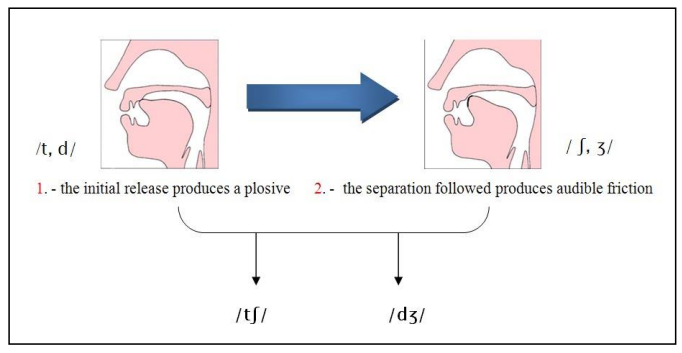
The picture below shows us:


Imagem associada para resolução da questão

Source: https://karlita2012pedagogiaingles.blogspot.com/. 

Alternativas
Q3465519 Inglês
Knowing that the main difference between affricate and fricative sounds lies in the way airflow is managed: affricates involve a stop followed by a release into a fricative, while fricatives are produced by forcing air through a narrow channel in the vocal tract, the alternative that brings only examples of words with affricate sounds in English is: 
Alternativas
Q3455270 Inglês
Identify the word with a different stress pattern from the others:
Alternativas
Q3455269 Inglês
Choose the correct phonetic transcription for the word "thought". 
Alternativas
Q3455268 Inglês
Identify the word with a different stress pattern from the others:
Alternativas
Q3455265 Inglês
Select the option that correctly identifies the voicing and place of articulation for the English consonant sound represented by the initial sound in the word "jeep".
Alternativas
Q3455258 Inglês
Match the following phonetic terms with their correct descriptions:
1 - Alveolar Ridge 2 - Nasal Cavity 3 - Phoneme 4 - Glottal Stop
a - A sound produced by obstructing airflow in the vocal tract, causing air pressure to build up and then be released
b - The small ridge located just behind the upper front teeth
c - The smallest unit of sound that can change the meaning of a word
d - A passage located behind the nose that is involved in the production of nasal sounds

Alternativas
Q3438648 Inglês
Mark the alternative in which there is no correct correspondence between the word and its correct pronunciation. (American English)
Alternativas
Q3438647 Inglês
Mark the alternative in which there is no correct correspondence between the word and its correct pronunciation. (American English)
Alternativas
Q3412145 Inglês
Read the following text:


TEXT I


The teaching of English as a foreign language in the context of Brazilian regular schools: a retrospective and prospective view of policies and practices


Read the following text:


The movement towards a more meaningful approach to the teaching of English as a foreign language in Brazilian regular schools reached its climax in the 20th century with the publication of the Brazilian National Curricular Parameters (PCN) for the teaching of foreign languages at basic education level. Since then, the community of teachers has been divided into those who welcomed the contents, views and propositions of the document, and the ones who believed that the suggestions it contained were inappropriate. At the center of this controversy was the importance given by the official policies to the teaching of reading, as opposed to an approach, borrowed from private language institutes, which historically favored a focus on the oral skills.


A brief overview of the recent history of ELT in Brazilian regular schools


During the 1970s, the so-called audiolingual method, based on behaviorist and structuralist assumptions, was still considered the only scientific way of teaching a foreign language. Its emphasis on the oral skills and on the exhaustive repetition of structural exercises seemed to work well in the contexts of private language institutes. Those contexts were characterized by the gathering of small numbers of highly motivated students per class, a weekly time-table superior in the number of hours to the one adopted in regular schools, and plenty of audiovisual resources. Questionable in itself, both because of its results (which in time were revealed to be less efficient than believed, especially in terms of fluency) and its theoretical assumptions, the method ended up being adopted by regular schools due to its positive reputation at the time. The failure of the methodology in this context would soon become evident, generating extreme frustration both amongst teachers and students. 


From the 1980s on, with the spread of ideas connected to the so-called communicative approach and the growth of English for Specific Purposes (ESP), the community of researchers and teachers interested in the context of regular schools started reviewing the assumptions and logic of English Language Teaching (ELT). Recognizing that each and every school discipline needs to justify its presence in the curriculum socially and educationally, this movement identified the skill of reading as the most relevant one for the students attending the majority of Brazilian regular schools. This understanding was achieved by considering not only the possibility of real use outside school, but also the role this approach could play in the achievement of other educational goals, such as the improvement of student's reading abilities in Portuguese as a mother tongue. This movement reached its climax with the publication of the Brazilian National Curricular Parameters (PCN) for the teaching of foreign languages at basic education level by the end of the 1990s. The document recommended the focus on the teaching of reading within a view of language as discourse. However, it did not close the door on the teaching of any other skill, as long as the context made it possible and relevant.


This understanding was achieved by considering not only the possibility of real use outside school, but also the role this approach could play in the achievement of other educational goals, such as the improvement of student's reading abilities in Portuguese as a mother tongue. This movement reached its climax with the publication of the Brazilian National Curricular Parameters (PCN) for the teaching of foreign languages at basic education level by the end of the 1990s. The document recommended the focus on the teaching of reading within a view of language as discourse. However, it did not close the door on the teaching of any other skill, as long as the context made it possible and relevant.


Another important characteristic of the Parameters that should not be overlooked is their emphasis on teacher's autonomy. This emphasis can be seen clearly in the fact that no content or method is imposed upon the teachers. What one can find are suggestions and relevant information for teachers to make their own decisions, taking into consideration the context within which they work. In other words, the Parameters do not force any teacher to limit their focus on the teaching of reading, if they believe they can go further than that.


To be or not to be: professional identities and beliefs


When asked why they were against the focus on reading, most teachers who take this position, told me that they considered the teaching of reading to be "not enough". Most of them also added that if the teaching of reading was designed to fit a context where one cannot effectively teach the oral skills, then we should not adapt ourselves to that context, but rather demand the improvements that would make more feasible the teaching of the so-called four skills.


Let us consider these statements more closely. The first one is about quantity, that is, by teaching "only" the reading skill, the teacher would be denying her/his students the opportunity for learning all the other skills. They would be denied the opportunity for learning to speak English, which is, after all, assumed to be the real goal of teaching English as a Foreign Language (EFL).


Reasonable and democratic as it may seem, such an argument fails to take into consideration at least one extremely relevant issue: the fact that in Brazil there are virtually no reports of successful teaching of the four skills in contexts other than the private language institutes. Before the mid-1980s, several different attempts were made to make ELT work out at regular schools, but only those which completely changed the characteristics of the classes (making them look almost exactly like the small, homogeneous classes of the private institutes) were able to achieve some (questionable) level of success. In other words, the integrative approach to ELT, with its claim of teaching the four skills, focusing especially on the oral skills, has never been successful in our regular schools, including most of the private ones, with very few exceptions. If that is indeed the case, then it makes very little sense to speak of giving our students more or less of something that they never really had. And even if we are to speak in such terms, then it is extremely clear (at least for those who tried it) that the communicative teaching of one skill is definitely better (and more) than the pantomime of allegedly teaching the four skills, which was never successful in the context of Brazilian schools.


Where do we go from here?


Any attempt to establish new policies for the teaching of EFL at Brazilian regular schools should start with the recognition that the PCN were a very important step towards meaningful foreign language education in this context. Without such recognition, there will always be the suspicion that the old beliefs connected to the professional identity of the teacher as an instructor are coming back.


Surely, we do not want to teach only reading forever. But sound attempts to go forward in enhancing the relevance of our teaching should start with the discussion of the three groups of reasons that justified the propositions of the PCN. The focus on reading was considered the most adequate for the majority of our schools because of practical considerations about our working conditions, social relevance, and educational relevance.


As far as practical conditions and educational relevance are concerned, virtually no major change has occurred in order to justify reframing our teaching. However, in what concerns social relevance, it is undeniable that the growth of the Internet has provided a new context for the use of the English language outside schools. For that reason, it is my belief that skills other than reading may now be taught in our classes without representing a return to a rationale that is alien to our schools. The teaching of writing in the context of Internet genres and practices is definitely necessary, if we want our students to have their own voice, becoming able to project their own local identities in global contexts.

Adapted from: ALMEIDA, Ricardo Luiz Teixeira de. Scielo Brazil – Revista Brasileira de Linguística Aplicada - https://www.scielo.br/j/rbla/a/ nNz3Jtj85xmms8MnNfwRpMn/?lang=en. Accessed: 05/02/2024.
In phonetics and phonology, schwa sound is an unrounded central mid vowel, whose symbol, in the International Phonetic Alphabet, is /ə/. In many languages, such a vowel arises through the neutralization of unstressed vowels or through epenthesis. Among the words below, taken from the text, the one containing a schwa sound is:
Alternativas
Q3407923 Inglês
In the context of English phonology, which of the following options correctly identifies the impact of the "Magic E" rule on the pronunciation of vowels in a word?
Alternativas
Q3397952 Inglês
The Role of the Teacher in Promoting Intercultural Approaches


Today, it would be an exaggeration to say that cultural diversity is perceived as a problem within education systems, since the teachers, in general, accept it and have positive attitudes towards the contribution of diversity. However, even if it is not a problem within the school, one must nevertheless address its complexity. Cultural diversity is not only an auspicious resource for extra-curricular activities; it has a social dimension with an impact on the life of the pupils and their parents. From this point of view, it seems important to us that teachers are aware of the issues concerning such themes as integration, openness, social justice and equality. Otherwise, it should be said that a certain number of stereotypes persist and their effects should be thoroughly examined within the school.

One of the theoretical foundations which seems productive for us in promoting cultural diversity is culturally relevant teaching. Indeed, further to exploiting otherness as a resource, it subjects it to critical analysis and in this way addresses inequalities connected with cultural, social or ethnic affiliations. This form of teaching addresses inequalities, but also takes the form of an approach to combat them.

Finally, research has demonstrated the advantage of opening the teaching profession to people from diverse origins. Indeed, their knowledge and the resemblance between their own experiences and those of their pupils, particularly those with cultural minority origins, contribute an educational added-value. Furthermore, we believe that the experiences of these teachers may represent a resource for the educational enterprise, while accepting its limits: the need for each individual to choose their own affiliation and not to be assigned an identity that could be detrimental.


(Based and adapted from AKKARI, Abdeljalil; RADHOUANE, Myriam. Intercultural approaches to education: From theory to practice. Springer Nature, 2022.) 
Understanding the sounds of phonemes in English is fundamental to teaching pronunciation and explore the theme of communication in the classroom and outside of it. About the text, choose the correct sentence about the sounds of the words: 
Alternativas
Q3382582 Inglês
Which word is not stressed on the second syllable when used as a verb? 
Alternativas
Q3382581 Inglês
Choose the option that does not feature homophones: 
Alternativas
Respostas
221: D
222: C
223: A
224: A
225: A
226: B
227: B
228: C
229: A
230: D
231: C
232: B
233: E
234: C
235: D
236: D
237: D
238: E
239: E
240: D