Questões de Concurso
Sobre adjetivos | adjectives em inglês
Foram encontradas 776 questões



I. In the structure “Oprah was deeply invested” the word “deeply” is as adjective.
II. The structure “the perfect person for each role.” is a nominal group connected to preposition “for” and the headnoun is “role”.
III. The word “invested” can be replace by “take part”.
IV. In the expression “on the casting choices” it refers to actor or actress in a play or film means to choose them to act a particular role in it.
Which ones are correct?
Julgue o item que se segue.
The comparative degree of the adjectives in the sentence
“She is stronger and more intelligent than me” is correct.
Julgue o item que se segue.
The antonyms of the adjectives beautiful, dead, dry,
heavy, and rough are, respectively, ugly, alive, wet, light,
and smooth.
Julgue o item que se segue.
In the sentence “Don’t go so fast”, the word “fast” is an
adjective.
Julgue o item que se segue.
In the sentence “I love her brown big eyes”, the order of
the adjectives is correct.
Julgue o item subsequente.
Adjective order is a crucial aspect of English syntax, and
there is a specific sequence that native speakers
instinctively follow when using multiple adjectives before
a noun. This order is based on categories such as opinion,
size, age, shape, color, proper adjective, and purpose.
Julgue o item subsequente.
Gradable adjectives in American English often take
modifiers like “very,” “quite” or “rather” to express different
degrees of intensity. Understanding how to use these
modifiers enhances language proficiency and allows for
more nuanced and precise expression.
Read the advertising text to answer question
Learn a language in 2 week
“There has never been a _____________ way to learn a new language! Just spend an hour a day following Babel, a new online language course, based on the very _____________ language teaching theories. Most people can expect to reach fluency within six months, although the more time you spend on it, _______________ your progress will be. And at only $150 Babel is certainly _________________ most other similar courses, which often cost over $300. Apply online for Babel, the language course described as ‘________________ method to have been invented in the past decade, judging by its results’. And remember, we`re offering a 10% discount for the first 200 orders, so ________________ you apply, the better your chance of paying less!”
Mark the option that fills in the advertisement’s blanks with the correct adjetive forms.
Book review:
Why We Fight: The Roots of War
and the Paths to Peace
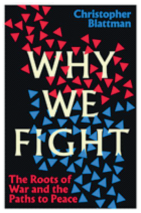
‘Why We Fight’ describes how despite sensationalist headlines, conflict is rare. The author is a field economist, so, much of the writing is based on examples in the real world. The concepts are all easy to understand and the analysis is framed within the context of non cooperative game theory. For those familiar with the subject there is little new in this book, but the examples given highlight in the real world how calculations get made. Most of the analysis is on subjects like gangs and territorial conflicts but it can be viewed in a larger context.
Disponível em: www.amazon.com.br/Why-We-Fight-Roots-Paths/
dp/0241444519. Acesso em: 07 nov. 2023. (Adaptado)

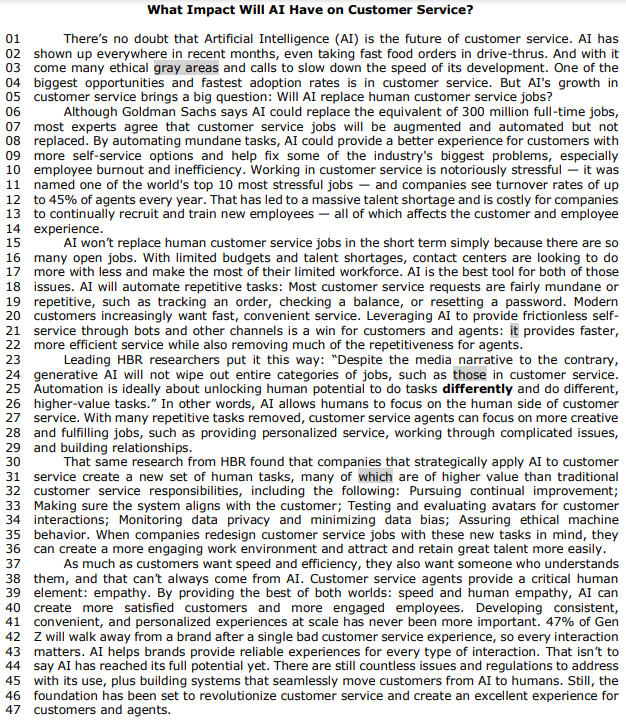
I. In “AI could provide a better experience” (l. 08), the word “better” is the superlative form of the irregular adjective “good”.
II. In “One of the world’s top 10 most stressful jobs” (l. 11), “most stressful” is a superlative structure and “most” is used because “stressful” is a long adjective.
III. In “It provides faster, more efficient service” (l. 21-22) there are two comparative structures. We add -er to the short adjective “fast”, and “more” to “efficient” because it is an irregular adjective.
Which ones are correct?

Internet: <alexhallat.com> (adapted).
Judge the following item, according to the preceding comic strip.
The words “beautiful” (third box) and “lucky” (fifth box)
belong to the same word class.
In the quest for technological advancements that can revolutionize our world, the scientific community has always been captivated by the elusive phenomenon of superconductivity. For decades, researchers have strived to unlock its full potential, seeking to discover materials that can exhibit superconducting properties at room temperature. And now, the wait might finally be over! Enter LK-99, a groundbreaking potential room-temperature superconductor that has sent shockwaves through the scientific world, spearheaded by a team of brilliant minds from Korea University, led by esteemed researchers Sukbae Lee and Ji-Hoon Kim.
Superconductors are materials that can conduct electricity with zero resistance, leading to unprecedented energy efficiency and technological advancements. In summary, LK-99 represents an exciting prospect as a potential room-temperature superconductor, but its superconducting properties have yet to be confirmed and independently verified.
Room temperature superconductors could revolutionize the energy sector by enabling lossless power transmission over long distances. With reduced energy dissipation during transmission, electricity could be distributed more efficiently, lowering carbon footprints and electricity costs.
Internet: <dataconomy.com/> (adapted).
According to the preceding text, judge the following items.
The adjective “groundbreaking” (fourth sentence of the first
paragraph) could be correctly replaced by “conventional”,
without changing the meaning of the text.
TEXT II – Tema: Variação linguística no ensino-aprendizagem de inglês
INTERNATIONAL VARIETIES OF ENGLISH
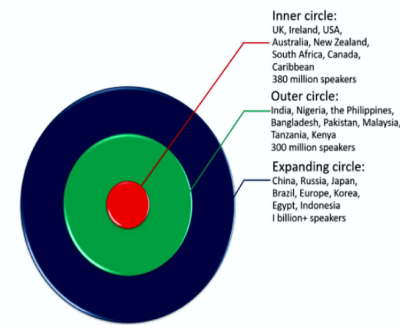
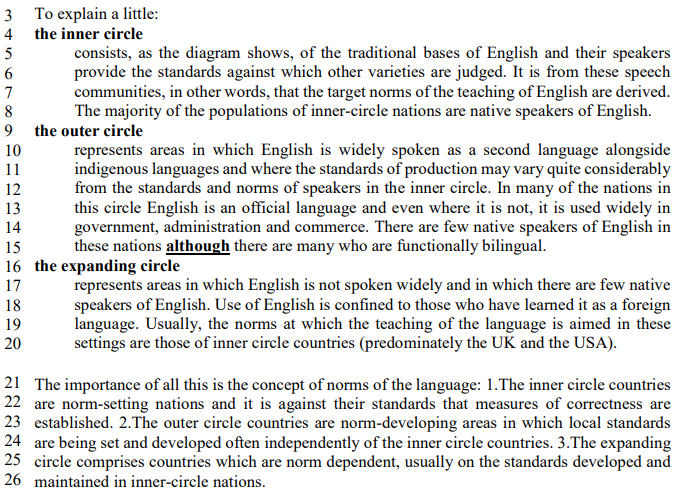
1 The most familiar way to classify the varieties of English around the world was developed by
2 Kachru (1985) and looks like this:
(Available from: https://www.eltconcourse.com/training/common/variety.html Accessed on July 5 , 2023)
“The world’s biggest bull is ________ a small elephant.”
(1) Noun. (2) Present participle. (3) Adjective.
(_) Playing piano is a great pleasure.
(_) That man is drinking.
(_) No parking.
( ) The rising prices are scary.

 Conheça nossos planos