Questões de Concurso
Sobre adjetivos | adjectives em inglês
Foram encontradas 776 questões


Complete the sentences and mark the CORRECT alternative.
I.Please give me a _________ of pie.
II.The railway _________ is expensive.
III.Mary and her sisters have got very _________ looks.
TEXT III -
My experience: one of the advantages of online tools is that they allow teachers and students to exercise their creativity
Cicinato do Carmo, English teacher that also works with initial and continuing education of teachers in Rio de Janeiro
Sept 20, 2021

I have been an English teacher for about 30 years. During this period, in addition to working in the classroom, both in the public and private sectors, I have also been working with training, education and development of English language teachers at Troika – in continuing and initial education. At the moment, I coordinate an English program in Rio de Janeiro with teachers from kindergarten to high school, and I guide undergraduate interns that will be English teachers.
Lyrics Training - Students are very fond of Lyrics Training. I've had experiences with students from elementary school to high school, each one has its specificity, its degree of difficulty and requirement. For example, high school students are very fond of challenges. For example, they really enjoy it when they select a more challenging level where they need to be quicker with answers. And even more so when they decide to organize themselves into groups and compete with each other singing songs.
Youglish- Youglish is very interesting for vocabulary reinforcement in context, when we are exploring a particular word, which offers greater difficulty in understanding, contextualization and use. In addition to the pronunciation, it manages to bring, through videos and other resources, the context of use of that term. Sometimes teaching only the meaning of a word can give the wrong impression that it can be used in different contexts, but there are subtle meanings that need a more concrete communicative element so that the student can perceive its use.
Wordwall - Wordwall offers a bank with different game format options for the same content. One can create an activity, for example, with specific vocabulary of farm animals, and the website offers game possibilities based on that vocabulary list, such as memory game, train, cards, pac man, spin the wheel. The activities are geared towards secondary education. With the older ones, from the moment they are more used to the platform, we can open up for them to choose the type of game they prefer to do that activity.
Mentimeter - I use Mentimeter for preparing presentations. It's like PowerPoint, only interactive. It is a presentation tool filled with interactive elements with viewers. For example, if I have a question about the subject of the class, I present it on the slide and a code will appear. Then, by cell phone, students access and respond. And those answers can create a word cloud instantly, in real time. From there, we can move towards a discussion. I like to use the tool for warm up activities. For example, I ask “What did you have for breakfast today?”; and, based on the answers (milk, tea), we warm up with a discussion and then move on to the content of the class.
ISLCollective - ISLCollective is very good for creating class material. It is an activity repository that is organized into interactive video sessions, PowerPoint and vocabulary or grammar worksheets. We teachers create content and feed the platform. You can search and use ready-made materials, or do something more customized, as it allows us to change and adapt these materials. It makes a copy of the original content with all rights reserved and assigned, but one can customize, delete or add something to the activity.
Gamilab - It is an educational game bank, which allows us to create very simple games, and whose platform is similar to mobile and video games. It has more gamification elements than many others we use, such as elements of the dynamics, mechanics and components that are part of the gamification process (difficulty level progression, challenges and rewards), with a well-described narrative.
One of the possibilities for creation is a mountain bike competition. As the runner walks the race path, golden boxes with questions (multiple choice) appear that must be answered in order for the player to win prizes. It is a competition like a video game, with great appeal for our students.
It is possible to create games for all levels, from kindergarten on, and it can be used both on computer and mobile. The games can be created individually or collaboratively – there is the ability to add collaborators, so that students can organize themselves into groups, each one at home, develop a game and present it to the class. They can send the link of the game they have created and everyone plays.
Live Worksheets - Live Worksheets website also makes it possible to create interactive exercises. We can create, for example, an exercise of connecting (matching), which can be done on the screen of the computer or cell phone itself, which makes it easier for the student as well.
These platforms are all free and students don't need to have an account, we can just use the link. The only thing is that, if I want to create some activity that can be measured later, I need everyone to be registered and to log in to the platform. Gamilab, ISLCollective and Live Worksheets, for example, generate a report and I can find out which students participated and what difficulties were encountered in relation to the score generated by each one of them.
Adapted from: https://www.inglesnasescolas.org/en/experience/my-experience-one-of-the-advantages-of-online-tools-is-that-they-allow-teachers-andstudents-to-exercise-their-creativity/. Accessed on January 15th, 2022.
Answer question according to TEXTIII.
Choose the option that best defines the phenomenon that occurred in the sentences below:
“For example, they really enjoy it when they select a more challenging level where they need to be quicker with answers.”
“[…] which offers greater difficulty in understanding, contextualization and use.”
“[…] but there are subtle meanings that need a more concrete communicative element […].”
“With the older ones [...].”
“[…] which makes it easier for the student as well.”
“There is a dangerous person in the house.”
I – The prefix in the adjective changed the meaning of the word. II – It characterizes the word house. III – The suffix means “full of”. IV – The adjective comes from a noun.
The alternative which shows the right information is:
Instruction: Answer to questions 38 to 47 based on the text below. The Highlights throughout the text are cited in the questions.
Caribou
01 ____Large hoofed animals belonging to the deer family, caribou and reindeer are actually the
02 same species — Rangifer tarandus. There are differences between caribou and reindeer though.
03 Caribou are native to North America, whereas reindeer are native to northern Europe and Asia.
04 Alaska does have some reindeer, however, imported from Siberia in the late 19th and early 20th
05 centuries.
06 ____Some people use the term "reindeer" to refer to domesticated work animals, such as those
07 pulling Santa's sleigh, but there are both wild and domestic herds of reindeer. Caribou, on the
08 other hand, are wild-living and long-migrating. Indigenous groups herd reindeer and use them for
09 their meat. That's also likely why reindeer evolved to be stockier than caribou.
10 ____Caribou make one of the world's great large-animal migrations. As summer approaches,
11 they head north along well-trod annual routes. Some herds may travel more than 600 miles to
12 get to their summer grazing grounds. They'll spend the summer months feeding on the abundant
13 grasses and plants of the tundra. This is also when they give birth. When the first snows fall each
14 year, the caribou turn back south. Herds of female caribou, called cows, leave several weeks
15 before the males, which follow with yearling calves from the previous birthing season.
16 ____They are taller and lankier than reindeer, likely because they evolved to make these long
17 migrations. They are the only deer in which males and females both have antlers—though only
18 some females have them. Cows have one calf each year, which can stand after only a few minutes
19 and move on with its mother by the next day.
20 ____Caribou are classified as vulnerable to extinction, one step above endangered. Because
21 they're migratory, changes in the landscape, such as the appearance of new fences or other
22 human development on their migration routes, can be especially disruptive. Climate change is
23 also a threat. As the Arctic warms, they become more susceptible to diseases and parasites,
24 which could quickly spread through a herd.
(Available in: https://www.nationalgeographic.com/animals/mammals/facts/caribou – text adapted especially
for this test).
“Taller and lankier” (l. 16) are both comparative adjectives. Which words below follow the same spelling rules, respectively?
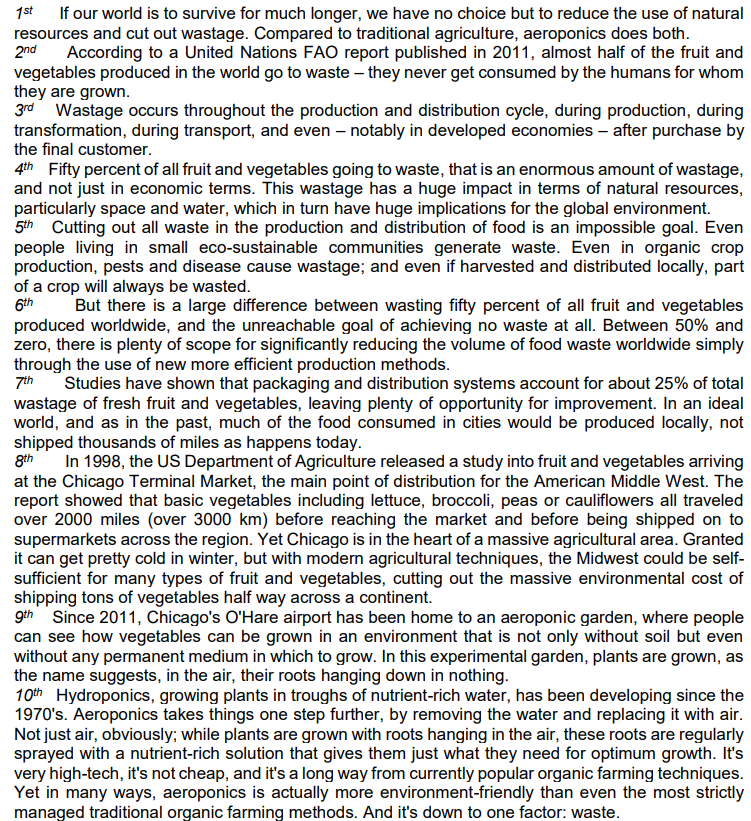
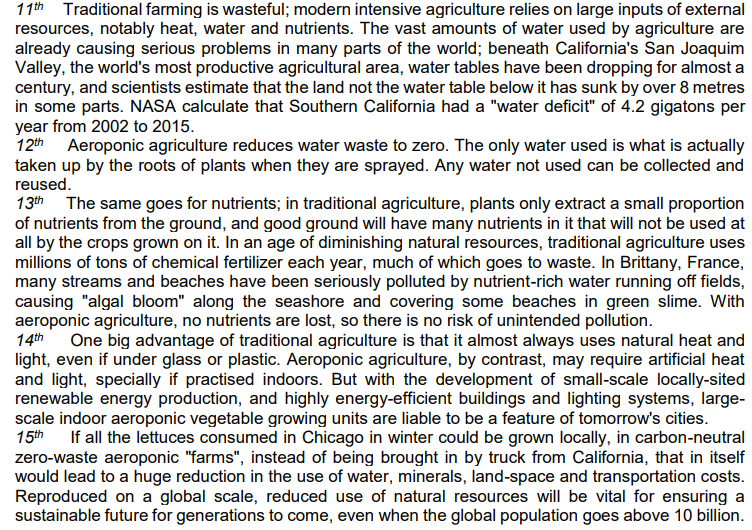
1. The underlined words in the sentence “This long, pointed stick was first used as a weapon…” is an example of active voice in the past tense.
2. The words in bold “they” and “their”, in the text, are being used as a personal pronoun and a possessive adjective, respectively.
3. The negative form of the following sentence: “Do exercises for your arms, legs, back, and neck…” is “Don’t exercise your arms, legs, back, and neck…”.
4. The word ‘properly’ in “it’s important to warm up properly before practicing the javelin.” is an adverb that means correctly or satisfactorily.
Choose the alternative which contains the correct sentences.
I. “We hated the concert, was totally ______” II. “The rotten eggs smell _______.” III. “Of the two routes, this is the ______.” IV. “He is a _____ driver.” V.
I. “He said she was _____ that night.” II. “She's cute as a princess and _____, like her mother.” III. “I’m not beautiful, but I can’t say I’m _______.” IV. “I’m loving this book, it’s so ______”
1. As used in paragraph 3, the best synonym for ‘ascend’ is ‘climb’.
2. As used in paragraph 3, the best antonym for ‘descend’ is ‘fall’.
3. According to the author, wicker is “a pliable twig to make items such as furniture and baskets”.
4. The words ‘higher’ and ‘lower’, as used in the last paragraph are examples of the comparative of superiority form of the adjectives ‘high’ and ‘low’.
Choose the alternative which presents the correct sentences.
I. “Jennifer does chores ______ because she doesn’t trust others to do them right.” II. “This is the first time I’ve ______ this | seen him so angry | seen this | heard about it.” III. “The teacher asked _______ coat was on the floor but no one answered.” IV. “If I had ______ up earlier this morning, I wouldn’t have caught him red-handed.”
Internet: <www.nortechplus.com>.

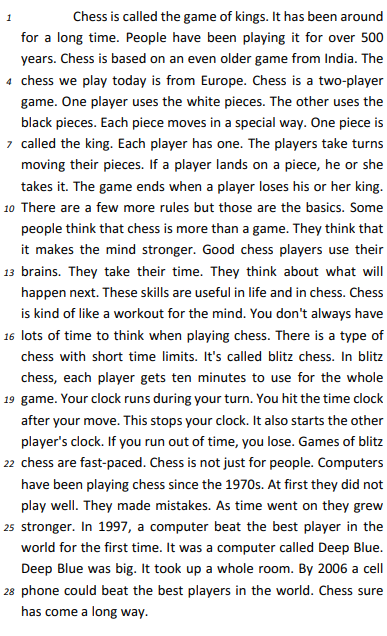
In line 7, “broad-leaved” is not an adjective.

In the first paragraph, “exacerbated” and “overwhelmed” are both adjectives and refer to how the author feels about people being so busy.
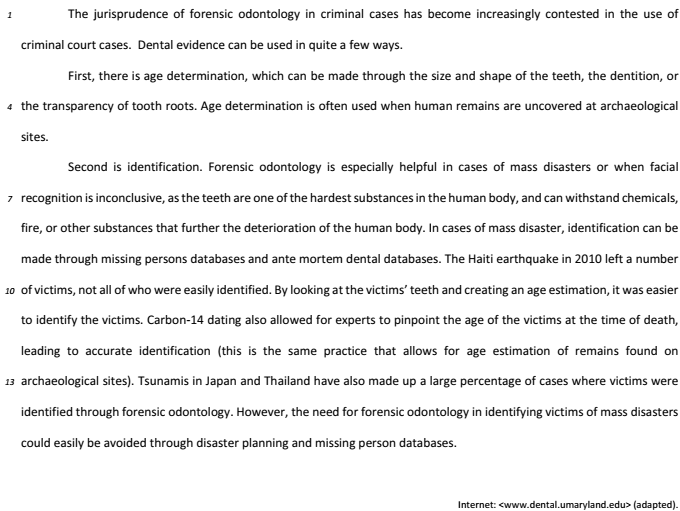
According to the text, judge the item.
The terms “easier” (line 10) and “further” (line 8) belong to the same word class: they are both examples of adjectives.

The term “its” (line 1) is a possessive adjective and refers to Artificial Intelligence (line 1).

 Conheça nossos planos