Questões Militares
Para aspirante da polícia militar
Foram encontradas 4.651 questões
Resolva questões gratuitamente!
Junte-se a mais de 4 milhões de concurseiros!


I. A prevenção é o sistema de indução de competência que determina a competência de um juiz ou delegado de polícia quando, na existência de duas ou mais autoridades, uma delas tomou conhecimento do fato em razão da natureza.
II. No caso de crimes de homicídio, o Código de Processo Penal determina que os cadáveres sejam identifcados preliminarmente e fotografados posteriormente na posição original, assim como cada uma das lesões aparentes, ainda no local.
III. No curso de uma investigação, um homem pode realizar busca pessoal numa mulher, se comprovar a possibilidade de prejuízo à diligência.
Assinale a alternativa CORRETA.
“João X procurou o Promotor de Justiça da cidade de Jejum/MG e requereu por meio de documento a instauração de um Inquérito Policial, em razão da conduta de um vizinho, na prática inveterada de crimes contra o patrimônio e, para tanto, apresentou fotos, documentos e testemunhas da prática delitiva.”
Em relação ao caso acima descrito, é INCORRETO dizer que
I. É impossível imputar o crime de roubo quando o agente utiliza arma de brinquedo.
II. A pessoa que ao atirar em legítima defesa contra quem atenta contra sua vida e acerta indevidamente uma pessoa que atravessou a linha de tiro deve ser condenada pelo crime culposo, porque assumiu o risco ao atirar.
III. O Estado de Necessidade pode não ser reconhecido totalmente quando era razoável abrir mão do direito ameaçado, gerando a aplicação de pena reduzida em até dois terços.
Assinale a alternativa CORRETA.
O resultado de um crime apenas pode ser imputado em uma relação causa e efeito.

Leia e analise o BRASÃO da Polícia Militar de Minas Gerais:
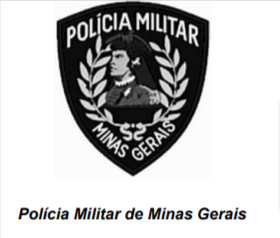
Pode-se inferir que o BRASÃO representa, predominantemente, uma função de linguagem
O conectivo “o qual” na frase: “( ... ) no distrito de Cachoeira do Campo, município de Ouro Preto, o qual tinha como missão guardar as minas de ouro descobertas na região de Vila Rica (atual Ouro Preto) e Mariana”.
No trecho acima, o termo destacado retoma a seguinte idéia:
Instrução: Leia o texto para responder a questão.
The Big Destructiveness Of The Tiny Bribe
Alexandra Wrage 03.01.2010
The smallest bribes can be the most vexing. Not suitcases full of money and transfers to offshore accounts, but the thousands of everyday payments people make to Indian building inspectors, Chinese customs officials and Nigerian airport functionaries, just to get things done. They’re payments for routine government services that a government official is legally obliged to perform but for which he’s hoping to skim off a little extra.
Unlike more serious bribes, these very modest payouts, formally known as “facilitating payments”, are not against the laws of the U.S., Canada, Australia, New Zealand or South Korea, when made abroad. They’re illegal for Great Britain, but the Serious Fraud Office there has taken the extraordinary public position that they’re unlikely to give rise to a prosecution.
Why don’t governments that lead the fight against large-scale bribery fall in line with what is already the practice of many major companies? They don’t want to outlaw such small-scale graft in foreign places, they say, because they don’t have the manpower to prosecute violators. By that logic, communities with just enough resources to handle murder and armed robbery would give a green light to shoplifting. You’d think a government could at least go after a few high-profile cases to set an example and a precedent. Permitting these smaller payments has to impede the effort to crack down on the larger ones. Companies know this.
“Facilitating” bribes are not tips. Tipping is voluntary, and you decide to do it after a service has been rendered. You don’t pay it at the outset to induce the waiter to bring the food, and you can always go somewhere else to eat next time should the service be bad.
Nor are they welfare for underpaid civil servants. If government workers are underpaid, we should compensate them for the cost of customs inspections or airport security by aboveboard means, through taxation and so forth. Payment to individuals not only slows service but also encourages entrepreneurial civil servants to increase their income by creating more and greater obstacles.
Nor are they a mere distraction from the fight against bigger bribes. Rather, they fuel the problem. Junior officials who look for small bribes rise to higher positions by paying off those above them. Corruption creates pyramids of illegal payments flowing upward. Legalizing the base of the pyramid gives it a strong and lasting foundation.
Nor are these payments legal where they’re made. They may not be banned by the wealthy countries mentioned above, but they are outlawed in the countries where they’re actually a problem. Do developed countries want to say they wouldn’t tolerate such payments at home but don’t care if they’re made abroad? And since they’re illegal in the countries where they’re paid, companies can’t put them on their books. The classic cover for a bribe is to call it a “consulting fee”, but that is a books and records violation that is illegal in any country.
(www.forbes.com. Adaptado.)
Instrução: Leia o texto para responder a questão.
The Big Destructiveness Of The Tiny Bribe
Alexandra Wrage 03.01.2010
The smallest bribes can be the most vexing. Not suitcases full of money and transfers to offshore accounts, but the thousands of everyday payments people make to Indian building inspectors, Chinese customs officials and Nigerian airport functionaries, just to get things done. They’re payments for routine government services that a government official is legally obliged to perform but for which he’s hoping to skim off a little extra.
Unlike more serious bribes, these very modest payouts, formally known as “facilitating payments”, are not against the laws of the U.S., Canada, Australia, New Zealand or South Korea, when made abroad. They’re illegal for Great Britain, but the Serious Fraud Office there has taken the extraordinary public position that they’re unlikely to give rise to a prosecution.
Why don’t governments that lead the fight against large-scale bribery fall in line with what is already the practice of many major companies? They don’t want to outlaw such small-scale graft in foreign places, they say, because they don’t have the manpower to prosecute violators. By that logic, communities with just enough resources to handle murder and armed robbery would give a green light to shoplifting. You’d think a government could at least go after a few high-profile cases to set an example and a precedent. Permitting these smaller payments has to impede the effort to crack down on the larger ones. Companies know this.
“Facilitating” bribes are not tips. Tipping is voluntary, and you decide to do it after a service has been rendered. You don’t pay it at the outset to induce the waiter to bring the food, and you can always go somewhere else to eat next time should the service be bad.
Nor are they welfare for underpaid civil servants. If government workers are underpaid, we should compensate them for the cost of customs inspections or airport security by aboveboard means, through taxation and so forth. Payment to individuals not only slows service but also encourages entrepreneurial civil servants to increase their income by creating more and greater obstacles.
Nor are they a mere distraction from the fight against bigger bribes. Rather, they fuel the problem. Junior officials who look for small bribes rise to higher positions by paying off those above them. Corruption creates pyramids of illegal payments flowing upward. Legalizing the base of the pyramid gives it a strong and lasting foundation.
Nor are these payments legal where they’re made. They may not be banned by the wealthy countries mentioned above, but they are outlawed in the countries where they’re actually a problem. Do developed countries want to say they wouldn’t tolerate such payments at home but don’t care if they’re made abroad? And since they’re illegal in the countries where they’re paid, companies can’t put them on their books. The classic cover for a bribe is to call it a “consulting fee”, but that is a books and records violation that is illegal in any country.
(www.forbes.com. Adaptado.)
Instrução: Leia o texto para responder a questão.
The Big Destructiveness Of The Tiny Bribe
Alexandra Wrage 03.01.2010
The smallest bribes can be the most vexing. Not suitcases full of money and transfers to offshore accounts, but the thousands of everyday payments people make to Indian building inspectors, Chinese customs officials and Nigerian airport functionaries, just to get things done. They’re payments for routine government services that a government official is legally obliged to perform but for which he’s hoping to skim off a little extra.
Unlike more serious bribes, these very modest payouts, formally known as “facilitating payments”, are not against the laws of the U.S., Canada, Australia, New Zealand or South Korea, when made abroad. They’re illegal for Great Britain, but the Serious Fraud Office there has taken the extraordinary public position that they’re unlikely to give rise to a prosecution.
Why don’t governments that lead the fight against large-scale bribery fall in line with what is already the practice of many major companies? They don’t want to outlaw such small-scale graft in foreign places, they say, because they don’t have the manpower to prosecute violators. By that logic, communities with just enough resources to handle murder and armed robbery would give a green light to shoplifting. You’d think a government could at least go after a few high-profile cases to set an example and a precedent. Permitting these smaller payments has to impede the effort to crack down on the larger ones. Companies know this.
“Facilitating” bribes are not tips. Tipping is voluntary, and you decide to do it after a service has been rendered. You don’t pay it at the outset to induce the waiter to bring the food, and you can always go somewhere else to eat next time should the service be bad.
Nor are they welfare for underpaid civil servants. If government workers are underpaid, we should compensate them for the cost of customs inspections or airport security by aboveboard means, through taxation and so forth. Payment to individuals not only slows service but also encourages entrepreneurial civil servants to increase their income by creating more and greater obstacles.
Nor are they a mere distraction from the fight against bigger bribes. Rather, they fuel the problem. Junior officials who look for small bribes rise to higher positions by paying off those above them. Corruption creates pyramids of illegal payments flowing upward. Legalizing the base of the pyramid gives it a strong and lasting foundation.
Nor are these payments legal where they’re made. They may not be banned by the wealthy countries mentioned above, but they are outlawed in the countries where they’re actually a problem. Do developed countries want to say they wouldn’t tolerate such payments at home but don’t care if they’re made abroad? And since they’re illegal in the countries where they’re paid, companies can’t put them on their books. The classic cover for a bribe is to call it a “consulting fee”, but that is a books and records violation that is illegal in any country.
(www.forbes.com. Adaptado.)
Instrução: Leia o texto para responder a questão.
The Big Destructiveness Of The Tiny Bribe
Alexandra Wrage 03.01.2010
The smallest bribes can be the most vexing. Not suitcases full of money and transfers to offshore accounts, but the thousands of everyday payments people make to Indian building inspectors, Chinese customs officials and Nigerian airport functionaries, just to get things done. They’re payments for routine government services that a government official is legally obliged to perform but for which he’s hoping to skim off a little extra.
Unlike more serious bribes, these very modest payouts, formally known as “facilitating payments”, are not against the laws of the U.S., Canada, Australia, New Zealand or South Korea, when made abroad. They’re illegal for Great Britain, but the Serious Fraud Office there has taken the extraordinary public position that they’re unlikely to give rise to a prosecution.
Why don’t governments that lead the fight against large-scale bribery fall in line with what is already the practice of many major companies? They don’t want to outlaw such small-scale graft in foreign places, they say, because they don’t have the manpower to prosecute violators. By that logic, communities with just enough resources to handle murder and armed robbery would give a green light to shoplifting. You’d think a government could at least go after a few high-profile cases to set an example and a precedent. Permitting these smaller payments has to impede the effort to crack down on the larger ones. Companies know this.
“Facilitating” bribes are not tips. Tipping is voluntary, and you decide to do it after a service has been rendered. You don’t pay it at the outset to induce the waiter to bring the food, and you can always go somewhere else to eat next time should the service be bad.
Nor are they welfare for underpaid civil servants. If government workers are underpaid, we should compensate them for the cost of customs inspections or airport security by aboveboard means, through taxation and so forth. Payment to individuals not only slows service but also encourages entrepreneurial civil servants to increase their income by creating more and greater obstacles.
Nor are they a mere distraction from the fight against bigger bribes. Rather, they fuel the problem. Junior officials who look for small bribes rise to higher positions by paying off those above them. Corruption creates pyramids of illegal payments flowing upward. Legalizing the base of the pyramid gives it a strong and lasting foundation.
Nor are these payments legal where they’re made. They may not be banned by the wealthy countries mentioned above, but they are outlawed in the countries where they’re actually a problem. Do developed countries want to say they wouldn’t tolerate such payments at home but don’t care if they’re made abroad? And since they’re illegal in the countries where they’re paid, companies can’t put them on their books. The classic cover for a bribe is to call it a “consulting fee”, but that is a books and records violation that is illegal in any country.
(www.forbes.com. Adaptado.)
Instrução: Leia o texto para responder a questão.
The Big Destructiveness Of The Tiny Bribe
Alexandra Wrage 03.01.2010
The smallest bribes can be the most vexing. Not suitcases full of money and transfers to offshore accounts, but the thousands of everyday payments people make to Indian building inspectors, Chinese customs officials and Nigerian airport functionaries, just to get things done. They’re payments for routine government services that a government official is legally obliged to perform but for which he’s hoping to skim off a little extra.
Unlike more serious bribes, these very modest payouts, formally known as “facilitating payments”, are not against the laws of the U.S., Canada, Australia, New Zealand or South Korea, when made abroad. They’re illegal for Great Britain, but the Serious Fraud Office there has taken the extraordinary public position that they’re unlikely to give rise to a prosecution.
Why don’t governments that lead the fight against large-scale bribery fall in line with what is already the practice of many major companies? They don’t want to outlaw such small-scale graft in foreign places, they say, because they don’t have the manpower to prosecute violators. By that logic, communities with just enough resources to handle murder and armed robbery would give a green light to shoplifting. You’d think a government could at least go after a few high-profile cases to set an example and a precedent. Permitting these smaller payments has to impede the effort to crack down on the larger ones. Companies know this.
“Facilitating” bribes are not tips. Tipping is voluntary, and you decide to do it after a service has been rendered. You don’t pay it at the outset to induce the waiter to bring the food, and you can always go somewhere else to eat next time should the service be bad.
Nor are they welfare for underpaid civil servants. If government workers are underpaid, we should compensate them for the cost of customs inspections or airport security by aboveboard means, through taxation and so forth. Payment to individuals not only slows service but also encourages entrepreneurial civil servants to increase their income by creating more and greater obstacles.
Nor are they a mere distraction from the fight against bigger bribes. Rather, they fuel the problem. Junior officials who look for small bribes rise to higher positions by paying off those above them. Corruption creates pyramids of illegal payments flowing upward. Legalizing the base of the pyramid gives it a strong and lasting foundation.
Nor are these payments legal where they’re made. They may not be banned by the wealthy countries mentioned above, but they are outlawed in the countries where they’re actually a problem. Do developed countries want to say they wouldn’t tolerate such payments at home but don’t care if they’re made abroad? And since they’re illegal in the countries where they’re paid, companies can’t put them on their books. The classic cover for a bribe is to call it a “consulting fee”, but that is a books and records violation that is illegal in any country.
(www.forbes.com. Adaptado.)
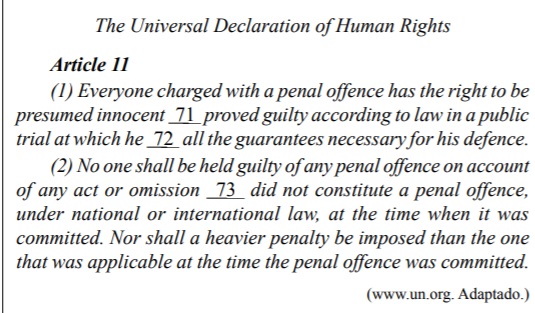
Instrução: Leia o artigo 11 da Declaração Universal dos Direitos Humanos, em inglês, para responder a questão, assinalando a alternativa que completa corretamente as respectivas lacunas.
The Universal Declaration of Human Rights
Article 11
(1) Everyone charged with a penal offence has the right to be
presumed innocent —— 71 proved guilty according to law in a public
trial at which he —— 72 all the guarantees necessary for his defence.
(2) No one shall be held guilty of any penal offence on account
of any act or omission — 73
— did not constitute a penal offence,
under national or international law, at the time when it was
committed. Nor shall a heavier penalty be imposed than the one
that was applicable at the time the penal offence was committed.
(www.un.org. Adaptado.)

 Conheça nossos planos