Questões Militares Para marinha

Foram encontradas 33.453 questões

Resolva questões gratuitamente!

Junte-se a mais de 4 milhões de concurseiros!

Q3832791 Inglês

Read text V to answer question.


TEXT V


US considers 'sun blocking' to cool the Earth


It sounds like something out of a sci-fi novel, but some researchers want to cool the earth by reflecting sunlight back into space. Sun blocking' technologies - also known as solar radiation modification (SRM) - could theoretically cool down the earth by reflecting sunlight back into space. One idea involves pumping sun-blocking particles into the upper atmosphere. This process of 'stratospheric aerosol injection' would involve planes spraying an aerosol like sulfur dioxide into the stratosphere. This mist of particles would reflect the sun back upwards, shading the earth. The method has already worked - although accidentally. When Mount Pinatubo in the Philippines erupted in 1991, it released thousands of tons of sulfur dioxide. The global temperature temporarily dropped by 0.5°C. In September 2022, researchers at Yale University argued that the injection method could hypothetically refreeze the poles.


A White House report published last Friday confirms that the US is open to researching SRM. "A programme of research into the scientific and societal implications of solar radiation modification (SRM) would enable better-informed decisions about the potential risks and benefits of SRM as a component. of climate policy, alongside the foundational elements of greenhouse gas emissions mitigation and adaptation it says. However, the report also clarifies that no decision has been made to "establish a comprehensive research programme focused on solar radiation modification."


In February, several news outlets reported that the UN wanted to 'explore' this technique. This could give the impression that the organisation had approved sun blocking as a viablé tool to fight climate change. Unfortunately for tech enthusiasts, this is not the case. The UN Environmental Program's recent report into SRM concludes that it is not currently a realistic or wise plan. "UNEP concurs with the panel that, at present, large-scale, or operational deployment of SRM technologies is not necessary, viable, prudent or sufficiently safe, given the limited scientific understanding and uncertainty about the potential impacts and unintended consequences," says UNEP's Chief Scientist Andrea Hinwood. "The review concludes that SRM cannot replace reducing greenhouse gas emissions." Nonetheless, the body doesn't rule out the method altogether, with the report concluding that their assessment of the technique "may change should climate actions remain insufficient".


Adapted from https://www.euronews.com/green/2023/07/05/sunblockers-us-scientists-aim-to-cool-the-earth-by-reflecting-sunlightinto-space


It may be inferred from the text that solar radiation modification:
Alternativas
Q3832790 Inglês
Read text IV to answer question.


TEXT IV


Fewer than 1 in 5 would give up their smartphone to mitigate climate change, YAF poll found


According to a poll published on Aug. 13, 2023 from the Young America's Foundation, two thirds of college students believe climate change is a threat to their generation, but fewer than one in five are willing to give up their smartphones to heip, a recent poll found. More college students would sacrifice having children and eating meat before giving up their cellphones.

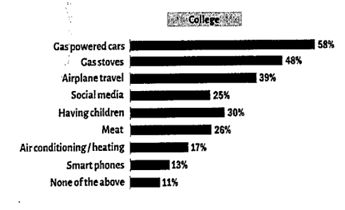
The poll, facilitated by Echelon Insights, asked 812 college students in mid-July about a wide variety of topics, including environmental issues. According to the poll, 86 percent believe climate change is happening, and nearly two thirds, 67 percent, believe it is a threat for their generation. But when asked what they are willing to give up or significantly cut down on to "heip mitigate climate change," only one in five - or 13 percent - chose their smartphones.

Anthony Watts, senior fellow for environment and climate at the Heartland Institute, said the results did not surprise him. He said giving up a smartphone - "essentially a visual stimulation drug" - is like trying to end a drug addiction, and it isn't surprising that students are more willing to sacrifice almost anything else.


Willing to give up or significantly cut down on to mitigate climate change


Q32_33.png (345×210)

Adapted from Adaptado de https://www.thecollegefix.com/more-collegestudents-would-give-up-having-children-eating-meat-thancellphones-to-help-climate-poll/>
Among the students asked in the poll:
Alternativas
Q3832789 Inglês
Read text IV to answer question.


TEXT IV


Fewer than 1 in 5 would give up their smartphone to mitigate climate change, YAF poll found


According to a poll published on Aug. 13, 2023 from the Young America's Foundation, two thirds of college students believe climate change is a threat to their generation, but fewer than one in five are willing to give up their smartphones to heip, a recent poll found. More college students would sacrifice having children and eating meat before giving up their cellphones.

The poll, facilitated by Echelon Insights, asked 812 college students in mid-July about a wide variety of topics, including environmental issues. According to the poll, 86 percent believe climate change is happening, and nearly two thirds, 67 percent, believe it is a threat for their generation. But when asked what they are willing to give up or significantly cut down on to "heip mitigate climate change," only one in five - or 13 percent - chose their smartphones.

Anthony Watts, senior fellow for environment and climate at the Heartland Institute, said the results did not surprise him. He said giving up a smartphone - "essentially a visual stimulation drug" - is like trying to end a drug addiction, and it isn't surprising that students are more willing to sacrifice almost anything else.


Willing to give up or significantly cut down on to mitigate climate change


Q32_33.png (345×210)

Adapted from Adaptado de https://www.thecollegefix.com/more-collegestudents-would-give-up-having-children-eating-meat-thancellphones-to-help-climate-poll/>
It is correct to infer that the poll:
Alternativas
Q3832788 Inglês
Read Text III to answer questions.


TEXT III


Czech star gymnast dies after falling over 200 feet from mountain while attempting to take selfie


By Scott Thompson - Fox News
Updated August 26, 2024


The Daily Mail reports that 23-year-old Natalie Stichova was declared dead six days after falling 262 feet down Tegelberg Mountain in Bavaria, Germany, on Aug. 15.

A friend of the gymnast told Czech media that Stichova was trying to take a selfie when she fell. The person, who wanted to remain anonymous, said Stichova was close to the edge of the mountain when her foot appeared to slip while setting up for a photo in front of the castle.

"We will never find out whether she slipped or whether a piece of the rock edge broke off," the friend said, per the Daily Mail.

Stichova was reportedly with her boyfriend, David, and two friends ________ the time of the incident. Police said it was a challenging climb to reach the gymnast after her fall. Although Stichova was alive when first responders arrived, she was suffering from severe injuries.

The Daily Mail reports Stichova's family took her off life support due to irreversible brain damage ________ Aug. 21. She died ________ 5:30 a.m. that day.

"With deep sorrow, we announce that our wonderful friend, gymnast, rëpresentative, and coach, Natalie Stichova, has left us forever due to a tragic accident," Stichova's club, Sokol Pribram Sports Gymnastics, said in an official statement, per the Daily Mail. "We are extending our heartfelt condolences to her family and close friends, sending them strength and support."


Adapted from: <https://www.foxnews.com/sports/czech-stargymnast-dies-after-falling-over-200-feet-from-mountain-whileattempting-take-selfie-report>
In the extract "Although Stichova was alive when first responders arrived, she was suffering from severe injuries" (4th paragraph), "although" is used to express:
Alternativas
Q3832787 Inglês
Read Text III to answer questions.


TEXT III


Czech star gymnast dies after falling over 200 feet from mountain while attempting to take selfie


By Scott Thompson - Fox News
Updated August 26, 2024


The Daily Mail reports that 23-year-old Natalie Stichova was declared dead six days after falling 262 feet down Tegelberg Mountain in Bavaria, Germany, on Aug. 15.

A friend of the gymnast told Czech media that Stichova was trying to take a selfie when she fell. The person, who wanted to remain anonymous, said Stichova was close to the edge of the mountain when her foot appeared to slip while setting up for a photo in front of the castle.

"We will never find out whether she slipped or whether a piece of the rock edge broke off," the friend said, per the Daily Mail.

Stichova was reportedly with her boyfriend, David, and two friends ________ the time of the incident. Police said it was a challenging climb to reach the gymnast after her fall. Although Stichova was alive when first responders arrived, she was suffering from severe injuries.

The Daily Mail reports Stichova's family took her off life support due to irreversible brain damage ________ Aug. 21. She died ________ 5:30 a.m. that day.

"With deep sorrow, we announce that our wonderful friend, gymnast, rëpresentative, and coach, Natalie Stichova, has left us forever due to a tragic accident," Stichova's club, Sokol Pribram Sports Gymnastics, said in an official statement, per the Daily Mail. "We are extending our heartfelt condolences to her family and close friends, sending them strength and support."


Adapted from: <https://www.foxnews.com/sports/czech-stargymnast-dies-after-falling-over-200-feet-from-mountain-whileattempting-take-selfie-report>
Which word ending in_ing, extracted from the text, is used as an adjective? 
Alternativas
Q3832786 Inglês
Read Text III to answer questions.


TEXT III


Czech star gymnast dies after falling over 200 feet from mountain while attempting to take selfie


By Scott Thompson - Fox News
Updated August 26, 2024


The Daily Mail reports that 23-year-old Natalie Stichova was declared dead six days after falling 262 feet down Tegelberg Mountain in Bavaria, Germany, on Aug. 15.

A friend of the gymnast told Czech media that Stichova was trying to take a selfie when she fell. The person, who wanted to remain anonymous, said Stichova was close to the edge of the mountain when her foot appeared to slip while setting up for a photo in front of the castle.

"We will never find out whether she slipped or whether a piece of the rock edge broke off," the friend said, per the Daily Mail.

Stichova was reportedly with her boyfriend, David, and two friends ________ the time of the incident. Police said it was a challenging climb to reach the gymnast after her fall. Although Stichova was alive when first responders arrived, she was suffering from severe injuries.

The Daily Mail reports Stichova's family took her off life support due to irreversible brain damage ________ Aug. 21. She died ________ 5:30 a.m. that day.

"With deep sorrow, we announce that our wonderful friend, gymnast, rëpresentative, and coach, Natalie Stichova, has left us forever due to a tragic accident," Stichova's club, Sokol Pribram Sports Gymnastics, said in an official statement, per the Daily Mail. "We are extending our heartfelt condolences to her family and close friends, sending them strength and support."


Adapted from: <https://www.foxnews.com/sports/czech-stargymnast-dies-after-falling-over-200-feet-from-mountain-whileattempting-take-selfie-report>
Complete the three gaps in the 4th and 5th paragraphs with the missing prepositions. Then, mark the correct option, respectively.
Alternativas
Q3832785 Inglês
Read Text III to answer questions.


TEXT III


Czech star gymnast dies after falling over 200 feet from mountain while attempting to take selfie


By Scott Thompson - Fox News
Updated August 26, 2024


The Daily Mail reports that 23-year-old Natalie Stichova was declared dead six days after falling 262 feet down Tegelberg Mountain in Bavaria, Germany, on Aug. 15.

A friend of the gymnast told Czech media that Stichova was trying to take a selfie when she fell. The person, who wanted to remain anonymous, said Stichova was close to the edge of the mountain when her foot appeared to slip while setting up for a photo in front of the castle.

"We will never find out whether she slipped or whether a piece of the rock edge broke off," the friend said, per the Daily Mail.

Stichova was reportedly with her boyfriend, David, and two friends ________ the time of the incident. Police said it was a challenging climb to reach the gymnast after her fall. Although Stichova was alive when first responders arrived, she was suffering from severe injuries.

The Daily Mail reports Stichova's family took her off life support due to irreversible brain damage ________ Aug. 21. She died ________ 5:30 a.m. that day.

"With deep sorrow, we announce that our wonderful friend, gymnast, rëpresentative, and coach, Natalie Stichova, has left us forever due to a tragic accident," Stichova's club, Sokol Pribram Sports Gymnastics, said in an official statement, per the Daily Mail. "We are extending our heartfelt condolences to her family and close friends, sending them strength and support."


Adapted from: <https://www.foxnews.com/sports/czech-stargymnast-dies-after-falling-over-200-feet-from-mountain-whileattempting-take-selfie-report>
Mark the option in which the statement, in parenthesis, correctly explains the verb tense(s) used in the corresponding extracts from the text.
Alternativas
Q3832784 Inglês
Read Text II to answer question.


TEXT II


France to trial ban on mobile phones at school for children under 15


Kim Willsher - Paris
Tue 27 Aug 2024


France is to trial a ban on mobile phones at school pupils who are younger than 15, seeking to give children a "digital pause" that, if judged successful, could be rolled out nationwide from January.

Just under 200 secondary schools will take place in the experiment that will require youngsters to hand over phones on arrival at reception. It takes the prohibition on the devices further than a 2018 law that banned pupils at primary and secondary schools from using their phones on the premises but allowed them to keep possession of them.

Announcing the trial on Tuesday, the acting education minister, Nicole Belloubet, said the aim was to give youngsters a "digital pause". If the trial proves successful, the ban would be introduced in all schools from January, Belloubet said.

A commission set up by the president, Emmanuel Macron, expressed concern that the overexposure of children to screens was having a detrimental effect on their health and development. 

A 140-page report published in March concluded there was "a very clear consensus on the direct and indirect negative effects of digital devices on sleep, on being sedentary - a lack of physical activity and the risk of being overweight and even obese - as well as on sight". It said the "hyper" use of phones and other digital technology was not only bad for children but also for "society and civilisation".

The report recommended children's use of mobile phones be controlled in stages: no mobile phones before the age of at least 11, mobiles without internet access between 11 and 13, phones with internet but no access to social media before 15.

It also suggested children under three years old should not be exposed at all to digital devices, which it said were "not necessary for the healthy development of the child".

"We must put the digital tool in its place. Up to at least six years old a child has no need for a digital device to develop," Servane Mouton, a neurologist and neurophysiologist who was on the commission, said. "We have to teach parents once again how to play with their children." 

Banning phones in schools has long been debated across Europe. In countries where bans exist this is most often confined to their use and do not require children to hand them over.

In Germany there are no formal restrictions but most schools have prohibited the use of mobile phones and digital devices in classrooms except for education purposes. A quasi ban has been in place in Dutch secondary school classrooms since the beginning of this year, but as a recommendation and not a legal obligation. From this school year the directive will also apply to primary schools.

Italy was early to phone bans, introducing one in 2007, easing it in 2017 and reimposing it in 2022. It applies to all age groups.

In February this year, the British government issued guidance for schools "on prohibiting the use of mobile phones throughout the school day" but said it was for individual head teachers and leaders to decide on phone use policy.

Portugal is experimenting with a compromise by introducing a number of phone-free days at schools each month, while in Spain schools in some autonomous regions have imposed a ban but there is no nationwide prohibition.


Adapted from: <https://www.thequardian.com/world/article/2024/aug/27/franceto-trial-ban-on-mobile-phones-at-school-for-children-under-15>
The main purpose of the experiment in France is to:
Alternativas
Q3832783 Inglês
Read Text II to answer question.


TEXT II


France to trial ban on mobile phones at school for children under 15


Kim Willsher - Paris
Tue 27 Aug 2024


France is to trial a ban on mobile phones at school pupils who are younger than 15, seeking to give children a "digital pause" that, if judged successful, could be rolled out nationwide from January.

Just under 200 secondary schools will take place in the experiment that will require youngsters to hand over phones on arrival at reception. It takes the prohibition on the devices further than a 2018 law that banned pupils at primary and secondary schools from using their phones on the premises but allowed them to keep possession of them.

Announcing the trial on Tuesday, the acting education minister, Nicole Belloubet, said the aim was to give youngsters a "digital pause". If the trial proves successful, the ban would be introduced in all schools from January, Belloubet said.

A commission set up by the president, Emmanuel Macron, expressed concern that the overexposure of children to screens was having a detrimental effect on their health and development. 

A 140-page report published in March concluded there was "a very clear consensus on the direct and indirect negative effects of digital devices on sleep, on being sedentary - a lack of physical activity and the risk of being overweight and even obese - as well as on sight". It said the "hyper" use of phones and other digital technology was not only bad for children but also for "society and civilisation".

The report recommended children's use of mobile phones be controlled in stages: no mobile phones before the age of at least 11, mobiles without internet access between 11 and 13, phones with internet but no access to social media before 15.

It also suggested children under three years old should not be exposed at all to digital devices, which it said were "not necessary for the healthy development of the child".

"We must put the digital tool in its place. Up to at least six years old a child has no need for a digital device to develop," Servane Mouton, a neurologist and neurophysiologist who was on the commission, said. "We have to teach parents once again how to play with their children." 

Banning phones in schools has long been debated across Europe. In countries where bans exist this is most often confined to their use and do not require children to hand them over.

In Germany there are no formal restrictions but most schools have prohibited the use of mobile phones and digital devices in classrooms except for education purposes. A quasi ban has been in place in Dutch secondary school classrooms since the beginning of this year, but as a recommendation and not a legal obligation. From this school year the directive will also apply to primary schools.

Italy was early to phone bans, introducing one in 2007, easing it in 2017 and reimposing it in 2022. It applies to all age groups.

In February this year, the British government issued guidance for schools "on prohibiting the use of mobile phones throughout the school day" but said it was for individual head teachers and leaders to decide on phone use policy.

Portugal is experimenting with a compromise by introducing a number of phone-free days at schools each month, while in Spain schools in some autonomous regions have imposed a ban but there is no nationwide prohibition.


Adapted from: <https://www.thequardian.com/world/article/2024/aug/27/franceto-trial-ban-on-mobile-phones-at-school-for-children-under-15>
According to the text:
Alternativas
Q3832782 Inglês
Read Text II to answer question.


TEXT II


France to trial ban on mobile phones at school for children under 15


Kim Willsher - Paris
Tue 27 Aug 2024


France is to trial a ban on mobile phones at school pupils who are younger than 15, seeking to give children a "digital pause" that, if judged successful, could be rolled out nationwide from January.

Just under 200 secondary schools will take place in the experiment that will require youngsters to hand over phones on arrival at reception. It takes the prohibition on the devices further than a 2018 law that banned pupils at primary and secondary schools from using their phones on the premises but allowed them to keep possession of them.

Announcing the trial on Tuesday, the acting education minister, Nicole Belloubet, said the aim was to give youngsters a "digital pause". If the trial proves successful, the ban would be introduced in all schools from January, Belloubet said.

A commission set up by the president, Emmanuel Macron, expressed concern that the overexposure of children to screens was having a detrimental effect on their health and development. 

A 140-page report published in March concluded there was "a very clear consensus on the direct and indirect negative effects of digital devices on sleep, on being sedentary - a lack of physical activity and the risk of being overweight and even obese - as well as on sight". It said the "hyper" use of phones and other digital technology was not only bad for children but also for "society and civilisation".

The report recommended children's use of mobile phones be controlled in stages: no mobile phones before the age of at least 11, mobiles without internet access between 11 and 13, phones with internet but no access to social media before 15.

It also suggested children under three years old should not be exposed at all to digital devices, which it said were "not necessary for the healthy development of the child".

"We must put the digital tool in its place. Up to at least six years old a child has no need for a digital device to develop," Servane Mouton, a neurologist and neurophysiologist who was on the commission, said. "We have to teach parents once again how to play with their children." 

Banning phones in schools has long been debated across Europe. In countries where bans exist this is most often confined to their use and do not require children to hand them over.

In Germany there are no formal restrictions but most schools have prohibited the use of mobile phones and digital devices in classrooms except for education purposes. A quasi ban has been in place in Dutch secondary school classrooms since the beginning of this year, but as a recommendation and not a legal obligation. From this school year the directive will also apply to primary schools.

Italy was early to phone bans, introducing one in 2007, easing it in 2017 and reimposing it in 2022. It applies to all age groups.

In February this year, the British government issued guidance for schools "on prohibiting the use of mobile phones throughout the school day" but said it was for individual head teachers and leaders to decide on phone use policy.

Portugal is experimenting with a compromise by introducing a number of phone-free days at schools each month, while in Spain schools in some autonomous regions have imposed a ban but there is no nationwide prohibition.


Adapted from: <https://www.thequardian.com/world/article/2024/aug/27/franceto-trial-ban-on-mobile-phones-at-school-for-children-under-15>
It is correct to infer that in France:
Alternativas
Q3832781 Inglês
Read Text II to answer question.


TEXT II


France to trial ban on mobile phones at school for children under 15


Kim Willsher - Paris
Tue 27 Aug 2024


France is to trial a ban on mobile phones at school pupils who are younger than 15, seeking to give children a "digital pause" that, if judged successful, could be rolled out nationwide from January.

Just under 200 secondary schools will take place in the experiment that will require youngsters to hand over phones on arrival at reception. It takes the prohibition on the devices further than a 2018 law that banned pupils at primary and secondary schools from using their phones on the premises but allowed them to keep possession of them.

Announcing the trial on Tuesday, the acting education minister, Nicole Belloubet, said the aim was to give youngsters a "digital pause". If the trial proves successful, the ban would be introduced in all schools from January, Belloubet said.

A commission set up by the president, Emmanuel Macron, expressed concern that the overexposure of children to screens was having a detrimental effect on their health and development. 

A 140-page report published in March concluded there was "a very clear consensus on the direct and indirect negative effects of digital devices on sleep, on being sedentary - a lack of physical activity and the risk of being overweight and even obese - as well as on sight". It said the "hyper" use of phones and other digital technology was not only bad for children but also for "society and civilisation".

The report recommended children's use of mobile phones be controlled in stages: no mobile phones before the age of at least 11, mobiles without internet access between 11 and 13, phones with internet but no access to social media before 15.

It also suggested children under three years old should not be exposed at all to digital devices, which it said were "not necessary for the healthy development of the child".

"We must put the digital tool in its place. Up to at least six years old a child has no need for a digital device to develop," Servane Mouton, a neurologist and neurophysiologist who was on the commission, said. "We have to teach parents once again how to play with their children." 

Banning phones in schools has long been debated across Europe. In countries where bans exist this is most often confined to their use and do not require children to hand them over.

In Germany there are no formal restrictions but most schools have prohibited the use of mobile phones and digital devices in classrooms except for education purposes. A quasi ban has been in place in Dutch secondary school classrooms since the beginning of this year, but as a recommendation and not a legal obligation. From this school year the directive will also apply to primary schools.

Italy was early to phone bans, introducing one in 2007, easing it in 2017 and reimposing it in 2022. It applies to all age groups.

In February this year, the British government issued guidance for schools "on prohibiting the use of mobile phones throughout the school day" but said it was for individual head teachers and leaders to decide on phone use policy.

Portugal is experimenting with a compromise by introducing a number of phone-free days at schools each month, while in Spain schools in some autonomous regions have imposed a ban but there is no nationwide prohibition.


Adapted from: <https://www.thequardian.com/world/article/2024/aug/27/franceto-trial-ban-on-mobile-phones-at-school-for-children-under-15>
The pronouns in the sentence "(...) but allowed them to keep possession of them" (2nd paragraph) refer to, respectively:
Alternativas
Q3832780 Inglês
Read Text II to answer question.


TEXT II


France to trial ban on mobile phones at school for children under 15


Kim Willsher - Paris
Tue 27 Aug 2024


France is to trial a ban on mobile phones at school pupils who are younger than 15, seeking to give children a "digital pause" that, if judged successful, could be rolled out nationwide from January.

Just under 200 secondary schools will take place in the experiment that will require youngsters to hand over phones on arrival at reception. It takes the prohibition on the devices further than a 2018 law that banned pupils at primary and secondary schools from using their phones on the premises but allowed them to keep possession of them.

Announcing the trial on Tuesday, the acting education minister, Nicole Belloubet, said the aim was to give youngsters a "digital pause". If the trial proves successful, the ban would be introduced in all schools from January, Belloubet said.

A commission set up by the president, Emmanuel Macron, expressed concern that the overexposure of children to screens was having a detrimental effect on their health and development. 

A 140-page report published in March concluded there was "a very clear consensus on the direct and indirect negative effects of digital devices on sleep, on being sedentary - a lack of physical activity and the risk of being overweight and even obese - as well as on sight". It said the "hyper" use of phones and other digital technology was not only bad for children but also for "society and civilisation".

The report recommended children's use of mobile phones be controlled in stages: no mobile phones before the age of at least 11, mobiles without internet access between 11 and 13, phones with internet but no access to social media before 15.

It also suggested children under three years old should not be exposed at all to digital devices, which it said were "not necessary for the healthy development of the child".

"We must put the digital tool in its place. Up to at least six years old a child has no need for a digital device to develop," Servane Mouton, a neurologist and neurophysiologist who was on the commission, said. "We have to teach parents once again how to play with their children." 

Banning phones in schools has long been debated across Europe. In countries where bans exist this is most often confined to their use and do not require children to hand them over.

In Germany there are no formal restrictions but most schools have prohibited the use of mobile phones and digital devices in classrooms except for education purposes. A quasi ban has been in place in Dutch secondary school classrooms since the beginning of this year, but as a recommendation and not a legal obligation. From this school year the directive will also apply to primary schools.

Italy was early to phone bans, introducing one in 2007, easing it in 2017 and reimposing it in 2022. It applies to all age groups.

In February this year, the British government issued guidance for schools "on prohibiting the use of mobile phones throughout the school day" but said it was for individual head teachers and leaders to decide on phone use policy.

Portugal is experimenting with a compromise by introducing a number of phone-free days at schools each month, while in Spain schools in some autonomous regions have imposed a ban but there is no nationwide prohibition.


Adapted from: <https://www.thequardian.com/world/article/2024/aug/27/franceto-trial-ban-on-mobile-phones-at-school-for-children-under-15>
Mark the option in which the extract from the text contains an adverb in the comparative degree.
Alternativas
Q3832779 Inglês
Read Text I to answer question


TEXT I

Q21_22.png (370×361)
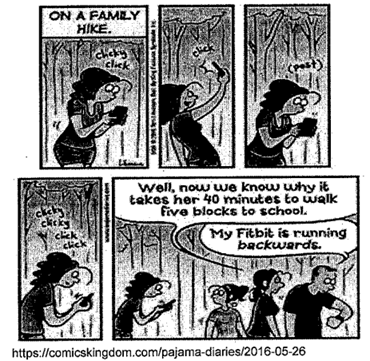
Mark the grammatically correct question for this sentence extracted from the cartoon: "it takes her 40 minutes to walk five blocks to school".
Alternativas
Q3832778 Inglês
Read Text I to answer question


TEXT I

Q21_22.png (370×361)
The mother finally realizes the reason why her daughter:
Alternativas
Q3832777 Matemática
Sendo a, b, x e y números naturais, sabe-se que o produto x · y é ímpar, e que o valor de (x · y)% de a · b é igual a 17,6. Se a é um número primo, está correto afirmar que o número b escrito na base 3 é:
Alternativas
Q3832776 Matemática
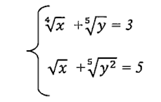
Observe o sistema abaixo.

Q19.png (161×102)

Existem dois pares ordenados A(X1,Y1) е В(Х2,Y2) que solucionam o sistema apresentado. Se representarmos os pontos A e B no sistema cartesiano é correto afirmar que a menor distância entre eles é igual a:
Alternativas
Q3832775 Matemática
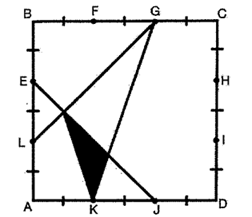
Analise a figura abaixo.

Q18.png (252×217)

A figura acima apresenta um quadrado de lado igual a 6 unidades de comprimento. Considerando que o segmento com marcas iguais são congruentes, é correto afirmar que, em unidades de área, a área da região sombreada é igual a:
Alternativas
Q3832774 Matemática
Considere , σ operador matemático, que associa a raiz quadrada do maior quadrado perfeito menor do que o produto dos fatores envolvidos, isto é 11σ 14 = 12 porque o maior quadrado perfeito menor do que o produto (11x14 = 154) é 144 e √144 = 12. Se A = {5 σ [ 6 σ (7 σ 8)]}2 σ 11 e B = {[(8 σ 6) σ 11] σ 8}3 σ 6, é correto afirmar que o valor de A σ B é igual a:
Alternativas
Q3832773 Matemática
Se j, k, l e m são algarismos não nulos, ao simplificar a fração Imagem associada para resolução da questão é sempre verdade que:
Alternativas
Q3832772 Matemática
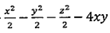
Considere a igualdade A³ - A²z- A²y + Ayz - A²x + Axz + Axy - Q15.png (110×33) - 4yz - 4xz +xyz =0, e ainda que A³ = (x + y + z)3, B = xy + xz + yz e C = A2.

É correto afirmar que xyz é igual a:

Alternativas
Respostas
2321: D
2322: D
2323: D
2324: E
2325: C
2326: A
2327: E
2328: E
2329: C
2330: A
2331: C
2332: B
2333: B
2334: E
2335: A
2336: B
2337: B
2338: C
2339: C
2340: A