Questões de Vestibular
Foram encontradas 75.429 questões
Resolva questões gratuitamente!
Junte-se a mais de 4 milhões de concurseiros!


Q1378746
Português
Texto associado
Considere os textos abaixo para
responder à questão.
I)
Consolo na praia (Carlos Drummond de Andrade)
Vamos, não chores
A infância está perdida.
A mocidade está perdida.
Mas a vida não está perdida.
A infância está perdida.
A mocidade está perdida.
Mas a vida não está perdida.
O primeiro amor passou.
O segundo amor passou.
O terceiro amor passou.
Mas o coração continua.
O segundo amor passou.
O terceiro amor passou.
Mas o coração continua.
Perdeste o melhor amigo.
Não tentaste qualquer viagem.
Não possuis casa, navio, terra.
Mas tens um cão.
Não tentaste qualquer viagem.
Não possuis casa, navio, terra.
Mas tens um cão.
[...]
(ADNRADE, Carlos Drummond de. Antologia poética.
39. ed. Rio de Janeiro: Record, 1998, p. 26)
II)
Velha chácara (Manuel Bandeira)
A casa era por aqui...
Onde? Procuro-a e não acho.
Ouço uma voz que esqueci:
É a voz deste mesmo riacho.
Ah quanto tempo passou!
(Foram mais de cinquenta anos.)
Tantos que a morte levou!
(E a vida... nos desenganos...)
A usura fez tábua rasa
Da velha chácara triste:
Não existe mais a casa...
– Mas o menino ainda existe.
(BANDEIRA, Manuel. Lira dos cinquent’anos. In: Bandeira de bolso:uma antologia poética. Porto Alegre: L&PM, 2008, 111-112.)
III)
Quarenta anos (Olavo Bilac)
Sim! Como um dia de verão, de acesa
Luz, de acesos e cálidos fulgores,
Como os sorrisos da estação das flores,
Foi passando também tua beleza.
Luz, de acesos e cálidos fulgores,
Como os sorrisos da estação das flores,
Foi passando também tua beleza.
Hoje, das garras da descrença presa,
Perdes as ilusões. Vão-se-te as cores
Da face. E entram-te n’alma os dissabores,
Nublam-te o olhar as sombras da tristeza.
Perdes as ilusões. Vão-se-te as cores
Da face. E entram-te n’alma os dissabores,
Nublam-te o olhar as sombras da tristeza.
Expira a primavera. O sol fulgura
Com o brilho extremo... E aí vêm as noites frias,
Aí vem o inverno da velhice escura...
Com o brilho extremo... E aí vêm as noites frias,
Aí vem o inverno da velhice escura...
Ah! pudesse eu fazer, novo Ezequias,
Que o sol poente dessa formosura
Volvesse à aurora dos primeiros dias!
Que o sol poente dessa formosura
Volvesse à aurora dos primeiros dias!
(BILAC, Olavo. Poesias. São Paulo:
Martin Claret: 2006, p. 70.)
IV)
Adeus, meus sonhos! (Álvares de Azevedo)
Adeus, meus sonhos, eu pranteio e morro!
Não levo da existência uma saudade!
E tanta vida que meu peito enchia
Morreu na minha triste mocidade!
Não levo da existência uma saudade!
E tanta vida que meu peito enchia
Morreu na minha triste mocidade!
Misérrimo! votei meus pobres dias
À sina doida de um amor sem fruto,
A minh’alma na treva agora dorme
Como um olhar que a morte envolve em luto.
À sina doida de um amor sem fruto,
A minh’alma na treva agora dorme
Como um olhar que a morte envolve em luto.
Que me resta, meu Deus? morra comigo
A estrela de meus cândidos amores
Já que não levo no meu peito morto
Um punhado sequer de murchas flores!
A estrela de meus cândidos amores
Já que não levo no meu peito morto
Um punhado sequer de murchas flores!
(AZEVEDO, Álvares. Lira dos vinte anos. São Paulo: Martin Claret,
2007, p. 224.)
Analise as afirmações abaixo e, depois, assinale a
alternativa correta.
I – Os quatro poemas tematizam liricamente a passagem do tempo, valendo-se de recursos estilísticos diversos, apresentando, cada um, uma visão particular da vida.
II – No texto IV, o eu lírico manifesta, na linguagem, o egocentrismo caro aos poetas da segunda geração romântica, levando ao extremo o foco da mensagem na figura do emissor, o que fica expresso, entre outros, pela recorrência do sinal de exclamação e pelo tom dramático assumido ao longo do poema.
III – No texto I, como nos demais poemas de Drummond, fala um eu lírico comprometido com a esperança na vida, ainda que, nem sempre, esta pareça fácil, posição que se evidencia pela escolha de vocabulário simples e encadeamento frasal sem torneios sintáticos.
IV – O poema de Bandeira, texto II, faz-se da dialética lírica que atualiza, esteticamente, o olhar da criança na experiência vital do adulto, processo que implica uma relação entre fatalismo da vida e saudosismo da memória do passado.
Estão CORRETAS as afirmações feitas apenas em:
I – Os quatro poemas tematizam liricamente a passagem do tempo, valendo-se de recursos estilísticos diversos, apresentando, cada um, uma visão particular da vida.
II – No texto IV, o eu lírico manifesta, na linguagem, o egocentrismo caro aos poetas da segunda geração romântica, levando ao extremo o foco da mensagem na figura do emissor, o que fica expresso, entre outros, pela recorrência do sinal de exclamação e pelo tom dramático assumido ao longo do poema.
III – No texto I, como nos demais poemas de Drummond, fala um eu lírico comprometido com a esperança na vida, ainda que, nem sempre, esta pareça fácil, posição que se evidencia pela escolha de vocabulário simples e encadeamento frasal sem torneios sintáticos.
IV – O poema de Bandeira, texto II, faz-se da dialética lírica que atualiza, esteticamente, o olhar da criança na experiência vital do adulto, processo que implica uma relação entre fatalismo da vida e saudosismo da memória do passado.
Estão CORRETAS as afirmações feitas apenas em:
Q1370267
Biologia
Nos ambientes urbanos, o excesso de chuvas causa alagamentos que fazem os esgotos transbordarem. Este
fator incrementa a dispersão de animais que disseminam doenças, pois eles saem dos esgotos e invadem as
residências. O aumento da proximidade do homem com as populações de ratos é um perigo em potencial para
o incremento de casos de _________, doença que é causada pelo contato humano com a urina desses
animais.
Q1370265
Química
Um metal M do grupo 1A forma um sulfeto. A fórmula correta deste sulfeto é:
Q1370264
Química
Examine o gráfico, que representa a solubilidade (g/L) de um sal iônico em água, em função da temperatura
(°C).
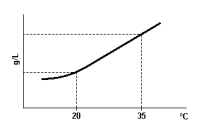
Pode-se afirmar que o sal possui
Pode-se afirmar que o sal possui
Q1370261
Física
Em um determinado dia, a temperatura mínima em Cascavel foi de 15 °C e a máxima de 27 °C. A diferença
entre essas temperaturas, na escala kelvin, é de
Q1370260
Matemática
A média das notas dos alunos de um professor é igual a 5,5. Ele observou que 60% dos alunos obtiveram nota
de 5,5 a 10 e que a média das notas desse grupo de alunos foi 6,5. Neste caso, considerando o grupo de alunos
que tiveram notas inferiores a 5,5, a média de suas notas foi de
Q1370259
Matemática
O diâmetro da base de um reservatório cilíndrico mede 2 metros. Sabendo-se que sua altura mede 60
centímetros, sua capacidade aproximada, em litros, é de
Q1370258
Matemática
Resolvendo a equação exponencial 2x = 3, encontramos como solução:
Q1370257
Inglês
Texto associado
Why a global Language?
‘English is the global language.’ – A headline of this kind must have appeared in a thousand newspapers and
magazines in recent years. ‘English Rules’ is an actual example, presenting to the world an uncomplicated scenario
suggesting the universality of the language’s spread and the likelihood of its continuation. (…)
These are the kinds of statement which seem so obvious that most people would give them hardly a second
thought. Of course English is a global language, they would say. You hear it on television spoken by politicians from
all over the world. Wherever you travel, you see English signs and advertisements. Whenever you enter a hotel or
restaurant in a foreign city, they will understand English, and there will be an English menu. (…)
But English is news. The language continues to make news daily in many countries. And the headline isn’t
stating the obvious. For what does it mean, exactly? Is it saying that everyone in the world speaks English? This is
certainly not true, as we shall see. Is it saying, then, that every country in the world recognizes English as an offcial
language? This is not true either. So what does it mean to say that a language is a global language? Why is English
the language which is usually cited in this connection? How did the situation arise? And could it change? Or is it the
case that, once a language becomes a global language, it is there forever?
These are fascinating questions to explore, whether your frst language is English or not. If English is your
mother tongue, you may have mixed feelings about the way English is spreading around the world. You may feel
pride, that your language is the one which has been so successful; but your pride may be tinged with concern, when
you realize that people in other countries may not want to use the language in the same way that you do, and are
changing it to suit themselves. We are all sensitive to the way other people use (it is often said, abuse) ‘our’ language.
Deeply held feelings of ownership begin to be questioned. Indeed, if there is one predictable consequence of a
language becoming a global language, it is that nobody owns it any more. Or rather, everyone who has learned it now owns it – ‘has a share in it’ might be more accurate – and has the right to use it in the way they want. This fact alone
makes many people feel uncomfortable, even vaguely resentful. ‘Look what the Americans have done to English’ is a
not uncommon comment found in the letter-columns of the British press.
But similar comments can be heard in the USA when people encounter the sometimes striking variations in
English which are emerging all over the world. And if English is not your mother tongue, you may still have mixed
feelings about it. You may be strongly motivated to learn it, because you know it will put you in touch with more people
than any other language; but at the same time you know it will take a great deal of effort to master it, and you may
begrudge that effort. Having made progress, you will feel pride in your achievement, and savour the communicative
power you have at your disposal, but may none the less feel that mother-tongue speakers of English have an unfair
advantage over you. (…)
These feelings are natural, and would arise whichever language emerged as a global language. They are
feelings which give rise to fears, whether real or imaginary, and fears lead to conflict. Language is always in the news,
and the nearer a language moves to becoming a global language, the more newsworthy it is. So how does a
language come to achieve global status?
(Source: CRYSTAL, David. English as a global language. 2 ed. United Kingdom: Cambridge University Press, 2003.
According to the text, what is the one predictable consequence of a language becoming a global
language?
Q1370256
Inglês
Texto associado
Why a global Language?
‘English is the global language.’ – A headline of this kind must have appeared in a thousand newspapers and
magazines in recent years. ‘English Rules’ is an actual example, presenting to the world an uncomplicated scenario
suggesting the universality of the language’s spread and the likelihood of its continuation. (…)
These are the kinds of statement which seem so obvious that most people would give them hardly a second
thought. Of course English is a global language, they would say. You hear it on television spoken by politicians from
all over the world. Wherever you travel, you see English signs and advertisements. Whenever you enter a hotel or
restaurant in a foreign city, they will understand English, and there will be an English menu. (…)
But English is news. The language continues to make news daily in many countries. And the headline isn’t
stating the obvious. For what does it mean, exactly? Is it saying that everyone in the world speaks English? This is
certainly not true, as we shall see. Is it saying, then, that every country in the world recognizes English as an offcial
language? This is not true either. So what does it mean to say that a language is a global language? Why is English
the language which is usually cited in this connection? How did the situation arise? And could it change? Or is it the
case that, once a language becomes a global language, it is there forever?
These are fascinating questions to explore, whether your frst language is English or not. If English is your
mother tongue, you may have mixed feelings about the way English is spreading around the world. You may feel
pride, that your language is the one which has been so successful; but your pride may be tinged with concern, when
you realize that people in other countries may not want to use the language in the same way that you do, and are
changing it to suit themselves. We are all sensitive to the way other people use (it is often said, abuse) ‘our’ language.
Deeply held feelings of ownership begin to be questioned. Indeed, if there is one predictable consequence of a
language becoming a global language, it is that nobody owns it any more. Or rather, everyone who has learned it now owns it – ‘has a share in it’ might be more accurate – and has the right to use it in the way they want. This fact alone
makes many people feel uncomfortable, even vaguely resentful. ‘Look what the Americans have done to English’ is a
not uncommon comment found in the letter-columns of the British press.
But similar comments can be heard in the USA when people encounter the sometimes striking variations in
English which are emerging all over the world. And if English is not your mother tongue, you may still have mixed
feelings about it. You may be strongly motivated to learn it, because you know it will put you in touch with more people
than any other language; but at the same time you know it will take a great deal of effort to master it, and you may
begrudge that effort. Having made progress, you will feel pride in your achievement, and savour the communicative
power you have at your disposal, but may none the less feel that mother-tongue speakers of English have an unfair
advantage over you. (…)
These feelings are natural, and would arise whichever language emerged as a global language. They are
feelings which give rise to fears, whether real or imaginary, and fears lead to conflict. Language is always in the news,
and the nearer a language moves to becoming a global language, the more newsworthy it is. So how does a
language come to achieve global status?
(Source: CRYSTAL, David. English as a global language. 2 ed. United Kingdom: Cambridge University Press, 2003.
The text above states that
Q1370255
Inglês
Texto associado
Why a global Language?
‘English is the global language.’ – A headline of this kind must have appeared in a thousand newspapers and
magazines in recent years. ‘English Rules’ is an actual example, presenting to the world an uncomplicated scenario
suggesting the universality of the language’s spread and the likelihood of its continuation. (…)
These are the kinds of statement which seem so obvious that most people would give them hardly a second
thought. Of course English is a global language, they would say. You hear it on television spoken by politicians from
all over the world. Wherever you travel, you see English signs and advertisements. Whenever you enter a hotel or
restaurant in a foreign city, they will understand English, and there will be an English menu. (…)
But English is news. The language continues to make news daily in many countries. And the headline isn’t
stating the obvious. For what does it mean, exactly? Is it saying that everyone in the world speaks English? This is
certainly not true, as we shall see. Is it saying, then, that every country in the world recognizes English as an offcial
language? This is not true either. So what does it mean to say that a language is a global language? Why is English
the language which is usually cited in this connection? How did the situation arise? And could it change? Or is it the
case that, once a language becomes a global language, it is there forever?
These are fascinating questions to explore, whether your frst language is English or not. If English is your
mother tongue, you may have mixed feelings about the way English is spreading around the world. You may feel
pride, that your language is the one which has been so successful; but your pride may be tinged with concern, when
you realize that people in other countries may not want to use the language in the same way that you do, and are
changing it to suit themselves. We are all sensitive to the way other people use (it is often said, abuse) ‘our’ language.
Deeply held feelings of ownership begin to be questioned. Indeed, if there is one predictable consequence of a
language becoming a global language, it is that nobody owns it any more. Or rather, everyone who has learned it now owns it – ‘has a share in it’ might be more accurate – and has the right to use it in the way they want. This fact alone
makes many people feel uncomfortable, even vaguely resentful. ‘Look what the Americans have done to English’ is a
not uncommon comment found in the letter-columns of the British press.
But similar comments can be heard in the USA when people encounter the sometimes striking variations in
English which are emerging all over the world. And if English is not your mother tongue, you may still have mixed
feelings about it. You may be strongly motivated to learn it, because you know it will put you in touch with more people
than any other language; but at the same time you know it will take a great deal of effort to master it, and you may
begrudge that effort. Having made progress, you will feel pride in your achievement, and savour the communicative
power you have at your disposal, but may none the less feel that mother-tongue speakers of English have an unfair
advantage over you. (…)
These feelings are natural, and would arise whichever language emerged as a global language. They are
feelings which give rise to fears, whether real or imaginary, and fears lead to conflict. Language is always in the news,
and the nearer a language moves to becoming a global language, the more newsworthy it is. So how does a
language come to achieve global status?
(Source: CRYSTAL, David. English as a global language. 2 ed. United Kingdom: Cambridge University Press, 2003.
Taking into account the textual genre approach, we can say the text “Why a global language”? is
Ano: 2019
Banca:
FAG
Órgão:
FAG
Provas:
FAG - 2019 - FAG - Vestibular - Segundo Semestre - Medicina
|
FAG - 2019 - FAG - Vestibular - Segundo Semestre |
Q1370254
Literatura
A respeito do conto “Pai contra mãe” de Machado de Assis, considere as seguintes afirmações:
I - Trata-se da história de um homem que decide ganhar dinheiro com a captura de escravos fugidos, para poder sustentar seu filho e, assim, evitar que o mesmo seja entregue à roda dos enjeitados. II- O conto narra uma história cujo teor dramático advém do fato de que a salvação de uma criança implica a morte de outra, a que está no ventre da escrava capturada, demonstrando ironicamente que a lei do mais forte rege a vida. III- Adotando uma forma de narrar pautada pela objetividade, ironia e frieza, através da qual descreve os instrumentos usados para castigar escravos e o ofício de capturar escravos fugidos, o narrador provoca mais impacto sobre o leitor do que se fizesse uso de um discurso sentimentalista.
É CORRETO o que se afirma em:
I - Trata-se da história de um homem que decide ganhar dinheiro com a captura de escravos fugidos, para poder sustentar seu filho e, assim, evitar que o mesmo seja entregue à roda dos enjeitados. II- O conto narra uma história cujo teor dramático advém do fato de que a salvação de uma criança implica a morte de outra, a que está no ventre da escrava capturada, demonstrando ironicamente que a lei do mais forte rege a vida. III- Adotando uma forma de narrar pautada pela objetividade, ironia e frieza, através da qual descreve os instrumentos usados para castigar escravos e o ofício de capturar escravos fugidos, o narrador provoca mais impacto sobre o leitor do que se fizesse uso de um discurso sentimentalista.
É CORRETO o que se afirma em:
Q1370249
Português
Texto associado
Texto 1
Duas pulgas estavam reclamando da vida quando uma disse para a outra: “sabe qual é o nosso problema?
Nós não sabemos voar. Só sabemos saltar. Aí, quando o cachorro percebe nossa presença, nossa chance de
sobrevivência é zero. É por isso que existem mais moscas do que pulgas nesse mundo – moscas voam.”
E aí as duas pulgas fizeram um curso de mosca e aprenderam a voar. Mas não ficaram satisfeitas. E uma
disse para a outra: “sabe qual é o nosso grande problema? Nós ficamos grudadas no corpo do cachorro. Daí nosso
tempo de reação é mais lento que a coçada dele. Temos que fazer como as abelhas, que sugam o néctar e levantam
voo rapidamente”. E as duas pulgas fizeram um curso de abelha. Mas não ficaram satisfeitas. E uma disse para a
outra: “sabe qual é o nosso grande problema? Nosso estômago é muito pequeno. Escapar do cachorro a gente até
escapa, mas não estamos nos alimentando adequadamente. Temos que ser como os pernilongos, que têm aquele
barrigão enorme”. E aí as duas pulgas fizeram um curso de pernilongo. Mas não ficaram satisfeitas porque, com
aquele barrigão, eram facilmente percebidas pelo cachorro e eram espantadas antes mesmo de conseguirem
pousar.
Então, totalmente frustradas porque nada na vida delas dava certo, as duas pulgas encontraram uma
saltitante pulguinha. Como viram que a pulguinha estava forte e saudável, as duas pulgas perguntaram: “escuta, o
que é que você mudou que nós ainda não mudamos?”. E a pulguinha respondeu: “nada, ué”. “Como assim nada?”,
perguntaram as pulgonas. “Como é que você escapa da coçada do cachorro?”. E a pulguinha respondeu: “Ah, é
simples. Eu sento na nuca do cachorro. É o único lugar que a pata dele não alcança”.
GEHRINGER, Max. O melhor de Max Gehringer na CBN: 120 conselhos sobre carreira, currículo, comportamento e
liderança. Vol. 1. São Paulo: Globo, 2006, p. 109 (fragmento), com adaptações
Considerando a estrutura, a forma e o conteúdo, assinale a alternativa que corresponde a uma
característica do texto 1 apresentado.
Q1370248
Português
Texto associado
Texto 1
Duas pulgas estavam reclamando da vida quando uma disse para a outra: “sabe qual é o nosso problema?
Nós não sabemos voar. Só sabemos saltar. Aí, quando o cachorro percebe nossa presença, nossa chance de
sobrevivência é zero. É por isso que existem mais moscas do que pulgas nesse mundo – moscas voam.”
E aí as duas pulgas fizeram um curso de mosca e aprenderam a voar. Mas não ficaram satisfeitas. E uma
disse para a outra: “sabe qual é o nosso grande problema? Nós ficamos grudadas no corpo do cachorro. Daí nosso
tempo de reação é mais lento que a coçada dele. Temos que fazer como as abelhas, que sugam o néctar e levantam
voo rapidamente”. E as duas pulgas fizeram um curso de abelha. Mas não ficaram satisfeitas. E uma disse para a
outra: “sabe qual é o nosso grande problema? Nosso estômago é muito pequeno. Escapar do cachorro a gente até
escapa, mas não estamos nos alimentando adequadamente. Temos que ser como os pernilongos, que têm aquele
barrigão enorme”. E aí as duas pulgas fizeram um curso de pernilongo. Mas não ficaram satisfeitas porque, com
aquele barrigão, eram facilmente percebidas pelo cachorro e eram espantadas antes mesmo de conseguirem
pousar.
Então, totalmente frustradas porque nada na vida delas dava certo, as duas pulgas encontraram uma
saltitante pulguinha. Como viram que a pulguinha estava forte e saudável, as duas pulgas perguntaram: “escuta, o
que é que você mudou que nós ainda não mudamos?”. E a pulguinha respondeu: “nada, ué”. “Como assim nada?”,
perguntaram as pulgonas. “Como é que você escapa da coçada do cachorro?”. E a pulguinha respondeu: “Ah, é
simples. Eu sento na nuca do cachorro. É o único lugar que a pata dele não alcança”.
GEHRINGER, Max. O melhor de Max Gehringer na CBN: 120 conselhos sobre carreira, currículo, comportamento e
liderança. Vol. 1. São Paulo: Globo, 2006, p. 109 (fragmento), com adaptações
Com base na leitura compreensiva do texto 1, infere-se que a (o):
Ano: 2019
Banca:
Instituto Consulplan
Órgão:
UNIFACIG
Prova:
Instituto Consulplan - 2019 - UNIFACIG - Vestibular de Medicina |
Q1370167
Biologia
Mudança que ocorre, aproximadamente, entre 11 e 14
anos, caracterizando a puberdade. É influenciada por dois
hormônios, o FSH e o LH, chamados, genericamente, de
gonadotrofinas, que atuam sobre as gônadas, promovendo
seu desenvolvimento e funcionamento. Sobre esses hormônios,
é INCORRETO afirmar que:
Ano: 2019
Banca:
Instituto Consulplan
Órgão:
UNIFACIG
Prova:
Instituto Consulplan - 2019 - UNIFACIG - Vestibular de Medicina |
Q1370166
Biologia
O exoesqueleto é uma estrutura que reveste o corpo dos
artrópodes. A sua rigidez impede que esses animais
cresçam; por isso eles passam pela ecdise ou muda, ou seja,
a troca dessa “vestimenta” que poderá ocorrer ao longo da
vida do animal. Durante a muda, um novo exoesqueleto é
formado da seguinte maneira:
Ano: 2019
Banca:
Instituto Consulplan
Órgão:
UNIFACIG
Prova:
Instituto Consulplan - 2019 - UNIFACIG - Vestibular de Medicina |
Q1370165
Biologia
Uma dieta rica em cálcio estimula a calcitocina, hormônio
produzido na glândula tireoidea, e transfere o cálcio do
sangue para os ossos. Porém, se há ausência desse composto
na alimentação, ocorre sua diminuição no sangue, e o
resultado são ossos fracos, pois o cálcio é retirado destes
órgãos para o sangue. O processo ocorre sobre a ação do
seguinte hormônio:
Ano: 2019
Banca:
Instituto Consulplan
Órgão:
UNIFACIG
Prova:
Instituto Consulplan - 2019 - UNIFACIG - Vestibular de Medicina |
Q1370164
Biologia
Uma mulher, durante a gravidez, descobriu ser portadora de
um alelo mutante, responsável pela hemofilia A. Considerando
que o pai da criança não é hemofílico, podemos afirmar que, se
a criança for uma menina:
Ano: 2019
Banca:
Instituto Consulplan
Órgão:
UNIFACIG
Prova:
Instituto Consulplan - 2019 - UNIFACIG - Vestibular de Medicina |
Q1370163
Biologia
A partir do quarto mês de gravidez ocorre a regressão do
corpo amarelo, devido à diminuição da taxa de LH; com
isso, há queda da produção de estrogênio e progesterona.
No entanto, a mucosa uterina continua presente e em
proliferação, graças a esses dois hormônios que continuam
sendo produzidos até o final da gravidez. Isso se deve a:
Ano: 2019
Banca:
Instituto Consulplan
Órgão:
UNIFACIG
Prova:
Instituto Consulplan - 2019 - UNIFACIG - Vestibular de Medicina |
Q1370162
Biologia
Apesar da grande diversidade das formas entre as espécies
de moluscos, é possível identificar três partes básicas:
cabeça, pés e saco visceral. Porém, dependendo da classe,
estas partes podem ser mais ou menos desenvolvidas. Sobre
tais características, analise as afirmativas a seguir.
I. O saco visceral nos moluscos é onde se alojam as vísceras. II. Nos cefalópodes, o pé permite capturar presas, nadar e caminhar. III. O manto é responsável pela produção da concha nos moluscos. IV. Os pés nos gastrópodes auxiliam na escavação e na fixação do animal no substrato. V. A forma de obtenção do alimento pelos bivalves faz com que eles tenham uma cabeça bem desenvolvida.
Estão INCORRETAS apenas as afirmativas
I. O saco visceral nos moluscos é onde se alojam as vísceras. II. Nos cefalópodes, o pé permite capturar presas, nadar e caminhar. III. O manto é responsável pela produção da concha nos moluscos. IV. Os pés nos gastrópodes auxiliam na escavação e na fixação do animal no substrato. V. A forma de obtenção do alimento pelos bivalves faz com que eles tenham uma cabeça bem desenvolvida.
Estão INCORRETAS apenas as afirmativas

 Conheça nossos planos