Questões de Vestibular FUVEST 2025 para Vestibular - 1ª Fase - Conhecimentos Gerais
Foram encontradas 90 questões


Ano: 2025
Banca:
FUVEST
Órgão:
FUVEST
Prova:
FUVEST - 2025 - FUVEST - Vestibular - 1ª Fase - Conhecimentos Gerais |
Q3946313
Física
Em 1905, Albert Einstein propôs que a luz, um tipo de radiação
eletromagnética, é composta por fótons, sendo que cada fóton
tem energia proporcional à frequência da luz (f) e à constante
de Planck (h). Nesses termos, E = hf, e a intensidade da luz é
a medida da quantidade de fótons. Essa interpretação foi
fundamental para o desenvolvimento da teoria quântica da luz
e para explicar o efeito fotoelétrico. Esse efeito consiste em um
fenômeno físico no qual elétrons são ejetados de um material,
geralmente um metal, quando este é irradiado com luz cujos
fótons têm energia maior que a energia de ligação do elétron
ao material, também conhecida como função trabalho. Assim,
quando o fóton incide sobre a superfície do material, a energia
excedente transforma-se na energia cinética do elétron que
escapa da superfície.
Em qual das situações a seguir a energia cinética do elétron ejetado no efeito fotoelétrico aumenta?
Em qual das situações a seguir a energia cinética do elétron ejetado no efeito fotoelétrico aumenta?
Ano: 2025
Banca:
FUVEST
Órgão:
FUVEST
Prova:
FUVEST - 2025 - FUVEST - Vestibular - 1ª Fase - Conhecimentos Gerais |
Q3946314
Química
Texto associado
Quem viajou de avião já ouviu o famoso aviso: “Em caso de
despressurização da cabine, máscaras de oxigênio cairão
automaticamente acima do seu assento. Puxe uma das
máscaras, coloque-a sobre o nariz e a boca e respire
normalmente (...)”. Porém, ao invés de aviões conterem
cilindros de oxigênio que alimentam as máscaras, esse gás é
gerado por meio de uma reação química. No compartimento
sobre cada passageiro encontra-se um reservatório contendo
um sal como o clorato de sódio (NaCl,O3) que, ao se
decompor, produz oxigênio (O2), cloreto de sódio (NaCl,) e
calor. O clorato de sódio é estável em temperatura ambiente,
e sua decomposição só se inicia quando o passageiro puxa a
máscara, o que dispara um gatilho que gera calor suficiente
para iniciar a reação que, então, se mantém autossuficiente
até consumo total do reagente.
Essa reação de geração de oxigênio
Ano: 2025
Banca:
FUVEST
Órgão:
FUVEST
Prova:
FUVEST - 2025 - FUVEST - Vestibular - 1ª Fase - Conhecimentos Gerais |
Q3946315
Química
Texto associado
Quem viajou de avião já ouviu o famoso aviso: “Em caso de
despressurização da cabine, máscaras de oxigênio cairão
automaticamente acima do seu assento. Puxe uma das
máscaras, coloque-a sobre o nariz e a boca e respire
normalmente (...)”. Porém, ao invés de aviões conterem
cilindros de oxigênio que alimentam as máscaras, esse gás é
gerado por meio de uma reação química. No compartimento
sobre cada passageiro encontra-se um reservatório contendo
um sal como o clorato de sódio (NaCl,O3) que, ao se
decompor, produz oxigênio (O2), cloreto de sódio (NaCl,) e
calor. O clorato de sódio é estável em temperatura ambiente,
e sua decomposição só se inicia quando o passageiro puxa a
máscara, o que dispara um gatilho que gera calor suficiente
para iniciar a reação que, então, se mantém autossuficiente
até consumo total do reagente.
A massa de clorato de sódio consumida na reação deve ser
suficiente para gerar, no mínimo, 15 minutos de oxigênio,
permitindo que a aeronave baixe sua altitude, restabelecendo
a pressão da cabine. Calcule a massa de clorato de sódio
mínima, em gramas, que deve ser utilizada por reservatório,
para gerar oxigênio suficiente por 15 minutos, considerando
que a taxa de respiração média de oxigênio de um adulto é
de 1,2 L/min ao nível do mar a 20 °C.
Ano: 2025
Banca:
FUVEST
Órgão:
FUVEST
Prova:
FUVEST - 2025 - FUVEST - Vestibular - 1ª Fase - Conhecimentos Gerais |
Q3946316
Biologia
Após a confirmação da primeira morte humana por gripe
aviária nos Estados Unidos, surge a dúvida sobre a
possibilidade de uma nova pandemia. Embora os vírus da
gripe aviária ataquem principalmente aves, eles também
podem infectar outros animais, incluindo humanos. Infecções
humanas com vírus da gripe aviária são raras e, normalmente,
não se transmitem de pessoa para pessoa.
Os cientistas concordam que mudanças-chave na sequência genética do vírus seriam necessárias para iniciar uma pandemia. Cada vez que um vírus infecta uma célula e novas unidades virais são produzidas, erros podem ocorrer. Ocasionalmente, há uma mudança genética que ajuda o vírus a se tornar melhor em infectar células. Assim, essa versão do vírus pode superar outras, infectando novos hospedeiros ou novos tipos de hospedeiros.
Disponível em https://www.cnnbrasil.com.br/. Adaptado.
Com base no texto, as mutações no vírus da gripe aviária
Os cientistas concordam que mudanças-chave na sequência genética do vírus seriam necessárias para iniciar uma pandemia. Cada vez que um vírus infecta uma célula e novas unidades virais são produzidas, erros podem ocorrer. Ocasionalmente, há uma mudança genética que ajuda o vírus a se tornar melhor em infectar células. Assim, essa versão do vírus pode superar outras, infectando novos hospedeiros ou novos tipos de hospedeiros.
Disponível em https://www.cnnbrasil.com.br/. Adaptado.
Com base no texto, as mutações no vírus da gripe aviária
Ano: 2025
Banca:
FUVEST
Órgão:
FUVEST
Prova:
FUVEST - 2025 - FUVEST - Vestibular - 1ª Fase - Conhecimentos Gerais |
Q3946317
Saúde Pública
A vacina contra a dengue co-desenvolvida pelo Brasil, a
Qdenga, começou a ser oferecida pelo SUS em 2024.
Indivíduos imunocompetentes recebem vírus atenuados ao
serem vacinados, adquirindo imunidade sem ficar doentes.
Pessoas com imunodeficiências, indivíduos com HIV
sintomático, gestantes e lactantes não podem ser vacinadas.
No entanto, estas pessoas podem ser beneficiadas com a
vacinação da população, pois
Ano: 2025
Banca:
FUVEST
Órgão:
FUVEST
Prova:
FUVEST - 2025 - FUVEST - Vestibular - 1ª Fase - Conhecimentos Gerais |
Q3946318
Inglês
Texto associado
Researchers investigated the quantities of thousands of
muscle proteins and found a possible new explanation for
muscle memory. A study showed for the first time that muscles
"remember" training at the protein level. It is often thought that
the effects of exercise are short-lived, and a break from the
gym can cause stress over muscle loss. However, the research
has shown that this stress is partly unnecessary, as the effects
of resistance training persist in muscles for up to two months
and the gains are fast when training is started again. But what
mechanisms and changes at the cellular and molecular levels
explain muscle memory? In the study, ten weeks of resistance
training was followed by a break of the same length and then
followed by another ten weeks of resistance training. Using the
proteomics method, it was possible to study the quantities of
over 3,000 muscle proteins using advanced mass
spectrometry equipment. The study found two types of change
profiles in muscle proteins. Some proteins changed as a result
of training, returned to their pre-training state during the break,
and changed again during the new training period similarly to
the first training period. These included proteins related to
aerobic metabolism. Another group of proteins changed as a
result of training and remained changed during the break and
after the new training period. Among these proteins were
several calcium-binding proteins, such as calpain-2, whose
gene has recently been identified to retain a memory trace
even after a training break. "At the level of the number of
muscle nuclei and the memory traces of genes, that is,
epigenetics, long-term responses that persist even after a
break and possibly explain 'muscle memory' have previously
been observed," says a researcher. "Now, for the first time, we
have shown that muscles 'remember' previous resistance
training at the protein level for at least two and a half months."
Disponível em https://jyu.fi/en/news/. 14 April 2025. Adaptado.
Segundo o texto, os experimentos demonstram que
Ano: 2025
Banca:
FUVEST
Órgão:
FUVEST
Prova:
FUVEST - 2025 - FUVEST - Vestibular - 1ª Fase - Conhecimentos Gerais |
Q3946319
Química
Texto associado
Researchers investigated the quantities of thousands of
muscle proteins and found a possible new explanation for
muscle memory. A study showed for the first time that muscles
"remember" training at the protein level. It is often thought that
the effects of exercise are short-lived, and a break from the
gym can cause stress over muscle loss. However, the research
has shown that this stress is partly unnecessary, as the effects
of resistance training persist in muscles for up to two months
and the gains are fast when training is started again. But what
mechanisms and changes at the cellular and molecular levels
explain muscle memory? In the study, ten weeks of resistance
training was followed by a break of the same length and then
followed by another ten weeks of resistance training. Using the
proteomics method, it was possible to study the quantities of
over 3,000 muscle proteins using advanced mass
spectrometry equipment. The study found two types of change
profiles in muscle proteins. Some proteins changed as a result
of training, returned to their pre-training state during the break,
and changed again during the new training period similarly to
the first training period. These included proteins related to
aerobic metabolism. Another group of proteins changed as a
result of training and remained changed during the break and
after the new training period. Among these proteins were
several calcium-binding proteins, such as calpain-2, whose
gene has recently been identified to retain a memory trace
even after a training break. "At the level of the number of
muscle nuclei and the memory traces of genes, that is,
epigenetics, long-term responses that persist even after a
break and possibly explain 'muscle memory' have previously
been observed," says a researcher. "Now, for the first time, we
have shown that muscles 'remember' previous resistance
training at the protein level for at least two and a half months."
Disponível em https://jyu.fi/en/news/. 14 April 2025. Adaptado.
A espectrometria de massas, utilizada para a identificação das
proteínas no estudo apresentado no texto, é uma técnica que
permite determinar com precisão a massa molecular de
moléculas carregadas. A determinação da massa exata da
molécula é feita a partir do conhecimento da sua carga e da
razão massa/carga (m/z), parâmetro que influencia no
movimento das espécies, permitindo sua determinação. Caso
a carga das moléculas seja unitária, a razão m/z é
numericamente igual à massa da espécie a ser identificada.
Caso a carga seja 2, a razão m/z detectada é metade da
massa da molécula.
A imagem a seguir representa, na forma de um gráfico, o resultado de uma análise por espectrometria de massas de uma amostra pura contendo apenas uma espécie intacta com fórmula molecular [C44H69NO12Ca]2+ e massa exata, considerando os isótopos mais abundantes, de 843,444 g/mol, detectada como m/z 421,722.
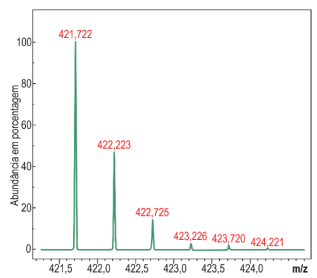
A presença de outros sinais além do sinal de m/z 421,722, mesmo em uma amostra pura não contendo nenhuma outra espécie além do [C44H69NO12Ca]2+, deve-se
A imagem a seguir representa, na forma de um gráfico, o resultado de uma análise por espectrometria de massas de uma amostra pura contendo apenas uma espécie intacta com fórmula molecular [C44H69NO12Ca]2+ e massa exata, considerando os isótopos mais abundantes, de 843,444 g/mol, detectada como m/z 421,722.
A presença de outros sinais além do sinal de m/z 421,722, mesmo em uma amostra pura não contendo nenhuma outra espécie além do [C44H69NO12Ca]2+, deve-se
Ano: 2025
Banca:
FUVEST
Órgão:
FUVEST
Prova:
FUVEST - 2025 - FUVEST - Vestibular - 1ª Fase - Conhecimentos Gerais |
Q3946320
Inglês
Texto associado
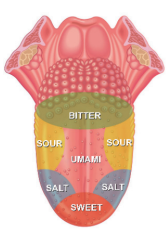
Think for a minute about the
little bumps on your tongue. You
probably saw a diagram of those
taste bud arrangements once in
a biology textbook — sweet
sensors at the tip, salty on either
side, sour behind them, bitter in
the back.
But the idea that specific
tastes are confined to certain
areas of the tongue is a myth that
“persists in the collective
consciousness, despite decades
of research debunking it”,
according to a review published this month in The New
England Journal of Medicine. Also wrong: the notion that taste
is limited to the mouth.
The old diagram, which has been used in many textbooks
over the years, originated in a study published by David Hanig,
a German scientist, in 1901. But the scientist was not
suggesting that various tastes are segregated on the tongue.
He was actually measuring the sensitivity of different areas,
said Paul Breslin, a researcher at Monell Chemical Senses
Center in Philadelphia. “What he found was that you could
detect things at a lower concentration in one part relative to
another,” Dr. Breslin said. The tip of the tongue, for example, is
dense with sweet sensors but contains the others as well.
The map’s mistakes are easy to confirm. If you place a
lemon wedge at the tip of your tongue, it will taste sour, and if
you put a bit of honey toward the side, it will be sweet.
The perception of taste is a remarkably complex process,
starting from that first encounter with the tongue. Taste cells
have a variety of sensors that signal the brain when they
encounter nutrients or toxins. For some tastes, tiny pores in cell
membranes let taste chemicals in.
Such taste receptors aren’t limited to the tongue; they are
also found in the gastrointestinal tract, liver, pancreas, fat cells,
brain, muscle cells, thyroid and lungs. We don’t generally think
of these organs as tasting anything, but they use the receptors
to pick up the presence of various molecules and metabolize
them, said Diego Bohórquez, a self-described gut-brain
neuroscientist at Duke University. For example, when the gut
notices sugar in food, it tells the brain to alert other organs to
get ready for digestion.
New York Times. May 29, 2024. Adaptado.
Sobre os receptores gustativos e sua distribuição corporal, o
texto sugere que
Ano: 2025
Banca:
FUVEST
Órgão:
FUVEST
Prova:
FUVEST - 2025 - FUVEST - Vestibular - 1ª Fase - Conhecimentos Gerais |
Q3946321
Inglês
Texto associado
Think for a minute about the
little bumps on your tongue. You
probably saw a diagram of those
taste bud arrangements once in
a biology textbook — sweet
sensors at the tip, salty on either
side, sour behind them, bitter in
the back.
But the idea that specific
tastes are confined to certain
areas of the tongue is a myth that
“persists in the collective
consciousness, despite decades
of research debunking it”,
according to a review published this month in The New
England Journal of Medicine. Also wrong: the notion that taste
is limited to the mouth.
The old diagram, which has been used in many textbooks
over the years, originated in a study published by David Hanig,
a German scientist, in 1901. But the scientist was not
suggesting that various tastes are segregated on the tongue.
He was actually measuring the sensitivity of different areas,
said Paul Breslin, a researcher at Monell Chemical Senses
Center in Philadelphia. “What he found was that you could
detect things at a lower concentration in one part relative to
another,” Dr. Breslin said. The tip of the tongue, for example, is
dense with sweet sensors but contains the others as well.
The map’s mistakes are easy to confirm. If you place a
lemon wedge at the tip of your tongue, it will taste sour, and if
you put a bit of honey toward the side, it will be sweet.
The perception of taste is a remarkably complex process,
starting from that first encounter with the tongue. Taste cells
have a variety of sensors that signal the brain when they
encounter nutrients or toxins. For some tastes, tiny pores in cell
membranes let taste chemicals in.
Such taste receptors aren’t limited to the tongue; they are
also found in the gastrointestinal tract, liver, pancreas, fat cells,
brain, muscle cells, thyroid and lungs. We don’t generally think
of these organs as tasting anything, but they use the receptors
to pick up the presence of various molecules and metabolize
them, said Diego Bohórquez, a self-described gut-brain
neuroscientist at Duke University. For example, when the gut
notices sugar in food, it tells the brain to alert other organs to
get ready for digestion.
New York Times. May 29, 2024. Adaptado.
O texto informa que, de acordo com Paul Breslin, a
interpretação do estudo de Hanig foi equivocada, porque
Ano: 2025
Banca:
FUVEST
Órgão:
FUVEST
Prova:
FUVEST - 2025 - FUVEST - Vestibular - 1ª Fase - Conhecimentos Gerais |
Q3946322
Biologia
Texto associado
Think for a minute about the
little bumps on your tongue. You
probably saw a diagram of those
taste bud arrangements once in
a biology textbook — sweet
sensors at the tip, salty on either
side, sour behind them, bitter in
the back.
But the idea that specific
tastes are confined to certain
areas of the tongue is a myth that
“persists in the collective
consciousness, despite decades
of research debunking it”,
according to a review published this month in The New
England Journal of Medicine. Also wrong: the notion that taste
is limited to the mouth.
The old diagram, which has been used in many textbooks
over the years, originated in a study published by David Hanig,
a German scientist, in 1901. But the scientist was not
suggesting that various tastes are segregated on the tongue.
He was actually measuring the sensitivity of different areas,
said Paul Breslin, a researcher at Monell Chemical Senses
Center in Philadelphia. “What he found was that you could
detect things at a lower concentration in one part relative to
another,” Dr. Breslin said. The tip of the tongue, for example, is
dense with sweet sensors but contains the others as well.
The map’s mistakes are easy to confirm. If you place a
lemon wedge at the tip of your tongue, it will taste sour, and if
you put a bit of honey toward the side, it will be sweet.
The perception of taste is a remarkably complex process,
starting from that first encounter with the tongue. Taste cells
have a variety of sensors that signal the brain when they
encounter nutrients or toxins. For some tastes, tiny pores in cell
membranes let taste chemicals in.
Such taste receptors aren’t limited to the tongue; they are
also found in the gastrointestinal tract, liver, pancreas, fat cells,
brain, muscle cells, thyroid and lungs. We don’t generally think
of these organs as tasting anything, but they use the receptors
to pick up the presence of various molecules and metabolize
them, said Diego Bohórquez, a self-described gut-brain
neuroscientist at Duke University. For example, when the gut
notices sugar in food, it tells the brain to alert other organs to
get ready for digestion.
New York Times. May 29, 2024. Adaptado.
Nós sentimos o sabor dos alimentos com o cérebro!
Esta afirmação à primeira vista nos parece estranha. No entanto, assim como ocorre em todos os sentidos do sistema sensorial, no caso do paladar, a percepção consciente do sabor só acontece quando sinais específicos chegam ao cérebro. Assinale a alternativa que apresenta corretamente a informação descrita neste processo.
Esta afirmação à primeira vista nos parece estranha. No entanto, assim como ocorre em todos os sentidos do sistema sensorial, no caso do paladar, a percepção consciente do sabor só acontece quando sinais específicos chegam ao cérebro. Assinale a alternativa que apresenta corretamente a informação descrita neste processo.
Ano: 2025
Banca:
FUVEST
Órgão:
FUVEST
Prova:
FUVEST - 2025 - FUVEST - Vestibular - 1ª Fase - Conhecimentos Gerais |
Q3946323
Física
Para muitas pessoas, um ovo perfeitamente cozido tem uma
gema cremosa e uma clara firme. A gema atinge uma textura
cremosa a 65 °C, mas a clara fica totalmente firme a 85 °C.
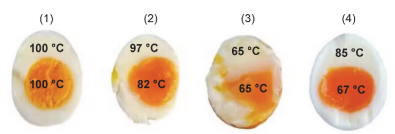
Métodos comuns de cozimento frequentemente resultam em um ovo com clara e gema duras (1), um ovo com clara dura e gema cremosa (2) ou um ovo com clara e gema cremosas (3).
Pesquisadores da Universidade de Nápoles, entretanto, perceberam que alternar o cozimento dos ovos em água a 100 °C e 30 °C a cada dois minutos, totalizando 32 minutos (4), faz com que as duas regiões do ovo (clara e gema) respondam de formas diferentes às temperaturas alternadas. Aplicando o método estudado (4), a temperatura da clara oscila antes de finalmente se estabilizar em torno de 85 °C, enquanto a temperatura da gema sobe lentamente até atingir 67 °C, quando chega à consistência desejada.
A figura a seguir compara o ovo cozido para cada um dos métodos descritos.
Di Lorenzo, E., Romano, F., Ciriaco, L. et al. “Periodic cooking of eggs”. Commun Eng 4, 5 (2025). Adaptado.
Suponha que, em cada método de cozimento, cada parte do ovo (clara e gema) seja aquecida de uma temperatura inicial de 20 ºC até as respectivas temperaturas finais apresentadas na figura. A quantidade de calor total recebida Qn pelo conjunto gema + clara para o método de cozimento (n = 1, 2, 3, 4), em ordem crescente, é:
Métodos comuns de cozimento frequentemente resultam em um ovo com clara e gema duras (1), um ovo com clara dura e gema cremosa (2) ou um ovo com clara e gema cremosas (3).
Pesquisadores da Universidade de Nápoles, entretanto, perceberam que alternar o cozimento dos ovos em água a 100 °C e 30 °C a cada dois minutos, totalizando 32 minutos (4), faz com que as duas regiões do ovo (clara e gema) respondam de formas diferentes às temperaturas alternadas. Aplicando o método estudado (4), a temperatura da clara oscila antes de finalmente se estabilizar em torno de 85 °C, enquanto a temperatura da gema sobe lentamente até atingir 67 °C, quando chega à consistência desejada.
A figura a seguir compara o ovo cozido para cada um dos métodos descritos.
Di Lorenzo, E., Romano, F., Ciriaco, L. et al. “Periodic cooking of eggs”. Commun Eng 4, 5 (2025). Adaptado.
Suponha que, em cada método de cozimento, cada parte do ovo (clara e gema) seja aquecida de uma temperatura inicial de 20 ºC até as respectivas temperaturas finais apresentadas na figura. A quantidade de calor total recebida Qn pelo conjunto gema + clara para o método de cozimento (n = 1, 2, 3, 4), em ordem crescente, é:
Ano: 2025
Banca:
FUVEST
Órgão:
FUVEST
Prova:
FUVEST - 2025 - FUVEST - Vestibular - 1ª Fase - Conhecimentos Gerais |
Q3946324
Física
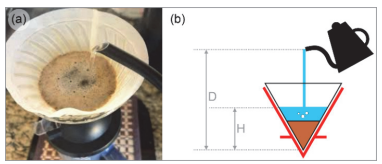
Park, E. et al. “Pour-over coffee: Mixing by a water jet impinging on a granular bed with avalanche dynamics”. Phys. Fluids 37, 043332 (2025). Adaptado.
Um artigo recentemente publicado na revista Physics of Fluids investigou de que modo fatores como a altura e a velocidade da água despejada na preparação de café filtrado (parte (a) da figura) influenciam no sabor da bebida pronta.
Um dos parâmetros importantes é a velocidade do jato de água ao atingir a lâmina de água que já está no filtro. Uma das conclusões do estudo é que velocidades acima de 2 m/s levam a uma melhor mistura do pó de café com a água.
A parte (b) da figura esquematiza a situação descrita, em que H é a altura da lâmina de água e D a altura de despejo da água do bule, medidas que têm a base do filtro como referência.
Assumindo que seja desprezível a velocidade do jato quando a água começa a ser despejada no bico do bule, para uma altura H = 8 cm, qual a altura mínima D de despejo para que a velocidade do jato, ao atingir a água, seja de, pelo menos, 2 m/s?
Ano: 2025
Banca:
FUVEST
Órgão:
FUVEST
Prova:
FUVEST - 2025 - FUVEST - Vestibular - 1ª Fase - Conhecimentos Gerais |
Q3946325
Física
Uma definição possível de equilíbrio mecânico estável é a
seguinte:
“Se um corpo está em uma posição de equilíbrio mecânico e, ao sofrer pequenos deslocamentos em torno dessa posição, sua tendência for retornar à posição original de equilíbrio, dizemos que o equilíbrio é estável.”
As imagens a seguir mostram uma colher em diferentes situações de equilíbrio mecânico em cima de uma xícara.
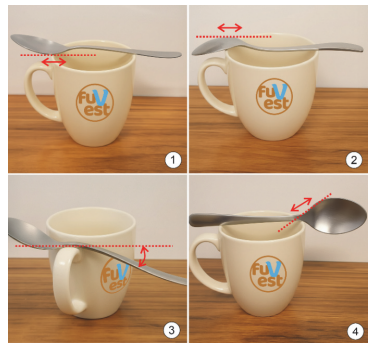
Com base na definição apresentada e nos seus conhecimentos, quais imagens ilustram situações em que a colher está em equilíbrio estável em relação a pequenos deslocamentos nas direções indicadas pelas setas?
“Se um corpo está em uma posição de equilíbrio mecânico e, ao sofrer pequenos deslocamentos em torno dessa posição, sua tendência for retornar à posição original de equilíbrio, dizemos que o equilíbrio é estável.”
As imagens a seguir mostram uma colher em diferentes situações de equilíbrio mecânico em cima de uma xícara.
Com base na definição apresentada e nos seus conhecimentos, quais imagens ilustram situações em que a colher está em equilíbrio estável em relação a pequenos deslocamentos nas direções indicadas pelas setas?
Ano: 2025
Banca:
FUVEST
Órgão:
FUVEST
Prova:
FUVEST - 2025 - FUVEST - Vestibular - 1ª Fase - Conhecimentos Gerais |
Q3946326
Matemática
Observe a imagem a seguir:
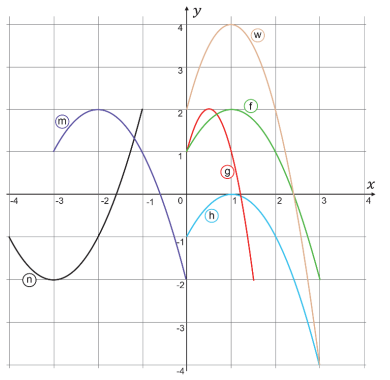
Com base nos gráficos das funções apresentados na imagem, é correto afirmar que:
Ano: 2025
Banca:
FUVEST
Órgão:
FUVEST
Prova:
FUVEST - 2025 - FUVEST - Vestibular - 1ª Fase - Conhecimentos Gerais |
Q3946327
Física
Uma criança brinca com uma bolinha, deixando-a cair em
direção ao chão, onde ela quica e retorna praticamente à
altura de origem. Qual dos gráficos a seguir melhor representa
como a altura da bolinha varia com o tempo?
Ano: 2025
Banca:
FUVEST
Órgão:
FUVEST
Prova:
FUVEST - 2025 - FUVEST - Vestibular - 1ª Fase - Conhecimentos Gerais |
Q3946328
Física
Texto associado
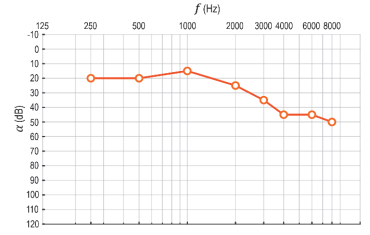
O gráfico a seguir mostra o resultado do exame de audiometria
tonal de um paciente. O eixo vertical refere-se ao nível de
intensidade sonora α (medido em dB e aumentando de cima
para baixo) necessário para que a pessoa possa ouvir o som
emitido pelo audiômetro a uma dada frequência f (medida em
Hz), representada no eixo horizontal.
Quanto menor o valor de α(f), melhor é a resposta auditiva do
paciente naquela frequência f. O uso de aparelhos auditivos
pode ser uma forma de melhorar a resposta auditiva em
determinadas frequências.
Considerando os valores de α registrados em 8000 Hz e
500 Hz para esse paciente, qual a razão entre as intensidades
das ondas sonoras emitidas pelo audiômetro nessas duas
frequências?
Ano: 2025
Banca:
FUVEST
Órgão:
FUVEST
Prova:
FUVEST - 2025 - FUVEST - Vestibular - 1ª Fase - Conhecimentos Gerais |
Q3946329
Física
Texto associado
O gráfico a seguir mostra o resultado do exame de audiometria
tonal de um paciente. O eixo vertical refere-se ao nível de
intensidade sonora α (medido em dB e aumentando de cima
para baixo) necessário para que a pessoa possa ouvir o som
emitido pelo audiômetro a uma dada frequência f (medida em
Hz), representada no eixo horizontal.
Quanto menor o valor de α(f), melhor é a resposta auditiva do
paciente naquela frequência f. O uso de aparelhos auditivos
pode ser uma forma de melhorar a resposta auditiva em
determinadas frequências.
Em qual comprimento de onda sonora ocorre a melhor
resposta auditiva do paciente nesse exame?
Ano: 2025
Banca:
FUVEST
Órgão:
FUVEST
Prova:
FUVEST - 2025 - FUVEST - Vestibular - 1ª Fase - Conhecimentos Gerais |
Q3946330
Biologia
A bióloga Lynn Margulis publicou um polêmico artigo em 1967
propondo que algumas organelas das células eucarióticas
poderiam ser o resultado de eventos de endossimbiose, no
qual bactérias passaram a viver em simbiose dentro de células
eucarióticas até serem completamente incorporadas a elas. A
hipótese de Margulis sofreu muita oposição, até que
evidências experimentais mostraram que algumas organelas
de fato possuíam muitas similaridades com bactérias. Entre as
evidências de endossimbiose, podemos citar:
Ano: 2025
Banca:
FUVEST
Órgão:
FUVEST
Prova:
FUVEST - 2025 - FUVEST - Vestibular - 1ª Fase - Conhecimentos Gerais |
Q3946331
Inglês
Texto associado
During the nineteen-seventies and eighties, a researcher at
the University of Washington started noticing something strange
in the college’s experimental forest. For years, a blight of
caterpillars had been munching the trees to death. Then,
suddenly, the caterpillars themselves started dying off. The forest
was able to recover. But what had happened to the caterpillars?
The researcher, David Rhoades, who had a background in
chemistry and zoology, found that the trees in the forest had
changed the chemistry of their leaves, to the detriment of the
caterpillars. Even more surprising, trees that had been nibbled by
caterpillars weren’t the only ones that had changed their
chemistry. Some were changing their leaves before caterpillars
reached them, as if they’d received a warning. A shocking
possibility presented itself: the trees were signalling to one
another.
Zoë Schlanger recounts Rhoades’s story in her new book,
“The Light Eaters: How the Unseen World of Plant Intelligence
Offers a New Understanding of Life on Earth.”
The contemporary world of botany that Schlanger explores in
“The Light Eaters” is still divided over the matter of how plants
sense the world and whether they can be said to communicate.
But, in the past twenty years, the idea that plants communicate
has gained broader acceptance. Research in recent decades has
shown garden-variety lima beans protecting themselves by
synthesizing and releasing chemicals to summon the predators of
the insects that eat them; lab-grown pea shoots navigating mazes
and responding to the sound of running water; and a chameleonic
vine in the jungles of Chile mimicking the shape and color of
nearby plants by a mechanism that’s not yet understood.
Schlanger acknowledges that some of the research yields as
many questions as answers. It’s not clear how the vine gathers
information about surrounding plants to perform its mimicry.
New Yorker. 12 June 2024. Adaptado.
Conforme o texto, a experiência conduzida por David Rhoades,
na floresta experimental da Universidade de Washington,
tornou-se marcante para a botânica, por revelar a
Ano: 2025
Banca:
FUVEST
Órgão:
FUVEST
Prova:
FUVEST - 2025 - FUVEST - Vestibular - 1ª Fase - Conhecimentos Gerais |
Q3946332
Inglês
Texto associado
During the nineteen-seventies and eighties, a researcher at
the University of Washington started noticing something strange
in the college’s experimental forest. For years, a blight of
caterpillars had been munching the trees to death. Then,
suddenly, the caterpillars themselves started dying off. The forest
was able to recover. But what had happened to the caterpillars?
The researcher, David Rhoades, who had a background in
chemistry and zoology, found that the trees in the forest had
changed the chemistry of their leaves, to the detriment of the
caterpillars. Even more surprising, trees that had been nibbled by
caterpillars weren’t the only ones that had changed their
chemistry. Some were changing their leaves before caterpillars
reached them, as if they’d received a warning. A shocking
possibility presented itself: the trees were signalling to one
another.
Zoë Schlanger recounts Rhoades’s story in her new book,
“The Light Eaters: How the Unseen World of Plant Intelligence
Offers a New Understanding of Life on Earth.”
The contemporary world of botany that Schlanger explores in
“The Light Eaters” is still divided over the matter of how plants
sense the world and whether they can be said to communicate.
But, in the past twenty years, the idea that plants communicate
has gained broader acceptance. Research in recent decades has
shown garden-variety lima beans protecting themselves by
synthesizing and releasing chemicals to summon the predators of
the insects that eat them; lab-grown pea shoots navigating mazes
and responding to the sound of running water; and a chameleonic
vine in the jungles of Chile mimicking the shape and color of
nearby plants by a mechanism that’s not yet understood.
Schlanger acknowledges that some of the research yields as
many questions as answers. It’s not clear how the vine gathers
information about surrounding plants to perform its mimicry.
New Yorker. 12 June 2024. Adaptado.
O caso da vinha chilena apresentado no texto suscita
questionamentos científicos quanto

 Conheça nossos planos