Questões de Vestibular Sobre inglês

Questões Discursivas

Foram encontradas 6.472 questões

Ano: 2019 Banca: VUNESP Órgão: FAMERP Prova: VUNESP - 2019 - FAMERP - Conhecimentos Gerais |
Q1342403 Inglês

Observe the image.

Imagem associada para resolução da questão

(www.michaelkonik.com, 05.10.2013.)

The art print overlaps
Alternativas
Ano: 2019 Banca: VUNESP Órgão: FAMERP Prova: VUNESP - 2019 - FAMERP - Conhecimentos Gerais |
Q1342402 Inglês
Leia o texto para responder à questão.


    What does love look like? Love is accepting that your partner is not perfect, but you want to be with him or her anyway. Love is being grateful that you are accepted despite your imperfections. Love is still being happy to come home to that same person, even after 30 years.

(Harriet Koral. www.nytimes.com, 19.11.2017. Adaptado.)
O trecho “accepting that your partner is not perfect” pode ser associado ao seguinte provérbio:
Alternativas
Ano: 2019 Banca: VUNESP Órgão: FAMERP Prova: VUNESP - 2019 - FAMERP - Conhecimentos Gerais |
Q1342401 Inglês
Leia o texto para responder à questão.


    What does love look like? Love is accepting that your partner is not perfect, but you want to be with him or her anyway. Love is being grateful that you are accepted despite your imperfections. Love is still being happy to come home to that same person, even after 30 years.

(Harriet Koral. www.nytimes.com, 19.11.2017. Adaptado.)
O trecho dessa carta aberta publicada no jornal The New York Times é norteado pelo caráter
Alternativas
Ano: 2019 Banca: VUNESP Órgão: FAMERP Prova: VUNESP - 2019 - FAMERP - Conhecimentos Gerais |
Q1342400 Inglês
Leia o texto para responder à questão.


    The Mona Lisa was recently moved from her usual gallery in the Salle des États, currently being renovated, to a temporary home in the Galérie Médicis. Visitors to the Louvre who have queued patiently for hours are complaining that museum staff are allowing them less than a minute to view the masterpice. The relocation has created bottlenecks of visitors lining corridors and the Louvre is now advising that only those who have pre-booked will be guaranteed a glimpse of the world’s most famous portrait.

(David Chazan. www.telegraph.co.uk, 13.08.2019. Adaptado.)
In the excerpt “only those who have pre-booked will be guaranteed a glimpse of the world’s most famous portrait”, the underlined word refers to
Alternativas
Ano: 2019 Banca: VUNESP Órgão: FAMERP Prova: VUNESP - 2019 - FAMERP - Conhecimentos Gerais |
Q1342399 Inglês
Leia o texto para responder à questão.


    The Mona Lisa was recently moved from her usual gallery in the Salle des États, currently being renovated, to a temporary home in the Galérie Médicis. Visitors to the Louvre who have queued patiently for hours are complaining that museum staff are allowing them less than a minute to view the masterpice. The relocation has created bottlenecks of visitors lining corridors and the Louvre is now advising that only those who have pre-booked will be guaranteed a glimpse of the world’s most famous portrait.

(David Chazan. www.telegraph.co.uk, 13.08.2019. Adaptado.)
The author’s aim is to
Alternativas
Ano: 2019 Banca: VUNESP Órgão: FAMERP Prova: VUNESP - 2019 - FAMERP - Conhecimentos Gerais |
Q1342398 Inglês

Leia o infográfico para responder à questão.


(Karmen Clair. https://karmenclair.wordpress.com, 03.04.2019. Adaptado.)
In the excerpt from the fourth topic “continue to be a huge trend”, the underlined word can be replaced, without changing the meaning of the sentence, by
Alternativas
Ano: 2019 Banca: VUNESP Órgão: FAMERP Prova: VUNESP - 2019 - FAMERP - Conhecimentos Gerais |
Q1342397 Inglês

Leia o infográfico para responder à questão.
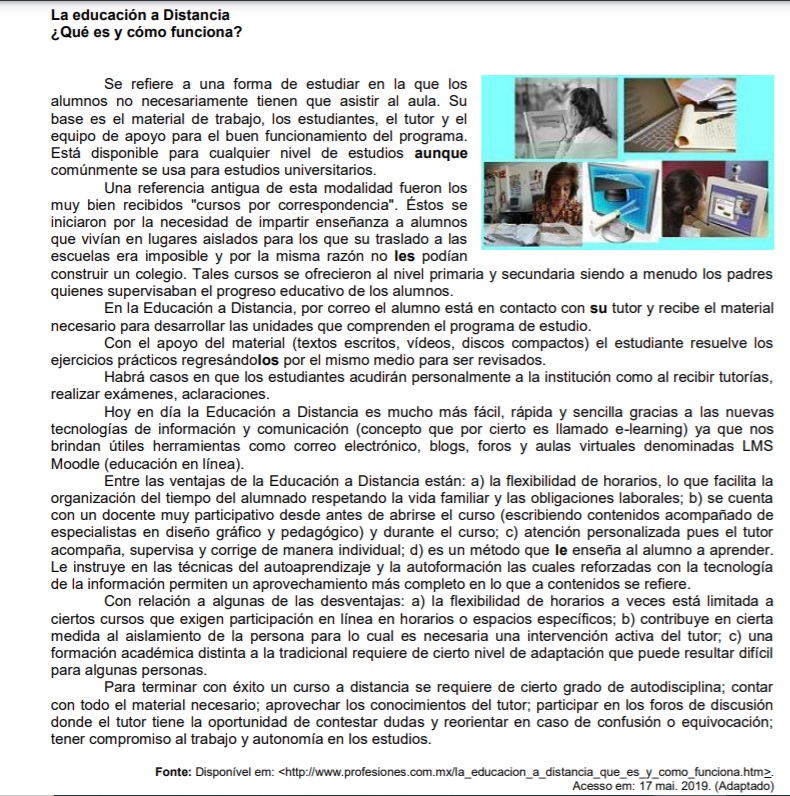


(Karmen Clair. https://karmenclair.wordpress.com, 03.04.2019. Adaptado.)
De acordo com o contexto do terceiro tópico, o trecho “the most bang for their buck” pode ser entendido como:
Alternativas
Ano: 2019 Banca: VUNESP Órgão: FAMERP Prova: VUNESP - 2019 - FAMERP - Conhecimentos Gerais |
Q1342396 Inglês

Leia o infográfico para responder à questão.
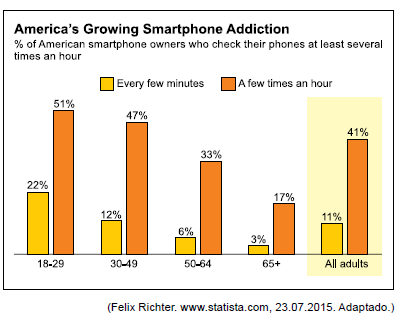


(Karmen Clair. https://karmenclair.wordpress.com, 03.04.2019. Adaptado.)
De acordo com o segundo tópico, atrações turísticas que exploram animais como entretenimento
Alternativas
Ano: 2019 Banca: VUNESP Órgão: FAMERP Prova: VUNESP - 2019 - FAMERP - Conhecimentos Gerais |
Q1342395 Inglês

Leia o infográfico para responder à questão.


(Karmen Clair. https://karmenclair.wordpress.com, 03.04.2019. Adaptado.)
According to the infographic, a mindful traveler should keep an eye on the following issue:
Alternativas
Ano: 2019 Banca: VUNESP Órgão: FAMERP Prova: VUNESP - 2019 - FAMERP - Conhecimentos Gerais |
Q1342394 Inglês

Leia o infográfico para responder à questão.


(Karmen Clair. https://karmenclair.wordpress.com, 03.04.2019. Adaptado.)
The purpose of this infographic is to
Alternativas
Q1341316 Inglês
Leia este texto para responder a questão.


O pronome ―themselves‖ (linha 12) refere-se a: 
Alternativas
Q1341315 Inglês
Leia este texto para responder a questão.


No contexto, a frase "Parents must get off the sidelines and get involved!" (linhas 22 e 23) pode ser entendida como:
Alternativas
Q1341314 Inglês
Leia este texto para responder a questão.


ASSINALE a afirmativa INCORRETA de acordo com o texto.
Alternativas
Q1341313 Inglês
Leia este texto para responder a questão.


O texto cita diversos exemplos dos sérios efeitos negativos das mídias sociais em adolescentes. ASSINALE a alternativa apresenta o efeito que NÃO consta no texto.
Alternativas
Q1341312 Inglês
Leia este texto para responder a questão.


ASSINALE a alternativa que contém o tema do texto:
Alternativas
Ano: 2019 Banca: VUNESP Órgão: UEA Prova: VUNESP - 2019 - UEA - Prova de Conhecimentos Gerais |
Q1340709 Inglês

Wood wide web: trees’ social networks are mapped 


    Research has shown that beneath every forest and wood there is a complex underground web of roots, fungi and bacteria helping to connect trees and plants to one another. This subterranean social network, nearly 500 million years old, has become known as the “wood wide web”. Now, an international study has produced the first global map of the “mycorrhizal fungi networks” dominating this secretive world.

    Using machine-learning, researchers from the Crowther Lab at ETH Zurich, Switzerland, and Stanford University in the US used the database of the Global Forest Initiative, which covers 1.2 million forest tree plots with 28,000 species, from more than 70 countries. Using millions of direct observations of trees and their symbiotic associations on the ground, the researchers could build models from the bottom up to visualise these fungal networks for the first time. Prof Thomas Crowther, one of the authors of the report, told the BBC, “It’s the first time that we’ve been able to understand the world beneath our feet, but at a global scale.”

    The research reveals how important mycorrhizal networks are to limiting climate change — and how vulnerable they are to the effects of it. “Just like an Magnetic Resonance Imaging scan of the brain helps us to understand how the brain works, this global map of the fungi beneath the soil helps us to understand how global ecosystems work,” said Prof Crowther. “What we find is that certain types of microorganisms live in certain parts of the world, and by understanding that we can figure out how to restore different types of ecosystems and also how the climate is changing.” Losing chunks of the wood wide web could well increase “the feedback loop of warming temperatures and carbon emissions.”

    Mycorrhizal fungi are those that form a symbiotic relationship with plants. There are two main groups of mycorrhizal fungi: arbuscular fungi (AM) that penetrate the host’s roots, and ectomycorrhizal fungi (EM) which surround the tree’s roots without penetrating them.

                                                (Claire Marshall. www.bbc.com, 15.05.2019. Adaptado.)

In the excerpt from the fourth paragraph “without penetrating them”, the underlined word refers to
Alternativas
Ano: 2019 Banca: VUNESP Órgão: UEA Prova: VUNESP - 2019 - UEA - Prova de Conhecimentos Gerais |
Q1340708 Inglês

Wood wide web: trees’ social networks are mapped 


    Research has shown that beneath every forest and wood there is a complex underground web of roots, fungi and bacteria helping to connect trees and plants to one another. This subterranean social network, nearly 500 million years old, has become known as the “wood wide web”. Now, an international study has produced the first global map of the “mycorrhizal fungi networks” dominating this secretive world.

    Using machine-learning, researchers from the Crowther Lab at ETH Zurich, Switzerland, and Stanford University in the US used the database of the Global Forest Initiative, which covers 1.2 million forest tree plots with 28,000 species, from more than 70 countries. Using millions of direct observations of trees and their symbiotic associations on the ground, the researchers could build models from the bottom up to visualise these fungal networks for the first time. Prof Thomas Crowther, one of the authors of the report, told the BBC, “It’s the first time that we’ve been able to understand the world beneath our feet, but at a global scale.”

    The research reveals how important mycorrhizal networks are to limiting climate change — and how vulnerable they are to the effects of it. “Just like an Magnetic Resonance Imaging scan of the brain helps us to understand how the brain works, this global map of the fungi beneath the soil helps us to understand how global ecosystems work,” said Prof Crowther. “What we find is that certain types of microorganisms live in certain parts of the world, and by understanding that we can figure out how to restore different types of ecosystems and also how the climate is changing.” Losing chunks of the wood wide web could well increase “the feedback loop of warming temperatures and carbon emissions.”

    Mycorrhizal fungi are those that form a symbiotic relationship with plants. There are two main groups of mycorrhizal fungi: arbuscular fungi (AM) that penetrate the host’s roots, and ectomycorrhizal fungi (EM) which surround the tree’s roots without penetrating them.

                                                (Claire Marshall. www.bbc.com, 15.05.2019. Adaptado.)

O trecho do terceiro parágrafo “Just like an Magnetic Resonance Imaging scan of the brain helps us to understand how the brain works, this global map of the fungi beneath the soil helps us to understand how global ecosystems work” estabelece uma relação de
Alternativas
Ano: 2019 Banca: VUNESP Órgão: UEA Prova: VUNESP - 2019 - UEA - Prova de Conhecimentos Gerais |
Q1340707 Inglês

Wood wide web: trees’ social networks are mapped 


    Research has shown that beneath every forest and wood there is a complex underground web of roots, fungi and bacteria helping to connect trees and plants to one another. This subterranean social network, nearly 500 million years old, has become known as the “wood wide web”. Now, an international study has produced the first global map of the “mycorrhizal fungi networks” dominating this secretive world.

    Using machine-learning, researchers from the Crowther Lab at ETH Zurich, Switzerland, and Stanford University in the US used the database of the Global Forest Initiative, which covers 1.2 million forest tree plots with 28,000 species, from more than 70 countries. Using millions of direct observations of trees and their symbiotic associations on the ground, the researchers could build models from the bottom up to visualise these fungal networks for the first time. Prof Thomas Crowther, one of the authors of the report, told the BBC, “It’s the first time that we’ve been able to understand the world beneath our feet, but at a global scale.”

    The research reveals how important mycorrhizal networks are to limiting climate change — and how vulnerable they are to the effects of it. “Just like an Magnetic Resonance Imaging scan of the brain helps us to understand how the brain works, this global map of the fungi beneath the soil helps us to understand how global ecosystems work,” said Prof Crowther. “What we find is that certain types of microorganisms live in certain parts of the world, and by understanding that we can figure out how to restore different types of ecosystems and also how the climate is changing.” Losing chunks of the wood wide web could well increase “the feedback loop of warming temperatures and carbon emissions.”

    Mycorrhizal fungi are those that form a symbiotic relationship with plants. There are two main groups of mycorrhizal fungi: arbuscular fungi (AM) that penetrate the host’s roots, and ectomycorrhizal fungi (EM) which surround the tree’s roots without penetrating them.

                                                (Claire Marshall. www.bbc.com, 15.05.2019. Adaptado.)

De acordo com o segundo e o terceiro parágrafos, os pesquisadores
Alternativas
Ano: 2019 Banca: VUNESP Órgão: UEA Prova: VUNESP - 2019 - UEA - Prova de Conhecimentos Gerais |
Q1340706 Inglês

Wood wide web: trees’ social networks are mapped 


    Research has shown that beneath every forest and wood there is a complex underground web of roots, fungi and bacteria helping to connect trees and plants to one another. This subterranean social network, nearly 500 million years old, has become known as the “wood wide web”. Now, an international study has produced the first global map of the “mycorrhizal fungi networks” dominating this secretive world.

    Using machine-learning, researchers from the Crowther Lab at ETH Zurich, Switzerland, and Stanford University in the US used the database of the Global Forest Initiative, which covers 1.2 million forest tree plots with 28,000 species, from more than 70 countries. Using millions of direct observations of trees and their symbiotic associations on the ground, the researchers could build models from the bottom up to visualise these fungal networks for the first time. Prof Thomas Crowther, one of the authors of the report, told the BBC, “It’s the first time that we’ve been able to understand the world beneath our feet, but at a global scale.”

    The research reveals how important mycorrhizal networks are to limiting climate change — and how vulnerable they are to the effects of it. “Just like an Magnetic Resonance Imaging scan of the brain helps us to understand how the brain works, this global map of the fungi beneath the soil helps us to understand how global ecosystems work,” said Prof Crowther. “What we find is that certain types of microorganisms live in certain parts of the world, and by understanding that we can figure out how to restore different types of ecosystems and also how the climate is changing.” Losing chunks of the wood wide web could well increase “the feedback loop of warming temperatures and carbon emissions.”

    Mycorrhizal fungi are those that form a symbiotic relationship with plants. There are two main groups of mycorrhizal fungi: arbuscular fungi (AM) that penetrate the host’s roots, and ectomycorrhizal fungi (EM) which surround the tree’s roots without penetrating them.

                                                (Claire Marshall. www.bbc.com, 15.05.2019. Adaptado.)

De acordo com o texto, a “wood wide web”, conhecida como a “internet das florestas”, corresponde

Alternativas
Ano: 2019 Banca: INEP Órgão: IF Goiano Prova: INEP - 2019 - IF Goiano - Vestibular Segundo Semestre |
Q1339453 Inglês
Brazilian scholar Sueli Carneiro (2011), arguing about the importance of black feminism in Brazil and Latin America, states that black women never recognized themselves in the myth of the female fragility, because they were never treated as fragile. This is shown in Text 1 through Maria’s life, since she is
Alternativas
Respostas
1281: C
1282: B
1283: E
1284: E
1285: C
1286: B
1287: E
1288: B
1289: C
1290: E
1291: A
1292: D
1293: A
1294: B
1295: D
1296: D
1297: A
1298: C
1299: E
1300: C
