Questões de Vestibular Sobre inglês
Foram encontradas 6.367 questões


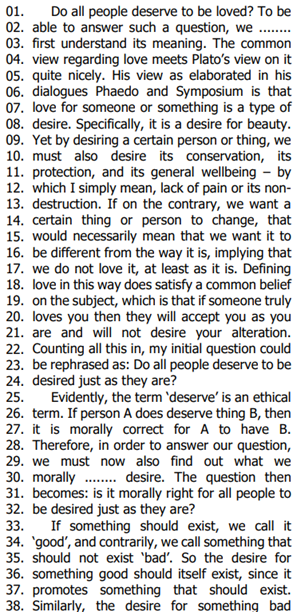
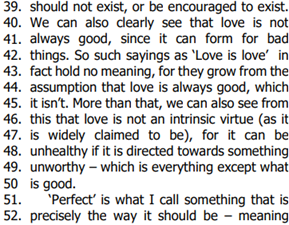
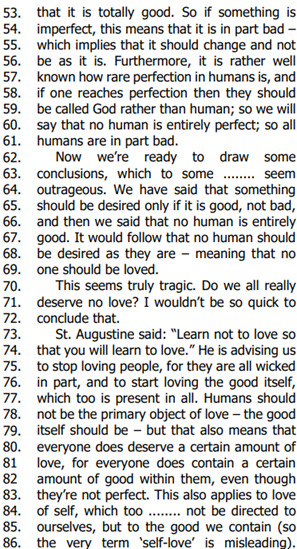
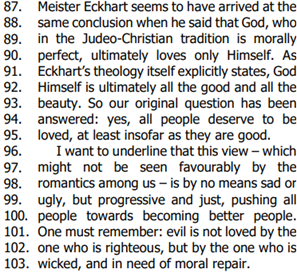
( ) The phrase ‘Love is love’ is based on the assumption that love is always good, so it does not make sense because it might be bad.
( ) The term ‘self-love’ is deceiving because it suggests one should love oneself instead of the good that is within one.
( ) Love, as an intrinsic virtue, may be harmful when directed to something or someone undeserving.
( ) If someone enjoys evil, it is a sign that they are morally flawed and in need of change.
The sequence should read, from top to bottom, is
I - In Phaedo and Symposium, Plato suggests that love is a desire for beauty and that when we love something or someone we want it as it is.
II - St. Augustine suggests we should not love people, but instead love the good that is in each person.
III- Meister Eckhart suggests that God contains all the good and all the beauty and thus loves us all.
Which ones are correct according to the text?
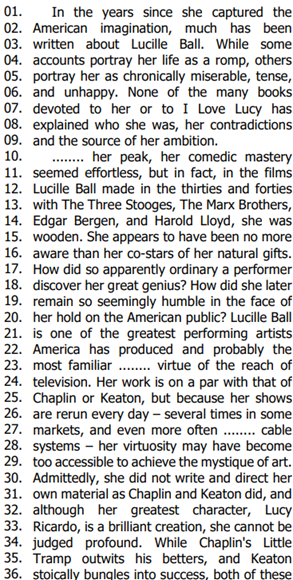
I - How did a performer who seemed to be so ordinary discover her great genius?
II - How did a performer of so ordinary appearance discover her genius?
III- How did a performer whose ordinary work was so apparent discover her great genius?
Quais poderiam substituir a frase, sem prejuízo do sentido original e da correção gramatical?
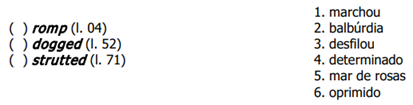
A sequência correta de preenchimento dos parênteses, de cima para baixo, é
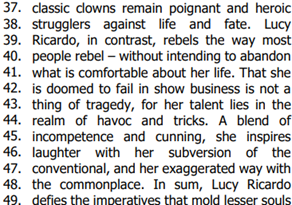
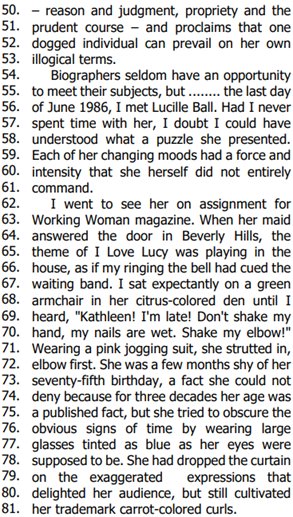
( ) As palavras she (l. 01), she (l. 45), her (l. 57) e herself (l. 60) têm o mesmo referente.
( ) A palavra did (l. 30) substitui o segmento direct her own material (l. 30-31), evitando portanto a repetição desse segmento.
( ) O pronome his (l. 35) refere-se a Chaplin’s Little Tramp (l. 34-35).
( ) O segmento reason and judgment, propriety and the prudent course (l. 50-51) é um aposto que se refere à palavra imperatives (l. 49).
A sequência correta de preenchimento dos parênteses, de cima para baixo, é
Read the informational guide provided by Biosphere 2.

The guide informs potential visitors to the Biosphere 2 project about

Leia o texto para responder à questão.
The Red Cross
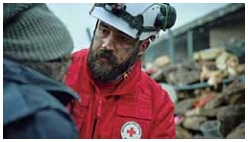
The International Red Cross movement started in 1863 and was inspired by Swiss businessman Henry Dunant. The suffering of thousands of men on both sides of the Battle of Solferino in 1859 upset Dunant. Many were left to die due to lack of care. He proposed creating national relief societies, made up of volunteers, trained in peacetime to provide neutral and impartial help to relieve suffering in times of war.
In response to these ideas, a committee (which later became the International Committee of the Red Cross) was established in Geneva. Dunant also proposed that countries adopt an international agreement, which would recognise the status of medical services and of the injured on the battlefield. This agreement was adopted in 1864.
The formation of the British Red Cross occurred during the war between France and Prussia in July 1870, Colonel Loyd-Lindsay wrote a letter to the newspaper The Times. He called for a National Society to be formed in Britain just like in other European nations. On 4 August 1870, a public meeting was held in London and a resolution passed authorizing the formation of The British National Society for Aid to the Sick and Wounded in War. It gave aid and relief to both warring armies during the Franco-Prussian War and in other wars and campaigns during the 19th century. This was done under the protection of the red cross emblem.
In 1905, the British National Society for Aid to the Sick and Wounded in War was renamed as the British Red Cross. The Red Cross needed many skilled volunteers for its wartime role. The Voluntary Aid Scheme was introduced in 1909 and ensured that Voluntary Aid Detachments were formed across the United Kingdom. Their members would provide aid to the territorial medical forces in times of war.
(www.redcross.org.uk. Adaptado.)
Leia o texto para responder à questão.
The Red Cross
The International Red Cross movement started in 1863 and was inspired by Swiss businessman Henry Dunant. The suffering of thousands of men on both sides of the Battle of Solferino in 1859 upset Dunant. Many were left to die due to lack of care. He proposed creating national relief societies, made up of volunteers, trained in peacetime to provide neutral and impartial help to relieve suffering in times of war.
In response to these ideas, a committee (which later became the International Committee of the Red Cross) was established in Geneva. Dunant also proposed that countries adopt an international agreement, which would recognise the status of medical services and of the injured on the battlefield. This agreement was adopted in 1864.
The formation of the British Red Cross occurred during the war between France and Prussia in July 1870, Colonel Loyd-Lindsay wrote a letter to the newspaper The Times. He called for a National Society to be formed in Britain just like in other European nations. On 4 August 1870, a public meeting was held in London and a resolution passed authorizing the formation of The British National Society for Aid to the Sick and Wounded in War. It gave aid and relief to both warring armies during the Franco-Prussian War and in other wars and campaigns during the 19th century. This was done under the protection of the red cross emblem.
In 1905, the British National Society for Aid to the Sick and Wounded in War was renamed as the British Red Cross. The Red Cross needed many skilled volunteers for its wartime role. The Voluntary Aid Scheme was introduced in 1909 and ensured that Voluntary Aid Detachments were formed across the United Kingdom. Their members would provide aid to the territorial medical forces in times of war.
(www.redcross.org.uk. Adaptado.)
Leia o texto para responder à questão.
The Red Cross
The International Red Cross movement started in 1863 and was inspired by Swiss businessman Henry Dunant. The suffering of thousands of men on both sides of the Battle of Solferino in 1859 upset Dunant. Many were left to die due to lack of care. He proposed creating national relief societies, made up of volunteers, trained in peacetime to provide neutral and impartial help to relieve suffering in times of war.
In response to these ideas, a committee (which later became the International Committee of the Red Cross) was established in Geneva. Dunant also proposed that countries adopt an international agreement, which would recognise the status of medical services and of the injured on the battlefield. This agreement was adopted in 1864.
The formation of the British Red Cross occurred during the war between France and Prussia in July 1870, Colonel Loyd-Lindsay wrote a letter to the newspaper The Times. He called for a National Society to be formed in Britain just like in other European nations. On 4 August 1870, a public meeting was held in London and a resolution passed authorizing the formation of The British National Society for Aid to the Sick and Wounded in War. It gave aid and relief to both warring armies during the Franco-Prussian War and in other wars and campaigns during the 19th century. This was done under the protection of the red cross emblem.
In 1905, the British National Society for Aid to the Sick and Wounded in War was renamed as the British Red Cross. The Red Cross needed many skilled volunteers for its wartime role. The Voluntary Aid Scheme was introduced in 1909 and ensured that Voluntary Aid Detachments were formed across the United Kingdom. Their members would provide aid to the territorial medical forces in times of war.
(www.redcross.org.uk. Adaptado.)
Leia o texto para responder à questão.
The Red Cross
The International Red Cross movement started in 1863 and was inspired by Swiss businessman Henry Dunant. The suffering of thousands of men on both sides of the Battle of Solferino in 1859 upset Dunant. Many were left to die due to lack of care. He proposed creating national relief societies, made up of volunteers, trained in peacetime to provide neutral and impartial help to relieve suffering in times of war.
In response to these ideas, a committee (which later became the International Committee of the Red Cross) was established in Geneva. Dunant also proposed that countries adopt an international agreement, which would recognise the status of medical services and of the injured on the battlefield. This agreement was adopted in 1864.
The formation of the British Red Cross occurred during the war between France and Prussia in July 1870, Colonel Loyd-Lindsay wrote a letter to the newspaper The Times. He called for a National Society to be formed in Britain just like in other European nations. On 4 August 1870, a public meeting was held in London and a resolution passed authorizing the formation of The British National Society for Aid to the Sick and Wounded in War. It gave aid and relief to both warring armies during the Franco-Prussian War and in other wars and campaigns during the 19th century. This was done under the protection of the red cross emblem.
In 1905, the British National Society for Aid to the Sick and Wounded in War was renamed as the British Red Cross. The Red Cross needed many skilled volunteers for its wartime role. The Voluntary Aid Scheme was introduced in 1909 and ensured that Voluntary Aid Detachments were formed across the United Kingdom. Their members would provide aid to the territorial medical forces in times of war.
(www.redcross.org.uk. Adaptado.)
Examine a seguinte campanha da Cruz Vermelha.
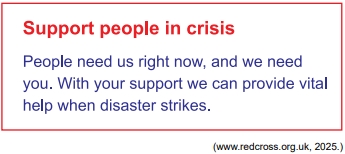
The word “strikes” can be replaced, with no change in meaning, by:

 Conheça nossos planos