In the excerpt from the third paragraph “The outcomes sugges...
Próximas questões
Com base no mesmo assunto
Ano: 2025
Banca:
VUNESP
Órgão:
FAMERP
Prova:
VUNESP - 2025 - FAMERP - Vestibular - Conhecimentos Gerais |
Q4143782
Inglês
Texto associado
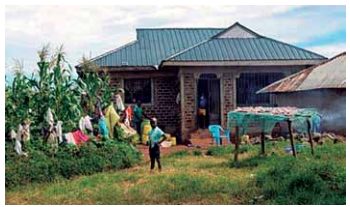
Leia o texto para responder à questão.
Of every 1,000 children born in Kenya, a country in East
Africa, 32 don’t make it to their first birthdays. Study after study
has explored how to improve those impressive numbers, in
Kenya and elsewhere. But a decade-long study on alleviating
poverty found a simple solution. Giving $1,000 to poor families
lowered infant mortality rates by nearly half, and deaths
in children under 5 by 45 percent. Those are much bigger
drops than have been credited to routine immunizations, for
example, or bed nets to prevent malaria.
“This is easily the biggest impact on child survival that
I’ve seen from an intervention that was designed to alleviate
poverty,” said Harsha Thirumurthy, an economist at the
University of Pennsylvania who was not involved in the work.
The decline in infant mortality is a “showstopping result,”
he said.
The outcomes suggest that delivering even smaller
amounts of money to families — especially those that live
near a hospital — immediately before or after the birth
of a child might allow women to seek medical care and
drastically improve their children’s chances of survival. More
than 100 low- and middle-income countries have explored
so-called cash transfers, especially after the pandemic
began. Generally, the experiments have found that giving
money to poor families improves school attendance, nutrition
and use of health services.
(Apoorva Mandavilli. www.nytimes.com, 18.08.2025. Adaptado.)
In the excerpt from the third paragraph “The outcomes suggest
that delivering even smaller amounts of money to families
— especially those that live near a hospital — immediately
before or after the birth of a child might allow women to seek
medical care and drastically improve their children’s chances
of survival”, the underlined word expresses a
 Conheça nossos planos