Questões de Vestibular Sobre inglês
Foram encontradas 6.367 questões


Leia o texto a seguir para responder à questão.
The decline of teenagers reading is an impact on education
If you are a teenager reading this story, you are in the minority. Statistics show that 80% of teenagers do not read for pleasure on a daily basis. It is no coincidence that the teenage reading rate has declined as technology and social media have taken over nearly all aspects of teenage life. With the downfall of teenage reading, may come the downfall of teenage education altogether.
With technology taking over the world, teenagers have all the knowledge they need and more right at their fingertips. There is no reason for people to open up nonfiction books anymore when they can simply pull out their phones and find any information on any topic. The rise of technology has also dramatically affected the amount of fiction reading teenagers do as they would rather watch YouTube or keep up with their friends on Instagram than read an all-time classic like Harry Potter or Lord of the Rings.
Speaking of all-time great books, it seems like just about every bestseller has been turned into a movie that either gives the book a bad rap or receives great reviews and overshadows the book. Why would anyone read a book for days or even weeks when they can just watch the movie in one sitting?
Teenagers have also stopped reading because of the amount of homework they are given, including any school-assigned reading. When students are forced to read particular books in school that they may not be interested in, they begin to associate reading with work instead of pleasure or entertainment. Reading books also always seems to take longer when it is one you are not interested in, which is often the case with school-assigned books.
No matter how boring teenagers find reading, its decline could have direct consequences for all teenagers and their education. Reading is a major part of school, and without the ability to read at a high level students could find it impossible to learn anything at all. From history textbooks to English literature, reading is used in nearly every class of every school and is essential to getting a good education.
Fonte: WHITAKER, Drew. The decline of teenagers reading is an impact on education. The Mirror, 15 dez. 2022. Disponivel em: https://desmetmirror.com/11058/editorials/the-decline-of-teenagers-reading-is-animpact-on-education/
De acordo com as informações do texto, é CORRETO afirmar que
Leia o texto a seguir para responder à questão.
The voluminous literature dealing with the idea of human progress is decidedly a mixed bag. While some of these writings are impressive and even inspiring, many of them are superficial, perhaps even ridiculous, in their reiteration (especially during the nineteenth century) of the comforting prospect that every day in every way we are growing better and better.
This kind of foolishness is manifested especially in discussions of such matters as economic, political, and moral progress, and of progress in art. [...]
From time to time, there seems to be real and measurable improvement in these areas. At other times the opposite seems equally to be the case. Thus the fervent belief of writers like the French sociophilosopher Auguste Comte in the inevitability of progress in all fields of human endeavor must be viewed as insupportable. We cannot accept it any longer, even if we once thought it was true.
Progress in human knowledge is another matter. Here it is possible to argue cogently that progress is in the nature of things. “Not only does each individual progress from day to day”, wrote French philosopher, mathematician, and mystic Blaise Pascal, “but mankind as a whole constantly progresses... in proportion as the universe grows older.” The essence of man as a rational being, as a later historian would put it, is that he develops his potential capacities by accumulating the experience of past generations.
Just as in our individual lives we learn more and more from day to day and from year to year because we remember some at least of what we have learned and add our new knowledge to it, so in the history of the race the collective memory retains at least some knowledge from the past to which is added every new discovery.
The memories of individuals fail and the persons die, but the memory of the race is eternal, or at least it can be expected to endure as long as human beings continue to write books and read them, or — which becomes more and more common — store up their knowledge in other mediums for the use of future generations.
Fonte: VAN DOREN, Charles. A History of Knowledge: Past, Present and Future. New York: The Random House Publishing Group, 1991, p. XV–XVI.
Leia o texto a seguir para responder à questão.
The voluminous literature dealing with the idea of human progress is decidedly a mixed bag. While some of these writings are impressive and even inspiring, many of them are superficial, perhaps even ridiculous, in their reiteration (especially during the nineteenth century) of the comforting prospect that every day in every way we are growing better and better.
This kind of foolishness is manifested especially in discussions of such matters as economic, political, and moral progress, and of progress in art. [...]
From time to time, there seems to be real and measurable improvement in these areas. At other times the opposite seems equally to be the case. Thus the fervent belief of writers like the French sociophilosopher Auguste Comte in the inevitability of progress in all fields of human endeavor must be viewed as insupportable. We cannot accept it any longer, even if we once thought it was true.
Progress in human knowledge is another matter. Here it is possible to argue cogently that progress is in the nature of things. “Not only does each individual progress from day to day”, wrote French philosopher, mathematician, and mystic Blaise Pascal, “but mankind as a whole constantly progresses... in proportion as the universe grows older.” The essence of man as a rational being, as a later historian would put it, is that he develops his potential capacities by accumulating the experience of past generations.
Just as in our individual lives we learn more and more from day to day and from year to year because we remember some at least of what we have learned and add our new knowledge to it, so in the history of the race the collective memory retains at least some knowledge from the past to which is added every new discovery.
The memories of individuals fail and the persons die, but the memory of the race is eternal, or at least it can be expected to endure as long as human beings continue to write books and read them, or — which becomes more and more common — store up their knowledge in other mediums for the use of future generations.
Fonte: VAN DOREN, Charles. A History of Knowledge: Past, Present and Future. New York: The Random House Publishing Group, 1991, p. XV–XVI.
Leia o texto a seguir para responder à questão.
The voluminous literature dealing with the idea of human progress is decidedly a mixed bag. While some of these writings are impressive and even inspiring, many of them are superficial, perhaps even ridiculous, in their reiteration (especially during the nineteenth century) of the comforting prospect that every day in every way we are growing better and better.
This kind of foolishness is manifested especially in discussions of such matters as economic, political, and moral progress, and of progress in art. [...]
From time to time, there seems to be real and measurable improvement in these areas. At other times the opposite seems equally to be the case. Thus the fervent belief of writers like the French sociophilosopher Auguste Comte in the inevitability of progress in all fields of human endeavor must be viewed as insupportable. We cannot accept it any longer, even if we once thought it was true.
Progress in human knowledge is another matter. Here it is possible to argue cogently that progress is in the nature of things. “Not only does each individual progress from day to day”, wrote French philosopher, mathematician, and mystic Blaise Pascal, “but mankind as a whole constantly progresses... in proportion as the universe grows older.” The essence of man as a rational being, as a later historian would put it, is that he develops his potential capacities by accumulating the experience of past generations.
Just as in our individual lives we learn more and more from day to day and from year to year because we remember some at least of what we have learned and add our new knowledge to it, so in the history of the race the collective memory retains at least some knowledge from the past to which is added every new discovery.
The memories of individuals fail and the persons die, but the memory of the race is eternal, or at least it can be expected to endure as long as human beings continue to write books and read them, or — which becomes more and more common — store up their knowledge in other mediums for the use of future generations.
Fonte: VAN DOREN, Charles. A History of Knowledge: Past, Present and Future. New York: The Random House Publishing Group, 1991, p. XV–XVI.
The sentence which describes an idea which is NOT in the text is
A new initiative ________ improving access to mental health services for people from diverse backgrounds has been unveiled. The Community Connectors Project held a launch event at Northampton's Grosvenor Centre on Friday to help individuals connect with mental health support.
Disponível em: https://www.bbc.com/news/articles/c4g05plj055o. Acesso em: 31 mar. 2025. Adaptado.
Choose the correct alternative to complete the gap in the passage.
New York CNN - Companies are struggling to deal with the rapid rise of generative AI, with some rushing to embrace the technology as workflow tools for employees while others shun it - at least for now.
As generative artificial intelligence - the technology that underpins ChatGPT and similar tools - seeps into seemingly every corner of the internet, large corporations are grappling with whether the increased efficiency it offers outweighs possible copyright and security risks. Some companies are enacting internal bans on generative AI tools as they work to better understand the technology, and others have already begun to introduce the trendy tech to employees in their own ways.
Disponível em: https://edition.cnn.com/2023/09/22/tech/generative-ai-corporate-policy/index.html. Acesso em: 30 mar. 2025. Adaptado.
In the text, the term enacting is equivalent to which word?
Hospitalized patients are often given antibiotics, which reduces the diversity of bacteria in their microbiomes. It also allows drug-resistant strains to gain a foothold and take over. Enterococcus faecium is a gut bacterium that can cause lethal infections if it gets into the bloodstream. Vancomycin-resistant E. faecium (VREfm), which is resistant to vancomycin and multiple other antibiotics, is a growing problem in healthcare settings. Populations of VREfm within healthcare systems are known to change over time. But the factors driving these changes aren’t well understood.
NIH-supported researchers at the University of Pittsburgh Medical Center have been collecting and sequencing bacterial DNA from hospitalized patients through the Enhanced Detection System for Healthcare-Associated Transmission (EDS-HAT). This helps clinicians to recognize and stop potential outbreaks. As part of this effort, researchers collected more than 700 VREfm samples between 2017 and 2022. A team at the university, led by Dr. Daria Van Tyne, used data from these samples to track VREfm evolution. Their findings appeared in Nature Microbiology on March 21, 2025.
Genome sequencing of the samples identified 42 different genetic lineages, or strains, of VREfm. Almost half of the samples were closely related to at least one other sample. This suggests a high level of transmission within the hospital. Before 2020, about a third of the samples belonged to the strain ST17. From 2020 onward, two new strains, ST80 and ST117, began to take over. By the end of 2022, these two strains made up more than 80% of all samples, while ST17 was not detected.
The researchers found that ST80 and ST117 could kill ST17, but not vice versa. Further examination revealed that ST80 and ST117, but not ST17, produce an antimicrobial peptide (a short chain of amino acids) called bacteriocin T8. Both in laboratory cultures and the guts of mice, strains that made bacteriocin T8 outcompeted strains that didn’t.
Next, the team analyzed more than 15,000 publicly available VREfm genomes collected worldwide between 2002 and 2022. They saw the same trend, with ST17 replaced by ST80 and ST117. This suggests that the changes observed in a single hospital reflected global trends.
Disponível em: https://www.nih.gov/news-events/nih-research-matters/bacteria-use-antimicrobialagent-kill-competition. Acesso em: 3 abr. 2025.
According to the text, how do strains ST80 and ST117 outcompete ST17?
WHO’s health emergency appeals consolidate WHO’s response priorities and funding requirements for the protection of vulnerable populations affected by acute and protracted health emergencies around the world.
Disponível em: https://www.who.int/emergencies/funding/health-emergency-appeals. Acesso em: 2 abr. 2025. Adaptado.
What alternative correctly conveys the meaning of acute and protracted health emergencies in Portuguese?
Action Enhancing how a company supports and engages its employees can attract talent, improve retention, spur innovation, and increase customer satisfaction. But managing the employee experience for maximum benefit requires leaders to know what employees are seeing, feeling, and wanting — and then respond judiciously. Driven by a tight labor market, corporate leaders have recently invested enormous amounts of energy and resources in collecting employee feedback through pulse surveys, town halls, listening tours, focus groups, data scraping from message boards, and other methods. The problem for many leaders is that when they ask what employees think, they don’t know what to do with what they hear — they often struggle to translate all this input into meaningful insights and concrete actions. A gap between accumulating the information and taking coherent action to respond can diminish the value of employee feedback over time — and if it persists, employees may stop responding.
Disponível em: https://hbr.org/2024/11/turn-employee-feedback-into-action. Acesso em: 31 mar. 2025. Adaptado.
According to the text, what is the main challenge leaders face when collecting employee feedback?
Effective surveillance and monitoring of noncommunicable diseases (NCDs) and their risk factors are essential for informing evidence-based public health policies, addressing health inequities, and ensuring progress toward global and regional targets. By tracking trends in NCDs, their modifiable risk factors such as tobacco use, unhealthy diets, physical inactivity, harmful use of alcohol, and air pollution, along with biological risk factors such as overweight and obesity, high blood pressure (hypertension), and elevated blood glucose (diabetes), policymakers can identify emerging threats, target vulnerable populations, allocating resources efficiently. Reliable data also enable countries to evaluate interventions, adjust policies, and strengthen health systems to reduce the burden of NCDs. This brochure presents data on NCD and suicide mortality, along with trends by sex, in the Region of the Americas and 35 Member States of the Pan American Health Organization (PAHO) from 2000 to 2021. It also highlights progress toward the 2025 global NCD targets. While the number of NCD-related deaths in the region increased to six million in 2021, the age-standardized NCD mortality rate declined by 16.2%, reflecting the impact of population growth and aging. However, premature NCD mortality — the key indicator for the Global Action Plan for NCD Prevention and Control — declined by only 0.71% annually between 2010 and 2021, falling short of the 1.92% annual reduction required to meet the 2025 target. Among modifiable risk factors, tobacco use showed the most significant decline from 2000 to 2021, while insufficient physical activity has been on the rise. Metabolic risks, including high fasting blood glucose, overweight, and obesity, exhibited concerning upward trends during this period. Hypertension control remains suboptimal, with only 36.4% of individuals achieving adequate blood pressure levels (≤140/90 mmHg). While ambient air pollution slightly decreased between 2000 and 2019, current levels remain above WHO guideline thresholds. To achieve global and regional NCD targets and improve population health in the Americas, countries must prioritize cost-effective interventions to reduce NCD mortality and address these persistent challenges.
Disponível em: https://iris.paho.org/handle/10665.2/65818. Acesso em: 2 abr. 2025.
What is the main purpose of surveillance and monitoring in the context of noncommunicable diseases (NCDs) as described in the text?
Utah has become the first state to ban fluoride in public drinking water, over opposition from dentists and national health organizations who warn the move will lead to medical problems and disproportionately affect low-income communities.
Republican Gov. Spencer Cox signed legislation late Thursday that bars cities and communities from deciding whether to add the mineral to their water systems.
Fluoride strengthens teeth and reduces cavities by replacing minerals lost during normal wear and tear, according to the U.S. Centers for Disease Control and Prevention.
Disponível em: https://edition.cnn.com/2025/03/28/health/utah-fluoride-drinking-water/index.html. Acesso em: 29 mar. 2025. Adaptado.
What does ban fluoride mean in the text?
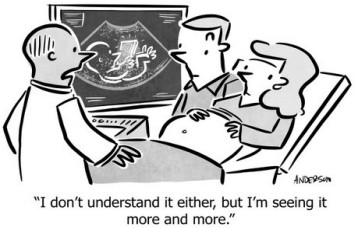
Disponível em: https://andertoons.com/sonogram/cartoon/9093/baby-ultrasound-with-phone. Acesso em: 29 mar. 2025.
Based on the cartoon, the doctor feels
Henry Lester, professor of biology at Caltech, discusses the effects of nicotine addiction on the brain.
Tobacco originated in the Americas, where humans have known some of its effects for at least 10,000 years. Beginning some 500 years ago, ocean crossings spread tobacco use to all other continents. We are essentially the only species that has learned how to use small amounts of plant toxins — which provide the selective advantage of sickening or poisoning animals who might eat them — for our own purposes. For tobacco, that toxin is nicotine. In addition to their historical medicinal and ritual uses, these substances, over time, have come to serve as guides, models, and touchstones for learning about the brain and opening many fields of neuroscience.
We have learned from tobacco and nicotine that it is possible to isolate single chemicals from plants that cause toxic effects on herbivores and valued effects on people. We’ve learned that it’s possible to define chemical processes in the human brain that are activated, inhibited, or otherwise manipulated by those substances.
Available at: https://scienceexchange.caltech.edu/topics/neuroscience/neuroscience-experts/nicotine-addictionneuroscience-henry-lester#what-happens-in-the-brain-when-people-smoke. Accessed on: Aug 1st, 2025.
According to the text, what is one of the main discoveries made from the study of tobacco and nicotine?

 Conheça nossos planos