Questões de Vestibular Sobre inglês
Foram encontradas 6.367 questões


Ano: 2025
Banca:
VUNESP
Órgão:
FCM/SANTA CASA
Prova:
VUNESP - 2025 - FCM/SANTA CASA - Vestibular - Medicina |
Q4148428
Inglês
Texto associado
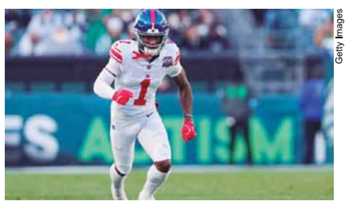
Read the text to answer question.
New York Giants1 wide receiver Malik Nabers has not
practiced while recovering from a persisting toe injury. While
the concussion has affected his availability thus far, Giants
coach Brian Daboll said there were no concerns about
Nabers potentially missing training camp. Nabers’ toe injury
dates back to his days at Louisiana State University (LSU),
though it does not require a procedural fix. It didn’t cause
him to miss any time as a rookie2 with the Giants in 2024.
He was sidelined for two games while recovering from a
concussion. In spite of that, Nabers still made the All-Rookie
Team and earned a Pro Bowl3 bid after catching 109 passes
for 1,204 yards and seven touchdowns. He broke New York’s
single-season receptions record in the process, surpassing
Steve Smith, and set the National Football League (NFL) record for most receptions by a rookie.
(Will Backus. www.cbssports.com, 18.06.2025. Adapted.)
1New York Giants: a professional American football team.
2 rookie: any player who is in their first season playing professional football,
having never signed a contract with a professional team before.
3Pro Bowl: the NFL’s annual all-star game, showcasing the league’s top
players.
In the excerpt from the text “While the concussion has affected his availability thus far, Giants coach Brian Daboll said there were no concerns about Nabers potentially missing training camp”, the underlined word expresses
Ano: 2025
Banca:
VUNESP
Órgão:
FCM/SANTA CASA
Prova:
VUNESP - 2025 - FCM/SANTA CASA - Vestibular - Medicina |
Q4148427
Inglês
Texto associado
Read the text to answer question.
New York Giants1 wide receiver Malik Nabers has not
practiced while recovering from a persisting toe injury. While
the concussion has affected his availability thus far, Giants
coach Brian Daboll said there were no concerns about
Nabers potentially missing training camp. Nabers’ toe injury
dates back to his days at Louisiana State University (LSU),
though it does not require a procedural fix. It didn’t cause
him to miss any time as a rookie2 with the Giants in 2024.
He was sidelined for two games while recovering from a
concussion. In spite of that, Nabers still made the All-Rookie
Team and earned a Pro Bowl3 bid after catching 109 passes
for 1,204 yards and seven touchdowns. He broke New York’s
single-season receptions record in the process, surpassing
Steve Smith, and set the National Football League (NFL) record for most receptions by a rookie.
(Will Backus. www.cbssports.com, 18.06.2025. Adapted.)
1New York Giants: a professional American football team.
2 rookie: any player who is in their first season playing professional football,
having never signed a contract with a professional team before.
3Pro Bowl: the NFL’s annual all-star game, showcasing the league’s top
players.
The main purpose of the text is to
Q4144910
Inglês
Leia a citação de Desmond Tutu, teólogo da África do Sul.
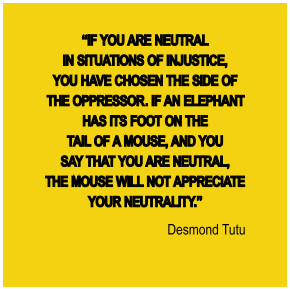 (https://antibullyingblog.blogspot.com. Adaptado.)
According to the quote,
(https://antibullyingblog.blogspot.com. Adaptado.) According to the quote,
Q4144909
Inglês
Texto associado

Leia o texto para responder à questão.
The Sustainable Development Goals (SDGs) were
adopted by all United Nations Member States in 2015 to
end poverty, reduce inequality and build more peaceful,
prosperous societies by 2030.
The widespread destruction of the natural world is
weakening the achievement of the SDGs and exposing
humanity’s future to danger. A human-induced triple planetary
crisis of climate change, nature and biodiversity loss, and
pollution and waste is pushing nature to the breaking point.
That is putting at risk the food we eat, the air we breathe, the
water we drink and the materials and resources upon which
our societies are built.
The triple planetary crisis is stressing most heavily the
vulnerable, including the poor, women and indigenous
peoples. Unless humanity reverses its environmental course,
it will be impossible to achieve the SDGs.
(www.unep.org. Adaptado.)
No trecho do terceiro parágrafo “Unless humanity reverses
its environmental course, it will be impossible to achieve the
SDGs”, o termo sublinhado tem sentido equivalente, em
português, a:
Q4144908
Inglês
Texto associado
Leia o texto para responder à questão.
The Sustainable Development Goals (SDGs) were
adopted by all United Nations Member States in 2015 to
end poverty, reduce inequality and build more peaceful,
prosperous societies by 2030.
The widespread destruction of the natural world is
weakening the achievement of the SDGs and exposing
humanity’s future to danger. A human-induced triple planetary
crisis of climate change, nature and biodiversity loss, and
pollution and waste is pushing nature to the breaking point.
That is putting at risk the food we eat, the air we breathe, the
water we drink and the materials and resources upon which
our societies are built.
The triple planetary crisis is stressing most heavily the
vulnerable, including the poor, women and indigenous
peoples. Unless humanity reverses its environmental course,
it will be impossible to achieve the SDGs.
(www.unep.org. Adaptado.)
According to the text, one problem of the triple planetary crisis
which is induced by human activity is:
Q4144907
Inglês
Texto associado
Leia o texto para responder à questão.
The Sustainable Development Goals (SDGs) were
adopted by all United Nations Member States in 2015 to
end poverty, reduce inequality and build more peaceful,
prosperous societies by 2030.
The widespread destruction of the natural world is
weakening the achievement of the SDGs and exposing
humanity’s future to danger. A human-induced triple planetary
crisis of climate change, nature and biodiversity loss, and
pollution and waste is pushing nature to the breaking point.
That is putting at risk the food we eat, the air we breathe, the
water we drink and the materials and resources upon which
our societies are built.
The triple planetary crisis is stressing most heavily the
vulnerable, including the poor, women and indigenous
peoples. Unless humanity reverses its environmental course,
it will be impossible to achieve the SDGs.
(www.unep.org. Adaptado.)
De acordo com o texto, um dos Objetivos de Desenvolvimento Sustentável adotado pela Organização das Nações Unidas
(ONU) é
Ano: 2025
Banca:
VUNESP
Órgão:
FAMERP
Prova:
VUNESP - 2025 - FAMERP - Vestibular - Conhecimentos Gerais |
Q4143788
Inglês
Read the poster of a campaign launched by the New York State Office of Addiction Services and Supports (OASAS)
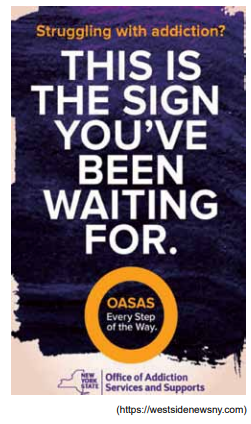
The campaign intends to.
Ano: 2025
Banca:
VUNESP
Órgão:
FAMERP
Prova:
VUNESP - 2025 - FAMERP - Vestibular - Conhecimentos Gerais |
Q4143787
Inglês
Texto associado
Leia o trecho de uma música escrita pelo cantor George
Michael para responder à questão.
How can I help you?
Please let me try to
I can heal the pain that you’re feeling inside
Whenever you want me, you know that I will be
Waiting for the day that you say you’ll be mine
Won’t you let me in? Let this love begin
Won’t you show me your heart now?
I’ll be good to you, I can make this thing true
Show me that heart right now
Who needs a lover that can’t be a friend
Something tells me I’m the one you’ve been looking for, oh
If you ever should see him again
Won’t you tell him you’ve found someone who gives you more?
Someone who will protect you, love and respect you
All those things that he never could bring to you
Like I do or rather I would
Won’t you show me your heart like you should?
(www.streetdirectory.com. Adaptado.)
O trecho da música que revela uma correção enunciativa no
discurso do eu lírico é:
Ano: 2025
Banca:
VUNESP
Órgão:
FAMERP
Prova:
VUNESP - 2025 - FAMERP - Vestibular - Conhecimentos Gerais |
Q4143786
Inglês
Texto associado
Leia o trecho de uma música escrita pelo cantor George
Michael para responder à questão.
How can I help you?
Please let me try to
I can heal the pain that you’re feeling inside
Whenever you want me, you know that I will be
Waiting for the day that you say you’ll be mine
Won’t you let me in? Let this love begin
Won’t you show me your heart now?
I’ll be good to you, I can make this thing true
Show me that heart right now
Who needs a lover that can’t be a friend
Something tells me I’m the one you’ve been looking for, oh
If you ever should see him again
Won’t you tell him you’ve found someone who gives you more?
Someone who will protect you, love and respect you
All those things that he never could bring to you
Like I do or rather I would
Won’t you show me your heart like you should?
(www.streetdirectory.com. Adaptado.)
No trecho “Who needs a lover that can’t be a friend” (3ª
estrofe),
o termo sublinhado é empregado com o mesmo sentido do
termo sublinhado em:
Ano: 2025
Banca:
VUNESP
Órgão:
FAMERP
Prova:
VUNESP - 2025 - FAMERP - Vestibular - Conhecimentos Gerais |
Q4143785
Inglês
Texto associado
Leia o trecho de uma música escrita pelo cantor George
Michael para responder à questão.
How can I help you?
Please let me try to
I can heal the pain that you’re feeling inside
Whenever you want me, you know that I will be
Waiting for the day that you say you’ll be mine
Won’t you let me in? Let this love begin
Won’t you show me your heart now?
I’ll be good to you, I can make this thing true
Show me that heart right now
Who needs a lover that can’t be a friend
Something tells me I’m the one you’ve been looking for, oh
If you ever should see him again
Won’t you tell him you’ve found someone who gives you more?
Someone who will protect you, love and respect you
All those things that he never could bring to you
Like I do or rather I would
Won’t you show me your heart like you should?
(www.streetdirectory.com. Adaptado.)
The lyrics suggest that the speaker is primarily expressing
Ano: 2025
Banca:
VUNESP
Órgão:
FAMERP
Prova:
VUNESP - 2025 - FAMERP - Vestibular - Conhecimentos Gerais |
Q4143784
Inglês
Read the quote from basketball player Michael Jordan.
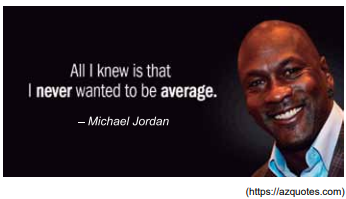
According to the quote, Michael Jordan
Ano: 2025
Banca:
VUNESP
Órgão:
FAMERP
Prova:
VUNESP - 2025 - FAMERP - Vestibular - Conhecimentos Gerais |
Q4143783
Inglês
Texto associado
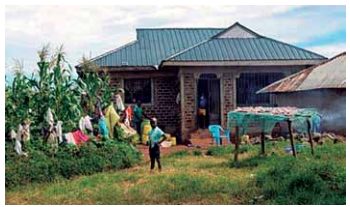
Leia o texto para responder à questão.
Of every 1,000 children born in Kenya, a country in East
Africa, 32 don’t make it to their first birthdays. Study after study
has explored how to improve those impressive numbers, in
Kenya and elsewhere. But a decade-long study on alleviating
poverty found a simple solution. Giving $1,000 to poor families
lowered infant mortality rates by nearly half, and deaths
in children under 5 by 45 percent. Those are much bigger
drops than have been credited to routine immunizations, for
example, or bed nets to prevent malaria.
“This is easily the biggest impact on child survival that
I’ve seen from an intervention that was designed to alleviate
poverty,” said Harsha Thirumurthy, an economist at the
University of Pennsylvania who was not involved in the work.
The decline in infant mortality is a “showstopping result,”
he said.
The outcomes suggest that delivering even smaller
amounts of money to families — especially those that live
near a hospital — immediately before or after the birth
of a child might allow women to seek medical care and
drastically improve their children’s chances of survival. More
than 100 low- and middle-income countries have explored
so-called cash transfers, especially after the pandemic
began. Generally, the experiments have found that giving
money to poor families improves school attendance, nutrition
and use of health services.
(Apoorva Mandavilli. www.nytimes.com, 18.08.2025. Adaptado.)
De acordo com o texto, o subsídio financeiro destinado a pessoas em situação de vulnerabilidade econômica no Quênia
demonstrou ter um impacto para além da redução no índice
de mortalidade infantil. O trecho do texto que confirma essa
afirmação é:
Ano: 2025
Banca:
VUNESP
Órgão:
FAMERP
Prova:
VUNESP - 2025 - FAMERP - Vestibular - Conhecimentos Gerais |
Q4143782
Inglês
Texto associado
Leia o texto para responder à questão.
Of every 1,000 children born in Kenya, a country in East
Africa, 32 don’t make it to their first birthdays. Study after study
has explored how to improve those impressive numbers, in
Kenya and elsewhere. But a decade-long study on alleviating
poverty found a simple solution. Giving $1,000 to poor families
lowered infant mortality rates by nearly half, and deaths
in children under 5 by 45 percent. Those are much bigger
drops than have been credited to routine immunizations, for
example, or bed nets to prevent malaria.
“This is easily the biggest impact on child survival that
I’ve seen from an intervention that was designed to alleviate
poverty,” said Harsha Thirumurthy, an economist at the
University of Pennsylvania who was not involved in the work.
The decline in infant mortality is a “showstopping result,”
he said.
The outcomes suggest that delivering even smaller
amounts of money to families — especially those that live
near a hospital — immediately before or after the birth
of a child might allow women to seek medical care and
drastically improve their children’s chances of survival. More
than 100 low- and middle-income countries have explored
so-called cash transfers, especially after the pandemic
began. Generally, the experiments have found that giving
money to poor families improves school attendance, nutrition
and use of health services.
(Apoorva Mandavilli. www.nytimes.com, 18.08.2025. Adaptado.)
In the excerpt from the third paragraph “The outcomes suggest
that delivering even smaller amounts of money to families
— especially those that live near a hospital — immediately
before or after the birth of a child might allow women to seek
medical care and drastically improve their children’s chances
of survival”, the underlined word expresses a
Ano: 2025
Banca:
VUNESP
Órgão:
FAMERP
Prova:
VUNESP - 2025 - FAMERP - Vestibular - Conhecimentos Gerais |
Q4143781
Inglês
Texto associado
Leia o texto para responder à questão.
Of every 1,000 children born in Kenya, a country in East
Africa, 32 don’t make it to their first birthdays. Study after study
has explored how to improve those impressive numbers, in
Kenya and elsewhere. But a decade-long study on alleviating
poverty found a simple solution. Giving $1,000 to poor families
lowered infant mortality rates by nearly half, and deaths
in children under 5 by 45 percent. Those are much bigger
drops than have been credited to routine immunizations, for
example, or bed nets to prevent malaria.
“This is easily the biggest impact on child survival that
I’ve seen from an intervention that was designed to alleviate
poverty,” said Harsha Thirumurthy, an economist at the
University of Pennsylvania who was not involved in the work.
The decline in infant mortality is a “showstopping result,”
he said.
The outcomes suggest that delivering even smaller
amounts of money to families — especially those that live
near a hospital — immediately before or after the birth
of a child might allow women to seek medical care and
drastically improve their children’s chances of survival. More
than 100 low- and middle-income countries have explored
so-called cash transfers, especially after the pandemic
began. Generally, the experiments have found that giving
money to poor families improves school attendance, nutrition
and use of health services.
(Apoorva Mandavilli. www.nytimes.com, 18.08.2025. Adaptado.)
No trecho do segundo parágrafo “The decline in infant
mortality is a ‘showstopping result,’ he said”, o termo sublinhado pode ser substituído, sem alteração de sentido para
o texto, por:
Ano: 2025
Banca:
VUNESP
Órgão:
FAMERP
Prova:
VUNESP - 2025 - FAMERP - Vestibular - Conhecimentos Gerais |
Q4143780
Inglês
Texto associado
Leia o texto para responder à questão.
Of every 1,000 children born in Kenya, a country in East
Africa, 32 don’t make it to their first birthdays. Study after study
has explored how to improve those impressive numbers, in
Kenya and elsewhere. But a decade-long study on alleviating
poverty found a simple solution. Giving $1,000 to poor families
lowered infant mortality rates by nearly half, and deaths
in children under 5 by 45 percent. Those are much bigger
drops than have been credited to routine immunizations, for
example, or bed nets to prevent malaria.
“This is easily the biggest impact on child survival that
I’ve seen from an intervention that was designed to alleviate
poverty,” said Harsha Thirumurthy, an economist at the
University of Pennsylvania who was not involved in the work.
The decline in infant mortality is a “showstopping result,”
he said.
The outcomes suggest that delivering even smaller
amounts of money to families — especially those that live
near a hospital — immediately before or after the birth
of a child might allow women to seek medical care and
drastically improve their children’s chances of survival. More
than 100 low- and middle-income countries have explored
so-called cash transfers, especially after the pandemic
began. Generally, the experiments have found that giving
money to poor families improves school attendance, nutrition
and use of health services.
(Apoorva Mandavilli. www.nytimes.com, 18.08.2025. Adaptado.)
In the excerpt from the first paragraph “Those are much
bigger drops than have been credited”, the underlined word
refers to
Ano: 2025
Banca:
VUNESP
Órgão:
FAMERP
Prova:
VUNESP - 2025 - FAMERP - Vestibular - Conhecimentos Gerais |
Q4143779
Inglês
Texto associado
Leia o texto para responder à questão.
Of every 1,000 children born in Kenya, a country in East
Africa, 32 don’t make it to their first birthdays. Study after study
has explored how to improve those impressive numbers, in
Kenya and elsewhere. But a decade-long study on alleviating
poverty found a simple solution. Giving $1,000 to poor families
lowered infant mortality rates by nearly half, and deaths
in children under 5 by 45 percent. Those are much bigger
drops than have been credited to routine immunizations, for
example, or bed nets to prevent malaria.
“This is easily the biggest impact on child survival that
I’ve seen from an intervention that was designed to alleviate
poverty,” said Harsha Thirumurthy, an economist at the
University of Pennsylvania who was not involved in the work.
The decline in infant mortality is a “showstopping result,”
he said.
The outcomes suggest that delivering even smaller
amounts of money to families — especially those that live
near a hospital — immediately before or after the birth
of a child might allow women to seek medical care and
drastically improve their children’s chances of survival. More
than 100 low- and middle-income countries have explored
so-called cash transfers, especially after the pandemic
began. Generally, the experiments have found that giving
money to poor families improves school attendance, nutrition
and use of health services.
(Apoorva Mandavilli. www.nytimes.com, 18.08.2025. Adaptado.)
The main purpose of the text is to
Q4130709
Inglês
Texto associado
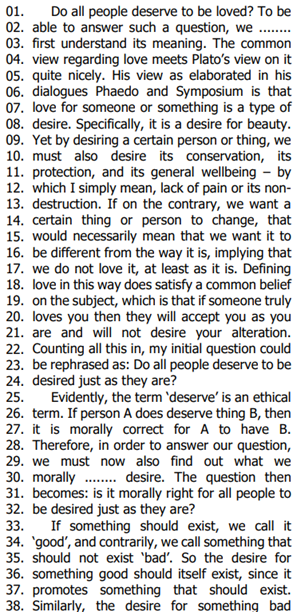
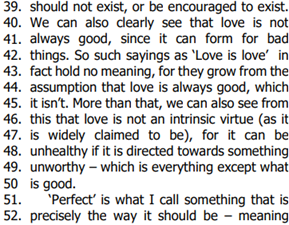
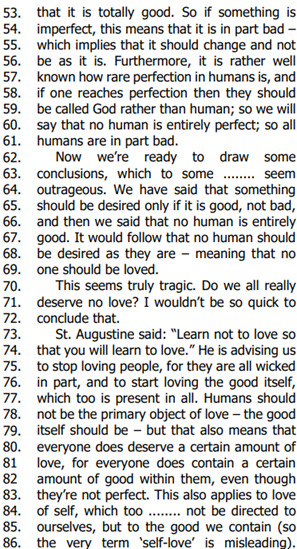
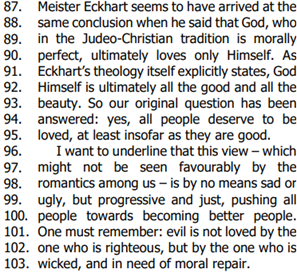
Instrução: A questão está relacionada ao texto abaixo.
Adapted from: TANASĂ, Matei. The Unlovable Parts of a Loving Society. 2022. Retrieved from: .
Accessed: 18 Sep. 2025.
Consider the following propositions for rephrasing the sentence Furthermore, it is rather well
known how rare perfection in humans is, and if one reaches perfection then they should
be called God rather than human; so we will say that no human is entirely perfect; so all
humans are in part bad (l. 56-61).
I - Moreover, everyone knows human perfection is rare. If someone were perfect, they would be our God, not human. So, no human is completely perfect, and all people have some flaws.
II - Aditionally, because perfection in humans is so rare that anyone who attains it would be more God than human, we can say that all humans are at least partly imperfect.
III- Furthermore, most people believe human perfection is rare. Still, some people come close to it and may be compared to God; so, not all humans are bad.
If applied to the text, which ones would be correct and keep the original meaning?
I - Moreover, everyone knows human perfection is rare. If someone were perfect, they would be our God, not human. So, no human is completely perfect, and all people have some flaws.
II - Aditionally, because perfection in humans is so rare that anyone who attains it would be more God than human, we can say that all humans are at least partly imperfect.
III- Furthermore, most people believe human perfection is rare. Still, some people come close to it and may be compared to God; so, not all humans are bad.
If applied to the text, which ones would be correct and keep the original meaning?
Q4130708
Inglês
Texto associado
Instrução: A questão está relacionada ao texto abaixo.
Adapted from: TANASĂ, Matei. The Unlovable Parts of a Loving Society. 2022. Retrieved from: .
Accessed: 18 Sep. 2025.
Select the alternative that offers adequate synonyms to the words intrinsic (l. 46), outrageous
(l. 64), misleading (l. 86) and progressive (l. 99) as used in the text.
Q4130707
Inglês
Texto associado
Instrução: A questão está relacionada ao texto abaixo.
Adapted from: TANASĂ, Matei. The Unlovable Parts of a Loving Society. 2022. Retrieved from: .
Accessed: 18 Sep. 2025.
Select the alternative that adequately replaces the expression Counting all this in (l. 22) without
altering the sentence’s original meaning.
Q4130706
Inglês
Texto associado
Instrução: A questão está relacionada ao texto abaixo.
Adapted from: TANASĂ, Matei. The Unlovable Parts of a Loving Society. 2022. Retrieved from: .
Accessed: 18 Sep. 2025.
Select the sequence of phrasal verbs that replaces the single verbs satisfy (l. 18), promotes (l. 37),
and arrived at (l. 87) adequately and without changes in meaning.

 Conheça nossos planos