Questões de Vestibular Sobre inglês
Foram encontradas 6.365 questões


Texto 1
Call to halve target for added sugar
People need to more than halve their intake of added sugar to tackle the obesity crisis, according to scientific advice for the government in England.
A report by the Scientific Advisory Committee on Nutrition
(SACN) says sugar added to food or naturally present in fruit
juice and honey should account for 5% of energy intake.
Many fail to meet the old 10% target. The sugar industry said
“demonizing one ingredient” would not “solve the obesity
epidemic”
The body reviewed 600 scientific studies on the evidence
of carbohydrates – including sugar – on health to develop the
new recommendations. One 330ml can of soft drink would
take a typical adult up to the proposed 5% daily allowance,
without factoring in sugar from any other source.
Prof Ian MacDonald, chairman of the SACN working group
on carbohydrates, said: “The evidence that we have analyzed
shows quite clearly that high free sugars intake in adults is
associated with increased energy intake and obesity. There
is also an association between sugar-sweetened beverages
and type-2 diabetes. In children there is clear demonstration
that sugar-sweetened beverages are associated with obesity.
By reducing it to 5% you would reduce the risk of all of those
things, the challenge will be to get there.”
The target of 5% of energy intake from free sugars
amounts to 25g for women (five to six teaspoons) and 35g
(seven to eight teaspoons) for men, based on the average
diet.
Public Health Minister for England, Jane Ellison, said: “We
know eating too much sugar can have a significant impact on
health, and this advice confirms that. We want to help people
make healthier choices and get the nation into healthy habits
for life. This report will inform the important debate taking
place about sugar.”
(www.bbc.com. Adaptado.)
Texto 2
Eating more fruits and veggies won’t make you lose weight
We’re often told to eat more fruits and vegetables, but the
chances that you’ll lose weight just by eating more of these
foods are slim. New research suggests increased fruit and
vegetable intake is only effective for weight loss if you make
an effort to reduce your calorie intake overall.
In other words, you need to exercise or consume fewer
calories to shed those pounds.
Don’t let that stop you from including more fruits and
veggies in your diet, though. Even if they don’t directly help
you lose weight, these foods still provide a number of health
benefits.
(http://thechart.blogs.cnn.com. Adaptado.)
Texto 1
Call to halve target for added sugar
People need to more than halve their intake of added sugar to tackle the obesity crisis, according to scientific advice for the government in England.
A report by the Scientific Advisory Committee on Nutrition
(SACN) says sugar added to food or naturally present in fruit
juice and honey should account for 5% of energy intake.
Many fail to meet the old 10% target. The sugar industry said
“demonizing one ingredient” would not “solve the obesity
epidemic”
The body reviewed 600 scientific studies on the evidence
of carbohydrates – including sugar – on health to develop the
new recommendations. One 330ml can of soft drink would
take a typical adult up to the proposed 5% daily allowance,
without factoring in sugar from any other source.
Prof Ian MacDonald, chairman of the SACN working group
on carbohydrates, said: “The evidence that we have analyzed
shows quite clearly that high free sugars intake in adults is
associated with increased energy intake and obesity. There
is also an association between sugar-sweetened beverages
and type-2 diabetes. In children there is clear demonstration
that sugar-sweetened beverages are associated with obesity.
By reducing it to 5% you would reduce the risk of all of those
things, the challenge will be to get there.”
The target of 5% of energy intake from free sugars
amounts to 25g for women (five to six teaspoons) and 35g
(seven to eight teaspoons) for men, based on the average
diet.
Public Health Minister for England, Jane Ellison, said: “We
know eating too much sugar can have a significant impact on
health, and this advice confirms that. We want to help people
make healthier choices and get the nation into healthy habits
for life. This report will inform the important debate taking
place about sugar.”
(www.bbc.com. Adaptado.)
Texto 2
Eating more fruits and veggies won’t make you lose weight
We’re often told to eat more fruits and vegetables, but the
chances that you’ll lose weight just by eating more of these
foods are slim. New research suggests increased fruit and
vegetable intake is only effective for weight loss if you make
an effort to reduce your calorie intake overall.
In other words, you need to exercise or consume fewer
calories to shed those pounds.
Don’t let that stop you from including more fruits and
veggies in your diet, though. Even if they don’t directly help
you lose weight, these foods still provide a number of health
benefits.
(http://thechart.blogs.cnn.com. Adaptado.)
Texto 1
Call to halve target for added sugar
People need to more than halve their intake of added sugar to tackle the obesity crisis, according to scientific advice for the government in England.
A report by the Scientific Advisory Committee on Nutrition
(SACN) says sugar added to food or naturally present in fruit
juice and honey should account for 5% of energy intake.
Many fail to meet the old 10% target. The sugar industry said
“demonizing one ingredient” would not “solve the obesity
epidemic”
The body reviewed 600 scientific studies on the evidence
of carbohydrates – including sugar – on health to develop the
new recommendations. One 330ml can of soft drink would
take a typical adult up to the proposed 5% daily allowance,
without factoring in sugar from any other source.
Prof Ian MacDonald, chairman of the SACN working group
on carbohydrates, said: “The evidence that we have analyzed
shows quite clearly that high free sugars intake in adults is
associated with increased energy intake and obesity. There
is also an association between sugar-sweetened beverages
and type-2 diabetes. In children there is clear demonstration
that sugar-sweetened beverages are associated with obesity.
By reducing it to 5% you would reduce the risk of all of those
things, the challenge will be to get there.”
The target of 5% of energy intake from free sugars
amounts to 25g for women (five to six teaspoons) and 35g
(seven to eight teaspoons) for men, based on the average
diet.
Public Health Minister for England, Jane Ellison, said: “We
know eating too much sugar can have a significant impact on
health, and this advice confirms that. We want to help people
make healthier choices and get the nation into healthy habits
for life. This report will inform the important debate taking
place about sugar.”
(www.bbc.com. Adaptado.)
Texto 2
Eating more fruits and veggies won’t make you lose weight
We’re often told to eat more fruits and vegetables, but the
chances that you’ll lose weight just by eating more of these
foods are slim. New research suggests increased fruit and
vegetable intake is only effective for weight loss if you make
an effort to reduce your calorie intake overall.
In other words, you need to exercise or consume fewer
calories to shed those pounds.
Don’t let that stop you from including more fruits and
veggies in your diet, though. Even if they don’t directly help
you lose weight, these foods still provide a number of health
benefits.
(http://thechart.blogs.cnn.com. Adaptado.)
Texto 1
Call to halve target for added sugar
People need to more than halve their intake of added sugar to tackle the obesity crisis, according to scientific advice for the government in England.
A report by the Scientific Advisory Committee on Nutrition
(SACN) says sugar added to food or naturally present in fruit
juice and honey should account for 5% of energy intake.
Many fail to meet the old 10% target. The sugar industry said
“demonizing one ingredient” would not “solve the obesity
epidemic”
The body reviewed 600 scientific studies on the evidence
of carbohydrates – including sugar – on health to develop the
new recommendations. One 330ml can of soft drink would
take a typical adult up to the proposed 5% daily allowance,
without factoring in sugar from any other source.
Prof Ian MacDonald, chairman of the SACN working group
on carbohydrates, said: “The evidence that we have analyzed
shows quite clearly that high free sugars intake in adults is
associated with increased energy intake and obesity. There
is also an association between sugar-sweetened beverages
and type-2 diabetes. In children there is clear demonstration
that sugar-sweetened beverages are associated with obesity.
By reducing it to 5% you would reduce the risk of all of those
things, the challenge will be to get there.”
The target of 5% of energy intake from free sugars
amounts to 25g for women (five to six teaspoons) and 35g
(seven to eight teaspoons) for men, based on the average
diet.
Public Health Minister for England, Jane Ellison, said: “We
know eating too much sugar can have a significant impact on
health, and this advice confirms that. We want to help people
make healthier choices and get the nation into healthy habits
for life. This report will inform the important debate taking
place about sugar.”
(www.bbc.com. Adaptado.)
Texto 2
Eating more fruits and veggies won’t make you lose weight
We’re often told to eat more fruits and vegetables, but the
chances that you’ll lose weight just by eating more of these
foods are slim. New research suggests increased fruit and
vegetable intake is only effective for weight loss if you make
an effort to reduce your calorie intake overall.
In other words, you need to exercise or consume fewer
calories to shed those pounds.
Don’t let that stop you from including more fruits and
veggies in your diet, though. Even if they don’t directly help
you lose weight, these foods still provide a number of health
benefits.
(http://thechart.blogs.cnn.com. Adaptado.)
Texto 1
Call to halve target for added sugar
People need to more than halve their intake of added sugar to tackle the obesity crisis, according to scientific advice for the government in England.
A report by the Scientific Advisory Committee on Nutrition
(SACN) says sugar added to food or naturally present in fruit
juice and honey should account for 5% of energy intake.
Many fail to meet the old 10% target. The sugar industry said
“demonizing one ingredient” would not “solve the obesity
epidemic”
The body reviewed 600 scientific studies on the evidence
of carbohydrates – including sugar – on health to develop the
new recommendations. One 330ml can of soft drink would
take a typical adult up to the proposed 5% daily allowance,
without factoring in sugar from any other source.
Prof Ian MacDonald, chairman of the SACN working group
on carbohydrates, said: “The evidence that we have analyzed
shows quite clearly that high free sugars intake in adults is
associated with increased energy intake and obesity. There
is also an association between sugar-sweetened beverages
and type-2 diabetes. In children there is clear demonstration
that sugar-sweetened beverages are associated with obesity.
By reducing it to 5% you would reduce the risk of all of those
things, the challenge will be to get there.”
The target of 5% of energy intake from free sugars
amounts to 25g for women (five to six teaspoons) and 35g
(seven to eight teaspoons) for men, based on the average
diet.
Public Health Minister for England, Jane Ellison, said: “We
know eating too much sugar can have a significant impact on
health, and this advice confirms that. We want to help people
make healthier choices and get the nation into healthy habits
for life. This report will inform the important debate taking
place about sugar.”
(www.bbc.com. Adaptado.)
Texto 2
Eating more fruits and veggies won’t make you lose weight
We’re often told to eat more fruits and vegetables, but the
chances that you’ll lose weight just by eating more of these
foods are slim. New research suggests increased fruit and
vegetable intake is only effective for weight loss if you make
an effort to reduce your calorie intake overall.
In other words, you need to exercise or consume fewer
calories to shed those pounds.
Don’t let that stop you from including more fruits and
veggies in your diet, though. Even if they don’t directly help
you lose weight, these foods still provide a number of health
benefits.
(http://thechart.blogs.cnn.com. Adaptado.)
Texto 1
Call to halve target for added sugar
People need to more than halve their intake of added sugar to tackle the obesity crisis, according to scientific advice for the government in England.
A report by the Scientific Advisory Committee on Nutrition
(SACN) says sugar added to food or naturally present in fruit
juice and honey should account for 5% of energy intake.
Many fail to meet the old 10% target. The sugar industry said
“demonizing one ingredient” would not “solve the obesity
epidemic”
The body reviewed 600 scientific studies on the evidence
of carbohydrates – including sugar – on health to develop the
new recommendations. One 330ml can of soft drink would
take a typical adult up to the proposed 5% daily allowance,
without factoring in sugar from any other source.
Prof Ian MacDonald, chairman of the SACN working group
on carbohydrates, said: “The evidence that we have analyzed
shows quite clearly that high free sugars intake in adults is
associated with increased energy intake and obesity. There
is also an association between sugar-sweetened beverages
and type-2 diabetes. In children there is clear demonstration
that sugar-sweetened beverages are associated with obesity.
By reducing it to 5% you would reduce the risk of all of those
things, the challenge will be to get there.”
The target of 5% of energy intake from free sugars
amounts to 25g for women (five to six teaspoons) and 35g
(seven to eight teaspoons) for men, based on the average
diet.
Public Health Minister for England, Jane Ellison, said: “We
know eating too much sugar can have a significant impact on
health, and this advice confirms that. We want to help people
make healthier choices and get the nation into healthy habits
for life. This report will inform the important debate taking
place about sugar.”
(www.bbc.com. Adaptado.)
Texto 2
Eating more fruits and veggies won’t make you lose weight
We’re often told to eat more fruits and vegetables, but the
chances that you’ll lose weight just by eating more of these
foods are slim. New research suggests increased fruit and
vegetable intake is only effective for weight loss if you make
an effort to reduce your calorie intake overall.
In other words, you need to exercise or consume fewer
calories to shed those pounds.
Don’t let that stop you from including more fruits and
veggies in your diet, though. Even if they don’t directly help
you lose weight, these foods still provide a number of health
benefits.
(http://thechart.blogs.cnn.com. Adaptado.)
Texto 1
Call to halve target for added sugar
People need to more than halve their intake of added sugar to tackle the obesity crisis, according to scientific advice for the government in England.
A report by the Scientific Advisory Committee on Nutrition
(SACN) says sugar added to food or naturally present in fruit
juice and honey should account for 5% of energy intake.
Many fail to meet the old 10% target. The sugar industry said
“demonizing one ingredient” would not “solve the obesity
epidemic”
The body reviewed 600 scientific studies on the evidence
of carbohydrates – including sugar – on health to develop the
new recommendations. One 330ml can of soft drink would
take a typical adult up to the proposed 5% daily allowance,
without factoring in sugar from any other source.
Prof Ian MacDonald, chairman of the SACN working group
on carbohydrates, said: “The evidence that we have analyzed
shows quite clearly that high free sugars intake in adults is
associated with increased energy intake and obesity. There
is also an association between sugar-sweetened beverages
and type-2 diabetes. In children there is clear demonstration
that sugar-sweetened beverages are associated with obesity.
By reducing it to 5% you would reduce the risk of all of those
things, the challenge will be to get there.”
The target of 5% of energy intake from free sugars
amounts to 25g for women (five to six teaspoons) and 35g
(seven to eight teaspoons) for men, based on the average
diet.
Public Health Minister for England, Jane Ellison, said: “We
know eating too much sugar can have a significant impact on
health, and this advice confirms that. We want to help people
make healthier choices and get the nation into healthy habits
for life. This report will inform the important debate taking
place about sugar.”
(www.bbc.com. Adaptado.)
Texto 2
Eating more fruits and veggies won’t make you lose weight
We’re often told to eat more fruits and vegetables, but the
chances that you’ll lose weight just by eating more of these
foods are slim. New research suggests increased fruit and
vegetable intake is only effective for weight loss if you make
an effort to reduce your calorie intake overall.
In other words, you need to exercise or consume fewer
calories to shed those pounds.
Don’t let that stop you from including more fruits and
veggies in your diet, though. Even if they don’t directly help
you lose weight, these foods still provide a number of health
benefits.
(http://thechart.blogs.cnn.com. Adaptado.)
The aim of mindfulness is not quieting the mind, or attempting to achieve a state of eternal calm. The goal is simple: we’re aiming to pay attention to the present moment, without judgment. Easier said than done, we know. When we notice judgments arise during our practice, we can make a mental note of them, and let them pass. Return to observing the present moment as it is. That’s the practice. The work is to just keep doing it. Results will accrue.
The aim of mindfulness is not quieting the mind, or attempting to achieve a state of eternal calm. The goal is simple: we’re aiming to pay attention to the present moment, without judgment. Easier said than done, we know. When we notice judgments arise during our practice, we can make a mental note of them, and let them pass. Return to observing the present moment as it is. That’s the practice. The work is to just keep doing it. Results will accrue.
Big U.S. tobacco companies are all developing e-cigarettes. The battery-powered gadgets feature a glowing tip and a heating element that turns liquid nicotine and flavorings into a cloud of vapor that users inhale. Some past research has suggested that using e-cigarettes may help smokers cut down on use of traditional tobacco products, or even transition entirely away from tobacco – an idea aggressively marketed by e-cigarette and tobacco companies.
Researchers analyzed data from a 2014 survey of more than 13,000 current or former smokers in the European Union. About 2,500 had tried vaping at least once; 46% of the participants were former smokers and 19% currently or previously used e-cigarettes. The study revealed that people smoked an average of about 14 cigarettes a day when they didn’t vape, and around 16 cigarettes a day when they did.
Big U.S. tobacco companies are all developing e-cigarettes. The battery-powered gadgets feature a glowing tip and a heating element that turns liquid nicotine and flavorings into a cloud of vapor that users inhale. Some past research has suggested that using e-cigarettes may help smokers cut down on use of traditional tobacco products, or even transition entirely away from tobacco – an idea aggressively marketed by e-cigarette and tobacco companies.
Researchers analyzed data from a 2014 survey of more than 13,000 current or former smokers in the European Union. About 2,500 had tried vaping at least once; 46% of the participants were former smokers and 19% currently or previously used e-cigarettes. The study revealed that people smoked an average of about 14 cigarettes a day when they didn’t vape, and around 16 cigarettes a day when they did.
( ) Over thirteen thousand people took part in the survey. ( ) All the participants had been cigarette smokers at some point. ( ) The smokers in the study used more cigarettes a day when they vaped. ( ) None of the participants had tried e-cigarettes before the survey.
The correct sequence, from top to bottom, is
Big U.S. tobacco companies are all developing e-cigarettes. The battery-powered gadgets feature a glowing tip and a heating element that turns liquid nicotine and flavorings into a cloud of vapor that users inhale. Some past research has suggested that using e-cigarettes may help smokers cut down on use of traditional tobacco products, or even transition entirely away from tobacco – an idea aggressively marketed by e-cigarette and tobacco companies.
Researchers analyzed data from a 2014 survey of more than 13,000 current or former smokers in the European Union. About 2,500 had tried vaping at least once; 46% of the participants were former smokers and 19% currently or previously used e-cigarettes. The study revealed that people smoked an average of about 14 cigarettes a day when they didn’t vape, and around 16 cigarettes a day when they did.
Questão

This phenomenon is known as unihemispheric slow-wave sleep, and it’s seen in marine animals and some birds. This is the first study to suggest that the human brain may also be hard-wired to function in a similar way, although on a smaller scale. Humans, unlike sparrows, don’t usually sleep with one eye open. However, when in new surroundings, one hemisphere of the brain may stay at least a little bit awake – great for waking quickly if an intruder shows up, but with a resulting groggy feeling the next morning.
The group of researchers recruited sleep study participants, and conducted neuroimaging along with polysomnography, a standard test used in sleep labs to monitor brain waves, oxygen level in blood, heart rate, breathing, and eye and leg movements. They discovered that only the brain’s right hemisphere was consistently engaged in slow-wave, or deep, sleep. The left hemisphere – the side responsible for logical thinking and reasoning – had what the researchers called “enhanced vigilance”, which also made the entire brain more responsive to sound.
The researchers tried a test where they targeted sounds to the left and right ear. They found that on the first night, 80 percent of the arousals from deep sleep occurred when sound was made to target the right ear (the brain’s left hemisphere). On day two, that number dropped to about 50 percent.
Questão
This phenomenon is known as unihemispheric slow-wave sleep, and it’s seen in marine animals and some birds. This is the first study to suggest that the human brain may also be hard-wired to function in a similar way, although on a smaller scale. Humans, unlike sparrows, don’t usually sleep with one eye open. However, when in new surroundings, one hemisphere of the brain may stay at least a little bit awake – great for waking quickly if an intruder shows up, but with a resulting groggy feeling the next morning.
The group of researchers recruited sleep study participants, and conducted neuroimaging along with polysomnography, a standard test used in sleep labs to monitor brain waves, oxygen level in blood, heart rate, breathing, and eye and leg movements. They discovered that only the brain’s right hemisphere was consistently engaged in slow-wave, or deep, sleep. The left hemisphere – the side responsible for logical thinking and reasoning – had what the researchers called “enhanced vigilance”, which also made the entire brain more responsive to sound.
The researchers tried a test where they targeted sounds to the left and right ear. They found that on the first night, 80 percent of the arousals from deep sleep occurred when sound was made to target the right ear (the brain’s left hemisphere). On day two, that number dropped to about 50 percent.
Questão
This phenomenon is known as unihemispheric slow-wave sleep, and it’s seen in marine animals and some birds. This is the first study to suggest that the human brain may also be hard-wired to function in a similar way, although on a smaller scale. Humans, unlike sparrows, don’t usually sleep with one eye open. However, when in new surroundings, one hemisphere of the brain may stay at least a little bit awake – great for waking quickly if an intruder shows up, but with a resulting groggy feeling the next morning.
The group of researchers recruited sleep study participants, and conducted neuroimaging along with polysomnography, a standard test used in sleep labs to monitor brain waves, oxygen level in blood, heart rate, breathing, and eye and leg movements. They discovered that only the brain’s right hemisphere was consistently engaged in slow-wave, or deep, sleep. The left hemisphere – the side responsible for logical thinking and reasoning – had what the researchers called “enhanced vigilance”, which also made the entire brain more responsive to sound.
The researchers tried a test where they targeted sounds to the left and right ear. They found that on the first night, 80 percent of the arousals from deep sleep occurred when sound was made to target the right ear (the brain’s left hemisphere). On day two, that number dropped to about 50 percent.
Questão
This phenomenon is known as unihemispheric slow-wave sleep, and it’s seen in marine animals and some birds. This is the first study to suggest that the human brain may also be hard-wired to function in a similar way, although on a smaller scale. Humans, unlike sparrows, don’t usually sleep with one eye open. However, when in new surroundings, one hemisphere of the brain may stay at least a little bit awake – great for waking quickly if an intruder shows up, but with a resulting groggy feeling the next morning.
The group of researchers recruited sleep study participants, and conducted neuroimaging along with polysomnography, a standard test used in sleep labs to monitor brain waves, oxygen level in blood, heart rate, breathing, and eye and leg movements. They discovered that only the brain’s right hemisphere was consistently engaged in slow-wave, or deep, sleep. The left hemisphere – the side responsible for logical thinking and reasoning – had what the researchers called “enhanced vigilance”, which also made the entire brain more responsive to sound.
The researchers tried a test where they targeted sounds to the left and right ear. They found that on the first night, 80 percent of the arousals from deep sleep occurred when sound was made to target the right ear (the brain’s left hemisphere). On day two, that number dropped to about 50 percent.
The study mentioned in the text says that, when we sleep in a new location,
( ) half of our brain may remain alert.
( ) we behave exactly like sparrows.
( ) the left hemisphere of our brain is less asleep than the right.
( ) our brain’s vigilance is a way to protect us from unknown dangers.
The correct sequence, from top to bottom, is
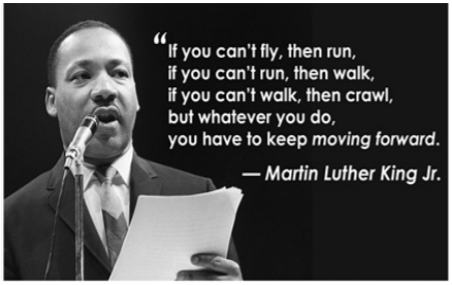 Disponível em: <https://www.goodreads.com/quotes/26963-if-you-can-t-flythen-run-if-you-can-t-run>. Acesso em: set. 2018.
According to this quote by Martin Luther King Jr.


 Conheça nossos planos