Questões de Vestibular Sobre inglês
Foram encontradas 6.365 questões


Leia o texto para responder à questão.
There is nothing conventional about 17-year-old Michael Fuller’s relationship with music. As someone with high-functioning autism who sees the world through sound, creating melodies from the bustle of the high street or trains on the tracks feels more natural than any social interaction. This hardwired connection to sound has been with him for as long as he can remember.
By the age of 11, Michael could play Mozart by ear, having taught himself to play the piano through a mobile phone app. The app highlighted notes on a keyboard as classical music played. He describes his unusual musical talent as “downloading” music into his head. His mother, Nadine, remembers that as a child Michael would “suddenly pop up and say: ‘I’ve got a symphony’”. Michael took to the piano and found he could quickly perform complex pieces from memory.
“I liked what I was hearing, sought more music and began studying through Google and YouTube,” he remembers. “It was very organic. I would listen in great depth and the music would be implanted in my mind. I could then just play it on the piano – all without being taught.”
Growing up in a family that listened to reggae over classical music, Michael feels “very much aware” of how different his approach is to music – symbolised by the way he taught himself piano as a child. This, his mother says, came as a “surprise to the family and myself – I’d never listened to classical music in my life”.
It was not long after learning to play the piano that Michael started composing his own works. Describing this process as “making music with my mind”, Michael says composing classical symphonies “helps me to express myself through music – it makes me calm”. Michael wants to nurture his song writing to achieve his ambition of becoming a modern mainstream classical artist. He wants to control the creative process, unlike typical modern-day composers, who he says “write blobs on a page, hand it over to the musicians – then say bye-bye and stay in the background and get no recognition”. Instead, Michael is determined to take centre stage.
(Alex Taylor. www.bbc.com, 27.03.2018. Adaptado.)
Leia o texto para responder à questão.
There is nothing conventional about 17-year-old Michael Fuller’s relationship with music. As someone with high-functioning autism who sees the world through sound, creating melodies from the bustle of the high street or trains on the tracks feels more natural than any social interaction. This hardwired connection to sound has been with him for as long as he can remember.
By the age of 11, Michael could play Mozart by ear, having taught himself to play the piano through a mobile phone app. The app highlighted notes on a keyboard as classical music played. He describes his unusual musical talent as “downloading” music into his head. His mother, Nadine, remembers that as a child Michael would “suddenly pop up and say: ‘I’ve got a symphony’”. Michael took to the piano and found he could quickly perform complex pieces from memory.
“I liked what I was hearing, sought more music and began studying through Google and YouTube,” he remembers. “It was very organic. I would listen in great depth and the music would be implanted in my mind. I could then just play it on the piano – all without being taught.”
Growing up in a family that listened to reggae over classical music, Michael feels “very much aware” of how different his approach is to music – symbolised by the way he taught himself piano as a child. This, his mother says, came as a “surprise to the family and myself – I’d never listened to classical music in my life”.
It was not long after learning to play the piano that Michael started composing his own works. Describing this process as “making music with my mind”, Michael says composing classical symphonies “helps me to express myself through music – it makes me calm”. Michael wants to nurture his song writing to achieve his ambition of becoming a modern mainstream classical artist. He wants to control the creative process, unlike typical modern-day composers, who he says “write blobs on a page, hand it over to the musicians – then say bye-bye and stay in the background and get no recognition”. Instead, Michael is determined to take centre stage.
(Alex Taylor. www.bbc.com, 27.03.2018. Adaptado.)
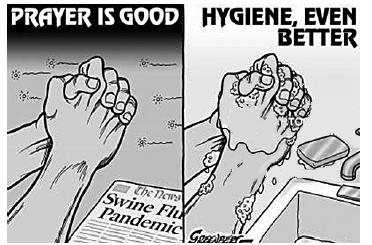
Disponível em: <https://cartoonstock.com>. Acesso em: mai. 2018.
Considering the reduction of pandemic influenza transmission, this cartoon focus on
( ) ignore the next pandemics before it happens. ( ) make the most of the Internet resources so as to better deal with them. ( ) detect potential lethal viruses at their source. ( ) disregard any information gotten through social media.
The correct sequence, from top to bottom, is

Texto 1
Call to halve target for added sugar
People need to more than halve their intake of added sugar to tackle the obesity crisis, according to scientific advice for the government in England.
A report by the Scientific Advisory Committee on Nutrition
(SACN) says sugar added to food or naturally present in fruit
juice and honey should account for 5% of energy intake.
Many fail to meet the old 10% target. The sugar industry said
“demonizing one ingredient” would not “solve the obesity
epidemic”
The body reviewed 600 scientific studies on the evidence
of carbohydrates – including sugar – on health to develop the
new recommendations. One 330ml can of soft drink would
take a typical adult up to the proposed 5% daily allowance,
without factoring in sugar from any other source.
Prof Ian MacDonald, chairman of the SACN working group
on carbohydrates, said: “The evidence that we have analyzed
shows quite clearly that high free sugars intake in adults is
associated with increased energy intake and obesity. There
is also an association between sugar-sweetened beverages
and type-2 diabetes. In children there is clear demonstration
that sugar-sweetened beverages are associated with obesity.
By reducing it to 5% you would reduce the risk of all of those
things, the challenge will be to get there.”
The target of 5% of energy intake from free sugars
amounts to 25g for women (five to six teaspoons) and 35g
(seven to eight teaspoons) for men, based on the average
diet.
Public Health Minister for England, Jane Ellison, said: “We
know eating too much sugar can have a significant impact on
health, and this advice confirms that. We want to help people
make healthier choices and get the nation into healthy habits
for life. This report will inform the important debate taking
place about sugar.”
(www.bbc.com. Adaptado.)
Texto 2
Eating more fruits and veggies won’t make you lose weight
We’re often told to eat more fruits and vegetables, but the
chances that you’ll lose weight just by eating more of these
foods are slim. New research suggests increased fruit and
vegetable intake is only effective for weight loss if you make
an effort to reduce your calorie intake overall.
In other words, you need to exercise or consume fewer
calories to shed those pounds.
Don’t let that stop you from including more fruits and
veggies in your diet, though. Even if they don’t directly help
you lose weight, these foods still provide a number of health
benefits.
(http://thechart.blogs.cnn.com. Adaptado.)
Texto 1
Call to halve target for added sugar
People need to more than halve their intake of added sugar to tackle the obesity crisis, according to scientific advice for the government in England.
A report by the Scientific Advisory Committee on Nutrition
(SACN) says sugar added to food or naturally present in fruit
juice and honey should account for 5% of energy intake.
Many fail to meet the old 10% target. The sugar industry said
“demonizing one ingredient” would not “solve the obesity
epidemic”
The body reviewed 600 scientific studies on the evidence
of carbohydrates – including sugar – on health to develop the
new recommendations. One 330ml can of soft drink would
take a typical adult up to the proposed 5% daily allowance,
without factoring in sugar from any other source.
Prof Ian MacDonald, chairman of the SACN working group
on carbohydrates, said: “The evidence that we have analyzed
shows quite clearly that high free sugars intake in adults is
associated with increased energy intake and obesity. There
is also an association between sugar-sweetened beverages
and type-2 diabetes. In children there is clear demonstration
that sugar-sweetened beverages are associated with obesity.
By reducing it to 5% you would reduce the risk of all of those
things, the challenge will be to get there.”
The target of 5% of energy intake from free sugars
amounts to 25g for women (five to six teaspoons) and 35g
(seven to eight teaspoons) for men, based on the average
diet.
Public Health Minister for England, Jane Ellison, said: “We
know eating too much sugar can have a significant impact on
health, and this advice confirms that. We want to help people
make healthier choices and get the nation into healthy habits
for life. This report will inform the important debate taking
place about sugar.”
(www.bbc.com. Adaptado.)
Texto 2
Eating more fruits and veggies won’t make you lose weight
We’re often told to eat more fruits and vegetables, but the
chances that you’ll lose weight just by eating more of these
foods are slim. New research suggests increased fruit and
vegetable intake is only effective for weight loss if you make
an effort to reduce your calorie intake overall.
In other words, you need to exercise or consume fewer
calories to shed those pounds.
Don’t let that stop you from including more fruits and
veggies in your diet, though. Even if they don’t directly help
you lose weight, these foods still provide a number of health
benefits.
(http://thechart.blogs.cnn.com. Adaptado.)
Texto 1
Call to halve target for added sugar
People need to more than halve their intake of added sugar to tackle the obesity crisis, according to scientific advice for the government in England.
A report by the Scientific Advisory Committee on Nutrition
(SACN) says sugar added to food or naturally present in fruit
juice and honey should account for 5% of energy intake.
Many fail to meet the old 10% target. The sugar industry said
“demonizing one ingredient” would not “solve the obesity
epidemic”
The body reviewed 600 scientific studies on the evidence
of carbohydrates – including sugar – on health to develop the
new recommendations. One 330ml can of soft drink would
take a typical adult up to the proposed 5% daily allowance,
without factoring in sugar from any other source.
Prof Ian MacDonald, chairman of the SACN working group
on carbohydrates, said: “The evidence that we have analyzed
shows quite clearly that high free sugars intake in adults is
associated with increased energy intake and obesity. There
is also an association between sugar-sweetened beverages
and type-2 diabetes. In children there is clear demonstration
that sugar-sweetened beverages are associated with obesity.
By reducing it to 5% you would reduce the risk of all of those
things, the challenge will be to get there.”
The target of 5% of energy intake from free sugars
amounts to 25g for women (five to six teaspoons) and 35g
(seven to eight teaspoons) for men, based on the average
diet.
Public Health Minister for England, Jane Ellison, said: “We
know eating too much sugar can have a significant impact on
health, and this advice confirms that. We want to help people
make healthier choices and get the nation into healthy habits
for life. This report will inform the important debate taking
place about sugar.”
(www.bbc.com. Adaptado.)
Texto 2
Eating more fruits and veggies won’t make you lose weight
We’re often told to eat more fruits and vegetables, but the
chances that you’ll lose weight just by eating more of these
foods are slim. New research suggests increased fruit and
vegetable intake is only effective for weight loss if you make
an effort to reduce your calorie intake overall.
In other words, you need to exercise or consume fewer
calories to shed those pounds.
Don’t let that stop you from including more fruits and
veggies in your diet, though. Even if they don’t directly help
you lose weight, these foods still provide a number of health
benefits.
(http://thechart.blogs.cnn.com. Adaptado.)

 Conheça nossos planos