Foram encontradas 811 questões
Resolva questões gratuitamente!
Junte-se a mais de 4 milhões de concurseiros!


I. Extinguir cargo, emprego ou função. II. Conceder vantagem, aumento, reajuste ou adequação de remuneração a qualquer título, salvo os derivados de sentença judicial ou de determinação legal ou contratual. III. Alterar a estrutura de carreira que implique ou não aumento de despesa. IV. Prover cargo público, admissão ou contratação de pessoal a qualquer título, ressalvada a reposição decorrente de aposentadoria ou falecimento de servidores das áreas de educação, saúde e segurança.
Estão corretas as afirmativas:
I. Facilitar, pelos meios ao seu alcance, as informações, dados, documentos e meios de prova em seu poder e daqueles que necessitem para o eficaz exercício das suas competências, somente sendo lícita a recusa quando o atendimento puder ocasionar prejuízos ao cumprimento das próprias atribuições. II. Praticar ato que se situe na competência de órgão ou entidade de outra Administração Pública. III. Assegurar cooperação técnica e financeira aos programas municipais de educação pré-escolar e de ensino fundamental. IV. Assegurar cooperação técnica e financeira aos serviços municipais de saneamento básico e de atendimento à saúde da população.
Estão corretas as afirmativas:
I. Uma estrutura argumentativa é construída com uma ou mais premissas e uma conclusão. II. Caso uma premissa seja falsa em qualquer situação, qualquer conclusão que se baseie nela será sempre inválida. III. Uma estrutura argumentativa necessita ao menos de duas premissas para que possa ser considerada válida.
Estão corretas as afirmativas:
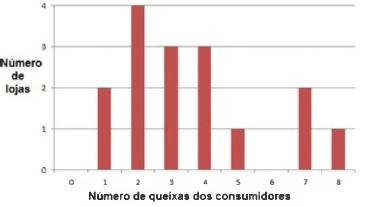
Figura 1: Gráfico do número de queixas por loja.
Baseando-se em sua análise, assinale a alternativa correta:
For the question read the text below:
People are getting poorer’: hunger and homelessness as Brazil crisis deepens
Unemployment and social instability threaten unwelcome return to the past in recession-hit country once seen as a model for developing economies.
It wasn’t yet 5am when Miriam Gomes drove up to Happy Little Angel, the social project she runs in the scruffy Cidade Nova neighbourhood of Rio de Janeiro, but the queue for her weekly food handout was already a hundred yards long.
Some had slept outside - those among Rio’s growing army of homeless people, or who lived too far away to get there by 6.30am, when those registered could start collecting a bag of vegetables, fruit, rice, beans, pasta, milk and biscuits, and a little chocolate.
These are some of the victims of a worsening problem in a country once praised for reducing poverty, but where the numbers of poor are climbing again.
Brazil has slumped into its worst recession for decades, with 14 million people unemployed.
There are a lot more people on the street,” said Gomes, 53, who bought the house where Little Happy Angel is based with an inheritance, and lives off her late father’s military pension.
Some of those Gomes helps benefit from a cash transfer scheme called the family allowance, but still struggle to make ends meet. Others are among the 1.1 million families the government removed from the programme last year for what it called “irregularities”.
Among the latter is Vera dos Santos, 43, who lost her job as a maid two and a half years ago, has three teenage children to feed, and recently had her allowance stopped. “My financial situation is difficult,” she said.
Brazil celebrated its removal from the UN hunger map in 2014. Now it is in danger, a new report warns, of being reinstated.
“If we don’t take the due providences, Brazil will go back to the hunger map,” said Francisco Menezes, an economist and one of the authors of a progress report on the 2030 sustainable development agenda, presented recently to the UN by a group of two dozen non-government groups and research institutes, and released in full later this month.
“People are getting poorer,” said Menezes.
That was supposed to be Brazil’s past. When leftwing leader Luiz Inácio Lula da Silva swept to power on a wave of popular support in 2002, he promised three meals a day to all Brazilians. During his eight years of rule, and a further four by his chosen successor, Dilma Rousseff, 36 million Brazilians escaped poverty with the help of acclaimed social policies like the family allowance.
Rising commodities prices and the feverish consumer spending of a new, lower-middle class contributed to a booming economy. Those living below the poverty line fell from 25% in 2004 to 8% in 2014, when Rousseff faced re-election, according to figures from the social policy centre at the Getúlio Vargas Foundation, a leading business school.
By then, though, the economy was already beginning to retract. Commodities prices fell when Rousseff secured a narrow win, with concern growing over her interventionist economic policy and soaring public spending.
By 2015, unemployment was climbing and Brazil had sunk into its deepest recession since the 1930s. The country was stripped of its investment grade. In 2016 Rousseff was impeached, ostensibly for breaking budget rules. But the process was driven by the recession and a vast corruption crisis at state-run oil company Petrobras in which many from Rousseff’s Workers’ party and its Congress allies were embroiled. By then, the number of Brazilians living in poverty had risen to an estimated 11%. “Without doubt, it is a regression,” said Marcelo Neri, director of the Vargas Foundation’s social policy centre.
Michel Temer, Rousseff’s former vice-president, took overand began cutting costs. Last December, a 20-year cap was introduced on public spending. Congress is debating reforms to Brazil’s generous pensions system. Liberal economists argue that without these reforms, Brazil will be unable to overcome its deficit and get back to growth.
The progress report argued that these austerity measures will increase poverty in Brazil and said the country should reduce other costs and adopt a fairer tax system (the highest tax rate in this deeply unequal country is 27.5%). Menezes calculated that, had the spending cap been in place in 2003, Brazil would have had 68% less to spend on social programmes between 2003 and 2015.
Meanwhile, the poor keep getting poorer. This was evident on a recent morning in a corner of Borel, a Rio favela where ramshackle wooden shacks without running water or sewage cling to a muddy hillside. Welington de Souza, a 39-year-old resident, said more homes are being built in the improvised, low-income community, where people work selling tin cans, plastic bottles and cardboard they pick off the street.
People are starting the same line of informal, cash-in-hand work, which they call “recycling”, in growing numbers. “Because of the unemployment, people are having to get by,” said De Souza, who lives with his pregnant partner Karla Santos, 19, and her son Carlos Eduardo, four, and did electrical and cleaning jobs before work dried up.
Santos’s sister, Edeane Silva, 24, lives next door with her partner Sérgio Conceição, 39, and their three young children. Their fridge has broken and water floods under the door when it rains, said Silva. Since her £101 a month family allowance was stopped, she has been “recycling” with Conceição, leaving her baby boy with her mother.
“Sometimes I think I need some meat on the table, and I don’t come home until I get it,” Conceição said. “I have to have faith.”
What Brazilians lack is faith that their politicians have any ability to resolve the mess the country is in and tackle its rising poverty. As graft scandals multiply, most are too busy trying to save themselves. Earlier this year, investigations were authorised into eight of Temer’s ministers. On 2 August, the lower house of Congress will vote on whether to authorise a trial of the president himself on corruption charges.
Temer’s centrist PMDB party has run Rio’s state government since 2007. Its former governor Sérgio Cabral is in jail, accused of pocketing substantial bribes, while the state government is broke and months in arrears with salaries. Unions have been organising food donations for hungry staff.
All of which has fed into an increasingly chaotic environment, where new legislation threatens advances in food security, as well as undermining health, education and social security services, the progress report warned.
“There is a generalised lack of confidence in relation to the political class, the justice system, and the executive and legislative powers,” said the report’s authors, adding that “the most vulnerable populations” were among “the most prejudiced”.
People are getting poorer’: hunger and homelessness as Brazil
crisis deepens. The Guardian, 2017. Disponível em: <https://www. theauardian.com/alobal-development/2017/iul/19/people-aettinapoorer-hunaer-homelessness-brazil-crisis>
For the question read the text below:
People are getting poorer’: hunger and homelessness as Brazil crisis deepens
Unemployment and social instability threaten unwelcome return to the past in recession-hit country once seen as a model for developing economies.
It wasn’t yet 5am when Miriam Gomes drove up to Happy Little Angel, the social project she runs in the scruffy Cidade Nova neighbourhood of Rio de Janeiro, but the queue for her weekly food handout was already a hundred yards long.
Some had slept outside - those among Rio’s growing army of homeless people, or who lived too far away to get there by 6.30am, when those registered could start collecting a bag of vegetables, fruit, rice, beans, pasta, milk and biscuits, and a little chocolate.
These are some of the victims of a worsening problem in a country once praised for reducing poverty, but where the numbers of poor are climbing again.
Brazil has slumped into its worst recession for decades, with 14 million people unemployed.
There are a lot more people on the street,” said Gomes, 53, who bought the house where Little Happy Angel is based with an inheritance, and lives off her late father’s military pension.
Some of those Gomes helps benefit from a cash transfer scheme called the family allowance, but still struggle to make ends meet. Others are among the 1.1 million families the government removed from the programme last year for what it called “irregularities”.
Among the latter is Vera dos Santos, 43, who lost her job as a maid two and a half years ago, has three teenage children to feed, and recently had her allowance stopped. “My financial situation is difficult,” she said.
Brazil celebrated its removal from the UN hunger map in 2014. Now it is in danger, a new report warns, of being reinstated.
“If we don’t take the due providences, Brazil will go back to the hunger map,” said Francisco Menezes, an economist and one of the authors of a progress report on the 2030 sustainable development agenda, presented recently to the UN by a group of two dozen non-government groups and research institutes, and released in full later this month.
“People are getting poorer,” said Menezes.
That was supposed to be Brazil’s past. When leftwing leader Luiz Inácio Lula da Silva swept to power on a wave of popular support in 2002, he promised three meals a day to all Brazilians. During his eight years of rule, and a further four by his chosen successor, Dilma Rousseff, 36 million Brazilians escaped poverty with the help of acclaimed social policies like the family allowance.
Rising commodities prices and the feverish consumer spending of a new, lower-middle class contributed to a booming economy. Those living below the poverty line fell from 25% in 2004 to 8% in 2014, when Rousseff faced re-election, according to figures from the social policy centre at the Getúlio Vargas Foundation, a leading business school.
By then, though, the economy was already beginning to retract. Commodities prices fell when Rousseff secured a narrow win, with concern growing over her interventionist economic policy and soaring public spending.
By 2015, unemployment was climbing and Brazil had sunk into its deepest recession since the 1930s. The country was stripped of its investment grade. In 2016 Rousseff was impeached, ostensibly for breaking budget rules. But the process was driven by the recession and a vast corruption crisis at state-run oil company Petrobras in which many from Rousseff’s Workers’ party and its Congress allies were embroiled. By then, the number of Brazilians living in poverty had risen to an estimated 11%. “Without doubt, it is a regression,” said Marcelo Neri, director of the Vargas Foundation’s social policy centre.
Michel Temer, Rousseff’s former vice-president, took overand began cutting costs. Last December, a 20-year cap was introduced on public spending. Congress is debating reforms to Brazil’s generous pensions system. Liberal economists argue that without these reforms, Brazil will be unable to overcome its deficit and get back to growth.
The progress report argued that these austerity measures will increase poverty in Brazil and said the country should reduce other costs and adopt a fairer tax system (the highest tax rate in this deeply unequal country is 27.5%). Menezes calculated that, had the spending cap been in place in 2003, Brazil would have had 68% less to spend on social programmes between 2003 and 2015.
Meanwhile, the poor keep getting poorer. This was evident on a recent morning in a corner of Borel, a Rio favela where ramshackle wooden shacks without running water or sewage cling to a muddy hillside. Welington de Souza, a 39-year-old resident, said more homes are being built in the improvised, low-income community, where people work selling tin cans, plastic bottles and cardboard they pick off the street.
People are starting the same line of informal, cash-in-hand work, which they call “recycling”, in growing numbers. “Because of the unemployment, people are having to get by,” said De Souza, who lives with his pregnant partner Karla Santos, 19, and her son Carlos Eduardo, four, and did electrical and cleaning jobs before work dried up.
Santos’s sister, Edeane Silva, 24, lives next door with her partner Sérgio Conceição, 39, and their three young children. Their fridge has broken and water floods under the door when it rains, said Silva. Since her £101 a month family allowance was stopped, she has been “recycling” with Conceição, leaving her baby boy with her mother.
“Sometimes I think I need some meat on the table, and I don’t come home until I get it,” Conceição said. “I have to have faith.”
What Brazilians lack is faith that their politicians have any ability to resolve the mess the country is in and tackle its rising poverty. As graft scandals multiply, most are too busy trying to save themselves. Earlier this year, investigations were authorised into eight of Temer’s ministers. On 2 August, the lower house of Congress will vote on whether to authorise a trial of the president himself on corruption charges.
Temer’s centrist PMDB party has run Rio’s state government since 2007. Its former governor Sérgio Cabral is in jail, accused of pocketing substantial bribes, while the state government is broke and months in arrears with salaries. Unions have been organising food donations for hungry staff.
All of which has fed into an increasingly chaotic environment, where new legislation threatens advances in food security, as well as undermining health, education and social security services, the progress report warned.
“There is a generalised lack of confidence in relation to the political class, the justice system, and the executive and legislative powers,” said the report’s authors, adding that “the most vulnerable populations” were among “the most prejudiced”.
People are getting poorer’: hunger and homelessness as Brazil
crisis deepens. The Guardian, 2017. Disponível em: <https://www. theauardian.com/alobal-development/2017/iul/19/people-aettinapoorer-hunaer-homelessness-brazil-crisis>
For the question read the text below:
People are getting poorer’: hunger and homelessness as Brazil crisis deepens
Unemployment and social instability threaten unwelcome return to the past in recession-hit country once seen as a model for developing economies.
It wasn’t yet 5am when Miriam Gomes drove up to Happy Little Angel, the social project she runs in the scruffy Cidade Nova neighbourhood of Rio de Janeiro, but the queue for her weekly food handout was already a hundred yards long.
Some had slept outside - those among Rio’s growing army of homeless people, or who lived too far away to get there by 6.30am, when those registered could start collecting a bag of vegetables, fruit, rice, beans, pasta, milk and biscuits, and a little chocolate.
These are some of the victims of a worsening problem in a country once praised for reducing poverty, but where the numbers of poor are climbing again.
Brazil has slumped into its worst recession for decades, with 14 million people unemployed.
There are a lot more people on the street,” said Gomes, 53, who bought the house where Little Happy Angel is based with an inheritance, and lives off her late father’s military pension.
Some of those Gomes helps benefit from a cash transfer scheme called the family allowance, but still struggle to make ends meet. Others are among the 1.1 million families the government removed from the programme last year for what it called “irregularities”.
Among the latter is Vera dos Santos, 43, who lost her job as a maid two and a half years ago, has three teenage children to feed, and recently had her allowance stopped. “My financial situation is difficult,” she said.
Brazil celebrated its removal from the UN hunger map in 2014. Now it is in danger, a new report warns, of being reinstated.
“If we don’t take the due providences, Brazil will go back to the hunger map,” said Francisco Menezes, an economist and one of the authors of a progress report on the 2030 sustainable development agenda, presented recently to the UN by a group of two dozen non-government groups and research institutes, and released in full later this month.
“People are getting poorer,” said Menezes.
That was supposed to be Brazil’s past. When leftwing leader Luiz Inácio Lula da Silva swept to power on a wave of popular support in 2002, he promised three meals a day to all Brazilians. During his eight years of rule, and a further four by his chosen successor, Dilma Rousseff, 36 million Brazilians escaped poverty with the help of acclaimed social policies like the family allowance.
Rising commodities prices and the feverish consumer spending of a new, lower-middle class contributed to a booming economy. Those living below the poverty line fell from 25% in 2004 to 8% in 2014, when Rousseff faced re-election, according to figures from the social policy centre at the Getúlio Vargas Foundation, a leading business school.
By then, though, the economy was already beginning to retract. Commodities prices fell when Rousseff secured a narrow win, with concern growing over her interventionist economic policy and soaring public spending.
By 2015, unemployment was climbing and Brazil had sunk into its deepest recession since the 1930s. The country was stripped of its investment grade. In 2016 Rousseff was impeached, ostensibly for breaking budget rules. But the process was driven by the recession and a vast corruption crisis at state-run oil company Petrobras in which many from Rousseff’s Workers’ party and its Congress allies were embroiled. By then, the number of Brazilians living in poverty had risen to an estimated 11%. “Without doubt, it is a regression,” said Marcelo Neri, director of the Vargas Foundation’s social policy centre.
Michel Temer, Rousseff’s former vice-president, took overand began cutting costs. Last December, a 20-year cap was introduced on public spending. Congress is debating reforms to Brazil’s generous pensions system. Liberal economists argue that without these reforms, Brazil will be unable to overcome its deficit and get back to growth.
The progress report argued that these austerity measures will increase poverty in Brazil and said the country should reduce other costs and adopt a fairer tax system (the highest tax rate in this deeply unequal country is 27.5%). Menezes calculated that, had the spending cap been in place in 2003, Brazil would have had 68% less to spend on social programmes between 2003 and 2015.
Meanwhile, the poor keep getting poorer. This was evident on a recent morning in a corner of Borel, a Rio favela where ramshackle wooden shacks without running water or sewage cling to a muddy hillside. Welington de Souza, a 39-year-old resident, said more homes are being built in the improvised, low-income community, where people work selling tin cans, plastic bottles and cardboard they pick off the street.
People are starting the same line of informal, cash-in-hand work, which they call “recycling”, in growing numbers. “Because of the unemployment, people are having to get by,” said De Souza, who lives with his pregnant partner Karla Santos, 19, and her son Carlos Eduardo, four, and did electrical and cleaning jobs before work dried up.
Santos’s sister, Edeane Silva, 24, lives next door with her partner Sérgio Conceição, 39, and their three young children. Their fridge has broken and water floods under the door when it rains, said Silva. Since her £101 a month family allowance was stopped, she has been “recycling” with Conceição, leaving her baby boy with her mother.
“Sometimes I think I need some meat on the table, and I don’t come home until I get it,” Conceição said. “I have to have faith.”
What Brazilians lack is faith that their politicians have any ability to resolve the mess the country is in and tackle its rising poverty. As graft scandals multiply, most are too busy trying to save themselves. Earlier this year, investigations were authorised into eight of Temer’s ministers. On 2 August, the lower house of Congress will vote on whether to authorise a trial of the president himself on corruption charges.
Temer’s centrist PMDB party has run Rio’s state government since 2007. Its former governor Sérgio Cabral is in jail, accused of pocketing substantial bribes, while the state government is broke and months in arrears with salaries. Unions have been organising food donations for hungry staff.
All of which has fed into an increasingly chaotic environment, where new legislation threatens advances in food security, as well as undermining health, education and social security services, the progress report warned.
“There is a generalised lack of confidence in relation to the political class, the justice system, and the executive and legislative powers,” said the report’s authors, adding that “the most vulnerable populations” were among “the most prejudiced”.
People are getting poorer’: hunger and homelessness as Brazil
crisis deepens. The Guardian, 2017. Disponível em: <https://www. theauardian.com/alobal-development/2017/iul/19/people-aettinapoorer-hunaer-homelessness-brazil-crisis>
For the question read the text below:
People are getting poorer’: hunger and homelessness as Brazil crisis deepens
Unemployment and social instability threaten unwelcome return to the past in recession-hit country once seen as a model for developing economies.
It wasn’t yet 5am when Miriam Gomes drove up to Happy Little Angel, the social project she runs in the scruffy Cidade Nova neighbourhood of Rio de Janeiro, but the queue for her weekly food handout was already a hundred yards long.
Some had slept outside - those among Rio’s growing army of homeless people, or who lived too far away to get there by 6.30am, when those registered could start collecting a bag of vegetables, fruit, rice, beans, pasta, milk and biscuits, and a little chocolate.
These are some of the victims of a worsening problem in a country once praised for reducing poverty, but where the numbers of poor are climbing again.
Brazil has slumped into its worst recession for decades, with 14 million people unemployed.
There are a lot more people on the street,” said Gomes, 53, who bought the house where Little Happy Angel is based with an inheritance, and lives off her late father’s military pension.
Some of those Gomes helps benefit from a cash transfer scheme called the family allowance, but still struggle to make ends meet. Others are among the 1.1 million families the government removed from the programme last year for what it called “irregularities”.
Among the latter is Vera dos Santos, 43, who lost her job as a maid two and a half years ago, has three teenage children to feed, and recently had her allowance stopped. “My financial situation is difficult,” she said.
Brazil celebrated its removal from the UN hunger map in 2014. Now it is in danger, a new report warns, of being reinstated.
“If we don’t take the due providences, Brazil will go back to the hunger map,” said Francisco Menezes, an economist and one of the authors of a progress report on the 2030 sustainable development agenda, presented recently to the UN by a group of two dozen non-government groups and research institutes, and released in full later this month.
“People are getting poorer,” said Menezes.
That was supposed to be Brazil’s past. When leftwing leader Luiz Inácio Lula da Silva swept to power on a wave of popular support in 2002, he promised three meals a day to all Brazilians. During his eight years of rule, and a further four by his chosen successor, Dilma Rousseff, 36 million Brazilians escaped poverty with the help of acclaimed social policies like the family allowance.
Rising commodities prices and the feverish consumer spending of a new, lower-middle class contributed to a booming economy. Those living below the poverty line fell from 25% in 2004 to 8% in 2014, when Rousseff faced re-election, according to figures from the social policy centre at the Getúlio Vargas Foundation, a leading business school.
By then, though, the economy was already beginning to retract. Commodities prices fell when Rousseff secured a narrow win, with concern growing over her interventionist economic policy and soaring public spending.
By 2015, unemployment was climbing and Brazil had sunk into its deepest recession since the 1930s. The country was stripped of its investment grade. In 2016 Rousseff was impeached, ostensibly for breaking budget rules. But the process was driven by the recession and a vast corruption crisis at state-run oil company Petrobras in which many from Rousseff’s Workers’ party and its Congress allies were embroiled. By then, the number of Brazilians living in poverty had risen to an estimated 11%. “Without doubt, it is a regression,” said Marcelo Neri, director of the Vargas Foundation’s social policy centre.
Michel Temer, Rousseff’s former vice-president, took overand began cutting costs. Last December, a 20-year cap was introduced on public spending. Congress is debating reforms to Brazil’s generous pensions system. Liberal economists argue that without these reforms, Brazil will be unable to overcome its deficit and get back to growth.
The progress report argued that these austerity measures will increase poverty in Brazil and said the country should reduce other costs and adopt a fairer tax system (the highest tax rate in this deeply unequal country is 27.5%). Menezes calculated that, had the spending cap been in place in 2003, Brazil would have had 68% less to spend on social programmes between 2003 and 2015.
Meanwhile, the poor keep getting poorer. This was evident on a recent morning in a corner of Borel, a Rio favela where ramshackle wooden shacks without running water or sewage cling to a muddy hillside. Welington de Souza, a 39-year-old resident, said more homes are being built in the improvised, low-income community, where people work selling tin cans, plastic bottles and cardboard they pick off the street.
People are starting the same line of informal, cash-in-hand work, which they call “recycling”, in growing numbers. “Because of the unemployment, people are having to get by,” said De Souza, who lives with his pregnant partner Karla Santos, 19, and her son Carlos Eduardo, four, and did electrical and cleaning jobs before work dried up.
Santos’s sister, Edeane Silva, 24, lives next door with her partner Sérgio Conceição, 39, and their three young children. Their fridge has broken and water floods under the door when it rains, said Silva. Since her £101 a month family allowance was stopped, she has been “recycling” with Conceição, leaving her baby boy with her mother.
“Sometimes I think I need some meat on the table, and I don’t come home until I get it,” Conceição said. “I have to have faith.”
What Brazilians lack is faith that their politicians have any ability to resolve the mess the country is in and tackle its rising poverty. As graft scandals multiply, most are too busy trying to save themselves. Earlier this year, investigations were authorised into eight of Temer’s ministers. On 2 August, the lower house of Congress will vote on whether to authorise a trial of the president himself on corruption charges.
Temer’s centrist PMDB party has run Rio’s state government since 2007. Its former governor Sérgio Cabral is in jail, accused of pocketing substantial bribes, while the state government is broke and months in arrears with salaries. Unions have been organising food donations for hungry staff.
All of which has fed into an increasingly chaotic environment, where new legislation threatens advances in food security, as well as undermining health, education and social security services, the progress report warned.
“There is a generalised lack of confidence in relation to the political class, the justice system, and the executive and legislative powers,” said the report’s authors, adding that “the most vulnerable populations” were among “the most prejudiced”.
People are getting poorer’: hunger and homelessness as Brazil
crisis deepens. The Guardian, 2017. Disponível em: <https://www. theauardian.com/alobal-development/2017/iul/19/people-aettinapoorer-hunaer-homelessness-brazil-crisis>
For the question read the text below:
People are getting poorer’: hunger and homelessness as Brazil crisis deepens
Unemployment and social instability threaten unwelcome return to the past in recession-hit country once seen as a model for developing economies.
It wasn’t yet 5am when Miriam Gomes drove up to Happy Little Angel, the social project she runs in the scruffy Cidade Nova neighbourhood of Rio de Janeiro, but the queue for her weekly food handout was already a hundred yards long.
Some had slept outside - those among Rio’s growing army of homeless people, or who lived too far away to get there by 6.30am, when those registered could start collecting a bag of vegetables, fruit, rice, beans, pasta, milk and biscuits, and a little chocolate.
These are some of the victims of a worsening problem in a country once praised for reducing poverty, but where the numbers of poor are climbing again.
Brazil has slumped into its worst recession for decades, with 14 million people unemployed.
There are a lot more people on the street,” said Gomes, 53, who bought the house where Little Happy Angel is based with an inheritance, and lives off her late father’s military pension.
Some of those Gomes helps benefit from a cash transfer scheme called the family allowance, but still struggle to make ends meet. Others are among the 1.1 million families the government removed from the programme last year for what it called “irregularities”.
Among the latter is Vera dos Santos, 43, who lost her job as a maid two and a half years ago, has three teenage children to feed, and recently had her allowance stopped. “My financial situation is difficult,” she said.
Brazil celebrated its removal from the UN hunger map in 2014. Now it is in danger, a new report warns, of being reinstated.
“If we don’t take the due providences, Brazil will go back to the hunger map,” said Francisco Menezes, an economist and one of the authors of a progress report on the 2030 sustainable development agenda, presented recently to the UN by a group of two dozen non-government groups and research institutes, and released in full later this month.
“People are getting poorer,” said Menezes.
That was supposed to be Brazil’s past. When leftwing leader Luiz Inácio Lula da Silva swept to power on a wave of popular support in 2002, he promised three meals a day to all Brazilians. During his eight years of rule, and a further four by his chosen successor, Dilma Rousseff, 36 million Brazilians escaped poverty with the help of acclaimed social policies like the family allowance.
Rising commodities prices and the feverish consumer spending of a new, lower-middle class contributed to a booming economy. Those living below the poverty line fell from 25% in 2004 to 8% in 2014, when Rousseff faced re-election, according to figures from the social policy centre at the Getúlio Vargas Foundation, a leading business school.
By then, though, the economy was already beginning to retract. Commodities prices fell when Rousseff secured a narrow win, with concern growing over her interventionist economic policy and soaring public spending.
By 2015, unemployment was climbing and Brazil had sunk into its deepest recession since the 1930s. The country was stripped of its investment grade. In 2016 Rousseff was impeached, ostensibly for breaking budget rules. But the process was driven by the recession and a vast corruption crisis at state-run oil company Petrobras in which many from Rousseff’s Workers’ party and its Congress allies were embroiled. By then, the number of Brazilians living in poverty had risen to an estimated 11%. “Without doubt, it is a regression,” said Marcelo Neri, director of the Vargas Foundation’s social policy centre.
Michel Temer, Rousseff’s former vice-president, took overand began cutting costs. Last December, a 20-year cap was introduced on public spending. Congress is debating reforms to Brazil’s generous pensions system. Liberal economists argue that without these reforms, Brazil will be unable to overcome its deficit and get back to growth.
The progress report argued that these austerity measures will increase poverty in Brazil and said the country should reduce other costs and adopt a fairer tax system (the highest tax rate in this deeply unequal country is 27.5%). Menezes calculated that, had the spending cap been in place in 2003, Brazil would have had 68% less to spend on social programmes between 2003 and 2015.
Meanwhile, the poor keep getting poorer. This was evident on a recent morning in a corner of Borel, a Rio favela where ramshackle wooden shacks without running water or sewage cling to a muddy hillside. Welington de Souza, a 39-year-old resident, said more homes are being built in the improvised, low-income community, where people work selling tin cans, plastic bottles and cardboard they pick off the street.
People are starting the same line of informal, cash-in-hand work, which they call “recycling”, in growing numbers. “Because of the unemployment, people are having to get by,” said De Souza, who lives with his pregnant partner Karla Santos, 19, and her son Carlos Eduardo, four, and did electrical and cleaning jobs before work dried up.
Santos’s sister, Edeane Silva, 24, lives next door with her partner Sérgio Conceição, 39, and their three young children. Their fridge has broken and water floods under the door when it rains, said Silva. Since her £101 a month family allowance was stopped, she has been “recycling” with Conceição, leaving her baby boy with her mother.
“Sometimes I think I need some meat on the table, and I don’t come home until I get it,” Conceição said. “I have to have faith.”
What Brazilians lack is faith that their politicians have any ability to resolve the mess the country is in and tackle its rising poverty. As graft scandals multiply, most are too busy trying to save themselves. Earlier this year, investigations were authorised into eight of Temer’s ministers. On 2 August, the lower house of Congress will vote on whether to authorise a trial of the president himself on corruption charges.
Temer’s centrist PMDB party has run Rio’s state government since 2007. Its former governor Sérgio Cabral is in jail, accused of pocketing substantial bribes, while the state government is broke and months in arrears with salaries. Unions have been organising food donations for hungry staff.
All of which has fed into an increasingly chaotic environment, where new legislation threatens advances in food security, as well as undermining health, education and social security services, the progress report warned.
“There is a generalised lack of confidence in relation to the political class, the justice system, and the executive and legislative powers,” said the report’s authors, adding that “the most vulnerable populations” were among “the most prejudiced”.
People are getting poorer’: hunger and homelessness as Brazil
crisis deepens. The Guardian, 2017. Disponível em: <https://www. theauardian.com/alobal-development/2017/iul/19/people-aettinapoorer-hunaer-homelessness-brazil-crisis>

 Conheça nossos planos