Selecionar segmento
Estude com questões de diferentes segmentos
Atenção: Isso limpará todos os campos já preenchidos no filtro!
Foram encontradas 2.912 questões
Resolva questões gratuitamente!
Junte-se a mais de 4 milhões de concurseiros!


Ano: 2026
Banca:
FGV
Órgão:
Prefeitura de Salvador - BA
Prova:
FGV - 2026 - Prefeitura de Salvador - BA - Coordenador Pedaógico |
Q4350656
Pedagogia
De acordo com a Base Nacional Comum Curricular (BNCC), nos
Anos Finais do Ensino Fundamental, “o adolescente/jovem
participa com maior criticidade de situações comunicativas
diversificadas, interagindo com um número de interlocutores cada
vez mais amplo. Esse cenário impõe à escola o desafio pedagógico
de aproximar e articular os múltiplos conhecimentos das
diferentes áreas.
Diante desse contexto, uma professora de Artes do 6º ano procura a coordenação pedagógica relatando o interesse dos estudantes por diferentes linguagens (música, dança, audiovisual e redes sociais) e propõe incorporar, em algumas aulas, componentes das práticas de linguagem trabalhados na Língua Portuguesa, como forma de ampliar as experiências comunicativas da turma.
Considerando as orientações da BNCC para a área de Linguagens nessa etapa de ensino, a orientação do coordenador pedagógico que valida e qualifica pedagogicamente a proposta da docente é
Diante desse contexto, uma professora de Artes do 6º ano procura a coordenação pedagógica relatando o interesse dos estudantes por diferentes linguagens (música, dança, audiovisual e redes sociais) e propõe incorporar, em algumas aulas, componentes das práticas de linguagem trabalhados na Língua Portuguesa, como forma de ampliar as experiências comunicativas da turma.
Considerando as orientações da BNCC para a área de Linguagens nessa etapa de ensino, a orientação do coordenador pedagógico que valida e qualifica pedagogicamente a proposta da docente é
Ano: 2026
Banca:
FGV
Órgão:
Prefeitura de Salvador - BA
Prova:
FGV - 2026 - Prefeitura de Salvador - BA - Coordenador Pedaógico |
Q4350655
Pedagogia
No âmbito da gestão democrática da escola, cabe à coordenação
pedagógica contribuir para que as garantias aos estudantes da
Educação Especial, estabelecidas pela LDB aos sistemas de ensino,
sejam concretizadas.
Considerando a atuação desse profissional na promoção de uma cultura escolar inclusiva, assinale a opção que corresponde ao trabalho que o coordenador pedagógico realiza em relação à escolarização dos estudantes públicos-alvo da Educação Especial.
Considerando a atuação desse profissional na promoção de uma cultura escolar inclusiva, assinale a opção que corresponde ao trabalho que o coordenador pedagógico realiza em relação à escolarização dos estudantes públicos-alvo da Educação Especial.
Ano: 2026
Banca:
FGV
Órgão:
Prefeitura de Salvador - BA
Prova:
FGV - 2026 - Prefeitura de Salvador - BA - Coordenador Pedaógico |
Q4350654
Pedagogia
Uma escola da Rede Municipal de Salvador adota o Ambiente
Virtual de Aprendizagem (AVA) como recurso de apoio para as
atividades dos Anos Finais do Ensino Fundamental. Considerando
a necessidade de assegurar a intencionalidade pedagógica e a
integração das Tecnologias Digitais de Informação e Comunicação
(TDIC) ao processo pedagógico, o coordenador deve orientar os
professores sobre o uso da plataforma no processo de ensino e
aprendizagem.
À luz das diretrizes curriculares nacionais e locais, assinale a opção que expressa a conduta mais adequada.
À luz das diretrizes curriculares nacionais e locais, assinale a opção que expressa a conduta mais adequada.
Ano: 2026
Banca:
FGV
Órgão:
Prefeitura de Salvador - BA
Prova:
FGV - 2026 - Prefeitura de Salvador - BA - Coordenador Pedaógico |
Q4350653
Pedagogia
Uma escola da Rede Municipal de Salvador, situada em bairro
periférico, inicia a reelaboração do seu Projeto Político-Pedagógico
(PPP). O diagnóstico institucional revela altos índices de evasão e
defasagem de aprendizagem na transição dos Anos Iniciais para os
Anos Finais do Ensino Fundamental, além de baixa adesão das
famílias aos formatos tradicionais de reunião escolar.
A equipe gestora propõe que o PPP seja elaborado pela coordenação pedagógica e pelos professores, com base em dados oficiais, para garantir agilidade e alinhamento técnico às diretrizes da SMED. Estudantes do grêmio, famílias organizadas e lideranças comunitárias reivindicam participação na construção do PPP e propõem novos formatos de escuta, como horários alternativos e assembleias no território.
Considerando o princípio da gestão democrática e o compromisso com a qualidade social da educação, assinale a conduta mais adequada a ser adotada pela coordenação pedagógica.
A equipe gestora propõe que o PPP seja elaborado pela coordenação pedagógica e pelos professores, com base em dados oficiais, para garantir agilidade e alinhamento técnico às diretrizes da SMED. Estudantes do grêmio, famílias organizadas e lideranças comunitárias reivindicam participação na construção do PPP e propõem novos formatos de escuta, como horários alternativos e assembleias no território.
Considerando o princípio da gestão democrática e o compromisso com a qualidade social da educação, assinale a conduta mais adequada a ser adotada pela coordenação pedagógica.
Ano: 2026
Banca:
FGV
Órgão:
Prefeitura de Salvador - BA
Prova:
FGV - 2026 - Prefeitura de Salvador - BA - Coordenador Pedaógico |
Q4350652
Pedagogia
A tabela a seguir apresenta os resultados do IDEB 2023 para o
Brasil, a Bahia e Salvador, segundo a etapa do Ensino Fundamental.
IDEB 2023 por recorte e etapa de ensino
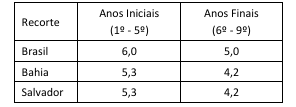
Fonte: IDEB 2023 (INEP), dados disponibilizados pelo QEdu/Iede.
Considerando os dados apresentados, analise as afirmativas a seguir e assinale (V) para a verdadeira e (F) para falsa.
( ) A queda no IDEB na transição para os Anos Finais está diretamente relacionada ao aumento do abandono escolar e da reprovação nessa etapa, fatores que impactam negativamente o cálculo do fluxo escolar.
( ) Como o IDEB é calculado somando-se o desempenho nas provas (SAEB) à taxa de reprovação, o aumento do abandono escolar acaba elevando a nota final devido ao ajuste do fluxo pedagógico.
( ) Os dados do IDEB indicam que a Bahia e Salvador alcançaram a mesma nota nos Anos Finais, superando a média nacional devido à padronização dos currículos escolares da região.
As afirmativas são, respectivamente,
IDEB 2023 por recorte e etapa de ensino
Fonte: IDEB 2023 (INEP), dados disponibilizados pelo QEdu/Iede.
Considerando os dados apresentados, analise as afirmativas a seguir e assinale (V) para a verdadeira e (F) para falsa.
( ) A queda no IDEB na transição para os Anos Finais está diretamente relacionada ao aumento do abandono escolar e da reprovação nessa etapa, fatores que impactam negativamente o cálculo do fluxo escolar.
( ) Como o IDEB é calculado somando-se o desempenho nas provas (SAEB) à taxa de reprovação, o aumento do abandono escolar acaba elevando a nota final devido ao ajuste do fluxo pedagógico.
( ) Os dados do IDEB indicam que a Bahia e Salvador alcançaram a mesma nota nos Anos Finais, superando a média nacional devido à padronização dos currículos escolares da região.
As afirmativas são, respectivamente,
Ano: 2026
Banca:
FGV
Órgão:
Prefeitura de Salvador - BA
Prova:
FGV - 2026 - Prefeitura de Salvador - BA - Coordenador Pedaógico |
Q4350651
Pedagogia
Estudantes do 7º ano estão fortemente engajados com o
movimento hip-hop, por meio de apresentações de rap e dança e
discutem letras de músicas sobre racismo, desigualdade e
identidade. A coordenadora pedagógica propõe que professores
de Arte, Língua Portuguesa, História e Matemática desenvolvam o
projeto interdisciplinar "Hip-Hop: arte, cultura e resistência na
escola", alinhado às diretrizes da política educacional para as
relações étnico-raciais da Rede Municipal de Salvador e à
competência geral Repertório Cultural da BNCC.
No entanto, a escola participa do Programa Educar pra Valer (SAEV) e se prepara para o PROSA (avaliação municipal anual) e o SAEB (avaliação federal bienal). Diante disso, a diretora solicita que se priorize o tempo didático de Língua Portuguesa e Matemática e se reduzam os projetos interdisciplinares.
Considerando o Referencial Curricular Municipal de Salvador e a perspectiva crítico-dialética, antirracista e decolonial que o fundamenta, assinale a opção que descreve a organização do trabalho pedagógico mais adequada da coordenadora diante desse dilema.
No entanto, a escola participa do Programa Educar pra Valer (SAEV) e se prepara para o PROSA (avaliação municipal anual) e o SAEB (avaliação federal bienal). Diante disso, a diretora solicita que se priorize o tempo didático de Língua Portuguesa e Matemática e se reduzam os projetos interdisciplinares.
Considerando o Referencial Curricular Municipal de Salvador e a perspectiva crítico-dialética, antirracista e decolonial que o fundamenta, assinale a opção que descreve a organização do trabalho pedagógico mais adequada da coordenadora diante desse dilema.
Ano: 2026
Banca:
FGV
Órgão:
Prefeitura de Salvador - BA
Prova:
FGV - 2026 - Prefeitura de Salvador - BA - Coordenador Pedaógico |
Q4350650
Pedagogia
Lynn Alves, Marcelle Minho e Marcelo Diniz (2014) defendem que
a gamificação deve construir "trilhas que vão além da ênfase na
recompensa". Nessa perspectiva, analise a proposta de
gamificação do material "(Particip)Ação Cidadã" (9º ano, Programa
Nossa Rede):
Em narrativa de contato com alienígenas, a turma decifra mensagens-enigma sobre os conteúdos das sequências didáticas (democracia, cidadania, participação social) e produz coletivamente uma mensagem de paz aos ETs.
A proposta apresenta características de gamificação porque
Em narrativa de contato com alienígenas, a turma decifra mensagens-enigma sobre os conteúdos das sequências didáticas (democracia, cidadania, participação social) e produz coletivamente uma mensagem de paz aos ETs.
A proposta apresenta características de gamificação porque
Ano: 2026
Banca:
FGV
Órgão:
Prefeitura de Salvador - BA
Prova:
FGV - 2026 - Prefeitura de Salvador - BA - Coordenador Pedaógico |
Q4350649
Pedagogia
Analise a seguinte situação hipotética:
A Escola Municipal Tereza Batista, em Salvador, enfrenta episódios recorrentes de conflitos entre estudantes do 7º e 8º anos, com agressões verbais, discriminação territorial e baixa adesão às atividades escolares. A coordenadora pedagógica, ao tomar conhecimento da situação, precisa definir as primeiras ações a serem realizadas.
Considerando as atribuições do coordenador pedagógico e os princípios da gestão democrática, da cultura de paz e do desenvolvimento de competências socioemocionais, assinale a conduta mais adequada para essa profissional.
Ano: 2026
Banca:
FGV
Órgão:
Prefeitura de Salvador - BA
Prova:
FGV - 2026 - Prefeitura de Salvador - BA - Coordenador Pedaógico |
Q4350648
Pedagogia
A Base Nacional Comum Curricular (BRASIL, 2018) estabelece uma
articulação direta entre protagonismo estudantil e projeto de vida
ao longo de toda a Educação Básica: "a escola pode contribuir para
o delineamento do projeto de vida dos estudantes, ao estabelecer
uma articulação não somente com os anseios desses jovens em
relação ao seu futuro, como também com a continuidade dos
estudos no Ensino Médio. Esse processo de reflexão sobre o que
cada jovem quer ser no futuro, e de planejamento de ações para
construir esse futuro, pode representar mais uma possibilidade de
desenvolvimento pessoal e social."
Considerando a relação estabelecida pela BNCC entre protagonismo estudantil e construção do projeto de vida, assinale a afirmativa correta.
Considerando a relação estabelecida pela BNCC entre protagonismo estudantil e construção do projeto de vida, assinale a afirmativa correta.
Ano: 2026
Banca:
FGV
Órgão:
Prefeitura de Salvador - BA
Prova:
FGV - 2026 - Prefeitura de Salvador - BA - Coordenador Pedaógico |
Q4350647
Direito da Criança e do Adolescente - Estatuto da Criança e do Adolescente (ECA) - Lei nº 8.069 de 1990
A campanha "Maio Laranja", instituída pela Lei nº 14.432/2022 em
âmbito nacional, é implementada pela Prefeitura de Salvador
desde 2023, com ações em diversos espaços públicos. Em 2026,
por meio da Secretaria Municipal de Políticas para Mulheres,
Infância e Juventude (SPMJ), e em parceria com o Esporte Clube
Bahia SAF, ocorreu uma dessas ações para promover atividades
formativas, como rodas de conversa sobre direitos, deveres e
proteção no ambiente digital, com atletas das divisões de base.
A iniciativa "Maio Laranja" é uma ação que atende:
I. ao princípio de que a adolescência é uma construção social e cultural, ao promover a reflexão e o engajamento em territórios frequentados por adolescentes, como os ambientes esportivos;
II. ao fortalecimento das ações de enfrentamento aos crimes contra a dignidade sexual no ambiente esportivo, considerando os novos riscos trazidos pelos avanços da tecnologia e o uso precoce da internet;
III. à restrição do acesso de adolescentes às plataformas digitais como principal medida de proteção no ambiente digital, cabendo exclusivamente às famílias a responsabilidade pela prevenção das violências.
Está correto o que se afirma em
I. ao princípio de que a adolescência é uma construção social e cultural, ao promover a reflexão e o engajamento em territórios frequentados por adolescentes, como os ambientes esportivos;
II. ao fortalecimento das ações de enfrentamento aos crimes contra a dignidade sexual no ambiente esportivo, considerando os novos riscos trazidos pelos avanços da tecnologia e o uso precoce da internet;
III. à restrição do acesso de adolescentes às plataformas digitais como principal medida de proteção no ambiente digital, cabendo exclusivamente às famílias a responsabilidade pela prevenção das violências.
Está correto o que se afirma em
Ano: 2026
Banca:
FGV
Órgão:
Prefeitura de Salvador - BA
Prova:
FGV - 2026 - Prefeitura de Salvador - BA - Coordenador Pedaógico |
Q4350646
Direito Ambiental
A proteção patrimonial dos terreiros de religiões de matriz africana
no Brasil mobiliza instrumentos de diferentes esferas federativas.
Com relação ao tema, analise as afirmativas a seguir e assinale (V) para verdadeira e (F) para falsa.
( ) O Terreiro Casa Branca do Engenho Velho, em Salvador, foi o primeiro terreiro de candomblé tombado como patrimônio cultural brasileiro pelo Iphan.
( ) Na Bahia, terreiros de matriz africana também podem receber proteção patrimonial por meio de reconhecimento promovido pelo governo estadual.
( ) O tombamento restringe-se às edificações protegidas, não alcançando intervenções realizadas em seu entorno.
As afirmativas são, respectivamente,
Com relação ao tema, analise as afirmativas a seguir e assinale (V) para verdadeira e (F) para falsa.
( ) O Terreiro Casa Branca do Engenho Velho, em Salvador, foi o primeiro terreiro de candomblé tombado como patrimônio cultural brasileiro pelo Iphan.
( ) Na Bahia, terreiros de matriz africana também podem receber proteção patrimonial por meio de reconhecimento promovido pelo governo estadual.
( ) O tombamento restringe-se às edificações protegidas, não alcançando intervenções realizadas em seu entorno.
As afirmativas são, respectivamente,
Ano: 2026
Banca:
FGV
Órgão:
Prefeitura de Salvador - BA
Prova:
FGV - 2026 - Prefeitura de Salvador - BA - Coordenador Pedaógico |
Q4350645
Direito Digital
O Projeto de Lei nº 2.338/2023 propõe um marco regulatório para
a inteligência artificial, estabelecendo mecanismos de governança
aplicáveis aos agentes que desenvolvem ou utilizam esses
sistemas.
Leia o trecho a seguir, extraído do texto aprovado pelo Senado Federal:
“Art. 13. Previamente a sua colocação no mercado ou utilização em serviço, todo sistema de inteligência artificial passará por avaliação preliminar realizada pelo fornecedor para classificação de seu grau de risco, cujo registro considerará os critérios previstos neste capítulo.”
Considerando o projeto mencionado e o trecho apresentado, assinale a opção que melhor expressa a função regulatória da avaliação preliminar prevista no dispositivo.
Leia o trecho a seguir, extraído do texto aprovado pelo Senado Federal:
“Art. 13. Previamente a sua colocação no mercado ou utilização em serviço, todo sistema de inteligência artificial passará por avaliação preliminar realizada pelo fornecedor para classificação de seu grau de risco, cujo registro considerará os critérios previstos neste capítulo.”
Considerando o projeto mencionado e o trecho apresentado, assinale a opção que melhor expressa a função regulatória da avaliação preliminar prevista no dispositivo.
Ano: 2026
Banca:
FGV
Órgão:
Prefeitura de Salvador - BA
Prova:
FGV - 2026 - Prefeitura de Salvador - BA - Coordenador Pedaógico |
Q4350644
Atualidades
Em março de 2026, Salvador sediou uma oficina estadual da
iniciativa AdaptaCidades, que apoia estados e municípios na
preparação para os efeitos das mudanças climáticas sobre seus
territórios.
Considerando a iniciativa, assinale a opção que identifica o ODS ao qual suas ações estão mais diretamente relacionadas.
Considerando a iniciativa, assinale a opção que identifica o ODS ao qual suas ações estão mais diretamente relacionadas.
Ano: 2026
Banca:
FGV
Órgão:
Prefeitura de Salvador - BA
Prova:
FGV - 2026 - Prefeitura de Salvador - BA - Coordenador Pedaógico |
Q4350643
História e Geografia de Estados e Municípios
Principal equipamento cultural da Bahia, o Teatro Castro Alves
(TCA) foi reaberto ao público em julho de 2026, após passar pela
maior intervenção de sua história.
Com relação às obras realizadas no teatro, é correto afirmar que a
Com relação às obras realizadas no teatro, é correto afirmar que a
Ano: 2026
Banca:
FGV
Órgão:
Prefeitura de Salvador - BA
Prova:
FGV - 2026 - Prefeitura de Salvador - BA - Coordenador Pedaógico |
Q4350642
Pedagogia
A Lei nº 15.100/2025 disciplina o uso de aparelhos eletrônicos
portáteis pessoais por estudantes da Educação Básica.
Com relação ao tema, analise as afirmativas a seguir.
I. A lei proíbe o uso de celulares durante as aulas, mas permite sua utilização no recreio e nos intervalos entre as aulas.
II. A lei permite o uso de celulares para atender às condições de saúde dos estudantes, desde que autorizado pela equipe escolar.
III. A lei admite o uso de celulares em sala de aula para fins pedagógicos, sob orientação dos profissionais de educação.
Está correto o que se afirma em
Com relação ao tema, analise as afirmativas a seguir.
I. A lei proíbe o uso de celulares durante as aulas, mas permite sua utilização no recreio e nos intervalos entre as aulas.
II. A lei permite o uso de celulares para atender às condições de saúde dos estudantes, desde que autorizado pela equipe escolar.
III. A lei admite o uso de celulares em sala de aula para fins pedagógicos, sob orientação dos profissionais de educação.
Está correto o que se afirma em
Ano: 2026
Banca:
FGV
Órgão:
Prefeitura de Salvador - BA
Prova:
FGV - 2026 - Prefeitura de Salvador - BA - Coordenador Pedaógico |
Q4350641
Matemática
Para incentivar a leitura, uma escola organizou um clube do livro
no início do ano letivo, com 200 alunos inscritos inicialmente.
Ao longo do primeiro semestre, ocorreram duas alterações no número de participantes:
• No final do primeiro bimestre, o número de alunos inscritos no clube aumentou 20% em relação ao total inicial.
• No final do segundo bimestre, devido à sobreposição com as avaliações, o número de alunos inscritos diminuiu 20% em relação ao total registrado no final do primeiro bimestre.
Ao final do segundo bimestre, o número de alunos inscritos no clube do livro era igual a
Ao longo do primeiro semestre, ocorreram duas alterações no número de participantes:
• No final do primeiro bimestre, o número de alunos inscritos no clube aumentou 20% em relação ao total inicial.
• No final do segundo bimestre, devido à sobreposição com as avaliações, o número de alunos inscritos diminuiu 20% em relação ao total registrado no final do primeiro bimestre.
Ao final do segundo bimestre, o número de alunos inscritos no clube do livro era igual a
Ano: 2026
Banca:
FGV
Órgão:
Prefeitura de Salvador - BA
Prova:
FGV - 2026 - Prefeitura de Salvador - BA - Coordenador Pedaógico |
Q4350640
Raciocínio Lógico
Para organizar as fichas dos livros do acervo da biblioteca escolar,
a equipe pedagógica decidiu criar códigos de identificação
formados por exatamente três algarismos distintos, escolhidos
entre os elementos do conjunto {1,2,3,4,5}.
Por uma regra de catalogação, o código só é considerado válido se o produto de seus três algarismos for um número par. Por exemplo, 241, 532 e 421 são três códigos válidos e distintos.
Seguindo essa regra, o número total de códigos válidos que podem ser criados é igual a
Por uma regra de catalogação, o código só é considerado válido se o produto de seus três algarismos for um número par. Por exemplo, 241, 532 e 421 são três códigos válidos e distintos.
Seguindo essa regra, o número total de códigos válidos que podem ser criados é igual a
Ano: 2026
Banca:
FGV
Órgão:
Prefeitura de Salvador - BA
Prova:
FGV - 2026 - Prefeitura de Salvador - BA - Coordenador Pedaógico |
Q4350639
Matemática
Uma brincadeira consiste em escolher um número natural, que
será submetido à seguinte sequência de operações:
• 1ª operação: somar 6 ao número;
• 2ª operação: multiplicar por 2 o resultado da 1ª operação;
• 3ª operação: subtrair 6 do resultado da 2ª operação;
• 4ª operação: dividir por 2 o resultado da 3ª operação.
Ao final de cada ciclo, o resultado é novamente submetido à sequência de quatro operações.
Um determinado número N foi escolhido e submetido a esse ciclo completo cinco vezes consecutivas. Ao final da quinta aplicação, o resultado obtido foi 27.
É correto concluir que N é múltiplo de
• 1ª operação: somar 6 ao número;
• 2ª operação: multiplicar por 2 o resultado da 1ª operação;
• 3ª operação: subtrair 6 do resultado da 2ª operação;
• 4ª operação: dividir por 2 o resultado da 3ª operação.
Ao final de cada ciclo, o resultado é novamente submetido à sequência de quatro operações.
Um determinado número N foi escolhido e submetido a esse ciclo completo cinco vezes consecutivas. Ao final da quinta aplicação, o resultado obtido foi 27.
É correto concluir que N é múltiplo de
Ano: 2026
Banca:
FGV
Órgão:
Prefeitura de Salvador - BA
Prova:
FGV - 2026 - Prefeitura de Salvador - BA - Coordenador Pedaógico |
Q4350638
Raciocínio Lógico
Para organizar o cronograma de formações continuadas do
segundo semestre, a direção de uma escola realizou um
levantamento sobre a participação de todos os seus 140
professores em dois cursos opcionais oferecidos recentemente:
Metodologias Ativas e Tecnologias Educacionais.
O levantamento revelou que:
• exatamente 75 professores participaram do curso de Metodologias Ativas;
• exatamente 55 professores participaram do curso de Tecnologias Educacionais; e
• o número de professores que não participaram de nenhum dos dois cursos é igual ao dobro do número de professores que participaram de ambos os cursos.
Com base nessas informações, o número total de professores que participaram de apenas um dos dois cursos é igual a
O levantamento revelou que:
• exatamente 75 professores participaram do curso de Metodologias Ativas;
• exatamente 55 professores participaram do curso de Tecnologias Educacionais; e
• o número de professores que não participaram de nenhum dos dois cursos é igual ao dobro do número de professores que participaram de ambos os cursos.
Com base nessas informações, o número total de professores que participaram de apenas um dos dois cursos é igual a
Ano: 2026
Banca:
FGV
Órgão:
Prefeitura de Salvador - BA
Prova:
FGV - 2026 - Prefeitura de Salvador - BA - Coordenador Pedaógico |
Q4350637
Raciocínio Lógico
Durante a revisão do regimento interno de uma escola, a comissão
pedagógica estabeleceu a seguinte regra sobre a concessão de
bolsas de estudo:
Se o estudante mantém a média global acima de oito e não possui ocorrências disciplinares, então ele recebe o desconto integral na mensalidade.
Do ponto de vista da lógica proposicional, uma proposição logicamente equivalente à regra estabelecida é:
Se o estudante mantém a média global acima de oito e não possui ocorrências disciplinares, então ele recebe o desconto integral na mensalidade.
Do ponto de vista da lógica proposicional, uma proposição logicamente equivalente à regra estabelecida é:

 Conheça nossos planos