Foram encontradas 515 questões
Resolva questões gratuitamente!
Junte-se a mais de 4 milhões de concurseiros!


TEXTIII - Text forquestion.
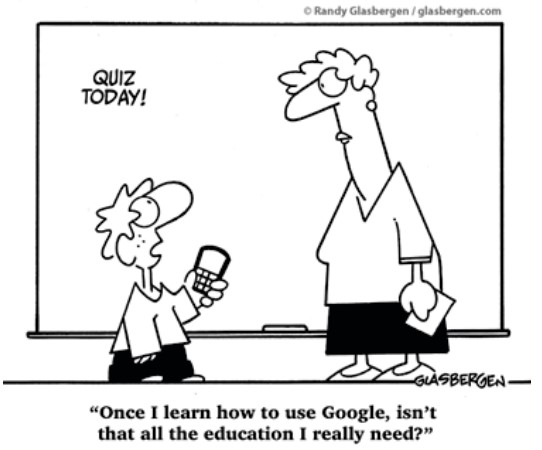
(Available at: https://www.glasbergen.com/gallery-search/?tag=learning. Accessed on October 26 , 2019).
The adverb in the clause “[…] the education I really need” functions as a marker of
TEXTIII - Text forquestion.
(Available at: https://www.glasbergen.com/gallery-search/?tag=learning. Accessed on October 26 , 2019).
Identify, in the options below, a sentence in which the use of the conjunction “once” is the same as in “Once I learn how to use Google […]”.
TEXTIII - Text forquestion.
(Available at: https://www.glasbergen.com/gallery-search/?tag=learning. Accessed on October 26 , 2019).
Based on the cartoon, it is possible to infer that the student
TEXT II
Another Brick In The Wall (Pink Floyd)
We don't need no education
We don't need no thought control
No dark sarcasm in the classroom
Teachers, leave them kids alone
Hey! Teacher! Leave them kids alone!
All in all, it's just another brick in the wall
All in all, you're just another brick in the wall st
(Adapted from: https://www.letras.mus.br/pink-floyd/64541/. Accessed on October 31 , 2019).
Answer question according to TEXT II.
TEXT II
Another Brick In The Wall (Pink Floyd)
We don't need no education
We don't need no thought control
No dark sarcasm in the classroom
Teachers, leave them kids alone
Hey! Teacher! Leave them kids alone!
All in all, it's just another brick in the wall
All in all, you're just another brick in the wall st
(Adapted from: https://www.letras.mus.br/pink-floyd/64541/. Accessed on October 31 , 2019).
Answer question according to TEXT II.
TEXT II
Another Brick In The Wall (Pink Floyd)
We don't need no education
We don't need no thought control
No dark sarcasm in the classroom
Teachers, leave them kids alone
Hey! Teacher! Leave them kids alone!
All in all, it's just another brick in the wall
All in all, you're just another brick in the wall st
(Adapted from: https://www.letras.mus.br/pink-floyd/64541/. Accessed on October 31 , 2019).
Answer question according to TEXT II.
TEXT I-
ENEM and the Language Policy forEnglish in the Brazilian Context
Andrea Barros Carvalho de Oliveira
1.INTRODUCTION
In the present article, I report the results of a doctoral research that focused on the language policy for English in Brazil, considering specifically the role of Exame Nacional do Ensino Médio (hereinafter ENEM) in this policy. Thus, taking into account the sociopolitical aspects of the teaching processes, learning, and use of English as a foreign language, we sought to identify the possible impact of ENEM on the status of English language as a school subject.
ENEM was initially conceived as a final exam to evaluate students at the end of basic education. However, it has been modified over the last few years to work as an entrance examination for public and private universities. In addition, the use of this exam in several governmental programs aimed at higher education access was preponderant to make it a high stakes exam in the educational scenario.
According to the literature on language examination exams, especially those considered to be high stakes, are seen as an intrinsically political activity (ALDERSON; BANERJEE, 2001). These exams can be used as educational policy tools as well as to promote a specific language related to local language policy objectives.
The theoretical conception of Language Policy (hereinafter LP) adopted in this investigation refers to Shohamy (2006). This author postulates that, although there is an official LP established in legislation and official documents, it is also necessary to consider the existence of a “real” LP, or “de facto” LP, which is put into practice through mechanisms, resources such as traffic signs, rules and laws related to official bodies, language exams, among others. Besides mechanisms, the beliefs or representations about the language that are shared in the community ought to be considered as well. The importance of mechanisms is that they reveal the true aims of LPas established by the government for a specific language, which are not always explicit in Brazilian law.
The research, the results of which are presented in this article, covered the three components of Shohamy’s theoretical model, namely: legislation, mechanisms (in this case, an exam, ENEM), and representations or beliefs about language. To obtain a sample of representations about English language, interviews were conducted with the students from an ENEM preparatory course for university entrance, with two teachers of English and two coordinators from public schools.
In the present article, I begin with a review of the expanded conception of LPelaborated by Shohamy, as it is the theoretical basis of this research. Second, I analyze some documents and laws regarding English teaching in Brazil. In addition to these documents, the English questions of ENEM (2016) were taken in consideration. Finally, I present an overview of the representations about English language that emerged from the interviews which constituted the empirical data of my doctoral thesis.
ALDERSON, J. C; BANERJEE, J. Language Testing and Assessment. Language Testing, [S.l.], n. 34, 2001, p. 213-236.
SHOHAMY, E. Language Policy: Hidden Agendas and New Approaches. London; New York: Routledge, 2006. (Adapted from: OLIVEIRA, A.B.C. ENEM and the Language Policy for English in the Brazilian Context. In.: Revista Brasileira de Linguística Aplicada. vol.19 no.2 th Belo Horizonte Apr./June 2019 Available at: http://www.scielo.br/scielo.php?script=sci_arttext&pid=S1984-63982019000200361 Accessed on October 20 , 2019)
Answer question according to TEXT I.
TEXT I-
ENEM and the Language Policy forEnglish in the Brazilian Context
Andrea Barros Carvalho de Oliveira
1.INTRODUCTION
In the present article, I report the results of a doctoral research that focused on the language policy for English in Brazil, considering specifically the role of Exame Nacional do Ensino Médio (hereinafter ENEM) in this policy. Thus, taking into account the sociopolitical aspects of the teaching processes, learning, and use of English as a foreign language, we sought to identify the possible impact of ENEM on the status of English language as a school subject.
ENEM was initially conceived as a final exam to evaluate students at the end of basic education. However, it has been modified over the last few years to work as an entrance examination for public and private universities. In addition, the use of this exam in several governmental programs aimed at higher education access was preponderant to make it a high stakes exam in the educational scenario.
According to the literature on language examination exams, especially those considered to be high stakes, are seen as an intrinsically political activity (ALDERSON; BANERJEE, 2001). These exams can be used as educational policy tools as well as to promote a specific language related to local language policy objectives.
The theoretical conception of Language Policy (hereinafter LP) adopted in this investigation refers to Shohamy (2006). This author postulates that, although there is an official LP established in legislation and official documents, it is also necessary to consider the existence of a “real” LP, or “de facto” LP, which is put into practice through mechanisms, resources such as traffic signs, rules and laws related to official bodies, language exams, among others. Besides mechanisms, the beliefs or representations about the language that are shared in the community ought to be considered as well. The importance of mechanisms is that they reveal the true aims of LPas established by the government for a specific language, which are not always explicit in Brazilian law.
The research, the results of which are presented in this article, covered the three components of Shohamy’s theoretical model, namely: legislation, mechanisms (in this case, an exam, ENEM), and representations or beliefs about language. To obtain a sample of representations about English language, interviews were conducted with the students from an ENEM preparatory course for university entrance, with two teachers of English and two coordinators from public schools.
In the present article, I begin with a review of the expanded conception of LPelaborated by Shohamy, as it is the theoretical basis of this research. Second, I analyze some documents and laws regarding English teaching in Brazil. In addition to these documents, the English questions of ENEM (2016) were taken in consideration. Finally, I present an overview of the representations about English language that emerged from the interviews which constituted the empirical data of my doctoral thesis.
ALDERSON, J. C; BANERJEE, J. Language Testing and Assessment. Language Testing, [S.l.], n. 34, 2001, p. 213-236.
SHOHAMY, E. Language Policy: Hidden Agendas and New Approaches. London; New York: Routledge, 2006. (Adapted from: OLIVEIRA, A.B.C. ENEM and the Language Policy for English in the Brazilian Context. In.: Revista Brasileira de Linguística Aplicada. vol.19 no.2 th Belo Horizonte Apr./June 2019 Available at: http://www.scielo.br/scielo.php?script=sci_arttext&pid=S1984-63982019000200361 Accessed on October 20 , 2019)
Answer question according to TEXT I.
TEXT I-
ENEM and the Language Policy forEnglish in the Brazilian Context
Andrea Barros Carvalho de Oliveira
1.INTRODUCTION
In the present article, I report the results of a doctoral research that focused on the language policy for English in Brazil, considering specifically the role of Exame Nacional do Ensino Médio (hereinafter ENEM) in this policy. Thus, taking into account the sociopolitical aspects of the teaching processes, learning, and use of English as a foreign language, we sought to identify the possible impact of ENEM on the status of English language as a school subject.
ENEM was initially conceived as a final exam to evaluate students at the end of basic education. However, it has been modified over the last few years to work as an entrance examination for public and private universities. In addition, the use of this exam in several governmental programs aimed at higher education access was preponderant to make it a high stakes exam in the educational scenario.
According to the literature on language examination exams, especially those considered to be high stakes, are seen as an intrinsically political activity (ALDERSON; BANERJEE, 2001). These exams can be used as educational policy tools as well as to promote a specific language related to local language policy objectives.
The theoretical conception of Language Policy (hereinafter LP) adopted in this investigation refers to Shohamy (2006). This author postulates that, although there is an official LP established in legislation and official documents, it is also necessary to consider the existence of a “real” LP, or “de facto” LP, which is put into practice through mechanisms, resources such as traffic signs, rules and laws related to official bodies, language exams, among others. Besides mechanisms, the beliefs or representations about the language that are shared in the community ought to be considered as well. The importance of mechanisms is that they reveal the true aims of LPas established by the government for a specific language, which are not always explicit in Brazilian law.
The research, the results of which are presented in this article, covered the three components of Shohamy’s theoretical model, namely: legislation, mechanisms (in this case, an exam, ENEM), and representations or beliefs about language. To obtain a sample of representations about English language, interviews were conducted with the students from an ENEM preparatory course for university entrance, with two teachers of English and two coordinators from public schools.
In the present article, I begin with a review of the expanded conception of LPelaborated by Shohamy, as it is the theoretical basis of this research. Second, I analyze some documents and laws regarding English teaching in Brazil. In addition to these documents, the English questions of ENEM (2016) were taken in consideration. Finally, I present an overview of the representations about English language that emerged from the interviews which constituted the empirical data of my doctoral thesis.
ALDERSON, J. C; BANERJEE, J. Language Testing and Assessment. Language Testing, [S.l.], n. 34, 2001, p. 213-236.
SHOHAMY, E. Language Policy: Hidden Agendas and New Approaches. London; New York: Routledge, 2006. (Adapted from: OLIVEIRA, A.B.C. ENEM and the Language Policy for English in the Brazilian Context. In.: Revista Brasileira de Linguística Aplicada. vol.19 no.2 th Belo Horizonte Apr./June 2019 Available at: http://www.scielo.br/scielo.php?script=sci_arttext&pid=S1984-63982019000200361 Accessed on October 20 , 2019)
Answer question according to TEXT I.
TEXT I-
ENEM and the Language Policy forEnglish in the Brazilian Context
Andrea Barros Carvalho de Oliveira
1.INTRODUCTION
In the present article, I report the results of a doctoral research that focused on the language policy for English in Brazil, considering specifically the role of Exame Nacional do Ensino Médio (hereinafter ENEM) in this policy. Thus, taking into account the sociopolitical aspects of the teaching processes, learning, and use of English as a foreign language, we sought to identify the possible impact of ENEM on the status of English language as a school subject.
ENEM was initially conceived as a final exam to evaluate students at the end of basic education. However, it has been modified over the last few years to work as an entrance examination for public and private universities. In addition, the use of this exam in several governmental programs aimed at higher education access was preponderant to make it a high stakes exam in the educational scenario.
According to the literature on language examination exams, especially those considered to be high stakes, are seen as an intrinsically political activity (ALDERSON; BANERJEE, 2001). These exams can be used as educational policy tools as well as to promote a specific language related to local language policy objectives.
The theoretical conception of Language Policy (hereinafter LP) adopted in this investigation refers to Shohamy (2006). This author postulates that, although there is an official LP established in legislation and official documents, it is also necessary to consider the existence of a “real” LP, or “de facto” LP, which is put into practice through mechanisms, resources such as traffic signs, rules and laws related to official bodies, language exams, among others. Besides mechanisms, the beliefs or representations about the language that are shared in the community ought to be considered as well. The importance of mechanisms is that they reveal the true aims of LPas established by the government for a specific language, which are not always explicit in Brazilian law.
The research, the results of which are presented in this article, covered the three components of Shohamy’s theoretical model, namely: legislation, mechanisms (in this case, an exam, ENEM), and representations or beliefs about language. To obtain a sample of representations about English language, interviews were conducted with the students from an ENEM preparatory course for university entrance, with two teachers of English and two coordinators from public schools.
In the present article, I begin with a review of the expanded conception of LPelaborated by Shohamy, as it is the theoretical basis of this research. Second, I analyze some documents and laws regarding English teaching in Brazil. In addition to these documents, the English questions of ENEM (2016) were taken in consideration. Finally, I present an overview of the representations about English language that emerged from the interviews which constituted the empirical data of my doctoral thesis.
ALDERSON, J. C; BANERJEE, J. Language Testing and Assessment. Language Testing, [S.l.], n. 34, 2001, p. 213-236.
SHOHAMY, E. Language Policy: Hidden Agendas and New Approaches. London; New York: Routledge, 2006. (Adapted from: OLIVEIRA, A.B.C. ENEM and the Language Policy for English in the Brazilian Context. In.: Revista Brasileira de Linguística Aplicada. vol.19 no.2 th Belo Horizonte Apr./June 2019 Available at: http://www.scielo.br/scielo.php?script=sci_arttext&pid=S1984-63982019000200361 Accessed on October 20 , 2019)
Answer question according to TEXT I.
Sou um evadido.
Logo que nasci
fecharam-me em mim,
ah, mas eu fugi.
Se a gente se cansa
do mesmo lugar,
do mesmo ser
por que não se cansar?
Minha alma procura-me
mas eu ando a monte,
oxalá que ela
nunca me encontre.
Ser um é cadeia,
ser eu é não ser.
Viverei fugindo
mas vivo a valer.
(Fernando Pessoa)
Sobre a aplicação do poema de Fernando Pessoa às teorias da História, assinale a alternativa CORRETA.
Leia a transcrição abaixo e responda ao que se pede.
“No início do século XX, acentuou-se a preocupação em reorganizar a cidade da Parahyba do Norte, que aos poucos, teve seus espaços tradicionais de circulação, moradia, lazer e trabalho, redefinidos, remodelados. Destacaram-se, nessa busca de remodelação, os governos de João Lopes Machado (1908/1911), João Pereira de Castro Pinto (1912-1915) e Camilo de Holanda (1916 - 1920). No período desses governos, foram incentivadas e praticadas, dentre outras reformas, as seguintes: transformação dos logradouros públicos em locais atraentes através da remodelação, arborização e criação de praças e Jardins Públicos; derrubada das casas de palha, abertura de ruas e avenidas que visavam substituir os chamados becos insalubres; remodelação, caiação dos prédios públicos e calçamento das ruas.”
Fonte: (https://www.snh2019.anpuh.org/resources/anais/8/1565317136_ARQUIVO_Textoanpuhrecifepublicar.pdf).
Assinale a alternativa que traz os pontos CORRETOS sobre os principais motivos históricos para o surgimento das mudanças citadas na cidade da Parahyba, no início do século XX:
De fato, o que sobrevive não é o conjunto daquilo que existiu no passado, mas uma escolha efetuada quer pelas forças que operam no desenvolvimento temporal do mundo e da humanidade, quer pelos que se dedicam à ciência do passado e do tempo que passa, os historiadores. (JACQUES LE GOFF, 1994. p. 535).
Analise as proposições a seguir:
I- Os documentos não são inocentes, todos têm um propósito assim como os monumentos.
II- Todo documento é monumento assim como todo monumento é documento.
III- Todo documento tem uma versão, com silêncios e parcialidades, comprometido com uma imagem que dele se almeja perpetuar.
IV- Os documentos e os monumentos são escolhas que se situam nas relações de poder das sociedades.
É CORRETO o que se afirma em:
Analise as proposições e coloque (V) para as verdadeiras e (F) para as falsas, tendo por base as características da Nova História evidenciadas a partir de meados do século XX:
( ) Prossegue a linha de inovação dos Annales e se aproxima do novo paradigma epistemológico em oposição ao paradigma clássico ou newtoniano.
( ) A inserção de novos objetos, novas abordagens e novos problemas, como se apresenta nos subtítulos das obras de Pierre Nora e Jacques Le Goff, ampliou o ofício de historiador sem tomar por base o conceito de interdisciplinaridade.
( ) É difícil estabelecer um conceito para a Nova História, porque o movimento está marcado por imprecisões e contradições.
Marque a alternativa que contém a sequência CORRETA de preenchimento dos parênteses.
Ao relacionarmos o conceito de interdisciplinaridade e o conhecimento histórico, podemos dizer:
I- A interdisciplinaridade alterou o caminho do conhecimento histórico e, na atualidade, as pesquisas historiográficas são todas voltadas para a História Cultural.
II- A Escola dos Annales foi defensora da interdisciplinaridade chegando a afirmar que a história precisava destruir os muros que a separava das demais disciplinas.
III- A interdisciplinaridade contribuiu para a ampliação dos temas e fontes de pesquisa na História. No entanto, esta ampliação nem sempre foi bem vinda, porque “se tudo é história, logo, a história não existe” (Veyne,1998).
Após identificar a legitimidade das sentenças acerca da relação estabelecida entre o conceito de interdisciplinaridade e o conhecimento histórico, assinale a alternativa que apresenta apenas a resposta CORRETA.
Analise as sentenças abaixo, tendo como parâmetro a música e a dança do Maxixe.
I- A dança do Maxixe foi uma expressão cultural muito presente no cenário brasileiro da Primeira República.
II- Chiquinha Gonzaga chegou a compor no estilo Maxixe a música “Corta Jaca”, de tão popular, esta música chegou a ser apresentada na transmissão do cargo de Presidente da República no Palácio do Catete em 1914.
III- Havia muito preconceito com a música do Maxixe, uma vez que sua dança exalava sensualidade e as letras por vezes eram picantes e apresentavam descontentamentos políticos.
IV- Os lares conservadores do Brasil, no início do século XX, aderiram com naturalidade a dança do Maxixe a ponto do Senador Rui Barbosa criticar o fato das pessoas denominarem o Maxixe de “(...) a mais baixa, a mais chula, a mais grosseira de todas as danças selvagens, a irmã gêmea do batuque do cateretê e do samba”.
Assinale a alternativa que apresenta apenas a resposta CORRETA.
Na Argentina, “Os Piqueteros”; no Peru, a “Frente Ampla Cívica de Arequipa”. Assinale a alternativa que melhor representa esses dois grupos:
Analise as proposições e coloque (V) para as verdadeiras e (F) para as falsas, tendo por base as características do Populismo:
( ) As lideranças populistas procuram manter relações diretas com as massas.
( ) O peronismo é um exemplo de populismo latino-americano cujo termo foi inspirado no nome do presidente argentino Juan Domingo Perón.
( ) O populismo é antinacionalista.
Assinale a alternativa que apresenta a sequência CORRETA de preenchimento dos parênteses.
Analise as sentenças abaixo, tendo como parâmetro a Guerra Fria.
I- Trata-se de um período que teve seu início logo após a Revolução Russa de 1917 e se baseou na disputa geopolítica, silenciosa e constante entre a União Soviética e Cuba.
II- Foi um momento histórico que se iniciou logo após a Segunda Guerra Mundial, em 1945, e se caracterizou pelas disputas estratégicas e conflitos indiretos entre os Estados Unidos e a União Soviética.
III- A Guerra Fria teve seu início logo após a revolução cubana em 1959 e trata-se do período de disputas pela hegemonia política, econômica e militar no mundo entre Cuba e os Estados Unidos.
IV- Foi um conflito militar entre Os Estados Unidos e o Vietnã pelo período de 1959 a 1975.
Assinale a alternativa que responde CORRETAMENTE:
¤t ś■ℓś ■Ăℓ ľʼn╜Ă■ŇĂℓ ▓ĵ ŕ Ăℓ telepáticas
Pense nas meninas cegas inexatas
Pense nas mulheres, rotas alteradas
Pense nas feridas como rosas cálidas
Mas só não se esqueça da rosa, da rosa
Da rosa de Hiroshima, a rosa hereditária
A rosa radiotiva, estúpida, inválida
A rosa com cirrose a anti-rosa atômica
Sem cor, sem perfume, sem rosa, sem nada”
(Vinícius de Moraes/Secos e Molhados, 1973).
Considerando o tema a que se refere a letra da música acima, assinale a alternativa CORRETA.

 Conheça nossos planos