Questões de Concurso
Para unoesc
Foram encontradas 3.214 questões
Resolva questões gratuitamente!
Junte-se a mais de 4 milhões de concurseiros!


O Marquês de Pombal é o nome pelo qual ficou conhecido Sebastião José de Carvalho e Melo. No Brasil, Marquês de Pombal ficou caracterizado pelas chamadas Reformas Pombalinas. Dentre as reformas realizadas no Brasil no período Pombalino, assinale as alternativas abaixo com (V) verdadeiro ou (F) falso.
( ) Expulsão dos Jesuítas.
( ) Extinção definitiva das capitanias hereditárias.
( ) Abolição da escravidão.
( ) Criação do Real Horto atualmente conhecido como Jardim Botânico.
( ) Nomeação do Rio de Janeiro como nova capital da colônia – em substituição a Salvador.
A sequência correta de cima para baixo é:
Analise os enunciados abaixo referente as Cruzadas.
I. As Cruzadas foram expedições militares organizadas por católicos da Europa Ocidental, tendo como objetivo inicial, reconquistar para o mundo cristão, lugares sagrados em Jerusalém na Palestina.
II. Embora o espírito religioso, as Cruzadas despertavam o interesse dos comerciantes, principalmente italianos, na reabertura das rotas de comércio no Mar Mediterrâneo, que estavam controladas pelos árabes muçulmanos.
III. As Cruzadas foram uma luta de cristão da Igreja Ocidental e Oriental contra o domínio dos povos bárbaros que ocupavam Portugal e Espanha, bem como, o oeste do Mar Mediterrâneo.
IV. As Cruzadas ocorreram no período da colonização europeia na América. Tinham como objetivo principal catequizar os indígenas nas Reduções Jesuíticas a fim de evitar a sua escravização.
Está correto o que se afirma em:
I. Contribuir para a viabilização da participação efetiva da população usuária nas decisões institucionais; garantir a plena informação e discussão sobre as possibilidades e consequências das situações apresentadas, respeitando democraticamente as decisões dos(as) usuários(as), mesmo que sejam contrárias aos valores e às crenças individuais dos(as) profissionais, resguardados os princípios deste código; democratizar as informações e o acesso aos programas disponíveis no espaço institucional, como um dos mecanismos indispensáveis à participação dos(as) usuários(as); devolver as informações colhidas nos estudos e pesquisas aos(às) usuários(as), no sentido de que estes possam usá-los para o fortalecimento dos seus interesses.
II. Desempenhar suas atividades profissionais, com eficiência e responsabilidade, observando a legislação em vigor; utilizar seu número de registro no Conselho Regional no exercício da Profissão; abster-se, no exercício da profissão, de práticas que caracterizem a censura, o cerceamento da liberdade, o policiamento dos comportamentos, denunciando sua ocorrência aos órgãos competentes; participar de programas de socorro à população em situação de calamidade pública, no atendimento e defesa de seus interesses e necessidades.
III. Informar à população usuária sobre a utilização de materiais de registro audiovisual e pesquisas a elas referentes e a forma de sistematização dos dados obtidos; fornecer à população usuária, quando solicitado, informações concernentes ao trabalho desenvolvido pelo Serviço Social e as suas conclusões, resguardado o sigilo profissional; contribuir para a criação de mecanismos que venham desburocratizar a relação com os(as) usuários(as), no sentido de agilizar e melhorar os serviços prestados; esclarecer aos(às) usuários(as), ao iniciar o trabalho, sobre os objetivos e a amplitude de sua atuação profissional.
IV. Garantia e defesa de suas atribuições e prerrogativas, estabelecidas na Lei de Regulamentação da Profissão e dos princípios firmados neste código; livre exercício das atividades inerentes à profissão; participação na elaboração e gerenciamento das políticas sociais e na formulação e implementação de programas sociais.
É correto apenas o que se afirma em:
I. A Lei nº 13.798 de 3 de janeiro de 2019 que instituiu a Semana Nacional de Prevenção da Gravidez na Adolescência e a Lei nº 13.812/2019, de 16 de março de 2019 que instituiu a Política Nacional de Busca de Pessoas Desaparecidas, criou o Cadastro Nacional de Pessoas Desaparecidas e exigiu autorização judicial para viagem de menores sem companhia dos responsáveis.
II. O Estatuto da Criança e do Adolescente (ECA) incorporou os avanços preconizados na Convenção sobre os Direitos da Criança das Nações Unidas e trouxe o caminho para se concretizar o Artigo 226 da Constituição Federal, que determinou direitos e garantias fundamentais a crianças e adolescentes. Considerado o maior símbolo dessa nova forma de se tratar a infância e a adolescência no país, o ECA inovou ao trazer a proteção integral, na qual crianças e adolescentes são vistos como sujeitos de direitos, em condição peculiar de desenvolvimento e com prioridade absoluta. Reafirmou a responsabilidade da família, sociedade e Estado de garantir as condições para o pleno desenvolvimento dessa população, além de colocá-la a salvo de toda forma de discriminação, exploração e violência.
III. Para garantir a efetivação da proteção integral, governo e sociedade civil trabalham em conjunto por meio dos conselhos municipais, estaduais, distrital e nacional dos direitos da criança e do adolescente. Com caráter deliberativo e composição paritária, essas instâncias fazem o controle das políticas públicas e estão entre os principais atores do Sistema de Garantia de Direitos (SGD).
IV. O Artigo 13 ganhou nova redação por meio da Lei nº 13.010 de 2014, que passou a vigorar: “Os casos de suspeita ou confirmação de castigo físico, de tratamento cruel ou degradante e de maustratos contra criança ou adolescente serão obrigatoriamente comunicados ao Conselho Tutelar da respectiva localidade, sem prejuízo de outras providências legais”.
É correto apenas o que se afirma em:
I. A Lei Orgânica da Assistência Social (LOAS) dispõe sobre a organização da assistência social. É o instrumento legal que regulamenta o que está escrito na Constituição Federal, nos artigos 203 e 204, que definem e garantem os direitos à assistência social. Esta lei institui benefícios, serviços, programas e projetos destinados ao enfrentamento da exclusão social dos segmentos mais vulneráveis.
II. O núcleo ou foco principal dos serviços assistenciais, é constituído pelas famílias vulnerabilizadas pela pobreza e exclusão social: enfatiza-se o grupo familiar e a comunidade por serem espaços sociais naturais de proteção e inclusão social sendo que a ação se valoriza a partir da implementação de ações e serviços intersetoriais. Estas ações e serviços intersetoriais devem ter objetivos e desenvolver processos mais ambiciosos de proteção e alteração da qualidade de vida do grupo familiar e não apenas de um ou outro de seus membros.
III. A assistência social é dever do Estado e direito do cidadão e se constitui em política pública e, como tal, faz parte da seguridade social (juntamente com a saúde e pela previdência social). Neste modelo, prevalece a premissa de que se protege para promover, para fazer a pessoa crescer e ter autonomia; que deve ser ofertado o mínimo básico para que o indivíduo inicie um processo de promoção humana, de crescimento e de valorização do indivíduo.
IV. A centralidade de ação da política de assistência social é a família, vista como elo integrador das ações e como foco de programas específicos. Todos os programas que visam à inserção e à reinserção familiar são prioritários na política de assistência social.
V. O Estado brasileiro, isto é, o poder público, no âmbito federal, tem o dever de formular políticas e realizar ações e atividades que protejam e promovam aquela parcela da população que se encontra em situação de vulnerabilidade, permitindo a esta parcela alcançar uma situação de plena cidadania.
É correto apenas o que se afirma em:
Asserção 1: Os Inibidores de Bomba de Prótons (IBP´s) agem bloqueando a etapa final de liberação do ácido gástrico devido à formação de uma ligação dissulfeto (ligação irreversível) entre a forma ativa dos IBP´s e um resíduo de cisteína da próton/potássio ATPase, levando a uma supressão prolongada desta bomba. Por causa dessa ligação covalente, os efeitos inibitórios dos IBP’s duram muito mais tempo que a meia-vida plasmática dele cuja variação é em torno de 1 a 2 horas enquanto que o efeito sobre a secreção ácida pode manter-se até 24 horas, até que aconteça a síntese de uma nova bomba; o efeito máximo é alcançado de 3 a 4 dias. Essa classe se mostra superior, em relação aos outros fármacos que também interferem na secreção gástrica, inibindo cerca de 80-95% das bombas de prótons presentes nas células parietais do estômago. Os IBPs produzem uma supressão ácida significativamente mais eficaz e prolongada do que os antagonistas dos receptores H2 e são capazes de manter o pH intragrástrico superior a 4 por até 16 a 18 h/dia.
Asserção 2: Todos eles são pró-fármacos, os quais precisam de um ambiente ácido para serem convertidos em suas respectivas formas ativas. Posteriormente as mesmas perdem a estabilidade em meio ácido, como o do estômago. Logo, os fármacos são produzidos com um revestimento entérico, que os protegem, a fim de prevenir a ativação prematura do fármaco. Os IBPs deverão ser administrados pelo menos 30 minutos antes da realização da alimentação, pois esta irá estimular a produção da gastrina, que ativará a bomba H+/K+ ATPase tornando o ambiente ácido (pH ~1) possibilitando a ativação do pró-fármaco. As formas farmacêuticas disponíveis no mercado são: injetáveis, comprimidos com revestimento entérico de liberação prolongada, comprimidos de desintegração rápida, cápsulas com grânulos com revestimento entérico de liberação normal e prolongada (pellets). Os que possuem revestimento ou grânulos passam intactos pelo estômago e são dissolvidos pelo pH alcalino do intestino, liberando os fármacos para serem absorvidos. Devido a isso, é importante ter cautela quando se administra uma forma líquida para crianças e pacientes hospitalizados, em que, geralmente, é feito uma solução extemporânea juntamente com o conteúdo das cápsulas (pellets) e uma solução adequada (CHAGAS; MELO; FREITAS, 2020).
Na asserção 1, tem-se a comparação com outro grupo de fármacos, com a mesma indicação terapêutica, que são os “Antagonistas de Receptores H2”. Já na asserção 2, é mencionado o termo “Pró-Fármacos”. O correto mecanismo de ação dos “Antagonistas de Receptores H2” e o verdadeiro conceito de Pró-Fármacos está disposto na opção:
O texto a seguir, segue como referência para a questão. Considerar que o conteúdo se encontra direcionado para a segunda pessoa no singular, usando termos “populares”, para melhor compreensão do leitor, pois trata-se de um texto instrutivo retirado do site da “Sociedade Brasileira de Diabetes”.
Os medicamentos para controle do diabetes estão sempre evoluindo e o médico é a pessoa mais capacitada para indicar aquele que se adapta ao seu perfil. Eles ajudam o pâncreas a produzir mais insulina, diminuem a absorção de carboidratos e aumentam a sensibilidade do organismo à ação da insulina.
Lembrando que nem sempre serão necessários medicamentos por longos períodos: no caso do Diabetes Tipo 2, a mudança no estilo de vida pode ser suficiente. Outra coisa que uma pessoa que acabou de receber o diagnóstico deve saber é que os remédios são modificados ao longo do tempo, de acordo com a idade e com o comportamento da taxa de glicemia.
Às vezes, o controle glicêmico só é obtido com injeções de insulina. Algumas pessoas necessitam receber esta substância ao mesmo tempo em que fazem uso de medicamentos. A frequência com que você recebe insulina depende de quanto o seu corpo ainda produz e de como o seu médico pretende controlar o seu nível glicêmico.
Outra informação relevante: tipos diferentes de insulina têm tempo de ação diferente. Sua equipe médica dirá quanto de cada tipo você necessita e com que frequência. É importante aprender a técnica correta de uso das injeções de insulina e sempre modificar o local do corpo onde são aplicadas, para evitar problemas degenerativos. Os melhores locais são a barriga, exceto a área de 5 cm ao redor do umbigo; região superior das nádegas; face anterior e lateral das coxas; e região lateral e posterior do braço.
A aplicação pode ser feita por meio de seringas, canetas próprias para esse fim e também por meio das bombas de insulina. Algumas delas fazem as duas funções: medem a taxa de glicemia e aplicam a dose indicada pelo usuário. A equipe multidisciplinar poderá ajudá-lo com informações sobre cada métodos, os custos envolvidos e as formas para adquirir os equipamentos.
Os avanços científicos na área possibilitam tratamentos para todos os tipos de casos de diabetes. Esta é uma oportunidade para você prestar mais atenção à sua saúde e adquirir responsabilidades sobre as mudanças.
Fonte: https://www.diabetes.org.br/publico/diabetes/diagnostico-e-tratamento.
Quanto ao tratamento insulínico para o diabetes, apresenta-se a seguinte figura:
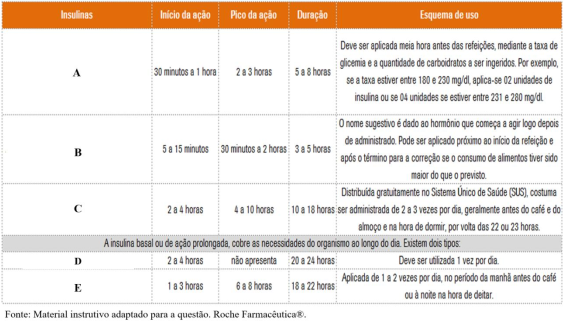
Considerando a imagem acima, a alternativa que corretamente preenche a lacuna referente a
validade da receita, de acordo com a Portaria 344/1998, é:
O texto a seguir, segue como referência para a questão. Considerar que o conteúdo se encontra direcionado para a segunda pessoa no singular, usando termos “populares”, para melhor compreensão do leitor, pois trata-se de um texto instrutivo retirado do site da “Sociedade Brasileira de Diabetes”.
Os medicamentos para controle do diabetes estão sempre evoluindo e o médico é a pessoa mais capacitada para indicar aquele que se adapta ao seu perfil. Eles ajudam o pâncreas a produzir mais insulina, diminuem a absorção de carboidratos e aumentam a sensibilidade do organismo à ação da insulina.
Lembrando que nem sempre serão necessários medicamentos por longos períodos: no caso do Diabetes Tipo 2, a mudança no estilo de vida pode ser suficiente. Outra coisa que uma pessoa que acabou de receber o diagnóstico deve saber é que os remédios são modificados ao longo do tempo, de acordo com a idade e com o comportamento da taxa de glicemia.
Às vezes, o controle glicêmico só é obtido com injeções de insulina. Algumas pessoas necessitam receber esta substância ao mesmo tempo em que fazem uso de medicamentos. A frequência com que você recebe insulina depende de quanto o seu corpo ainda produz e de como o seu médico pretende controlar o seu nível glicêmico.
Outra informação relevante: tipos diferentes de insulina têm tempo de ação diferente. Sua equipe médica dirá quanto de cada tipo você necessita e com que frequência. É importante aprender a técnica correta de uso das injeções de insulina e sempre modificar o local do corpo onde são aplicadas, para evitar problemas degenerativos. Os melhores locais são a barriga, exceto a área de 5 cm ao redor do umbigo; região superior das nádegas; face anterior e lateral das coxas; e região lateral e posterior do braço.
A aplicação pode ser feita por meio de seringas, canetas próprias para esse fim e também por meio das bombas de insulina. Algumas delas fazem as duas funções: medem a taxa de glicemia e aplicam a dose indicada pelo usuário. A equipe multidisciplinar poderá ajudá-lo com informações sobre cada métodos, os custos envolvidos e as formas para adquirir os equipamentos.
Os avanços científicos na área possibilitam tratamentos para todos os tipos de casos de diabetes. Esta é uma oportunidade para você prestar mais atenção à sua saúde e adquirir responsabilidades sobre as mudanças.
Fonte: https://www.diabetes.org.br/publico/diabetes/diagnostico-e-tratamento.
Categoria 1
Aumentam a secreção de insulina (hipoglicemiantes).
Categoria 2
Não aumentam a secreção de insulina (anti-hiperglicemiantes).
Categoria 3
Aumentam a secreção de insulina de maneira dependente de glicose, além de promover a supressão do glucagon.
Categoria 4
Promovem a glicosúria (sem relação com a secreção de insulina).
Dessa maneira, os fármacos antidiabéticos “Clorpropamida”, “glibenclamida”, “glipizida”, “gliclazida”, “glimepirida”, “nateglinida” e “repaglinida” pertencem a qual categoria representada acima:
Apresenta-se a seguinte reportagem publicada no Jornal da USP (Universidade de São Paulo):
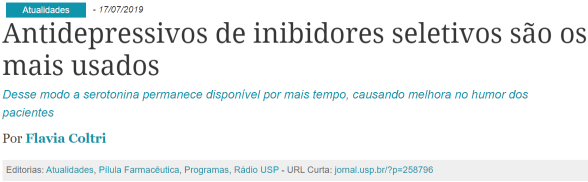
A reportagem apresenta o seguinte conteúdo jornalístico:
O boletim Pílula Farmacêutica desta edição explica o que são os medicamentos antidepressivos Inibidores Seletivos da Recaptação da Serotonina.
Existem várias classes de antidepressivos, porque os efeitos mudam de organismo para organismo; podendo não apresentar um resultado satisfatório, é bastante comum que sejam realizadas diversas trocas de medicamento até que se ache o ideal para o paciente.
Uma das classes mais novas desses medicamentos são as dos Inibidores Seletivos da Recaptação da Serotonina, também conhecidos por antidepressivos ISRS. Esses remédios constituem grande parte dos mais usados atualmente, pois apresentam maior segurança e efeitos colaterais mais leves.
O nome do medicamento é autoexplicativo. O efeito antidepressivo ocorre pelos inibidores seletivos da recaptação da serotonina, que agem impedindo a retirada da serotonina da fenda sináptica, local onde esse neurotransmissor exerce suas ações. Desse modo, a serotonina permanece disponível por mais tempo, causando melhora no humor dos pacientes.
Os antidepressivos dessa classe mais populares são a X1, X2, X3, X4, X5 e X6. Mas eles também podem apresentar efeitos adversos de origem gastrointestinal, cefaleia, falta de coordenação motora, alterações no sono e no nível de energia e, em alguns casos, a disfunção sexual.
O boletim Pílula Farmacêutica é apresentado pelos alunos de graduação da Faculdade de Ciências Farmacêuticas de Ribeirão Preto (FCFRP) da USP, com supervisão da professora Regina Célia Garcia de Andrade. Trabalhos técnicos de Luiz Antonio Fontana.
Os fármacos que corretamente preenchem a lacuna representada como X1, X2, X3, X4, X5 e X6,
são:

 Conheça nossos planos