Questões de Concurso
Para avança sp
Foram encontradas 63.949 questões
Resolva questões gratuitamente!
Junte-se a mais de 4 milhões de concurseiros!


Analise os principais conceitos relacionados a cartografia a seguir e assinale V, se verdadeiras, ou F, se falsas.
( ) Croqui é uma representação bidimensional e em escala de uma dada região da superfície terrestre.
( ) Planta é a representação cartográfica de uma região geográfica feita em uma escala ampliada.
( ) Mapa é um esboço cartográfico de uma determinada área feito sem as técnicas necessárias para a elaboração de uma planta ou mapa.
Com base na definição de "iluminação pública" apresentada pela norma ABNT NBR 5101, analise as afirmativas a seguir:
I. A responsabilidade pelo serviço de iluminação pública é do poder público municipal ou distrital, ou daquele que receber essa delegação.
II. O serviço público de iluminação tem como objetivo iluminar apenas vias públicas destinadas ao trânsito de pessoas ou veículos, como ruas e avenidas, excluindo estradas e rodovias, pois estas são de competência de outras esferas de poder.
III. A definição de serviço público de iluminação também contempla bens de uso comum (como praças, parques e jardins), mesmo quando seu uso está sujeito a condições impostas pela administração, tais como cercamento, horários restritos ou cobrança.
Está correto o que se afirma em:
Com base na classificação dos pavimentos, analise as assertivas a seguir e assinale V, se verdadeiras, ou F, se falsas.
( ) No pavimento flexível, todas as camadas sofrem deformação elástica significativa sob o carregamento aplicado, distribuindo a carga entre as camadas.
( ) Pavimento rígido é aquele em que as camadas inferiores absorvem praticamente todas as tensões provenientes do carregamento aplicado.
( ) O pavimento semirrígido caracteriza-se por possuir uma base cimentada por um aglutinante com propriedades cimentícias, como o solocimento.
( ) Um pavimento constituído por lajes de concreto de cimento Portland é um exemplo típico de pavimento flexível.
Assinale a alternativa que apresenta a sequência correta de cima para baixo.
Assinale a alternativa que preenche corretamente as lacunas a seguir:
__________ é a parte do bueiro situada sob os cortes e aterros, enquanto as _______ constituem os dispositivos de admissão e lançamento, a montante e a jusante, e são compostas de soleira, muro de testa e alas.
Analise as afirmativas a seguir sobre os principais componentes de um sistema de abastecimento de água:
I. O sistema de captação é a etapa inicial, responsável por coletar a água bruta do manancial.
II. A Estação de Tratamento de Água (ETA) tem como função principal adequar a qualidade da água aos padrões de potabilidade.
III. O sistema de distribuição é encarregado de levar a água tratada desde os reservatórios até os consumidores finais.
Está correto o que se afirma em:
Conforme a NBR 5626, sobre a capacidade de reservatórios de água fria potável, o volume total de água reservado deve atender no mínimo _________ de consumo normal no edifício e deve considerar eventual volume adicional de água para combate a incêndio quando este estiver armazenado conjuntamente.
Assinale a alternativa que preencha corretamente a lacuna.
A figura a seguir mostra um tipo de defeito em peças de madeira que a deixa em forma espiralada.
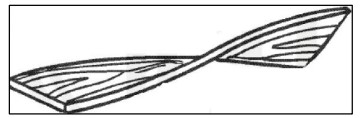
Fonte: ABNT NBR 7190-2.
Este tipo de defeito é denominado
Read the text to answer the question.
The archetype of the classic witch is a cornerstone of global folklore and fiction, often depicted as a formidable and sinister antagonist. These figures are deeply embedded in collective storytelling, usually characterized by their malevolent intentions towards protagonists, especially innocent children or virtuous heroes. Their narrative role is fundamentally to embody the forces of darkness, chaos, or forbidden knowledge, creating a clear moral contrast and a formidable obstacle for the main characters to overcome. From European fairy tales to modern pop culture, the classic witch serves as a powerful symbol of fear and the supernatural.
Physically, the traditional witch is frequently described as an old, haggard woman with exaggeratedly ugly features, which visually symbolizes her inner corruption and alienation from societal norms. Common traits include a long, hooked nose, warts, disheveled gray hair, and crooked fingers. She is typically clothed in dark, ragged robes and a pointed, wide-brimmed hat, an image popularized and solidified by Western media. This distinct and fearsome appearance is designed to evoke immediate unease and signal her dangerous nature to the audience.
The classic witch's power is intrinsically linked to specific magical tools and practices. The bubbling cauldron is her quintessential instrument, used for brewing potent potions, casting spells, and concocting mysterious elixirs. Her magic often involves ancient books ofspells, enchanted mirrors that show more than mere reflections, and the command over supernatural familiars like black cats, crows, or toads. These elements are not just props; they are extensions of her will and the sources of her power, which she uses to curse, transform, or deceive those who cross her path.
This archetype finds vivid expression in some of the most famous villains of literature and film. The Wicked Witch of the West from The Wizard of Oz menaces Dorothy with her command over flying monkeys and her thirst for revenge. The Evil Queen from Snow White, obsessed with being the "fairest of them all," uses a poisoned apple in her deadly scheme. Similarly, Maleficent from Sleeping Beauty is a figure of pure vengeance, cursing an infant princess to a sleep-like death. Beyond Anglo-American tales, other cultures have their own versions, such as Brazil's Cuca, a child-eating alligator-witch from Sítio do Picapau Amarelo.
However, the portrayal of the witch is not monolithic and has evolved to include more nuanced or comedic figures. In the Mexican sitcom El Chavo del Ocho, Doña Clotilde, nicknamed "La Bruja del 71," is a neighborhood eccentric whose witch persona is more a source of gossip and lighthearted fear than genuine evil. Furthermore, modern narratives like the film Hocus Pocus present the Sanderson sisters as a blend of the classic tropes—complete with spell books and a thirst for youth—but with a comedic and less terrifying demeanor, showcasing the adaptability and enduring fascination with this iconic character type.
“The archetype of the classic witch is a cornerstone of global folklore and fiction, often depicted as a formidable and sinister antagonist.”
In thissentence, the word “formidable” functions mainly as:
Read the text to answer the question.
The archetype of the classic witch is a cornerstone of global folklore and fiction, often depicted as a formidable and sinister antagonist. These figures are deeply embedded in collective storytelling, usually characterized by their malevolent intentions towards protagonists, especially innocent children or virtuous heroes. Their narrative role is fundamentally to embody the forces of darkness, chaos, or forbidden knowledge, creating a clear moral contrast and a formidable obstacle for the main characters to overcome. From European fairy tales to modern pop culture, the classic witch serves as a powerful symbol of fear and the supernatural.
Physically, the traditional witch is frequently described as an old, haggard woman with exaggeratedly ugly features, which visually symbolizes her inner corruption and alienation from societal norms. Common traits include a long, hooked nose, warts, disheveled gray hair, and crooked fingers. She is typically clothed in dark, ragged robes and a pointed, wide-brimmed hat, an image popularized and solidified by Western media. This distinct and fearsome appearance is designed to evoke immediate unease and signal her dangerous nature to the audience.
The classic witch's power is intrinsically linked to specific magical tools and practices. The bubbling cauldron is her quintessential instrument, used for brewing potent potions, casting spells, and concocting mysterious elixirs. Her magic often involves ancient books ofspells, enchanted mirrors that show more than mere reflections, and the command over supernatural familiars like black cats, crows, or toads. These elements are not just props; they are extensions of her will and the sources of her power, which she uses to curse, transform, or deceive those who cross her path.
This archetype finds vivid expression in some of the most famous villains of literature and film. The Wicked Witch of the West from The Wizard of Oz menaces Dorothy with her command over flying monkeys and her thirst for revenge. The Evil Queen from Snow White, obsessed with being the "fairest of them all," uses a poisoned apple in her deadly scheme. Similarly, Maleficent from Sleeping Beauty is a figure of pure vengeance, cursing an infant princess to a sleep-like death. Beyond Anglo-American tales, other cultures have their own versions, such as Brazil's Cuca, a child-eating alligator-witch from Sítio do Picapau Amarelo.
However, the portrayal of the witch is not monolithic and has evolved to include more nuanced or comedic figures. In the Mexican sitcom El Chavo del Ocho, Doña Clotilde, nicknamed "La Bruja del 71," is a neighborhood eccentric whose witch persona is more a source of gossip and lighthearted fear than genuine evil. Furthermore, modern narratives like the film Hocus Pocus present the Sanderson sisters as a blend of the classic tropes—complete with spell books and a thirst for youth—but with a comedic and less terrifying demeanor, showcasing the adaptability and enduring fascination with this iconic character type.
“Her magic often involves ancient books of spells, enchanted mirrors that show more than mere reflections, and the command over supernatural familiars like black cats, crows, or toads. These elements are not just props; they are extensions of her will and the sources of her power…”
In this excerpt, the pronoun “they” refers to:
Read the text to answer the question.
The archetype of the classic witch is a cornerstone of global folklore and fiction, often depicted as a formidable and sinister antagonist. These figures are deeply embedded in collective storytelling, usually characterized by their malevolent intentions towards protagonists, especially innocent children or virtuous heroes. Their narrative role is fundamentally to embody the forces of darkness, chaos, or forbidden knowledge, creating a clear moral contrast and a formidable obstacle for the main characters to overcome. From European fairy tales to modern pop culture, the classic witch serves as a powerful symbol of fear and the supernatural.
Physically, the traditional witch is frequently described as an old, haggard woman with exaggeratedly ugly features, which visually symbolizes her inner corruption and alienation from societal norms. Common traits include a long, hooked nose, warts, disheveled gray hair, and crooked fingers. She is typically clothed in dark, ragged robes and a pointed, wide-brimmed hat, an image popularized and solidified by Western media. This distinct and fearsome appearance is designed to evoke immediate unease and signal her dangerous nature to the audience.
The classic witch's power is intrinsically linked to specific magical tools and practices. The bubbling cauldron is her quintessential instrument, used for brewing potent potions, casting spells, and concocting mysterious elixirs. Her magic often involves ancient books ofspells, enchanted mirrors that show more than mere reflections, and the command over supernatural familiars like black cats, crows, or toads. These elements are not just props; they are extensions of her will and the sources of her power, which she uses to curse, transform, or deceive those who cross her path.
This archetype finds vivid expression in some of the most famous villains of literature and film. The Wicked Witch of the West from The Wizard of Oz menaces Dorothy with her command over flying monkeys and her thirst for revenge. The Evil Queen from Snow White, obsessed with being the "fairest of them all," uses a poisoned apple in her deadly scheme. Similarly, Maleficent from Sleeping Beauty is a figure of pure vengeance, cursing an infant princess to a sleep-like death. Beyond Anglo-American tales, other cultures have their own versions, such as Brazil's Cuca, a child-eating alligator-witch from Sítio do Picapau Amarelo.
However, the portrayal of the witch is not monolithic and has evolved to include more nuanced or comedic figures. In the Mexican sitcom El Chavo del Ocho, Doña Clotilde, nicknamed "La Bruja del 71," is a neighborhood eccentric whose witch persona is more a source of gossip and lighthearted fear than genuine evil. Furthermore, modern narratives like the film Hocus Pocus present the Sanderson sisters as a blend of the classic tropes—complete with spell books and a thirst for youth—but with a comedic and less terrifying demeanor, showcasing the adaptability and enduring fascination with this iconic character type.

 Conheça nossos planos