Questões de Concurso
Para cpcon
Foram encontradas 21.682 questões
Resolva questões gratuitamente!
Junte-se a mais de 4 milhões de concurseiros!


Ano: 2026
Banca:
CPCON
Órgão:
Prefeitura de Mãe D`Água - PB
Prova:
CPCON - 2026 - Prefeitura de Mãe D`Água - PB - Médico Clínico - PSF |
Q4304049
Medicina
Homem de 74 anos procura atendimento de emergência com história de dor abdominal difusa iniciada há seis horas, de forte
intensidade, associada a náuseas. É portador de fibrilação atrial crônica e refere uso irregular das medicações prescritas. Ao exame
físico, apresenta-se ansioso, com frequência cardíaca de 112 bpm, pressão arterial de 130/80 mmHg e abdome discretamente doloroso
à palpação difusa, sem sinais de irritação peritoneal. Exames laboratoriais iniciais demonstram leucocitose.
Considerando o diagnóstico mais provável e a conduta inicial, assinale a alternativa CORRETA.
Considerando o diagnóstico mais provável e a conduta inicial, assinale a alternativa CORRETA.
Ano: 2026
Banca:
CPCON
Órgão:
Prefeitura de Mãe D`Água - PB
Prova:
CPCON - 2026 - Prefeitura de Mãe D`Água - PB - Médico Clínico - PSF |
Q4304048
Medicina
Homem de 68 anos procura atendimento devido a quadro de diarreia intensa há quatro dias. Ao exame físico apresenta mucosas secas,
hipotensão postural e taquipneia leve. Os exames laboratoriais revelam:
• pH: 7,30
• PaCO₂: 30 mmHg
• HCO₃⁻: 15 mEq/L
A análise dos dados apresentados permite concluir que o paciente apresenta:
• pH: 7,30
• PaCO₂: 30 mmHg
• HCO₃⁻: 15 mEq/L
A análise dos dados apresentados permite concluir que o paciente apresenta:
Ano: 2026
Banca:
CPCON
Órgão:
Prefeitura de Mãe D`Água - PB
Prova:
CPCON - 2026 - Prefeitura de Mãe D`Água - PB - Médico Clínico - PSF |
Q4304047
Medicina
Mulher de 53 anos procura atendimento médico por cefaleia iniciada há cerca de um mês. Refere dor holocraniana diária,
progressivamente mais intensa, frequentemente acompanhada de náuseas e piora ao despertar. Nega história prévia de migrânea ou
outras cefaleias recorrentes. Relata ainda dois episódios recentes de embaçamento visual transitório. Ao exame físico, apresenta-se
afebril, sem déficits neurológicos focais evidentes.
A interpretação mais adequada dos achados apresentados é:
A interpretação mais adequada dos achados apresentados é:
Ano: 2026
Banca:
CPCON
Órgão:
Prefeitura de Mãe D`Água - PB
Prova:
CPCON - 2026 - Prefeitura de Mãe D`Água - PB - Médico Clínico - PSF |
Q4304046
Medicina
Paciente de 72 anos encontra-se internado há 12 dias em enfermaria clínica para reabilitação após acidente vascular cerebral
isquêmico. Apresenta traqueostomia, encontra-se afebril, hemodinamicamente estável, sem aumento de secreção traqueal, sem
alteração do padrão respiratório, sem novos infiltrados pulmonares em radiografia de tórax, além de hemograma sem leucocitose.
Durante investigação solicitada por outro profissional da equipe, a cultura de aspirado traqueal revelou crescimento de Pseudomonas
aeruginosa multirresistente.
Diante desse cenário, assinale a alternativa CORRETA.
Diante desse cenário, assinale a alternativa CORRETA.
Ano: 2026
Banca:
CPCON
Órgão:
Prefeitura de Mãe D`Água - PB
Prova:
CPCON - 2026 - Prefeitura de Mãe D`Água - PB - Médico Clínico - PSF |
Q4304045
Medicina
Durante reunião clínica sobre uso racional de antimicrobianos em um serviço municipal de saúde, discutiram-se situações frequentes
da prática assistencial que podem levar à prescrição inadequada de antibióticos.
Diante das recomendações atuais para o uso racional de antimicrobianos, é CORRETO afirmar que:
Diante das recomendações atuais para o uso racional de antimicrobianos, é CORRETO afirmar que:
Ano: 2026
Banca:
CPCON
Órgão:
Prefeitura de Mãe D`Água - PB
Prova:
CPCON - 2026 - Prefeitura de Mãe D`Água - PB - Médico Clínico - PSF |
Q4304044
Medicina
Paciente do sexo feminino, 34 anos, procura atendimento médico com história de febre de início súbito há quatro dias, associada à
exantema maculopapular difuso, hiperemia conjuntival não purulenta e artralgia em pequenas articulações das mãos e punhos. Refere
que outros moradores de sua vizinhança apresentaram quadro semelhante nas últimas semanas. Ao exame físico, encontra-se em bom
estado geral, afebril no momento da consulta, sem sinais de sangramento, sem dor abdominal e sem alterações neurológicas.
Hemograma demonstra leucopenia discreta, sem trombocitopenia.
A melhor interpretação do quadro clínico apresentado é:
A melhor interpretação do quadro clínico apresentado é:
Ano: 2026
Banca:
CPCON
Órgão:
Prefeitura de Mãe D`Água - PB
Prova:
CPCON - 2026 - Prefeitura de Mãe D`Água - PB - Professor de Ciências |
Q4303413
Geologia
O Monte Etna é reconhecido como o vulcão mais alto e ativo do continente europeu. Suas erupções frequentemente causam impactos
diretos no ambiente.
A partir desse contexto, avalie as asserções a seguir e a relação proposta entre elas.
I - Este fenômeno natural gera alterações na atmosfera, tal como o aumento de gases de efeito estufa.
PORQUE
II - No manto há rochas ricas em carbonatos que ao derreterem formam o magma em um processo que libera, principalmente, vapor de água e CO2 , que ficam dissolvidos na rocha líquida até serem liberados com a queda de pressão do magma durante a erupção.
A respeito dessas asserções, é CORRETO afirmar que:
A partir desse contexto, avalie as asserções a seguir e a relação proposta entre elas.
I - Este fenômeno natural gera alterações na atmosfera, tal como o aumento de gases de efeito estufa.
PORQUE
II - No manto há rochas ricas em carbonatos que ao derreterem formam o magma em um processo que libera, principalmente, vapor de água e CO2 , que ficam dissolvidos na rocha líquida até serem liberados com a queda de pressão do magma durante a erupção.
A respeito dessas asserções, é CORRETO afirmar que:
Ano: 2026
Banca:
CPCON
Órgão:
Prefeitura de Mãe D`Água - PB
Prova:
CPCON - 2026 - Prefeitura de Mãe D`Água - PB - Professor de Ciências |
Q4303412
Física
Assinale a alternativa que traz CORRETAMENTE um exemplo equivalente ao processo executado pelas operárias para aquecer o
formigueiro.
Ano: 2026
Banca:
CPCON
Órgão:
Prefeitura de Mãe D`Água - PB
Prova:
CPCON - 2026 - Prefeitura de Mãe D`Água - PB - Professor de Ciências |
Q4303411
Física
Formica rufa é uma espécie de formiga que aquece seus formigueiros a partir do comportamento coletivo das operárias. Em grandes
grupos, as formigas se expõem ao sol para absorver calor e retornam todas juntas para o interior do formigueiro.
I- Convecção: as operárias forçam o deslocamento da energia térmica de fora para dentro do ninho ao caminharem, em grandes grupos, aquecidas no exterior para o interior do formigueiro.
II- Condução: através do contato físico direto das formigas aquecidas com os ovos, larvas e paredes do ninho.
III- Irradiação térmica: pela emissão natural de ondas de calor infravermelho que os corpos das formigas liberam no ar confinado das câmaras.
É CORRETO o que se afirma em:
I- Convecção: as operárias forçam o deslocamento da energia térmica de fora para dentro do ninho ao caminharem, em grandes grupos, aquecidas no exterior para o interior do formigueiro.
II- Condução: através do contato físico direto das formigas aquecidas com os ovos, larvas e paredes do ninho.
III- Irradiação térmica: pela emissão natural de ondas de calor infravermelho que os corpos das formigas liberam no ar confinado das câmaras.
É CORRETO o que se afirma em:
Ano: 2026
Banca:
CPCON
Órgão:
Prefeitura de Mãe D`Água - PB
Prova:
CPCON - 2026 - Prefeitura de Mãe D`Água - PB - Professor de Ciências |
Q4303410
Saúde Pública
Os dados relacionados à saúde sexual de adolescentes, em 2019, conforme a Pesquisa Nacional de Saúde de Escolares (PENSE), indica
que 35,4% dos estudantes de 13 a 17 anos informaram já ter tido relação sexual, uma redução de 2,1 pontos percentuais em relação a
2015 (37,5%). Na rede pública de ensino, esse percentual (37,5%) foi mais alto do que na rede privada de ensino (23,1%).
Fonte: Brasil. Ministério da Saúde. NOTA TÉCNICANº 2/2025-COSAJ/CGCRIAJ/DGCI/SAPS/MS. Brasília, 2025.
O gráfico abaixo apresenta o número de mães adolescentes em milhares (k) nos munícipios brasileiros em distribuídas por cor/raça de acordo com os dados do Observatório da Saúde Pública.
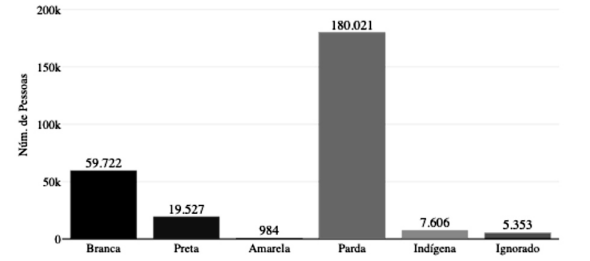
Fonte: Brasil. Ministério da Saúde. NOTATÉCNICANº 2/2025-COSAJ/CGCRIAJ/DGCI/SAPS/MS. Brasília, 2025.
Considerando esse contexto e as discussões atuais sobre o tema, analise as afirmações a seguir.
I- Entre os fatores que contribuem para a ocorrência da gravidez na adolescência, incluem-se o início de atividade sexual em anos iniciais da adolescência e fatores socioeconômicos, como pobreza.
II- A desigualdade de gênero, bem como de fatores socioculturais, relacionados à sexualização precoce de meninas é um fator importante.
III- A sexualidade, como um Tema Contemporâneo Transversal (TCT) da Base Nacional Comum Curricular (BNCC), deve ser inserida nos currículos de ciências abordando estratégias de prevenção de infecções sexualmente transmissíveis (ISTs) e métodos contraceptivos.
IV- As consequências da gravidez na adolescência também dizem respeito aos aspectos sociais, afetando a continuidade dos estudos, a inserção no mercado de trabalho, as interações e relações sociais, por, muitas vezes, produzir isolamento e estigmas.
É CORRETO o que se afirma apenas em:
Fonte: Brasil. Ministério da Saúde. NOTA TÉCNICANº 2/2025-COSAJ/CGCRIAJ/DGCI/SAPS/MS. Brasília, 2025.
O gráfico abaixo apresenta o número de mães adolescentes em milhares (k) nos munícipios brasileiros em distribuídas por cor/raça de acordo com os dados do Observatório da Saúde Pública.
Fonte: Brasil. Ministério da Saúde. NOTATÉCNICANº 2/2025-COSAJ/CGCRIAJ/DGCI/SAPS/MS. Brasília, 2025.
Considerando esse contexto e as discussões atuais sobre o tema, analise as afirmações a seguir.
I- Entre os fatores que contribuem para a ocorrência da gravidez na adolescência, incluem-se o início de atividade sexual em anos iniciais da adolescência e fatores socioeconômicos, como pobreza.
II- A desigualdade de gênero, bem como de fatores socioculturais, relacionados à sexualização precoce de meninas é um fator importante.
III- A sexualidade, como um Tema Contemporâneo Transversal (TCT) da Base Nacional Comum Curricular (BNCC), deve ser inserida nos currículos de ciências abordando estratégias de prevenção de infecções sexualmente transmissíveis (ISTs) e métodos contraceptivos.
IV- As consequências da gravidez na adolescência também dizem respeito aos aspectos sociais, afetando a continuidade dos estudos, a inserção no mercado de trabalho, as interações e relações sociais, por, muitas vezes, produzir isolamento e estigmas.
É CORRETO o que se afirma apenas em:
Ano: 2026
Banca:
CPCON
Órgão:
Prefeitura de Mãe D`Água - PB
Prova:
CPCON - 2026 - Prefeitura de Mãe D`Água - PB - Professor de Ciências |
Q4303409
Biologia
Um trabalho acerca das concepções discentes sobre célula, a partir da pergunta de que se seriam todas microscópicas, levantou as
seguintes afirmações:
E1 “Não, pois algumas algas são células macroscópicas que podem ser vistas sem microscópios”.
E2 “Não, pois não dá pra vê todas as estruturas a olho nu”.
E3 “Não. Há células que podem ser vistas sem o auxílio do microscópio como óvulos. Porém, as estruturas só podem ser reconhecidas com o auxílio destes”.
E4 “Sim, elas possuem tamanhos microscópicos sendo preciso o uso de microscópios ou lupas para ser visualizadas”.
E5 “Sim, pois são estruturas que não são observadas a olho nu”.
Fonte: SILVA, Deyvison Gabriel et al. Concepções de Discentes de Ciências Biológicas sobre o Conceito de Célula: Etapa 2 do Modelo de Reconstrução Educacional (MRE). In: ENCONTRO NACIONALDE PESQUISAEM EDUCAÇÃO EM CIÊNCIAS, 12., 2019, Natal. Anais... Natal: ABRAPEC, 2019.
A partir do contexto, avalie as asserções a seguir e a relação proposta entre elas.
I- Todas as respostas apresentam uma ideia simplista em relação a pergunta, embora algumas afirmações estejam mais próximas do conhecimento científico, tal como a E4 e outras mais distantes, como a E2.
PORQUE
II- Nas respostas apresentadas, o fato de visualizar ou não a olho nu, é a premissa para considerar o tamanho da célula como micro ou macroscópico.
A respeito dessas asserções, é CORRETO afirmar que:
E1 “Não, pois algumas algas são células macroscópicas que podem ser vistas sem microscópios”.
E2 “Não, pois não dá pra vê todas as estruturas a olho nu”.
E3 “Não. Há células que podem ser vistas sem o auxílio do microscópio como óvulos. Porém, as estruturas só podem ser reconhecidas com o auxílio destes”.
E4 “Sim, elas possuem tamanhos microscópicos sendo preciso o uso de microscópios ou lupas para ser visualizadas”.
E5 “Sim, pois são estruturas que não são observadas a olho nu”.
Fonte: SILVA, Deyvison Gabriel et al. Concepções de Discentes de Ciências Biológicas sobre o Conceito de Célula: Etapa 2 do Modelo de Reconstrução Educacional (MRE). In: ENCONTRO NACIONALDE PESQUISAEM EDUCAÇÃO EM CIÊNCIAS, 12., 2019, Natal. Anais... Natal: ABRAPEC, 2019.
A partir do contexto, avalie as asserções a seguir e a relação proposta entre elas.
I- Todas as respostas apresentam uma ideia simplista em relação a pergunta, embora algumas afirmações estejam mais próximas do conhecimento científico, tal como a E4 e outras mais distantes, como a E2.
PORQUE
II- Nas respostas apresentadas, o fato de visualizar ou não a olho nu, é a premissa para considerar o tamanho da célula como micro ou macroscópico.
A respeito dessas asserções, é CORRETO afirmar que:
Ano: 2026
Banca:
CPCON
Órgão:
Prefeitura de Mãe D`Água - PB
Prova:
CPCON - 2026 - Prefeitura de Mãe D`Água - PB - Professor de Ciências |
Q4303408
Meio Ambiente
De acordo com Ministério da Agricultura e Pecuária, os Organismos Geneticamente Modificados (OGMs), também conhecidos como
transgênicos, são definidos pela Lei 11.105, de 24 de março de 2005, como organismos cujo material genético - ADN ou ARN - tenha
sido modificado por qualquer técnica de engenharia genética. A engenharia genética, por sua vez, é definida como a atividade de
manipulação de moléculas de ADN ou ARN recombinante. Ou seja, os OGMs são aqueles organismos que possuem segmentos de
DNA manipulados em laboratório e introduzidos no material genético do organismo receptor para expressar determinada
característica de interesse.
A partir desse contexto, analise as afirmações a seguir.
I- Devido a sua natureza, definida por lei, ecólogos ressaltam riscos desconhecidos associados a liberação destes organismos no ambiente.
II- Estes organismos requerem níveis elevados de substâncias químicas inseticidas, o que gera a preocupação com a sua ingestão.
III- É inevitável o cruzamento entre estes organismos e as plantas nativas, o que pode causar a perda da biodiversidade.
É CORRETO o que se afirma em:
A partir desse contexto, analise as afirmações a seguir.
I- Devido a sua natureza, definida por lei, ecólogos ressaltam riscos desconhecidos associados a liberação destes organismos no ambiente.
II- Estes organismos requerem níveis elevados de substâncias químicas inseticidas, o que gera a preocupação com a sua ingestão.
III- É inevitável o cruzamento entre estes organismos e as plantas nativas, o que pode causar a perda da biodiversidade.
É CORRETO o que se afirma em:
Ano: 2026
Banca:
CPCON
Órgão:
Prefeitura de Mãe D`Água - PB
Prova:
CPCON - 2026 - Prefeitura de Mãe D`Água - PB - Professor de Ciências |
Q4303407
Filosofia
Um clássico da literatura relacionada a Natureza da Ciência é o conto do peru que investigava. Anarrativa é de que um peru descobriu
que, em sua primeira manhã na fazenda, ele tinha sido alimentado às 9h da manhã. Decidiu então recolher um grande número de
observações do fato para chegar a uma conclusão segura sobre o assunto. O peru fez essas observações sob uma ampla variedade de
circunstâncias: diferentes dias da semana, em dias quentes e dias frios, em dias chuvosos e dias secos. A cada dia acrescentava uma
outra proposição de observação à sua lista. Finalmente, ficou satisfeito e fez uma inferência para concluir: “Eu sou alimentado sempre
às 9 da manhã”. Mas, essa conclusão que parecia tão certeza, demonstrou ser falsa, de modo inequívoco, quando, na véspera do Natal,
ao invés de ser alimentado, ele foi degolado.
A partir desse contexto, avalie as asserções a seguir e a relação proposta entre elas.
I- O peru fez uma inferência dedutiva com premissas verdadeiras que o levara a uma conclusão falsa.
PORQUE
II- Os argumentos não são argumentos logicamente válidos, pois é possível a conclusão de um argumento indutivo ser falsa, embora as premissas sejam verdadeiras e, ainda assim, não haver contradição envolvida.
A respeito dessas asserções, é CORRETO afirmar que:
A partir desse contexto, avalie as asserções a seguir e a relação proposta entre elas.
I- O peru fez uma inferência dedutiva com premissas verdadeiras que o levara a uma conclusão falsa.
PORQUE
II- Os argumentos não são argumentos logicamente válidos, pois é possível a conclusão de um argumento indutivo ser falsa, embora as premissas sejam verdadeiras e, ainda assim, não haver contradição envolvida.
A respeito dessas asserções, é CORRETO afirmar que:
Ano: 2026
Banca:
CPCON
Órgão:
Prefeitura de Mãe D`Água - PB
Prova:
CPCON - 2026 - Prefeitura de Mãe D`Água - PB - Professor de Ciências |
Q4303406
Segurança da Informação
Fake news se espalham rápido e, na internet, todos estão sujeitos a serem enganados por elas. Por isso, é indispensável entender por que
elas são criadas e como combater a divulgação e compartilhamento das Fake news em apps de mensagens.
Analise as afirmações a seguir em relação a esse contexto.
I- Entre os principais fatores que geram as Fake news está a desinformação de quem as cria, não sendo, portanto, uma criação intencional.
II- As Fake News não geram lucros financeiros, pois são notícias, geralmente relacionadas a questões científicas, com diferentes opiniões de especialistas, gerando um debate importante.
III- É necessário identificar se as mensagens recebidas nas redes sociais são verdadeiras através de mecanismos disponíveis para esta finalidade.
IV- É importante denunciar as Fake news e desinformações em sites e plataformas de redes sociais como medida de combate.
É CORRETO o que se afirma apenas em:
Analise as afirmações a seguir em relação a esse contexto.
I- Entre os principais fatores que geram as Fake news está a desinformação de quem as cria, não sendo, portanto, uma criação intencional.
II- As Fake News não geram lucros financeiros, pois são notícias, geralmente relacionadas a questões científicas, com diferentes opiniões de especialistas, gerando um debate importante.
III- É necessário identificar se as mensagens recebidas nas redes sociais são verdadeiras através de mecanismos disponíveis para esta finalidade.
IV- É importante denunciar as Fake news e desinformações em sites e plataformas de redes sociais como medida de combate.
É CORRETO o que se afirma apenas em:
Ano: 2026
Banca:
CPCON
Órgão:
Prefeitura de Mãe D`Água - PB
Prova:
CPCON - 2026 - Prefeitura de Mãe D`Água - PB - Professor de Ciências |
Q4303405
Geologia
A Venezuela está situada em uma região de contato entre as Placas tectônicas do Caribe e a Sul-Americana, onde ocorre um intenso
acúmulo e liberação de tensões na crosta terrestre.
Sobre esse contexto, analise as proposições a seguir.
I- Estas placas são grandes blocos rígidos que formam a litosfera terrestre, composta pela crosta e pela parte mais superficial do manto.
II- Estas placas estão em constante movimento sob uma camada mais plástica do manto, chamada de litosfera.
III- O movimento destas placas ocorre também devido às correntes de convecção no interior da Terra, geradas pelo calor proveniente do núcleo e do manto.
É CORRETO o que se afirma apenas em:
Sobre esse contexto, analise as proposições a seguir.
I- Estas placas são grandes blocos rígidos que formam a litosfera terrestre, composta pela crosta e pela parte mais superficial do manto.
II- Estas placas estão em constante movimento sob uma camada mais plástica do manto, chamada de litosfera.
III- O movimento destas placas ocorre também devido às correntes de convecção no interior da Terra, geradas pelo calor proveniente do núcleo e do manto.
É CORRETO o que se afirma apenas em:
Ano: 2026
Banca:
CPCON
Órgão:
Prefeitura de Mãe D`Água - PB
Prova:
CPCON - 2026 - Prefeitura de Mãe D`Água - PB - Professor de Ciências |
Q4303404
Matemática
Texto associado
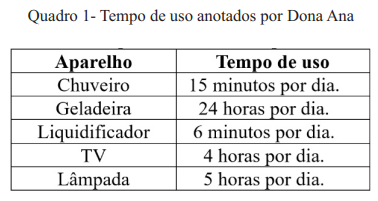
Considere o Texto 1 para responder à questão.
Na residência de Dona Ana, existem os seguintes aparelhos que consomem energia elétrica: 1 chuveiro (5500W), 1 geladeira (250W),
1 liquidificador (100W), 1 TV (300W) e 6 lâmpadas, sendo 15W, a potência de cada uma delas. Com o intuito de monitorar o consumo
de energia de sua casa, ela decidiu anotar o tempo de uso de cada aparelho, conforme descrito no Quadro 1.
Dona Ana se assustou ao se deparar com o valor da conta de energia de sua residência dentro do mês, e decidiu tomar as seguintes
providências: não fez mais uso do chuveiro elétrico e a TV passou a ser utilizada por 3 horas diárias. Considerando essa nova medida e
que o valor da tarifa cobrado pela companhia de energia elétrica é de R$ 0,90 por KWh, e que no cálculo do valor da conta sejam
desconsiderado impostos e valores adicionais, é CORRETO afirmar que o valor da conta de Dona Ana será de:
Ano: 2026
Banca:
CPCON
Órgão:
Prefeitura de Mãe D`Água - PB
Prova:
CPCON - 2026 - Prefeitura de Mãe D`Água - PB - Professor de Ciências |
Q4303403
Matemática
Texto associado
Considere o Texto 1 para responder à questão.
Na residência de Dona Ana, existem os seguintes aparelhos que consomem energia elétrica: 1 chuveiro (5500W), 1 geladeira (250W),
1 liquidificador (100W), 1 TV (300W) e 6 lâmpadas, sendo 15W, a potência de cada uma delas. Com o intuito de monitorar o consumo
de energia de sua casa, ela decidiu anotar o tempo de uso de cada aparelho, conforme descrito no Quadro 1.
Considerando que na residência de Dona Ana todos os aparelhos funcionem e que o tempo de uso dos mesmos seja o apresentado no
Quadro I, é CORRETO afirmar que, num período mensal (30 dias), o consumo de energia de sua residência em (kWh) é de:
Ano: 2026
Banca:
CPCON
Órgão:
Prefeitura de Mãe D`Água - PB
Prova:
CPCON - 2026 - Prefeitura de Mãe D`Água - PB - Professor de Ciências |
Q4303402
Física
O bebê-conforto, indicado para recém-nascidos e bebês de pouca idade, oferece elevado nível de segurança quando utilizado
corretamente. No entanto, muitos pais sentem-se inseguros por não conseguirem visualizar a criança durante o trajeto, uma vez que
esse dispositivo deve ser instalado de costas para o banco dianteiro do veículo.
Uma solução simples para essa situação é a utilização de um espelho adicional, instalado de forma que os responsáveis possam observar a criança enquanto dirigem. Dessa maneira, além de os pais conseguirem acompanhar o bebê, a própria criança também poderá visualizar seus responsáveis, proporcionando maior conforto e tranquilidade durante a viagem.
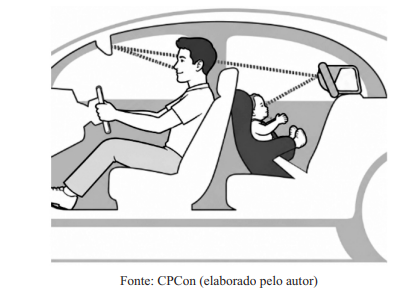
O fato do pai ver o bebê e o bebê também ver o pai é possível devido o fenômeno físico denominado de:
Uma solução simples para essa situação é a utilização de um espelho adicional, instalado de forma que os responsáveis possam observar a criança enquanto dirigem. Dessa maneira, além de os pais conseguirem acompanhar o bebê, a própria criança também poderá visualizar seus responsáveis, proporcionando maior conforto e tranquilidade durante a viagem.
O fato do pai ver o bebê e o bebê também ver o pai é possível devido o fenômeno físico denominado de:
Ano: 2026
Banca:
CPCON
Órgão:
Prefeitura de Mãe D`Água - PB
Prova:
CPCON - 2026 - Prefeitura de Mãe D`Água - PB - Professor de Ciências |
Q4303401
Química
As reações químicas representam transformações na composição química dos reagentes, de modo a formar novas substâncias. Elas
podem ser classificadas de acordo com suas características e produtos formados.
Sendo assim, analise as afirmativas a seguir.
I- A combustão é, geralmente, uma reação de oxirredução em que uma substância reage com um comburente como, por exemplo, o oxigênio, liberando energia na forma de calor e, às vezes, luz.
II- As reações de neutralização ocorrem entre um ácido e uma base, produzindo sal e água, sendo geralmente acompanhadas pela absorção de calor.
III- As reações de decomposição caracterizam-se pela união de duas ou mais substâncias para formar um único produto, sem necessidade de fornecimento de energia.
É CORRETO o que se afirma em:
Sendo assim, analise as afirmativas a seguir.
I- A combustão é, geralmente, uma reação de oxirredução em que uma substância reage com um comburente como, por exemplo, o oxigênio, liberando energia na forma de calor e, às vezes, luz.
II- As reações de neutralização ocorrem entre um ácido e uma base, produzindo sal e água, sendo geralmente acompanhadas pela absorção de calor.
III- As reações de decomposição caracterizam-se pela união de duas ou mais substâncias para formar um único produto, sem necessidade de fornecimento de energia.
É CORRETO o que se afirma em:
Ano: 2026
Banca:
CPCON
Órgão:
Prefeitura de Mãe D`Água - PB
Prova:
CPCON - 2026 - Prefeitura de Mãe D`Água - PB - Professor de Ciências |
Q4303400
Ciências
Em uma comunidade agroecológica, diferentes atividades do cotidiano exigem a aplicação de técnicas de separação de misturas.
Durante a colheita do café, um trabalhador utiliza a ação do vento para separar os grãos desejados das cascas, que são mais leves. Em
outra situação, uma agricultora realiza a seleção manual dos feijões, retirando impurezas e sementes inadequadas antes do preparo de
uma refeição. Já em uma etapa de beneficiamento da produção, outro trabalhador utiliza uma peneira para separar grãos de diferentes
tamanhos, garantindo maior uniformidade ao produto final.
Os métodos de separação de misturas empregados nessas três situações são, respectivamente:
Os métodos de separação de misturas empregados nessas três situações são, respectivamente:

 Conheça nossos planos