Questões de Concurso
Sobre verbos | verbs em inglês
Foram encontradas 3.093 questões



Multidict.net. Advertising language. Multidict.net, 2024. Disponível em: https://multidict.net/clilstore/page.php?id=5243. Acesso em: 12 jul. 2024.
Uma das formas de identificar a função social de um texto é a partir dos recursos linguísticos usados. O anúncio publicitário acima tem a função social de induzir o leitor a ter um certo comportamento, que é alcançada, também, pelo uso de
Read the song lyrics below and answer the question.
Hand In My Pocket
Alanis Morissette
I'm broke, but I'm happy
I'm poor, but
I'm kind I'm short, but
I'm healthy, yeah
I'm high, but
I'm grounded
I'm sane, but
I'm overwhelmed
I'm lost, bu
t I'm hopeful, baby
And what it all comes down to
Is that everything's gonna be fine, fine, fine
'Cause I've got one hand in my pocket
And the other one is giving a: High five
I feel drunk, but
I'm sober I'm young and
I'm underpaid
I'm tired, but
I'm working, yeah I care, but
I'm restless
I'm here, but
I'm really gone
I'm wrong and
I'm sorry, baby
And what it all comes down to
Is that everything's gonna be quite alright
'Cause I've got one hand in my pocket
And the other is flicking a cigarette
And what is all comes down to
Is that I haven't got it all figured out just yet
'Cause I've got one hand in my pocket
And the other one is giving the peace sign
I'm free, but
I'm focused
I'm green, but
I'm wise
I'm hard, but
I'm friendly, baby
I'm sad, but
I'm laughing
I'm brave, but
I'm chicken shit
I'm sick, but
I'm pretty, baby
And what it all boils down to
Is that no one's really got it figured out just yet
Well, I've got one hand in my pocket
And the other one is playing a piano
What it all comes down to, my friends, yeah
Is that everything's just fine, fine, fine
'Cause I've got one hand in my pocket
And the other one is hailing a taxi cab
O emprego da forma verbal destacada na letra da canção “Somewhere only we know” da banda inglesa Keane, cantada nos shows pelo Brasil em 2024, justifica-se por:
I walked across an empty land
I knew the pathway like the back of my hand
I felt the earth beneath my feet
Sat by the river and it made me complete
Oh, simple thing, where have you gone?
I'm getting old, and I need something to rely on
So, tell me when you're gonna let me in
I'm getting tired, and I need somewhere to begin
I came across a fallen tree
I felt the branches of it looking at me
Is this the place we used to love?
Is this the place that I've been dreaming of?
Oh, simple thing, where have you gone?
I'm getting old, and I need something to rely on
So, tell me when you're gonna let me in
I'm getting tired, and I need somewhere to begin
And if you have a minute, why don't we go
Talk about it somewhere only we know?
This could be the end of everything
So, why don't we go somewhere only we know?
Somewhere only we know
Oh, simple thing, where have you gone?
I'm getting old, and I need something to rely on
So, tell me when you're gonna let me in
I'm getting tired, and I need somewhere to begin
And if you have a minute, why don't we go
Talk about it somewhere only we know?
This could be the end of everything
So, why don't we go?
So, why don't we go?
Ooh, oh-oh
Ah, oh
This could be the end of everything
So, why don't we go somewhere only we know?
Somewhere only we know
Somewhere only we know
(Disponível em: https://www.letras.mus.br/keane. Acesso em: outubro de 2024.)
1.a) The coming and going of people is easy in a humanized city. 1.b) People are coming and going to choose their Christmas gifts.
2.a) Mike’s arriving to class late became a bad habit. 2.b) Look, Mike’s arriving to class late once more!
3.a) Jordan gets detention for his disrespecting the teachers. 3.b) Jordan gets detention for he’s disrespecting the teachers.
4.a) The candidate’s winning the elections in several key areas. 4.b) Her winning the elections was happily celebrated.
5.a) We are buying the gear for the weekend camping trip. 5.b) For the weekend camping trip, our buying the gear was expensive.
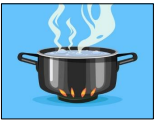
Fill in the blank with the appropriate verb form.
(Available: https://stock.adobe.com.)
“If you boil water, it ______________ into steam, that’s a scientific fact and there’s no doubt about it!”
In the English tense system, the simple present can be used to describe actions that occurred in the past.
Judge the next item, about the semantics and morphosyntax of the English language.
The sentence "Hardly had he entered the room when
the meeting started" demonstrates the use of negative
inversion, where the auxiliary verb "had" precedes the
subject "he" to emphasize the immediacy of the events.
Judge the next item, about the semantics and morphosyntax of the English language.
In the phrase "She enjoys playing the piano," the
gerund "playing" functions as a verbal noun, modifying
the verb "enjoys."
Judge the next item, about the semantics and morphosyntax of the English language.
In the sentence "He must have been working," the
auxiliary verb "must" indicates a necessity or obligation in
the past.
Regarding English grammar, judge the following item.
The modal verb "must" in English is always used to
indicate obligation or necessity, and it cannot be replaced
by "have to" without altering the meaning of the sentence.
Regarding English grammar, judge the following item.
In English, the subjunctive mood is only used in
hypothetical situations and is identical in form to the
indicative mood in all tenses except the present.
Regarding English grammar, judge the following item.
The English past perfect continuous tense is used
exclusively to emphasize the duration of an action that
was completed before another action in the past, and it
cannot be used in passive constructions.
Analyze the following statement about cognates and false cognates.
The English word "apparent" and the Portuguese
word "aparente" are false cognates, as "apparent" in
English means something that seems to be true or real
but may not be, while "aparente" in Portuguese means
something that is clearly visible or obvious.
Analyze the following statement about cognates and false cognates.
The English verb "to assist" and the Portuguese verb
"assistir" are cognates, both meaning "to help" or "to give
support."
1. The phrasal verb took place (1st paragraph) means happened, occurred.
2. The underlined words in th first paragraph mainly, completely, and occasionally are examples of adverbs of manner.
3. In the 3rd paragraph, the pronoun They (in bold), refers to the rings.
4. Women (1st paragraph) is the plural form of woman.
Choose the alternative which contains the correct sentences.
( ) The verb “understood” is incorrect, it should be replaced by “understand”.
( ) “are understood” is a present passive structure.
( ) “widest” is an adjective, that is in the superlative of superiority form.
Choose the alternative which presents the correct sequence, from top to bottom.

 Conheça nossos planos