Questões de Concurso Sobre inglês
Foram encontradas 25.994 questões


Text 3
Teaching with mental health challenges
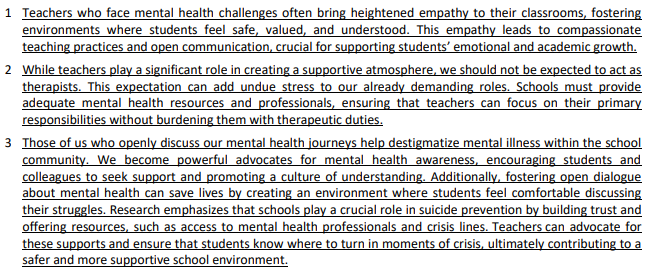
Sewell, A. (2024, December 9). Supporting teachers with anxiety and depression. Edutopia. https://www.edutopia.org/article/teachermental-health-challenges/
Text 2
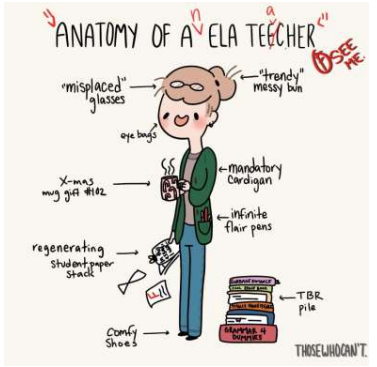
Reddit. (2023, June 8). Anatomy of an English Teacher [Comic]. r/comics. https://www.reddit.com/r/comics/comments/144c8h2/anatomy_of_an_english_teacher_oc/
Text 1
Where did English come from?

Blanco, C. (2025, April 17). Dear Duolingo: Where did English come from? Duolingo Blog. https://blog.duolingo.com/history-of-english-language/
Text 1
Where did English come from?
Blanco, C. (2025, April 17). Dear Duolingo: Where did English come from? Duolingo Blog. https://blog.duolingo.com/history-of-english-language/
To answer question, read the text below.
The Language of Performance
Well, the word “performative” is generally meant as an insult. It’s meant to trivialize and indicate that someone is play-acting or “faking it.” It suggests that someone is only doing something to be seen doing it, and not because it represents a sincere interest or enjoyment.
This is one of those situations in which metaphors are overextended, and language distorts rather than describes natural human behavior. It is normal for our species for men and women to “perform” acts to impress both our own sex and the opposite sex. Males and females have different sex “roles,” and we “perform” acts to satisfy those roles.
The language seems to “portray” us as “actors performing roles” and implies that we are all essentially “lying” or “faking.” This is the kind of wordcel wordtrap that lends itself to Marxist gender theory ideology and postmodernist thinking.
“Nothing is real, everything is fake. Everything is a performance.”
That’s a frame, but it isn’t the whole picture.
Men are primates. We imitate each other. Monkey see, monkey do. And yes, we do things to try to impress each other. You can frame that in a way that seems trivial or superficial, but it is also foundational to human nature and social hierarchy.
Fonte: https//mrjackdonovan.substack.com/p/on-performative-males
The author uses the passive voice sparingly and primarily for definitions (e.g., is generally meant), while shifting to a consistent active voice to build his core argument. Considering this stylistic choice, analyze the statements below:
I. Passive constructions tend to obscure the agent of the action, creating a sense of detachment.
II. Active verbs (such as those appearing in the second and third paragraphs) assign clear responsibility to the subject, making the critique feel more direct and assertive.
III. The use of active voice emphasizes that actions (like those mentioned in the fourth paragraph) are deliberate and intentional rather than passive occurrences.
IV. Extensive use of the passive voice would weaken the punchy, authoritative tone of the argument established throughout the text.
Which of the statements are CORRECT?
To answer question, read the text below.
The Language of Performance
Well, the word “performative” is generally meant as an insult. It’s meant to trivialize and indicate that someone is play-acting or “faking it.” It suggests that someone is only doing something to be seen doing it, and not because it represents a sincere interest or enjoyment.
This is one of those situations in which metaphors are overextended, and language distorts rather than describes natural human behavior. It is normal for our species for men and women to “perform” acts to impress both our own sex and the opposite sex. Males and females have different sex “roles,” and we “perform” acts to satisfy those roles.
The language seems to “portray” us as “actors performing roles” and implies that we are all essentially “lying” or “faking.” This is the kind of wordcel wordtrap that lends itself to Marxist gender theory ideology and postmodernist thinking.
“Nothing is real, everything is fake. Everything is a performance.”
That’s a frame, but it isn’t the whole picture.
Men are primates. We imitate each other. Monkey see, monkey do. And yes, we do things to try to impress each other. You can frame that in a way that seems trivial or superficial, but it is also foundational to human nature and social hierarchy.
Fonte: https//mrjackdonovan.substack.com/p/on-performative-males
Regarding the use of adjectives and their degrees of comparison in the text, mark T (true) or F (false) for the following statements:
( ) The term different in the second paragraph is a superlative adjective used to show that roles are unique.
( ) The word essentially in the third paragraph functions as an intensifier but is not a superlative form.
( ) The expression the whole picture in the fifth paragraph is in the positive degree, not the superlative.
( ) There are no adjectives ending in "-est" or preceded by "most" (as a superlative modifier) in the entire text.
Which option CORRECTLY fills in the parenthesis above, from top to bottom?
To answer question, read the text below.
The Language of Performance
Well, the word “performative” is generally meant as an insult. It’s meant to trivialize and indicate that someone is play-acting or “faking it.” It suggests that someone is only doing something to be seen doing it, and not because it represents a sincere interest or enjoyment.
This is one of those situations in which metaphors are overextended, and language distorts rather than describes natural human behavior. It is normal for our species for men and women to “perform” acts to impress both our own sex and the opposite sex. Males and females have different sex “roles,” and we “perform” acts to satisfy those roles.
The language seems to “portray” us as “actors performing roles” and implies that we are all essentially “lying” or “faking.” This is the kind of wordcel wordtrap that lends itself to Marxist gender theory ideology and postmodernist thinking.
“Nothing is real, everything is fake. Everything is a performance.”
That’s a frame, but it isn’t the whole picture.
Men are primates. We imitate each other. Monkey see, monkey do. And yes, we do things to try to impress each other. You can frame that in a way that seems trivial or superficial, but it is also foundational to human nature and social hierarchy.
Fonte: https//mrjackdonovan.substack.com/p/on-performative-males
To answer question, read the text below.
The Language of Performance
Well, the word “performative” is generally meant as an insult. It’s meant to trivialize and indicate that someone is play-acting or “faking it.” It suggests that someone is only doing something to be seen doing it, and not because it represents a sincere interest or enjoyment.
This is one of those situations in which metaphors are overextended, and language distorts rather than describes natural human behavior. It is normal for our species for men and women to “perform” acts to impress both our own sex and the opposite sex. Males and females have different sex “roles,” and we “perform” acts to satisfy those roles.
The language seems to “portray” us as “actors performing roles” and implies that we are all essentially “lying” or “faking.” This is the kind of wordcel wordtrap that lends itself to Marxist gender theory ideology and postmodernist thinking.
“Nothing is real, everything is fake. Everything is a performance.”
That’s a frame, but it isn’t the whole picture.
Men are primates. We imitate each other. Monkey see, monkey do. And yes, we do things to try to impress each other. You can frame that in a way that seems trivial or superficial, but it is also foundational to human nature and social hierarchy.
Fonte: https//mrjackdonovan.substack.com/p/on-performative-males
Collocations are pairs or groups of words that are habitually juxtaposed in English. Based on this concept, identify which of the following terms from the text are examples of collocations:
I. Whole picture (Fifth paragraph)
II. Human nature (Sixth paragraph)
III. Social hierarchy (Sixth paragraph)
IV. Sex roles (Second paragraph)
V. Human behavior (Second paragraph)
Which of the statements are CORRECT?
To answer question, read the text below.
The Language of Performance
Well, the word “performative” is generally meant as an insult. It’s meant to trivialize and indicate that someone is play-acting or “faking it.” It suggests that someone is only doing something to be seen doing it, and not because it represents a sincere interest or enjoyment.
This is one of those situations in which metaphors are overextended, and language distorts rather than describes natural human behavior. It is normal for our species for men and women to “perform” acts to impress both our own sex and the opposite sex. Males and females have different sex “roles,” and we “perform” acts to satisfy those roles.
The language seems to “portray” us as “actors performing roles” and implies that we are all essentially “lying” or “faking.” This is the kind of wordcel wordtrap that lends itself to Marxist gender theory ideology and postmodernist thinking.
“Nothing is real, everything is fake. Everything is a performance.”
That’s a frame, but it isn’t the whole picture.
Men are primates. We imitate each other. Monkey see, monkey do. And yes, we do things to try to impress each other. You can frame that in a way that seems trivial or superficial, but it is also foundational to human nature and social hierarchy.
Fonte: https//mrjackdonovan.substack.com/p/on-performative-males
Read the following statements about the phrase faking it (first paragraph) and mark True (T) or False (F):
( ) It is a phrasal verb (intransitive, with "it" as a pronoun object).
( ) It appears in the context of the word performative.
( ) It is implying sincerity, synonymous with pretending or acting truly.
( ) It is a compound noun.
Which option CORRECTLY fills in the parenthesis above, from top to bottom?
To answer question, read the text below.
The Language of Performance
Well, the word “performative” is generally meant as an insult. It’s meant to trivialize and indicate that someone is play-acting or “faking it.” It suggests that someone is only doing something to be seen doing it, and not because it represents a sincere interest or enjoyment.
This is one of those situations in which metaphors are overextended, and language distorts rather than describes natural human behavior. It is normal for our species for men and women to “perform” acts to impress both our own sex and the opposite sex. Males and females have different sex “roles,” and we “perform” acts to satisfy those roles.
The language seems to “portray” us as “actors performing roles” and implies that we are all essentially “lying” or “faking.” This is the kind of wordcel wordtrap that lends itself to Marxist gender theory ideology and postmodernist thinking.
“Nothing is real, everything is fake. Everything is a performance.”
That’s a frame, but it isn’t the whole picture.
Men are primates. We imitate each other. Monkey see, monkey do. And yes, we do things to try to impress each other. You can frame that in a way that seems trivial or superficial, but it is also foundational to human nature and social hierarchy.
Fonte: https//mrjackdonovan.substack.com/p/on-performative-males
To answer question, read the text below.
The Language of Performance
Well, the word “performative” is generally meant as an insult. It’s meant to trivialize and indicate that someone is play-acting or “faking it.” It suggests that someone is only doing something to be seen doing it, and not because it represents a sincere interest or enjoyment.
This is one of those situations in which metaphors are overextended, and language distorts rather than describes natural human behavior. It is normal for our species for men and women to “perform” acts to impress both our own sex and the opposite sex. Males and females have different sex “roles,” and we “perform” acts to satisfy those roles.
The language seems to “portray” us as “actors performing roles” and implies that we are all essentially “lying” or “faking.” This is the kind of wordcel wordtrap that lends itself to Marxist gender theory ideology and postmodernist thinking.
“Nothing is real, everything is fake. Everything is a performance.”
That’s a frame, but it isn’t the whole picture.
Men are primates. We imitate each other. Monkey see, monkey do. And yes, we do things to try to impress each other. You can frame that in a way that seems trivial or superficial, but it is also foundational to human nature and social hierarchy.
Fonte: https//mrjackdonovan.substack.com/p/on-performative-males
To answer question, read the text below.
The Language of Performance
Well, the word “performative” is generally meant as an insult. It’s meant to trivialize and indicate that someone is play-acting or “faking it.” It suggests that someone is only doing something to be seen doing it, and not because it represents a sincere interest or enjoyment.
This is one of those situations in which metaphors are overextended, and language distorts rather than describes natural human behavior. It is normal for our species for men and women to “perform” acts to impress both our own sex and the opposite sex. Males and females have different sex “roles,” and we “perform” acts to satisfy those roles.
The language seems to “portray” us as “actors performing roles” and implies that we are all essentially “lying” or “faking.” This is the kind of wordcel wordtrap that lends itself to Marxist gender theory ideology and postmodernist thinking.
“Nothing is real, everything is fake. Everything is a performance.”
That’s a frame, but it isn’t the whole picture.
Men are primates. We imitate each other. Monkey see, monkey do. And yes, we do things to try to impress each other. You can frame that in a way that seems trivial or superficial, but it is also foundational to human nature and social hierarchy.
Fonte: https//mrjackdonovan.substack.com/p/on-performative-males
To answer question, read the text below.
The Language of Performance
Well, the word “performative” is generally meant as an insult. It’s meant to trivialize and indicate that someone is play-acting or “faking it.” It suggests that someone is only doing something to be seen doing it, and not because it represents a sincere interest or enjoyment.
This is one of those situations in which metaphors are overextended, and language distorts rather than describes natural human behavior. It is normal for our species for men and women to “perform” acts to impress both our own sex and the opposite sex. Males and females have different sex “roles,” and we “perform” acts to satisfy those roles.
The language seems to “portray” us as “actors performing roles” and implies that we are all essentially “lying” or “faking.” This is the kind of wordcel wordtrap that lends itself to Marxist gender theory ideology and postmodernist thinking.
“Nothing is real, everything is fake. Everything is a performance.”
That’s a frame, but it isn’t the whole picture.
Men are primates. We imitate each other. Monkey see, monkey do. And yes, we do things to try to impress each other. You can frame that in a way that seems trivial or superficial, but it is also foundational to human nature and social hierarchy.
Fonte: https//mrjackdonovan.substack.com/p/on-performative-males
To answer question, read the text below.
The Language of Performance
Well, the word “performative” is generally meant as an insult. It’s meant to trivialize and indicate that someone is play-acting or “faking it.” It suggests that someone is only doing something to be seen doing it, and not because it represents a sincere interest or enjoyment.
This is one of those situations in which metaphors are overextended, and language distorts rather than describes natural human behavior. It is normal for our species for men and women to “perform” acts to impress both our own sex and the opposite sex. Males and females have different sex “roles,” and we “perform” acts to satisfy those roles.
The language seems to “portray” us as “actors performing roles” and implies that we are all essentially “lying” or “faking.” This is the kind of wordcel wordtrap that lends itself to Marxist gender theory ideology and postmodernist thinking.
“Nothing is real, everything is fake. Everything is a performance.”
That’s a frame, but it isn’t the whole picture.
Men are primates. We imitate each other. Monkey see, monkey do. And yes, we do things to try to impress each other. You can frame that in a way that seems trivial or superficial, but it is also foundational to human nature and social hierarchy.
Fonte: https//mrjackdonovan.substack.com/p/on-performative-males
“Many educators argue that online learning can be more flexible than traditional classroom instruction.”
Com base no uso da estrutura more flexible than, assinale a alternativa correta.
“The internationalization of artificial intelligence technologies has transformed the way people communicate, work and access information around the world.”
A palavra “internationalization” apresenta um processo de formação lexical característico da língua inglesa, envolvendo prefixação e sufixação a partir de um radical nominal. Assinale a alternativa que apresenta a análise correta da formação dessa palavra.
“Students improve their language skills through practice.”
Assinale a alternativa em que a palavra em destaque pode ser substituída por um sinônimo adequado sem alteração significativa de sentido.

 Conheça nossos planos