Questões de Concurso Sobre inglês
Foram encontradas 25.999 questões


Ano: 2025
Banca:
FEPESE
Órgão:
Prefeitura de Chapecó - SC
Prova:
FEPESE - 2025 - Prefeitura de Chapecó - SC - Professor - Língua Estrangeira - Inglês |
Q3698886
Inglês
Texto associado
Text 2
Corporations can now find out exactly how you think
through the science of neuromarketing. Advertisers
are currently collaborating with scientists to test their
products directly on our brains. Some experts believe
that one in ten TV commercials have already been
designed using neuromarketing.
The reasons are obvious. The technique allows companies to discover exactly what people like about their
products. For example, when we eat a type of potato
chip, it may be the color, the flavor, or the pleasant
noise it makes when you crunch it in your mouth that
we like most.
In order to tap into what’s going on in consumers’
brains, it all begins in laboratories and office buildings.
Groups of volunteers submit themselves to a simple
process. Wearing a special headset called an electrode cap, they watch commercials or test products. The
caps allow researchers to monitor brain activity. When
something attracts the attention of the volunteers,
this is highlighted on a computer.
They literally use this device to read the minds of their
volunteers. This may sound a little scary, but advertisers are just tapping into our existing thoughts and
desires. And that’s what advertisers have always tried
to do.
Previously, companies would give people a survey or
questionnaire to complete in order to research their
customers. The problem was that people didn’t always
tell the truth. They may not want to be critical of a
product or advertisement because they don’t want to
upset the interviewer. The electrode cap overcomes
this problem. It shows when someone really is interested in something.
Neuromarketing is also used to develop packaging
for the world’s most famous brands. The aim is to
make their products stand out in a busy marketplace.
This will become standard as more companies capitalize on the technology. With millions invested in
advertising, companies simply cannot afford to hope
that their ads and products will be a success. If they
can find out what we think first, and change their
products to make them more successful, they will
quickly pay off the high cost of neuromarketing and
dominate their market.
The phrase capitalize on (last paragraph/text
2) in the sentence This will become standard as more
companies capitalize on the technology, is closest in
meaning to:
Ano: 2025
Banca:
FEPESE
Órgão:
Prefeitura de Chapecó - SC
Prova:
FEPESE - 2025 - Prefeitura de Chapecó - SC - Professor - Língua Estrangeira - Inglês |
Q3698885
Inglês
Texto associado
Text 2
Corporations can now find out exactly how you think
through the science of neuromarketing. Advertisers
are currently collaborating with scientists to test their
products directly on our brains. Some experts believe
that one in ten TV commercials have already been
designed using neuromarketing.
The reasons are obvious. The technique allows companies to discover exactly what people like about their
products. For example, when we eat a type of potato
chip, it may be the color, the flavor, or the pleasant
noise it makes when you crunch it in your mouth that
we like most.
In order to tap into what’s going on in consumers’
brains, it all begins in laboratories and office buildings.
Groups of volunteers submit themselves to a simple
process. Wearing a special headset called an electrode cap, they watch commercials or test products. The
caps allow researchers to monitor brain activity. When
something attracts the attention of the volunteers,
this is highlighted on a computer.
They literally use this device to read the minds of their
volunteers. This may sound a little scary, but advertisers are just tapping into our existing thoughts and
desires. And that’s what advertisers have always tried
to do.
Previously, companies would give people a survey or
questionnaire to complete in order to research their
customers. The problem was that people didn’t always
tell the truth. They may not want to be critical of a
product or advertisement because they don’t want to
upset the interviewer. The electrode cap overcomes
this problem. It shows when someone really is interested in something.
Neuromarketing is also used to develop packaging
for the world’s most famous brands. The aim is to
make their products stand out in a busy marketplace.
This will become standard as more companies capitalize on the technology. With millions invested in
advertising, companies simply cannot afford to hope
that their ads and products will be a success. If they
can find out what we think first, and change their
products to make them more successful, they will
quickly pay off the high cost of neuromarketing and
dominate their market.
According to text 2 what was the problem with
old-fashioned research?
Ano: 2025
Banca:
FEPESE
Órgão:
Prefeitura de Chapecó - SC
Prova:
FEPESE - 2025 - Prefeitura de Chapecó - SC - Professor - Língua Estrangeira - Inglês |
Q3698884
Inglês
Texto associado
Text 2
Corporations can now find out exactly how you think
through the science of neuromarketing. Advertisers
are currently collaborating with scientists to test their
products directly on our brains. Some experts believe
that one in ten TV commercials have already been
designed using neuromarketing.
The reasons are obvious. The technique allows companies to discover exactly what people like about their
products. For example, when we eat a type of potato
chip, it may be the color, the flavor, or the pleasant
noise it makes when you crunch it in your mouth that
we like most.
In order to tap into what’s going on in consumers’
brains, it all begins in laboratories and office buildings.
Groups of volunteers submit themselves to a simple
process. Wearing a special headset called an electrode cap, they watch commercials or test products. The
caps allow researchers to monitor brain activity. When
something attracts the attention of the volunteers,
this is highlighted on a computer.
They literally use this device to read the minds of their
volunteers. This may sound a little scary, but advertisers are just tapping into our existing thoughts and
desires. And that’s what advertisers have always tried
to do.
Previously, companies would give people a survey or
questionnaire to complete in order to research their
customers. The problem was that people didn’t always
tell the truth. They may not want to be critical of a
product or advertisement because they don’t want to
upset the interviewer. The electrode cap overcomes
this problem. It shows when someone really is interested in something.
Neuromarketing is also used to develop packaging
for the world’s most famous brands. The aim is to
make their products stand out in a busy marketplace.
This will become standard as more companies capitalize on the technology. With millions invested in
advertising, companies simply cannot afford to hope
that their ads and products will be a success. If they
can find out what we think first, and change their
products to make them more successful, they will
quickly pay off the high cost of neuromarketing and
dominate their market.
In the sentence They literally use this device to
read the minds of their volunteers (fourth paragraph of
text 2), the pronoun they refers to the:
Ano: 2025
Banca:
FEPESE
Órgão:
Prefeitura de Chapecó - SC
Prova:
FEPESE - 2025 - Prefeitura de Chapecó - SC - Professor - Língua Estrangeira - Inglês |
Q3698882
Inglês
Texto associado
Text 2
Corporations can now find out exactly how you think
through the science of neuromarketing. Advertisers
are currently collaborating with scientists to test their
products directly on our brains. Some experts believe
that one in ten TV commercials have already been
designed using neuromarketing.
The reasons are obvious. The technique allows companies to discover exactly what people like about their
products. For example, when we eat a type of potato
chip, it may be the color, the flavor, or the pleasant
noise it makes when you crunch it in your mouth that
we like most.
In order to tap into what’s going on in consumers’
brains, it all begins in laboratories and office buildings.
Groups of volunteers submit themselves to a simple
process. Wearing a special headset called an electrode cap, they watch commercials or test products. The
caps allow researchers to monitor brain activity. When
something attracts the attention of the volunteers,
this is highlighted on a computer.
They literally use this device to read the minds of their
volunteers. This may sound a little scary, but advertisers are just tapping into our existing thoughts and
desires. And that’s what advertisers have always tried
to do.
Previously, companies would give people a survey or
questionnaire to complete in order to research their
customers. The problem was that people didn’t always
tell the truth. They may not want to be critical of a
product or advertisement because they don’t want to
upset the interviewer. The electrode cap overcomes
this problem. It shows when someone really is interested in something.
Neuromarketing is also used to develop packaging
for the world’s most famous brands. The aim is to
make their products stand out in a busy marketplace.
This will become standard as more companies capitalize on the technology. With millions invested in
advertising, companies simply cannot afford to hope
that their ads and products will be a success. If they
can find out what we think first, and change their
products to make them more successful, they will
quickly pay off the high cost of neuromarketing and
dominate their market.
Read the statements below and decide if they are
true ( T ) or false ( F ) according to text 2.
( ) A minority of advertisements already use neuromarketing.
( ) Neuromarketing can only be used on food or drink products.
( ) Scientists refuse to work with companies on neuromarketing projects.
( ) Neuromarketing allows companies to discover exactly what people like about their products.
Choose the alternative which presents the correct sequence, from top to bottom.
( ) A minority of advertisements already use neuromarketing.
( ) Neuromarketing can only be used on food or drink products.
( ) Scientists refuse to work with companies on neuromarketing projects.
( ) Neuromarketing allows companies to discover exactly what people like about their products.
Choose the alternative which presents the correct sequence, from top to bottom.
Ano: 2025
Banca:
FEPESE
Órgão:
Prefeitura de Chapecó - SC
Prova:
FEPESE - 2025 - Prefeitura de Chapecó - SC - Professor - Língua Estrangeira - Inglês |
Q3698881
Inglês
Texto associado
Text 1
Chapecó is a municipality in the state of Santa Catarina, in the Southern Region of Brazil. Being a major
industrial, financial and educational center, it is a major
producer of industrialized food products. Considered
a medium city, with a population estimated at 224,013
inhabitants, it is among the four most important cities
in the state. It belongs to the Meso-region of Western
Santa Catarina and to the Microregion of Chapecó.
Distant 550 km.......................the state capital,
Florianópolis, it is Headquarters of the Metropolitan
Region.......................Chapecó, and exerts significant
influence not....................... in the Catarinense West
but.......................in the Northwest Rio Grande do Sul
and Southwest of Paraná, from an economic, cultural,
or political point of view.
Chapecó became known worldwide through its association football club Chapecoense and the aftermath
of LaMia Flight 2933 which killed 71, including most of
the team’s roster and staff.
With the titles of “Brazil’s agribusiness capital” and
“Brazil’s business tourism capital”, the planned town
constructed in the form of a chess grid also has
universities attracting students from all over Brazil.
The main educational institutions are UFFS, UCEFF,
UNOCHAPECÓ, UNOESC and UDESC.
This region of the state is home of some of the largest
meat processing and exporting industrial enterprises
such as Sadia and Seara Foods; the farmers are organized in agricultural cooperatives. Chapecó is known
as a Brazilian agro-industrial capital, specialized in
pork, poultry and technology involved. The city is
headquarters of Aurora Central Cooperative Archived
2016-11-23 at the Wayback Machine and has a plant of
BRF S.A. since 1973.
Other major economic sectors are metal mechanics
specialized in equipment for slaughterhouses and
transportation, plastics and packaging, furniture, beverages, software development and biotechnology.
Civil construction and trade are also important source
of income.
source: https://en.wikipedia.org
The word “plant” in the following sentence:” The
city is headquarters of Aurora Central Cooperative
Archived 2016-11-23 at the Wayback Machine and has
a plant of BRF S.A. since 1973.”, is closest in meaning
to:
Ano: 2025
Banca:
FEPESE
Órgão:
Prefeitura de Chapecó - SC
Prova:
FEPESE - 2025 - Prefeitura de Chapecó - SC - Professor - Língua Estrangeira - Inglês |
Q3698880
Inglês
Texto associado
Text 1
Chapecó is a municipality in the state of Santa Catarina, in the Southern Region of Brazil. Being a major
industrial, financial and educational center, it is a major
producer of industrialized food products. Considered
a medium city, with a population estimated at 224,013
inhabitants, it is among the four most important cities
in the state. It belongs to the Meso-region of Western
Santa Catarina and to the Microregion of Chapecó.
Distant 550 km.......................the state capital,
Florianópolis, it is Headquarters of the Metropolitan
Region.......................Chapecó, and exerts significant
influence not....................... in the Catarinense West
but.......................in the Northwest Rio Grande do Sul
and Southwest of Paraná, from an economic, cultural,
or political point of view.
Chapecó became known worldwide through its association football club Chapecoense and the aftermath
of LaMia Flight 2933 which killed 71, including most of
the team’s roster and staff.
With the titles of “Brazil’s agribusiness capital” and
“Brazil’s business tourism capital”, the planned town
constructed in the form of a chess grid also has
universities attracting students from all over Brazil.
The main educational institutions are UFFS, UCEFF,
UNOCHAPECÓ, UNOESC and UDESC.
This region of the state is home of some of the largest
meat processing and exporting industrial enterprises
such as Sadia and Seara Foods; the farmers are organized in agricultural cooperatives. Chapecó is known
as a Brazilian agro-industrial capital, specialized in
pork, poultry and technology involved. The city is
headquarters of Aurora Central Cooperative Archived
2016-11-23 at the Wayback Machine and has a plant of
BRF S.A. since 1973.
Other major economic sectors are metal mechanics
specialized in equipment for slaughterhouses and
transportation, plastics and packaging, furniture, beverages, software development and biotechnology.
Civil construction and trade are also important source
of income.
source: https://en.wikipedia.org
According to text 1, about Chapecó, which of the
following statements can be inferred from the text?
1. Meat processing, metal mechanics and civil construction are the only sources of income.
2. Chapecó has its location in the west part of the state of Santa Catarina.
3. The Universidade Federal da Fronteira Sul is one of the main educational institutions in Chapecó.
4. Sadia and Seara’s food are famous enterprises for their technology on slaughterhouses.
Choose the alternative which contains the correct sentences.
1. Meat processing, metal mechanics and civil construction are the only sources of income.
2. Chapecó has its location in the west part of the state of Santa Catarina.
3. The Universidade Federal da Fronteira Sul is one of the main educational institutions in Chapecó.
4. Sadia and Seara’s food are famous enterprises for their technology on slaughterhouses.
Choose the alternative which contains the correct sentences.
Ano: 2025
Banca:
FEPESE
Órgão:
Prefeitura de Chapecó - SC
Prova:
FEPESE - 2025 - Prefeitura de Chapecó - SC - Professor - Língua Estrangeira - Inglês |
Q3698879
Inglês
Texto associado
Text 1
Chapecó is a municipality in the state of Santa Catarina, in the Southern Region of Brazil. Being a major
industrial, financial and educational center, it is a major
producer of industrialized food products. Considered
a medium city, with a population estimated at 224,013
inhabitants, it is among the four most important cities
in the state. It belongs to the Meso-region of Western
Santa Catarina and to the Microregion of Chapecó.
Distant 550 km.......................the state capital,
Florianópolis, it is Headquarters of the Metropolitan
Region.......................Chapecó, and exerts significant
influence not....................... in the Catarinense West
but.......................in the Northwest Rio Grande do Sul
and Southwest of Paraná, from an economic, cultural,
or political point of view.
Chapecó became known worldwide through its association football club Chapecoense and the aftermath
of LaMia Flight 2933 which killed 71, including most of
the team’s roster and staff.
With the titles of “Brazil’s agribusiness capital” and
“Brazil’s business tourism capital”, the planned town
constructed in the form of a chess grid also has
universities attracting students from all over Brazil.
The main educational institutions are UFFS, UCEFF,
UNOCHAPECÓ, UNOESC and UDESC.
This region of the state is home of some of the largest
meat processing and exporting industrial enterprises
such as Sadia and Seara Foods; the farmers are organized in agricultural cooperatives. Chapecó is known
as a Brazilian agro-industrial capital, specialized in
pork, poultry and technology involved. The city is
headquarters of Aurora Central Cooperative Archived
2016-11-23 at the Wayback Machine and has a plant of
BRF S.A. since 1973.
Other major economic sectors are metal mechanics
specialized in equipment for slaughterhouses and
transportation, plastics and packaging, furniture, beverages, software development and biotechnology.
Civil construction and trade are also important source
of income.
source: https://en.wikipedia.org
Which alternative presents the correct words that
are missing in the second paragraph of text 1.
Ano: 2025
Banca:
FEPESE
Órgão:
Prefeitura de Chapecó - SC
Prova:
FEPESE - 2025 - Prefeitura de Chapecó - SC - Professor - Língua Estrangeira - Inglês |
Q3698878
Inglês
Texto associado
Text 1
Chapecó is a municipality in the state of Santa Catarina, in the Southern Region of Brazil. Being a major
industrial, financial and educational center, it is a major
producer of industrialized food products. Considered
a medium city, with a population estimated at 224,013
inhabitants, it is among the four most important cities
in the state. It belongs to the Meso-region of Western
Santa Catarina and to the Microregion of Chapecó.
Distant 550 km.......................the state capital,
Florianópolis, it is Headquarters of the Metropolitan
Region.......................Chapecó, and exerts significant
influence not....................... in the Catarinense West
but.......................in the Northwest Rio Grande do Sul
and Southwest of Paraná, from an economic, cultural,
or political point of view.
Chapecó became known worldwide through its association football club Chapecoense and the aftermath
of LaMia Flight 2933 which killed 71, including most of
the team’s roster and staff.
With the titles of “Brazil’s agribusiness capital” and
“Brazil’s business tourism capital”, the planned town
constructed in the form of a chess grid also has
universities attracting students from all over Brazil.
The main educational institutions are UFFS, UCEFF,
UNOCHAPECÓ, UNOESC and UDESC.
This region of the state is home of some of the largest
meat processing and exporting industrial enterprises
such as Sadia and Seara Foods; the farmers are organized in agricultural cooperatives. Chapecó is known
as a Brazilian agro-industrial capital, specialized in
pork, poultry and technology involved. The city is
headquarters of Aurora Central Cooperative Archived
2016-11-23 at the Wayback Machine and has a plant of
BRF S.A. since 1973.
Other major economic sectors are metal mechanics
specialized in equipment for slaughterhouses and
transportation, plastics and packaging, furniture, beverages, software development and biotechnology.
Civil construction and trade are also important source
of income.
source: https://en.wikipedia.org
According to text 1, decide if the following sentences are true ( T ) or false ( F ).
( ) Chapecó is considered a major industrial, financial and educational center.
( ) Florianópolis is 550km far from Chapecó.
( ) Chapecoense is the largest meat importing industrial enterprises.
( ) Chapecó became known worldwide because of a plane crash.
Choose the alternative which presents the correct sequence, from top to bottom.
( ) Chapecó is considered a major industrial, financial and educational center.
( ) Florianópolis is 550km far from Chapecó.
( ) Chapecoense is the largest meat importing industrial enterprises.
( ) Chapecó became known worldwide because of a plane crash.
Choose the alternative which presents the correct sequence, from top to bottom.
Ano: 2025
Banca:
Avança SP
Órgão:
Prefeitura de Varginha - MG
Prova:
Avança SP - 2025 - Prefeitura de Varginha - MG - Professor PII - Língua Inglesa |
Q3695706
Inglês
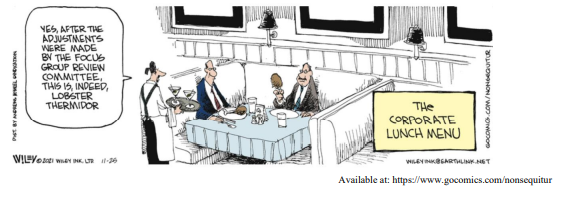
Which of the following best describes the voice of the clause: “the adjustments were made by the focus group review committee”?
Ano: 2025
Banca:
Avança SP
Órgão:
Prefeitura de Varginha - MG
Prova:
Avança SP - 2025 - Prefeitura de Varginha - MG - Professor PII - Língua Inglesa |
Q3695705
Inglês
The audio-lingual method is based on the automatization of linguistic skills through grammatical
patterns and oral practices. This method emphasizes listening and speaking, with a focus on immediate
correction of errors.
Which of the following alternatives does not present an example of this method?
Which of the following alternatives does not present an example of this method?
Ano: 2025
Banca:
Avança SP
Órgão:
Prefeitura de Varginha - MG
Prova:
Avança SP - 2025 - Prefeitura de Varginha - MG - Professor PII - Língua Inglesa |
Q3695704
Inglês
Read the following sentence:
“During the 2018 US-North Korea Summit in Singapore, President Trump had to walk on eggshells when discussing denuclearization with Kim Jong-un to avoid derailing the historic talks.”
What does the expression “walk on eggshells” mean in this context?
“During the 2018 US-North Korea Summit in Singapore, President Trump had to walk on eggshells when discussing denuclearization with Kim Jong-un to avoid derailing the historic talks.”
What does the expression “walk on eggshells” mean in this context?
Ano: 2025
Banca:
Avança SP
Órgão:
Prefeitura de Varginha - MG
Prova:
Avança SP - 2025 - Prefeitura de Varginha - MG - Professor PII - Língua Inglesa |
Q3695703
Inglês
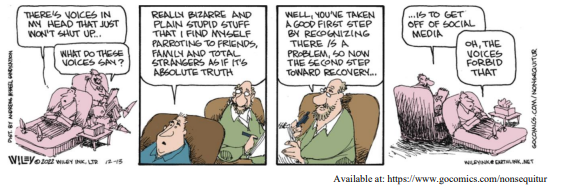
In the comic strip, what do the voices in the character's head forbid him from doing?
Ano: 2025
Banca:
Avança SP
Órgão:
Prefeitura de Varginha - MG
Prova:
Avança SP - 2025 - Prefeitura de Varginha - MG - Professor PII - Língua Inglesa |
Q3695702
Inglês

Brass ‘White Australia’ protection badge, 1906
“In 1901, the new federal government passed an Act ending the employment of Pacific Islanders. The Immigration Restriction Act 1901 received royal assent on 23 December 1901. It was described as an Act ‘to place certain restrictions on immigration and to provide for the removal from the Commonwealth of prohibited immigrants’.”
What was the purpose of the Immigration Restriction Act of 1901 in Australia?
Ano: 2025
Banca:
Avança SP
Órgão:
Prefeitura de Varginha - MG
Prova:
Avança SP - 2025 - Prefeitura de Varginha - MG - Professor PII - Língua Inglesa |
Q3695701
Inglês
Yard sales, also known as garage sales or tag sales in some regions, are a common cultural practice in
the United States. The impact of their socioeconomic status on communities is explained by which of
the following?
Ano: 2025
Banca:
Avança SP
Órgão:
Prefeitura de Varginha - MG
Prova:
Avança SP - 2025 - Prefeitura de Varginha - MG - Professor PII - Língua Inglesa |
Q3695700
Inglês
The British colonial expansion led to the spread of the English language across various regions
globally. Today, several countries speak English due to these colonial ventures, including nations in
Africa, the Caribbean, and the Pacific.
Which of the following lists includes only countries where English is spoken as a result of British colonialism?
Which of the following lists includes only countries where English is spoken as a result of British colonialism?
Ano: 2025
Banca:
Avança SP
Órgão:
Prefeitura de Varginha - MG
Prova:
Avança SP - 2025 - Prefeitura de Varginha - MG - Professor PII - Língua Inglesa |
Q3695699
Inglês
Review the statements below about journalistic text genres and decide whether they are correct or not:
I. Giving a detailed analysis of the event is the function of a “headline”. II. Without including the writer’s personal views, a “news report” should stick to the facts. III. Being neutral and based purely on facts is the purpose of “opinion pieces”. IV. To critically analyze news, it is essential to understand and recognize bias. V. The opinions of the publication’s editorial team are represented by “editorials”.
Choose the option where the statements are correctly identified:
I. Giving a detailed analysis of the event is the function of a “headline”. II. Without including the writer’s personal views, a “news report” should stick to the facts. III. Being neutral and based purely on facts is the purpose of “opinion pieces”. IV. To critically analyze news, it is essential to understand and recognize bias. V. The opinions of the publication’s editorial team are represented by “editorials”.
Choose the option where the statements are correctly identified:
Ano: 2025
Banca:
Avança SP
Órgão:
Prefeitura de Varginha - MG
Prova:
Avança SP - 2025 - Prefeitura de Varginha - MG - Professor PII - Língua Inglesa |
Q3695698
Inglês
Read the sentences below and select the alternative that contains the incorrect tag question:
Ano: 2025
Banca:
Avança SP
Órgão:
Prefeitura de Varginha - MG
Prova:
Avança SP - 2025 - Prefeitura de Varginha - MG - Professor PII - Língua Inglesa |
Q3695697
Inglês
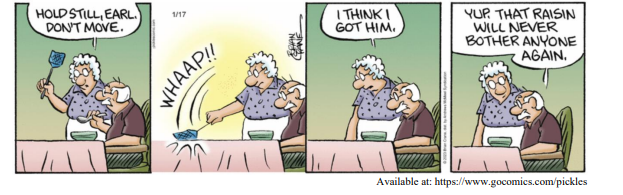
In the last panel of the comic strip, the word “raisin” is used. What does the word “raisin” mean in English?
Ano: 2025
Banca:
Avança SP
Órgão:
Prefeitura de Varginha - MG
Prova:
Avança SP - 2025 - Prefeitura de Varginha - MG - Professor PII - Língua Inglesa |
Q3695696
Inglês
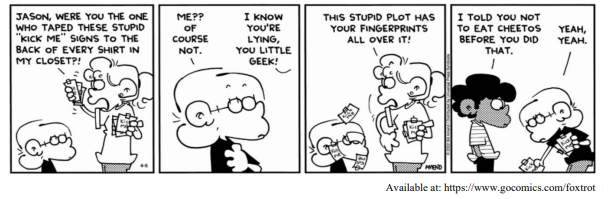
In the comic, the character accuses Jason of taping “kick me” signs to the back of every shirt. What gives him away?
Ano: 2025
Banca:
Avança SP
Órgão:
Prefeitura de Varginha - MG
Prova:
Avança SP - 2025 - Prefeitura de Varginha - MG - Professor PII - Língua Inglesa |
Q3695695
Inglês
In the word “photography” /fəˈtɑːɡrəfi/, which syllable is stressed?

 Conheça nossos planos