Questões de Concurso
Sobre interpretação de texto | reading comprehension em inglês
Foram encontradas 12.687 questões


Ano: 2025
Banca:
VUNESP
Órgão:
Prefeitura de Tremembé - SP
Prova:
VUNESP - 2025 - Prefeitura de Tremembé - SP - Professor da Educação Básica II - Inglês |
Q3393782
Inglês
Texto associado
Read the following text to answer question:
The Missing Ingredient in Education? Curiosity.
It’s easy to forget how important individual passion is in
education; too often it can feel like it’s a game of just painting
by the numbers. But if we all think about it for a moment,
isn’t learning actually meant to be a joyous experience? If
you think about your own life, haven’t you had an afternoon
fly past because you’ve been gripped by a certain task, a
particular lesson, a specific train of thought? School education
is no different. If we make room for young people’s individual
curiosities, notice and nurture them, we can make learning a
natural experience.
Once we find that individual spark in a child, in many
ways, the hard part is over. They can lead the way with their
learning and they don’t have to be coaxed into it. Curiosity can
be utilized through inquiry-based learning and schools all over
the world are already making the most of this type of learning.
For instance, children are driven to the museums where
they are engaged in stories, games and activities. To develop
curiosity, children identify an exhibit on a particular topic and
are encouraged to ask questions about the exhibits to fill in
the gaps in their own knowledge. Along with utilizing manmade resources such as museums, nature itself has an
important part to play in inquiry-based learning. The world is
full of natural wonders which can spark curiosity in children.
Not only is identifying and encouraging curiosity pivotal
in a child’s educational career, but it will be useful for them in
the working world too. By instilling these behaviours early on
we can help kids to become lifelong learners, which they will
need to be, as single-track careers become an antiquated idea
and we’ll potentially find ourselves working several different
careers within our lifetime. Curiosity may have killed the cat in
decades past, but it could be the key to a more stable future
for the next generation.
(Josephine Lister. Disponível em: https://hundred.org. Adaptado)
In the context of the text, the expression from the first
paragraph “painting by the numbers” means
Ano: 2025
Banca:
VUNESP
Órgão:
Prefeitura de Tremembé - SP
Prova:
VUNESP - 2025 - Prefeitura de Tremembé - SP - Professor da Educação Básica II - Inglês |
Q3393781
Inglês
Texto associado
Read the following text to answer question:
The Missing Ingredient in Education? Curiosity.
It’s easy to forget how important individual passion is in
education; too often it can feel like it’s a game of just painting
by the numbers. But if we all think about it for a moment,
isn’t learning actually meant to be a joyous experience? If
you think about your own life, haven’t you had an afternoon
fly past because you’ve been gripped by a certain task, a
particular lesson, a specific train of thought? School education
is no different. If we make room for young people’s individual
curiosities, notice and nurture them, we can make learning a
natural experience.
Once we find that individual spark in a child, in many
ways, the hard part is over. They can lead the way with their
learning and they don’t have to be coaxed into it. Curiosity can
be utilized through inquiry-based learning and schools all over
the world are already making the most of this type of learning.
For instance, children are driven to the museums where
they are engaged in stories, games and activities. To develop
curiosity, children identify an exhibit on a particular topic and
are encouraged to ask questions about the exhibits to fill in
the gaps in their own knowledge. Along with utilizing manmade resources such as museums, nature itself has an
important part to play in inquiry-based learning. The world is
full of natural wonders which can spark curiosity in children.
Not only is identifying and encouraging curiosity pivotal
in a child’s educational career, but it will be useful for them in
the working world too. By instilling these behaviours early on
we can help kids to become lifelong learners, which they will
need to be, as single-track careers become an antiquated idea
and we’ll potentially find ourselves working several different
careers within our lifetime. Curiosity may have killed the cat in
decades past, but it could be the key to a more stable future
for the next generation.
(Josephine Lister. Disponível em: https://hundred.org. Adaptado)
A teacher is going to use this text with the students, and
intends to practice with them the reading strategy called
inference.
In order to do this, he will ask his students to
In order to do this, he will ask his students to
Ano: 2025
Banca:
VUNESP
Órgão:
Prefeitura de Tremembé - SP
Prova:
VUNESP - 2025 - Prefeitura de Tremembé - SP - Professor da Educação Básica II - Inglês |
Q3393780
Inglês
Texto associado
Read the following text to answer question:
The Missing Ingredient in Education? Curiosity.
It’s easy to forget how important individual passion is in
education; too often it can feel like it’s a game of just painting
by the numbers. But if we all think about it for a moment,
isn’t learning actually meant to be a joyous experience? If
you think about your own life, haven’t you had an afternoon
fly past because you’ve been gripped by a certain task, a
particular lesson, a specific train of thought? School education
is no different. If we make room for young people’s individual
curiosities, notice and nurture them, we can make learning a
natural experience.
Once we find that individual spark in a child, in many
ways, the hard part is over. They can lead the way with their
learning and they don’t have to be coaxed into it. Curiosity can
be utilized through inquiry-based learning and schools all over
the world are already making the most of this type of learning.
For instance, children are driven to the museums where
they are engaged in stories, games and activities. To develop
curiosity, children identify an exhibit on a particular topic and
are encouraged to ask questions about the exhibits to fill in
the gaps in their own knowledge. Along with utilizing manmade resources such as museums, nature itself has an
important part to play in inquiry-based learning. The world is
full of natural wonders which can spark curiosity in children.
Not only is identifying and encouraging curiosity pivotal
in a child’s educational career, but it will be useful for them in
the working world too. By instilling these behaviours early on
we can help kids to become lifelong learners, which they will
need to be, as single-track careers become an antiquated idea
and we’ll potentially find ourselves working several different
careers within our lifetime. Curiosity may have killed the cat in
decades past, but it could be the key to a more stable future
for the next generation.
(Josephine Lister. Disponível em: https://hundred.org. Adaptado)
Inquiry-based learning, mentioned in the second and third
paragraphs, can be described as
Ano: 2025
Banca:
VUNESP
Órgão:
Prefeitura de Tremembé - SP
Prova:
VUNESP - 2025 - Prefeitura de Tremembé - SP - Professor da Educação Básica II - Inglês |
Q3393779
Inglês
Texto associado
Read the following text to answer question:
The Missing Ingredient in Education? Curiosity.
It’s easy to forget how important individual passion is in
education; too often it can feel like it’s a game of just painting
by the numbers. But if we all think about it for a moment,
isn’t learning actually meant to be a joyous experience? If
you think about your own life, haven’t you had an afternoon
fly past because you’ve been gripped by a certain task, a
particular lesson, a specific train of thought? School education
is no different. If we make room for young people’s individual
curiosities, notice and nurture them, we can make learning a
natural experience.
Once we find that individual spark in a child, in many
ways, the hard part is over. They can lead the way with their
learning and they don’t have to be coaxed into it. Curiosity can
be utilized through inquiry-based learning and schools all over
the world are already making the most of this type of learning.
For instance, children are driven to the museums where
they are engaged in stories, games and activities. To develop
curiosity, children identify an exhibit on a particular topic and
are encouraged to ask questions about the exhibits to fill in
the gaps in their own knowledge. Along with utilizing manmade resources such as museums, nature itself has an
important part to play in inquiry-based learning. The world is
full of natural wonders which can spark curiosity in children.
Not only is identifying and encouraging curiosity pivotal
in a child’s educational career, but it will be useful for them in
the working world too. By instilling these behaviours early on
we can help kids to become lifelong learners, which they will
need to be, as single-track careers become an antiquated idea
and we’ll potentially find ourselves working several different
careers within our lifetime. Curiosity may have killed the cat in
decades past, but it could be the key to a more stable future
for the next generation.
(Josephine Lister. Disponível em: https://hundred.org. Adaptado)
It is correct to state that this extract is probably part of
Ano: 2025
Banca:
VUNESP
Órgão:
Prefeitura de Tremembé - SP
Prova:
VUNESP - 2025 - Prefeitura de Tremembé - SP - Professor da Educação Básica II - Inglês |
Q3393778
Inglês
Texto associado
Read the following text to answer question:
The Missing Ingredient in Education? Curiosity.
It’s easy to forget how important individual passion is in
education; too often it can feel like it’s a game of just painting
by the numbers. But if we all think about it for a moment,
isn’t learning actually meant to be a joyous experience? If
you think about your own life, haven’t you had an afternoon
fly past because you’ve been gripped by a certain task, a
particular lesson, a specific train of thought? School education
is no different. If we make room for young people’s individual
curiosities, notice and nurture them, we can make learning a
natural experience.
Once we find that individual spark in a child, in many
ways, the hard part is over. They can lead the way with their
learning and they don’t have to be coaxed into it. Curiosity can
be utilized through inquiry-based learning and schools all over
the world are already making the most of this type of learning.
For instance, children are driven to the museums where
they are engaged in stories, games and activities. To develop
curiosity, children identify an exhibit on a particular topic and
are encouraged to ask questions about the exhibits to fill in
the gaps in their own knowledge. Along with utilizing manmade resources such as museums, nature itself has an
important part to play in inquiry-based learning. The world is
full of natural wonders which can spark curiosity in children.
Not only is identifying and encouraging curiosity pivotal
in a child’s educational career, but it will be useful for them in
the working world too. By instilling these behaviours early on
we can help kids to become lifelong learners, which they will
need to be, as single-track careers become an antiquated idea
and we’ll potentially find ourselves working several different
careers within our lifetime. Curiosity may have killed the cat in
decades past, but it could be the key to a more stable future
for the next generation.
(Josephine Lister. Disponível em: https://hundred.org. Adaptado)
A teacher asks students to read the title and try to imagine
what the text is going to be about.
This is intended to foster the reading strategy named
This is intended to foster the reading strategy named
Ano: 2025
Banca:
VUNESP
Órgão:
Prefeitura de Tremembé - SP
Prova:
VUNESP - 2025 - Prefeitura de Tremembé - SP - Professor da Educação Básica II - Inglês |
Q3393775
Inglês
Texto associado

Read the following cartoon and answer question:
(Andy Marlette. Disponível em: https://larrycuban.wordpress.
com/2023/01/26/)
A fala do personagem indica que o aluno
Ano: 2025
Banca:
VUNESP
Órgão:
Prefeitura de Tremembé - SP
Prova:
VUNESP - 2025 - Prefeitura de Tremembé - SP - Professor da Educação Básica II - Inglês |
Q3393774
Inglês
Read the following excerpt:
The use of technology is not a goal in and of itself; rather, technology is one tool that supports language learners as they use the target language in culturally appropriate ways to accomplish authentic tasks. Further, all language learning opportunities, whether facilitated through technology or in a classroom setting, aimed at developing proficiency and communication in the target language through interactive, meaningful, and cognitively engaging learning experiences.
(Disponível em: https://www.actfl.org/news/the-role-of-technology-inlanguage-learning. Adaptado)
It is correct to state that the use of technology described by the author is consistent with the principles of the
The use of technology is not a goal in and of itself; rather, technology is one tool that supports language learners as they use the target language in culturally appropriate ways to accomplish authentic tasks. Further, all language learning opportunities, whether facilitated through technology or in a classroom setting, aimed at developing proficiency and communication in the target language through interactive, meaningful, and cognitively engaging learning experiences.
(Disponível em: https://www.actfl.org/news/the-role-of-technology-inlanguage-learning. Adaptado)
It is correct to state that the use of technology described by the author is consistent with the principles of the
Ano: 2025
Banca:
VUNESP
Órgão:
Prefeitura de Tremembé - SP
Prova:
VUNESP - 2025 - Prefeitura de Tremembé - SP - Professor da Educação Básica II - Inglês |
Q3393773
Inglês
Texto associado
Read the following extract to answer question.
A friend of mine who is an orchestral conductor was
asking me (early in our acquaintance) about what I did for
a living. When I told him that apart from other activities, I
wrote books about how to teach English he said ‘Books in
the plural? Surely once you’ve written one, there’s nothing
more to say!’ I wanted to reply that he had just argued himself
out of a job (I mean, how many performances of Beethoven
symphonies have there been in the twenty-first century
alone?), but someone else laughed at his question, another
musician made a different comment, the conversation moved
on, and so Martin-the-conductor’s flippant enquiry evaporated
in the convivial atmosphere of a British pub.
But his question was a good one. Surely we know how
to teach languages? After all, people have been doing it
successfully for two thousand years or more, and some
aspects of teaching in the past have probably not changed
that much. But other things have, and continue to change.
Which is (I suppose) why every time I re-examine past
assumptions about teaching, I find myself questioning and
reinterpreting things I thought were fixed. And of course, I am
not alone in this. We all do it all the time – or at least we do if
we haven’t closed our minds off from the possibility of change
and renewal.
Language teaching, perhaps more than many other
activities, reflects the times it takes place in. Language is
about communication, after all, and perhaps that is why
philosophies and techniques for learning languages seem to
develop and change in tune with the societies which give rise
to them. Teaching and learning are very human activities; they
are social just as much as they are (in our case) linguistic.
But it’s not just society that changes and evolves. The
last decades have seen what feels like unprecedented
technological change. The Internet has seen to that, and
other educational technology has not lagged behind. And it’s
exciting stuff. I’ve tried to reflect that excitement and newness
in parts of this new edition.
(Jeremy Harmer, How to teach English. Adaptado)
O terceiro e o quarto parágrafos permitem saber o
seguinte:
Ano: 2025
Banca:
VUNESP
Órgão:
Prefeitura de Tremembé - SP
Prova:
VUNESP - 2025 - Prefeitura de Tremembé - SP - Professor da Educação Básica II - Inglês |
Q3393770
Inglês
Texto associado
Read the following extract to answer question.
A friend of mine who is an orchestral conductor was
asking me (early in our acquaintance) about what I did for
a living. When I told him that apart from other activities, I
wrote books about how to teach English he said ‘Books in
the plural? Surely once you’ve written one, there’s nothing
more to say!’ I wanted to reply that he had just argued himself
out of a job (I mean, how many performances of Beethoven
symphonies have there been in the twenty-first century
alone?), but someone else laughed at his question, another
musician made a different comment, the conversation moved
on, and so Martin-the-conductor’s flippant enquiry evaporated
in the convivial atmosphere of a British pub.
But his question was a good one. Surely we know how
to teach languages? After all, people have been doing it
successfully for two thousand years or more, and some
aspects of teaching in the past have probably not changed
that much. But other things have, and continue to change.
Which is (I suppose) why every time I re-examine past
assumptions about teaching, I find myself questioning and
reinterpreting things I thought were fixed. And of course, I am
not alone in this. We all do it all the time – or at least we do if
we haven’t closed our minds off from the possibility of change
and renewal.
Language teaching, perhaps more than many other
activities, reflects the times it takes place in. Language is
about communication, after all, and perhaps that is why
philosophies and techniques for learning languages seem to
develop and change in tune with the societies which give rise
to them. Teaching and learning are very human activities; they
are social just as much as they are (in our case) linguistic.
But it’s not just society that changes and evolves. The
last decades have seen what feels like unprecedented
technological change. The Internet has seen to that, and
other educational technology has not lagged behind. And it’s
exciting stuff. I’ve tried to reflect that excitement and newness
in parts of this new edition.
(Jeremy Harmer, How to teach English. Adaptado)
O segundo parágrafo permite saber que Harmer considera que
Ano: 2025
Banca:
VUNESP
Órgão:
Prefeitura de Tremembé - SP
Prova:
VUNESP - 2025 - Prefeitura de Tremembé - SP - Professor da Educação Básica II - Inglês |
Q3393767
Inglês
Texto associado
Read the following extract to answer question.
A friend of mine who is an orchestral conductor was
asking me (early in our acquaintance) about what I did for
a living. When I told him that apart from other activities, I
wrote books about how to teach English he said ‘Books in
the plural? Surely once you’ve written one, there’s nothing
more to say!’ I wanted to reply that he had just argued himself
out of a job (I mean, how many performances of Beethoven
symphonies have there been in the twenty-first century
alone?), but someone else laughed at his question, another
musician made a different comment, the conversation moved
on, and so Martin-the-conductor’s flippant enquiry evaporated
in the convivial atmosphere of a British pub.
But his question was a good one. Surely we know how
to teach languages? After all, people have been doing it
successfully for two thousand years or more, and some
aspects of teaching in the past have probably not changed
that much. But other things have, and continue to change.
Which is (I suppose) why every time I re-examine past
assumptions about teaching, I find myself questioning and
reinterpreting things I thought were fixed. And of course, I am
not alone in this. We all do it all the time – or at least we do if
we haven’t closed our minds off from the possibility of change
and renewal.
Language teaching, perhaps more than many other
activities, reflects the times it takes place in. Language is
about communication, after all, and perhaps that is why
philosophies and techniques for learning languages seem to
develop and change in tune with the societies which give rise
to them. Teaching and learning are very human activities; they
are social just as much as they are (in our case) linguistic.
But it’s not just society that changes and evolves. The
last decades have seen what feels like unprecedented
technological change. The Internet has seen to that, and
other educational technology has not lagged behind. And it’s
exciting stuff. I’ve tried to reflect that excitement and newness
in parts of this new edition.
(Jeremy Harmer, How to teach English. Adaptado)
É correto afirmar que o primeiro parágrafo é desenvolvido,
predominantemente, em forma de texto
Ano: 2025
Banca:
VUNESP
Órgão:
Prefeitura de Tremembé - SP
Prova:
VUNESP - 2025 - Prefeitura de Tremembé - SP - Professor da Educação Básica II - Inglês |
Q3393766
Inglês
Texto associado
Read the following extract to answer question.
A friend of mine who is an orchestral conductor was
asking me (early in our acquaintance) about what I did for
a living. When I told him that apart from other activities, I
wrote books about how to teach English he said ‘Books in
the plural? Surely once you’ve written one, there’s nothing
more to say!’ I wanted to reply that he had just argued himself
out of a job (I mean, how many performances of Beethoven
symphonies have there been in the twenty-first century
alone?), but someone else laughed at his question, another
musician made a different comment, the conversation moved
on, and so Martin-the-conductor’s flippant enquiry evaporated
in the convivial atmosphere of a British pub.
But his question was a good one. Surely we know how
to teach languages? After all, people have been doing it
successfully for two thousand years or more, and some
aspects of teaching in the past have probably not changed
that much. But other things have, and continue to change.
Which is (I suppose) why every time I re-examine past
assumptions about teaching, I find myself questioning and
reinterpreting things I thought were fixed. And of course, I am
not alone in this. We all do it all the time – or at least we do if
we haven’t closed our minds off from the possibility of change
and renewal.
Language teaching, perhaps more than many other
activities, reflects the times it takes place in. Language is
about communication, after all, and perhaps that is why
philosophies and techniques for learning languages seem to
develop and change in tune with the societies which give rise
to them. Teaching and learning are very human activities; they
are social just as much as they are (in our case) linguistic.
But it’s not just society that changes and evolves. The
last decades have seen what feels like unprecedented
technological change. The Internet has seen to that, and
other educational technology has not lagged behind. And it’s
exciting stuff. I’ve tried to reflect that excitement and newness
in parts of this new edition.
(Jeremy Harmer, How to teach English. Adaptado)
This extract from Harmer’s book is consistent with the
following section of a book:
Ano: 2025
Banca:
VUNESP
Órgão:
Prefeitura de Tremembé - SP
Prova:
VUNESP - 2025 - Prefeitura de Tremembé - SP - Professor da Educação Básica II - Inglês |
Q3393765
Inglês
Read the following cartoon:
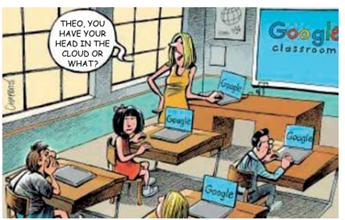
(Patrick Chappatte. Disponível em: https://larrycuban.wordpress. com/2023/01/26/)
Humor in the comic derives from the fact that
(Patrick Chappatte. Disponível em: https://larrycuban.wordpress. com/2023/01/26/)
Humor in the comic derives from the fact that
Ano: 2025
Banca:
OBJETIVA
Órgão:
Prefeitura de Barão - RS
Prova:
OBJETIVA - 2025 - Prefeitura de Barão - RS - Professor – Língua Inglesa |
Q3393026
Inglês
The classic “Little Women” by Louisa May Alcott
presents diverse social issues, but mainly:
Ano: 2025
Banca:
OBJETIVA
Órgão:
Prefeitura de Barão - RS
Prova:
OBJETIVA - 2025 - Prefeitura de Barão - RS - Professor – Língua Inglesa |
Q3393023
Inglês
Harper Lee’s “To Kill a Mockingbird” presents diverse
social issues, but mainly:
Ano: 2025
Banca:
OBJETIVA
Órgão:
Prefeitura de Barão - RS
Prova:
OBJETIVA - 2025 - Prefeitura de Barão - RS - Professor – Língua Inglesa |
Q3393013
Inglês
Texto associado
Hypatia (born c. 355 CE—died March 415,
Alexandria) was a mathematician, astronomer, and
philosopher who lived in a very turbulent era in Alexandria’s
history. She is the earliest female mathematician of whose
life and work reasonably detailed knowledge exists. Hypatia
was the daughter of Theon of Alexandria, himself a
mathematician and astronomer and the last attested
member of the Alexandrian Museum. Hypatia continued his
program, which was essentially a determined effort to
preserve the Greek mathematical and astronomical heritage
in (1) extremely difficult times. She is credited with
commentaries on geometry, number theory, as well as an
(2) astronomical table. These works, the only ones she is
listed as having written, have been lost, although there have
been attempts to (3) reconstruct aspects of them. She was,
in her time, the world’s leading mathematician and
astronomer, the only woman for (4) whom such claim can be
made.
She was also a popular teacher and lecturer on
philosophical topics of a less-specialist nature, attracting
many loyal students and large audiences. Her philosophy
was Neoplatonist and was thus seen as “pagan” at a time of
bitter religious conflict between Christians (both orthodox
and “heretical”), Jews, and pagans. Her philosophy also led
her to embrace a life of dedicated virginity.
The climate of tolerance lapsed, and shortly
afterward Hypatia became the victim of a particularly brutal
murder at the hands of a gang of Christian zealots.
The affair
made Hypatia a powerful feminist symbol and a figure of
affirmation for intellectual endeavor in the face of ignorant
prejudice. Her intellectual accomplishments alone were
quite ______ to merit the preservation and respect of her
name, but, sadly, the manner of her death added to it an
even greater emphasis.
Source: Encyclopedia Britannica. Adapted.
Considering the facts within the text, mark the CORRECT
item.
Ano: 2025
Banca:
OBJETIVA
Órgão:
Prefeitura de Barão - RS
Prova:
OBJETIVA - 2025 - Prefeitura de Barão - RS - Professor – Língua Inglesa |
Q3393012
Inglês
Texto associado
Hypatia (born c. 355 CE—died March 415,
Alexandria) was a mathematician, astronomer, and
philosopher who lived in a very turbulent era in Alexandria’s
history. She is the earliest female mathematician of whose
life and work reasonably detailed knowledge exists. Hypatia
was the daughter of Theon of Alexandria, himself a
mathematician and astronomer and the last attested
member of the Alexandrian Museum. Hypatia continued his
program, which was essentially a determined effort to
preserve the Greek mathematical and astronomical heritage
in (1) extremely difficult times. She is credited with
commentaries on geometry, number theory, as well as an
(2) astronomical table. These works, the only ones she is
listed as having written, have been lost, although there have
been attempts to (3) reconstruct aspects of them. She was,
in her time, the world’s leading mathematician and
astronomer, the only woman for (4) whom such claim can be
made.
She was also a popular teacher and lecturer on
philosophical topics of a less-specialist nature, attracting
many loyal students and large audiences. Her philosophy
was Neoplatonist and was thus seen as “pagan” at a time of
bitter religious conflict between Christians (both orthodox
and “heretical”), Jews, and pagans. Her philosophy also led
her to embrace a life of dedicated virginity.
The climate of tolerance lapsed, and shortly
afterward Hypatia became the victim of a particularly brutal
murder at the hands of a gang of Christian zealots.
The affair
made Hypatia a powerful feminist symbol and a figure of
affirmation for intellectual endeavor in the face of ignorant
prejudice. Her intellectual accomplishments alone were
quite ______ to merit the preservation and respect of her
name, but, sadly, the manner of her death added to it an
even greater emphasis.
Source: Encyclopedia Britannica. Adapted.
Mark the item which CORRECTLY completes the blank in
the last paragraph of the text.
Ano: 2025
Banca:
Prefeitura de Trombudo Central - SC
Órgão:
Prefeitura de Trombudo Central - SC
Prova:
Prefeitura de Trombudo Central - SC - 2025 - Prefeitura de Trombudo Central - SC - Professor de Língua Inglesa |
Q3391466
Inglês
Texto:
Anna loves spending her weekends outdoors. On Saturdays, she usually visits the local park with her friends. They enjoy playing games, having picnics, and walking their dogs. Anna always brings a blanket and some snacks.
According to the text, which sentence uses a noun (substantivo) correctly and matches the meaning of the passage?
Anna loves spending her weekends outdoors. On Saturdays, she usually visits the local park with her friends. They enjoy playing games, having picnics, and walking their dogs. Anna always brings a blanket and some snacks.
According to the text, which sentence uses a noun (substantivo) correctly and matches the meaning of the passage?
Ano: 2025
Banca:
VUNESP
Órgão:
AresPCJ - SP
Provas:
VUNESP - 2025 - AresPCJ - SP - Analista de Ouvidoria
|
VUNESP - 2025 - AresPCJ - SP - Contador |
VUNESP - 2025 - AresPCJ - SP - Analista de Fiscalização e Regulação - Área: Biologia/Química |
VUNESP - 2025 - AresPCJ - SP - Analista de Fiscalização e Regulação - Área: Contábil/Economia/Administração |
VUNESP - 2025 - AresPCJ - SP - Analista de Fiscalização e Regulação - Área: Engenharia Ambiental/Engenharia Química |
VUNESP - 2025 - AresPCJ - SP - Analista de Fiscalização e Regulação - Área: Engenharia Civil/Sanitária |
Q3390449
Inglês
Texto associado
Leia o texto a seguir para responder à questão:
The United Nations Environment Programme (UNEP)
reports that once water is contaminated, it is difficult, costly,
and often impossible to remove the pollutants. Currently, 80%
of global wastewater goes untreated, and is contaminated by
a wide range of substances, from human waste to highly toxic
industrial discharges. The type and amount of pollutants in
freshwater determines its suitability for human uses such as
drinking, bathing, and agriculture.
Pollution of freshwater ecosystems can also impact the
habitat and quality of life of fish and other wildlife. This can
include pathogens (largely from human and animal waste),
organic matter (including nutrients from agricultural run-off
such as nitrogen or phosphorus), chemical pollution (from
irrigation, domestic wastewater and runoff of mines into
rivers) and salinity. Plastics, and chemicals of emerging
concern, such as certain pharmaceutical products, are issues
for which their extent and impacts on freshwater are largely
unknown. A preliminary assessment of water quality in rivers
in Latin America, Africa and Asia, “A Snapshot of the World’s
Water Quality” (Ringler, et al., 2016), estimated that severe
pathogenic pollution affects around one third of all rivers,
severe organic pollution around one seventh of all rivers, and
severe and moderate salinity pollution around one-tenth of all
rivers in these regions.
(UNDRR, “Pollution”. Disponível em: www.undrr.org/
understanding-disaster-risk/terminology/hips/tl0028#:~:text=Pollution%20
is%20defined%20as%20the,UN%20data%2C%20n o%20date. Adaptado)
The water quality assessment mentioned in the second
paragraph estimates that the pollutant that affects more
rivers in Latin America, Africa and Asia is:
Ano: 2025
Banca:
VUNESP
Órgão:
AresPCJ - SP
Provas:
VUNESP - 2025 - AresPCJ - SP - Analista de Ouvidoria
|
VUNESP - 2025 - AresPCJ - SP - Contador |
VUNESP - 2025 - AresPCJ - SP - Analista de Fiscalização e Regulação - Área: Biologia/Química |
VUNESP - 2025 - AresPCJ - SP - Analista de Fiscalização e Regulação - Área: Contábil/Economia/Administração |
VUNESP - 2025 - AresPCJ - SP - Analista de Fiscalização e Regulação - Área: Engenharia Ambiental/Engenharia Química |
VUNESP - 2025 - AresPCJ - SP - Analista de Fiscalização e Regulação - Área: Engenharia Civil/Sanitária |
Q3390448
Inglês
Texto associado
Leia o texto a seguir para responder à questão:
The United Nations Environment Programme (UNEP)
reports that once water is contaminated, it is difficult, costly,
and often impossible to remove the pollutants. Currently, 80%
of global wastewater goes untreated, and is contaminated by
a wide range of substances, from human waste to highly toxic
industrial discharges. The type and amount of pollutants in
freshwater determines its suitability for human uses such as
drinking, bathing, and agriculture.
Pollution of freshwater ecosystems can also impact the
habitat and quality of life of fish and other wildlife. This can
include pathogens (largely from human and animal waste),
organic matter (including nutrients from agricultural run-off
such as nitrogen or phosphorus), chemical pollution (from
irrigation, domestic wastewater and runoff of mines into
rivers) and salinity. Plastics, and chemicals of emerging
concern, such as certain pharmaceutical products, are issues
for which their extent and impacts on freshwater are largely
unknown. A preliminary assessment of water quality in rivers
in Latin America, Africa and Asia, “A Snapshot of the World’s
Water Quality” (Ringler, et al., 2016), estimated that severe
pathogenic pollution affects around one third of all rivers,
severe organic pollution around one seventh of all rivers, and
severe and moderate salinity pollution around one-tenth of all
rivers in these regions.
(UNDRR, “Pollution”. Disponível em: www.undrr.org/
understanding-disaster-risk/terminology/hips/tl0028#:~:text=Pollution%20
is%20defined%20as%20the,UN%20data%2C%20n o%20date. Adaptado)
De acordo com o segundo parágrafo, um dos poluentes
cujo impacto sobre a água doce ainda é em grande parte
desconhecido é:
Ano: 2025
Banca:
VUNESP
Órgão:
AresPCJ - SP
Provas:
VUNESP - 2025 - AresPCJ - SP - Analista de Ouvidoria
|
VUNESP - 2025 - AresPCJ - SP - Contador |
VUNESP - 2025 - AresPCJ - SP - Analista de Fiscalização e Regulação - Área: Biologia/Química |
VUNESP - 2025 - AresPCJ - SP - Analista de Fiscalização e Regulação - Área: Contábil/Economia/Administração |
VUNESP - 2025 - AresPCJ - SP - Analista de Fiscalização e Regulação - Área: Engenharia Ambiental/Engenharia Química |
VUNESP - 2025 - AresPCJ - SP - Analista de Fiscalização e Regulação - Área: Engenharia Civil/Sanitária |
Q3390447
Inglês
Texto associado
Leia o texto a seguir para responder à questão:
The United Nations Environment Programme (UNEP)
reports that once water is contaminated, it is difficult, costly,
and often impossible to remove the pollutants. Currently, 80%
of global wastewater goes untreated, and is contaminated by
a wide range of substances, from human waste to highly toxic
industrial discharges. The type and amount of pollutants in
freshwater determines its suitability for human uses such as
drinking, bathing, and agriculture.
Pollution of freshwater ecosystems can also impact the
habitat and quality of life of fish and other wildlife. This can
include pathogens (largely from human and animal waste),
organic matter (including nutrients from agricultural run-off
such as nitrogen or phosphorus), chemical pollution (from
irrigation, domestic wastewater and runoff of mines into
rivers) and salinity. Plastics, and chemicals of emerging
concern, such as certain pharmaceutical products, are issues
for which their extent and impacts on freshwater are largely
unknown. A preliminary assessment of water quality in rivers
in Latin America, Africa and Asia, “A Snapshot of the World’s
Water Quality” (Ringler, et al., 2016), estimated that severe
pathogenic pollution affects around one third of all rivers,
severe organic pollution around one seventh of all rivers, and
severe and moderate salinity pollution around one-tenth of all
rivers in these regions.
(UNDRR, “Pollution”. Disponível em: www.undrr.org/
understanding-disaster-risk/terminology/hips/tl0028#:~:text=Pollution%20
is%20defined%20as%20the,UN%20data%2C%20n o%20date. Adaptado)
No trecho do segundo parágrafo “This can include
pathogens”, o termo destacado em negrito se refere a

 Conheça nossos planos