Questões de Concurso
Sobre interpretação de texto | reading comprehension em inglês
Foram encontradas 12.687 questões


Leia o texto para responder às questão.

Let’s start by discussing smoking. It continues to be the leading cause of preventable disease and death in many countries. The highest percent of smoking tends to be seen among people with a high school diploma (or not even that!), and the lowest is among those with a bachelor’s degree or higher. Trends in efforts to quit smoking habits also vary by educational level. Adults with only a high school diploma historically have had the lowest rates of quitting smoking compared to adults overall. But these data document the relationship when it is too late: Adults don’t drop out of school, children do.
The field of public health recognizes education is a social determinant of health and an indicator of well-being. National efforts in North America are currently focused on promoting literacy, and increasing high school completion and college enrollment. It is critical to ensure that children have positive learning experiences while they are still young so that they can achieve educational success. This is one of the best ways to ensure that they can live healthier lives as adults.
A human baby’s brain is not fully developed at birth. Rapid brain developments and the acquisition of foundation skills occur in the first few years of life and then steady into childhood and adolescence. Abuse, neglect, poverty and related stressful exposures can put children at risk for problems with healthy cognitive, social and emotional development, which can interfere with learning.
To effectively address the problem, learning environments must include staff who have knowledge about trauma and symptoms of trauma. Most importantly, the school ecosystems, which include the schools’ staff, must be prepared and able to provide children, and each other, safe, supportive and trusting environments. Thus, creating effective solutions will require a multigenerational approach – that is, one that focuses on the children affected as well as on the adults dealing with them. In order to promote well-being across the lifespan, we must collectively invest in meeting the needs of future generations.
(Shanta R. Dube. 07.02.2018, https://theconversation.com. Adaptado)
Leia o texto para responder às questão.
Let’s start by discussing smoking. It continues to be the leading cause of preventable disease and death in many countries. The highest percent of smoking tends to be seen among people with a high school diploma (or not even that!), and the lowest is among those with a bachelor’s degree or higher. Trends in efforts to quit smoking habits also vary by educational level. Adults with only a high school diploma historically have had the lowest rates of quitting smoking compared to adults overall. But these data document the relationship when it is too late: Adults don’t drop out of school, children do.
The field of public health recognizes education is a social determinant of health and an indicator of well-being. National efforts in North America are currently focused on promoting literacy, and increasing high school completion and college enrollment. It is critical to ensure that children have positive learning experiences while they are still young so that they can achieve educational success. This is one of the best ways to ensure that they can live healthier lives as adults.
A human baby’s brain is not fully developed at birth. Rapid brain developments and the acquisition of foundation skills occur in the first few years of life and then steady into childhood and adolescence. Abuse, neglect, poverty and related stressful exposures can put children at risk for problems with healthy cognitive, social and emotional development, which can interfere with learning.
To effectively address the problem, learning environments must include staff who have knowledge about trauma and symptoms of trauma. Most importantly, the school ecosystems, which include the schools’ staff, must be prepared and able to provide children, and each other, safe, supportive and trusting environments. Thus, creating effective solutions will require a multigenerational approach – that is, one that focuses on the children affected as well as on the adults dealing with them. In order to promote well-being across the lifespan, we must collectively invest in meeting the needs of future generations.
(Shanta R. Dube. 07.02.2018, https://theconversation.com. Adaptado)
Leia o texto para responder às questão.
Let’s start by discussing smoking. It continues to be the leading cause of preventable disease and death in many countries. The highest percent of smoking tends to be seen among people with a high school diploma (or not even that!), and the lowest is among those with a bachelor’s degree or higher. Trends in efforts to quit smoking habits also vary by educational level. Adults with only a high school diploma historically have had the lowest rates of quitting smoking compared to adults overall. But these data document the relationship when it is too late: Adults don’t drop out of school, children do.
The field of public health recognizes education is a social determinant of health and an indicator of well-being. National efforts in North America are currently focused on promoting literacy, and increasing high school completion and college enrollment. It is critical to ensure that children have positive learning experiences while they are still young so that they can achieve educational success. This is one of the best ways to ensure that they can live healthier lives as adults.
A human baby’s brain is not fully developed at birth. Rapid brain developments and the acquisition of foundation skills occur in the first few years of life and then steady into childhood and adolescence. Abuse, neglect, poverty and related stressful exposures can put children at risk for problems with healthy cognitive, social and emotional development, which can interfere with learning.
To effectively address the problem, learning environments must include staff who have knowledge about trauma and symptoms of trauma. Most importantly, the school ecosystems, which include the schools’ staff, must be prepared and able to provide children, and each other, safe, supportive and trusting environments. Thus, creating effective solutions will require a multigenerational approach – that is, one that focuses on the children affected as well as on the adults dealing with them. In order to promote well-being across the lifespan, we must collectively invest in meeting the needs of future generations.
(Shanta R. Dube. 07.02.2018, https://theconversation.com. Adaptado)
Leia o texto para responder às questão.
Let’s start by discussing smoking. It continues to be the leading cause of preventable disease and death in many countries. The highest percent of smoking tends to be seen among people with a high school diploma (or not even that!), and the lowest is among those with a bachelor’s degree or higher. Trends in efforts to quit smoking habits also vary by educational level. Adults with only a high school diploma historically have had the lowest rates of quitting smoking compared to adults overall. But these data document the relationship when it is too late: Adults don’t drop out of school, children do.
The field of public health recognizes education is a social determinant of health and an indicator of well-being. National efforts in North America are currently focused on promoting literacy, and increasing high school completion and college enrollment. It is critical to ensure that children have positive learning experiences while they are still young so that they can achieve educational success. This is one of the best ways to ensure that they can live healthier lives as adults.
A human baby’s brain is not fully developed at birth. Rapid brain developments and the acquisition of foundation skills occur in the first few years of life and then steady into childhood and adolescence. Abuse, neglect, poverty and related stressful exposures can put children at risk for problems with healthy cognitive, social and emotional development, which can interfere with learning.
To effectively address the problem, learning environments must include staff who have knowledge about trauma and symptoms of trauma. Most importantly, the school ecosystems, which include the schools’ staff, must be prepared and able to provide children, and each other, safe, supportive and trusting environments. Thus, creating effective solutions will require a multigenerational approach – that is, one that focuses on the children affected as well as on the adults dealing with them. In order to promote well-being across the lifespan, we must collectively invest in meeting the needs of future generations.
(Shanta R. Dube. 07.02.2018, https://theconversation.com. Adaptado)
Leia o cartum para responder à questão.

(https://au.pinterest.com)
Cantaloupes – a variety of melon
Leia o cartum para responder à questão.
(https://au.pinterest.com)
Cantaloupes – a variety of melon

ps://www.gocomics.com/calvinandhobbes
Learning Strategies
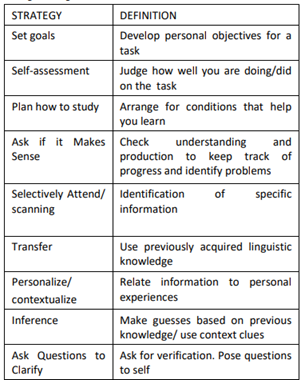
CHAMOT, Anna et al. The learning strategies handbook: creating independent learners. New York: Longman, 1999. Adaptado.
Apart from teaching reading in English, the teacher is also highly concerned with developing their students’ autonomy as learners. Considering that the option for the blog Science News for Students resulted from negotiation between the group and not necessarily from individual interests, the teacher will help promote their students’ autonomy if, for the work with the blog, proposes that they
#6 Science News for Students
Created by the Society for Science, this blog is dedicated to promoting a love for science in teenagers by presenting complex topics in a clear and understandable manner. It covers a wide range of scientific subjects, from biology and chemistry to astronomy and environmental science.
What is so special about Science News for Students is its well-written, easy-to-understand content that not only informs but also inspires. It gives young learners the opportunity to stay updated on the latest scientific advancements, encouraging their curiosity and critical thinking.
https://www.nshss.org/resources/blog/blog-posts/top-10-educationalblogs-for-teens. Acesso em 22.04.2025. Adaptado.
The purpose of the teacher to have the students read the whole post and then choose one particular blog to follow is that they develop a more fluent reading in English. The instruction provided – “Quickly go through the blogs in the post to have a general idea of their content and then decide which one you would like to follow” – focuses on the development of the reading ability named.
Text CB1A2
Currently, the Digital Euro has not been launched — though there are signs that a launch may be coming sooner rather than later. By October 2025, the ECB (European Central Bank) has indicated a second phase of the preparation for the Digital Euro. By then, the ECB will have prepared an outreach plan, procurement standards, and technology providers.
The Digital Euro has potential downsides, many of them echoed in the other launches of central bank digital currencies. For example, the central bank will become a technology company focused on procurement with central points of failure. This was a breeding ground for corruption for the bureaucrat fortunate enough to make these technical choices in China.
While the Digital Euro is slated to “coexist” with cash, this also comes when EU (European Union) nations are voting on ending end-to-end encryption (a critical digital privacy tool) and have started to restrict cash with limits being placed on how much you can spend in cash to accelerate its slow demise.
User privacy is said to be the ECB’s “chief concern” as it has been designing the central bank’s digital currency. Certainly, the ECB is aware of public perception that has negative surveillance, control, and privacy implications in mind. The ECB has been at pains to say that the Digital Euro will “coexist” with cash and that unlike the e-CNY (China’s central bank digital coin) it will not be tied to a “social credit” score or place limits on how money is spent.
A big part of the ECB’s drive towards the Digital Euro is to compete and pry Europeans away from Bitcoin, cryptocurrencies, and “stablecoins”.
Central bank digital currencies are a direct liability of the central bank. Since the central bank has the power to issue currency, this means that the central bank can essentially create “digital euros” if it wishes to. The architecture and data within a central bank digital currency are usually built completely by the central bank supported by private vendors of its choice. In China, the central bank has turned away from a distributed ledger technology to a centralized data store, in which the technical details are pretty scant. Hence, the central bank controls everything, and the system has no external access.
Internet: <www.forbes.com/sites> (adapted).
Text CB1A2
Currently, the Digital Euro has not been launched — though there are signs that a launch may be coming sooner rather than later. By October 2025, the ECB (European Central Bank) has indicated a second phase of the preparation for the Digital Euro. By then, the ECB will have prepared an outreach plan, procurement standards, and technology providers.
The Digital Euro has potential downsides, many of them echoed in the other launches of central bank digital currencies. For example, the central bank will become a technology company focused on procurement with central points of failure. This was a breeding ground for corruption for the bureaucrat fortunate enough to make these technical choices in China.
While the Digital Euro is slated to “coexist” with cash, this also comes when EU (European Union) nations are voting on ending end-to-end encryption (a critical digital privacy tool) and have started to restrict cash with limits being placed on how much you can spend in cash to accelerate its slow demise.
User privacy is said to be the ECB’s “chief concern” as it has been designing the central bank’s digital currency. Certainly, the ECB is aware of public perception that has negative surveillance, control, and privacy implications in mind. The ECB has been at pains to say that the Digital Euro will “coexist” with cash and that unlike the e-CNY (China’s central bank digital coin) it will not be tied to a “social credit” score or place limits on how money is spent.
A big part of the ECB’s drive towards the Digital Euro is to compete and pry Europeans away from Bitcoin, cryptocurrencies, and “stablecoins”.
Central bank digital currencies are a direct liability of the central bank. Since the central bank has the power to issue currency, this means that the central bank can essentially create “digital euros” if it wishes to. The architecture and data within a central bank digital currency are usually built completely by the central bank supported by private vendors of its choice. In China, the central bank has turned away from a distributed ledger technology to a centralized data store, in which the technical details are pretty scant. Hence, the central bank controls everything, and the system has no external access.
Internet: <www.forbes.com/sites> (adapted).
Text CB1A2
Currently, the Digital Euro has not been launched — though there are signs that a launch may be coming sooner rather than later. By October 2025, the ECB (European Central Bank) has indicated a second phase of the preparation for the Digital Euro. By then, the ECB will have prepared an outreach plan, procurement standards, and technology providers.
The Digital Euro has potential downsides, many of them echoed in the other launches of central bank digital currencies. For example, the central bank will become a technology company focused on procurement with central points of failure. This was a breeding ground for corruption for the bureaucrat fortunate enough to make these technical choices in China.
While the Digital Euro is slated to “coexist” with cash, this also comes when EU (European Union) nations are voting on ending end-to-end encryption (a critical digital privacy tool) and have started to restrict cash with limits being placed on how much you can spend in cash to accelerate its slow demise.
User privacy is said to be the ECB’s “chief concern” as it has been designing the central bank’s digital currency. Certainly, the ECB is aware of public perception that has negative surveillance, control, and privacy implications in mind. The ECB has been at pains to say that the Digital Euro will “coexist” with cash and that unlike the e-CNY (China’s central bank digital coin) it will not be tied to a “social credit” score or place limits on how money is spent.
A big part of the ECB’s drive towards the Digital Euro is to compete and pry Europeans away from Bitcoin, cryptocurrencies, and “stablecoins”.
Central bank digital currencies are a direct liability of the central bank. Since the central bank has the power to issue currency, this means that the central bank can essentially create “digital euros” if it wishes to. The architecture and data within a central bank digital currency are usually built completely by the central bank supported by private vendors of its choice. In China, the central bank has turned away from a distributed ledger technology to a centralized data store, in which the technical details are pretty scant. Hence, the central bank controls everything, and the system has no external access.
Internet: <www.forbes.com/sites> (adapted).
Text CB1A2
Currently, the Digital Euro has not been launched — though there are signs that a launch may be coming sooner rather than later. By October 2025, the ECB (European Central Bank) has indicated a second phase of the preparation for the Digital Euro. By then, the ECB will have prepared an outreach plan, procurement standards, and technology providers.
The Digital Euro has potential downsides, many of them echoed in the other launches of central bank digital currencies. For example, the central bank will become a technology company focused on procurement with central points of failure. This was a breeding ground for corruption for the bureaucrat fortunate enough to make these technical choices in China.
While the Digital Euro is slated to “coexist” with cash, this also comes when EU (European Union) nations are voting on ending end-to-end encryption (a critical digital privacy tool) and have started to restrict cash with limits being placed on how much you can spend in cash to accelerate its slow demise.
User privacy is said to be the ECB’s “chief concern” as it has been designing the central bank’s digital currency. Certainly, the ECB is aware of public perception that has negative surveillance, control, and privacy implications in mind. The ECB has been at pains to say that the Digital Euro will “coexist” with cash and that unlike the e-CNY (China’s central bank digital coin) it will not be tied to a “social credit” score or place limits on how money is spent.
A big part of the ECB’s drive towards the Digital Euro is to compete and pry Europeans away from Bitcoin, cryptocurrencies, and “stablecoins”.
Central bank digital currencies are a direct liability of the central bank. Since the central bank has the power to issue currency, this means that the central bank can essentially create “digital euros” if it wishes to. The architecture and data within a central bank digital currency are usually built completely by the central bank supported by private vendors of its choice. In China, the central bank has turned away from a distributed ledger technology to a centralized data store, in which the technical details are pretty scant. Hence, the central bank controls everything, and the system has no external access.
Internet: <www.forbes.com/sites> (adapted).

 Conheça nossos planos