Questões de Concurso Sobre interpretação de texto | reading comprehension em inglês

Foram encontradas 12.689 questões

Q4023160 Inglês
    The security risks faced by Parliaments, legislatures, elected representatives, and the officials who support them, differ greatly according to their evolving national and local circumstances, among other things. For some, the biggest security risks may stem from disruptive protesters and cyber criminals, but terrorism may pose the most concerning risks for others. In fact, threat actors differ enormously in their intentions and capabilities, which also change over time.
    Given that risk is a product of threat, vulnerability, and impact, it follows that ultimately there are only three ways to reduce security risk — namely, by reducing the threat, reducing the vulnerability, or reducing the impact (or some combination thereof). Reducing the threat element of security risk is difficult, especially in the case of determined and capable threat actors. Responsibility for reducing threats tends to lie mainly with national law enforcement, security, and intelligence agencies. That said, parliaments and other organisations can contribute to threat reduction through deterrence — in other words, by influencing the intentions of threat actors. Carefully crafted security-minded communications can convey a discouraging message to potential attackers, to the effect that they should expect to confront professional security measures and face a substantial risk of being caught. For instance, a parliamentary website might advertise that visitors will undergo ‘airport-style screening’, without explaining precisely what that entails. The public should be reassured by such message, whereas some threat actors might be deterred.

Paul Martin. Parliamentary security: an introductory guide.
Internet: <www.cpahq.org> (adapted).


Considering the preceding text, judge the following item. 
As mentioned at the end of the text, the message about the airport-style screening advertised in a parliamentary website could have a dual effect on people, even if they are not told its exact implications.
Alternativas
Q4023159 Inglês
    The security risks faced by Parliaments, legislatures, elected representatives, and the officials who support them, differ greatly according to their evolving national and local circumstances, among other things. For some, the biggest security risks may stem from disruptive protesters and cyber criminals, but terrorism may pose the most concerning risks for others. In fact, threat actors differ enormously in their intentions and capabilities, which also change over time.
    Given that risk is a product of threat, vulnerability, and impact, it follows that ultimately there are only three ways to reduce security risk — namely, by reducing the threat, reducing the vulnerability, or reducing the impact (or some combination thereof). Reducing the threat element of security risk is difficult, especially in the case of determined and capable threat actors. Responsibility for reducing threats tends to lie mainly with national law enforcement, security, and intelligence agencies. That said, parliaments and other organisations can contribute to threat reduction through deterrence — in other words, by influencing the intentions of threat actors. Carefully crafted security-minded communications can convey a discouraging message to potential attackers, to the effect that they should expect to confront professional security measures and face a substantial risk of being caught. For instance, a parliamentary website might advertise that visitors will undergo ‘airport-style screening’, without explaining precisely what that entails. The public should be reassured by such message, whereas some threat actors might be deterred.

Paul Martin. Parliamentary security: an introductory guide.
Internet: <www.cpahq.org> (adapted).


Considering the preceding text, judge the following item. 
According to the text, with “Carefully crafted securityminded communications”, potential attackers are discouraged and caught before being able to cause any harm.
Alternativas
Q4023155 Inglês
    The security risks faced by Parliaments, legislatures, elected representatives, and the officials who support them, differ greatly according to their evolving national and local circumstances, among other things. For some, the biggest security risks may stem from disruptive protesters and cyber criminals, but terrorism may pose the most concerning risks for others. In fact, threat actors differ enormously in their intentions and capabilities, which also change over time.
    Given that risk is a product of threat, vulnerability, and impact, it follows that ultimately there are only three ways to reduce security risk — namely, by reducing the threat, reducing the vulnerability, or reducing the impact (or some combination thereof). Reducing the threat element of security risk is difficult, especially in the case of determined and capable threat actors. Responsibility for reducing threats tends to lie mainly with national law enforcement, security, and intelligence agencies. That said, parliaments and other organisations can contribute to threat reduction through deterrence — in other words, by influencing the intentions of threat actors. Carefully crafted security-minded communications can convey a discouraging message to potential attackers, to the effect that they should expect to confront professional security measures and face a substantial risk of being caught. For instance, a parliamentary website might advertise that visitors will undergo ‘airport-style screening’, without explaining precisely what that entails. The public should be reassured by such message, whereas some threat actors might be deterred.

Paul Martin. Parliamentary security: an introductory guide.
Internet: <www.cpahq.org> (adapted).


Considering the preceding text, judge the following item. 
In the excerpt “threat actors differ enormously in their intentions and capabilities, which also change over time” (first paragraph), “which” refers to “threat actors”. 
Alternativas
Q4023154 Inglês
    The role of the police in a healthy democracy is radically different from their role in authoritarian societies. In autocratic regimes, the police serve mainly to protect not the people, but the regime. The police are therefore typically politicized, with appointments being part of the patronage system that rewards regime loyalists. Police officers spend a great deal of time spying on the populace to unmask political opposition; crime against citizens is less of a concern. Abuse and corruption are usually rife, because police are not held accountable for their actions. Rather, political leaders tolerate abuses by the police in return for police loyalty to the regime.
    By contrast, in democratic societies the primary mission of the police is to protect citizens against crime and disorder, including illegal or corrupt behavior by officials. In democracies, police have carefully circumscribed roles that require close and positive relations with ordinary citizens. The use of arms and pursuit of criminals are rare and take up only a tiny fraction of police time. Instead, police officers spend the vast bulk of their time building relationships with the community through patrols, community-enhancing activities, and listening to citizens. The goal of democratic policing is to build a web of relationships between the community and the police that helps to control crime by making police aware of the persons and activities in the communities that they are assigned to protect and by inclining citizens to trust and cooperate with police. This also achieves the primary goal of making citizens feel secure in their daily activities, thereby fostering a climate that encourages increased legitimate business activity, investment, and planning for the future.

Michael D. Wiatrowski and Jack A. Goldstone. The ballot and the badge: democratic policing. In: Journal
of Democracy, Volume 21, Number 2. Internet: <muse.jhu.edu>  (adapted).


Concerning the previous text, judge the following items.
In the fragment “police have carefully circumscribed roles that require close and positive relations with ordinary citizens” (second paragraph), “ordinary citizens” are people who represent the average citizen in a democratic society.
Alternativas
Q4023149 Inglês
    The role of the police in a healthy democracy is radically different from their role in authoritarian societies. In autocratic regimes, the police serve mainly to protect not the people, but the regime. The police are therefore typically politicized, with appointments being part of the patronage system that rewards regime loyalists. Police officers spend a great deal of time spying on the populace to unmask political opposition; crime against citizens is less of a concern. Abuse and corruption are usually rife, because police are not held accountable for their actions. Rather, political leaders tolerate abuses by the police in return for police loyalty to the regime.
    By contrast, in democratic societies the primary mission of the police is to protect citizens against crime and disorder, including illegal or corrupt behavior by officials. In democracies, police have carefully circumscribed roles that require close and positive relations with ordinary citizens. The use of arms and pursuit of criminals are rare and take up only a tiny fraction of police time. Instead, police officers spend the vast bulk of their time building relationships with the community through patrols, community-enhancing activities, and listening to citizens. The goal of democratic policing is to build a web of relationships between the community and the police that helps to control crime by making police aware of the persons and activities in the communities that they are assigned to protect and by inclining citizens to trust and cooperate with police. This also achieves the primary goal of making citizens feel secure in their daily activities, thereby fostering a climate that encourages increased legitimate business activity, investment, and planning for the future.

Michael D. Wiatrowski and Jack A. Goldstone. The ballot and the badge: democratic policing. In: Journal
of Democracy, Volume 21, Number 2. Internet: <muse.jhu.edu>  (adapted).


Concerning the previous text, judge the following items.
It is correct to infer from the first paragraph of the text that investigating common crimes committed against citizens is not part of the police’s duties in autocratic nations. 
Alternativas
Q4020443 Inglês
Regarding the mechanisms of textual cohesion and reading strategies in English, mark T for True or F for False for the following statements:
(__)Anaphoric reference occurs when a word or phrase refers back to a previously mentioned entity in the text, helping to maintain thematic continuity without unnecessary repetition.
(__)Scanning is a rapid reading technique employed when the reader needs to grasp the overall "gist" or the main argument of a long editorial or academic paper.
(__)Inference is a cognitive process where the reader combines textual evidence with their prior schematic knowledge to deduce information that is not explicitly stated.
(__)The presence of connectors like "notwithstanding" and "albeit" usually indicates a relationship of causality or temporal sequence between the main and the subordinate clause.
Now, choose the CORRECT alternative with the sequence from top to bottom:
Alternativas
Q4020434 Inglês
Reading comprehension in a foreign language involves identifying not only the literal meaning but also the illocutionary force behind specific statements. Considering the strategies for processing complex academic texts in English, mark the CORRECT alternative.
Alternativas
Q4020427 Inglês
Semantic relations in English determine how meaning is constructed and how lexical items relate to each other within a specific context. Analyze the following statements:
I.Hyponymy is a relationship of inclusion, where the meaning of a more specific term (the hyponym) is included within the meaning of a more general term (the hypernym).
II.Antonymy always involves absolute opposites, meaning that words like "hot" and "cold" cannot be placed on a scale or modified by adverbs of degree in formal registers.
III.Polysemy refers to a single lexical item that possesses multiple related meanings, often originating from the same etymological root or metaphorical extension.
Which of the statements above is/are CORRECT?
Alternativas
Q4019674 Inglês
        The changes to Earth’s natural patterns reveal an interconnected web of ecological systems that are undergoing profound changes beyond what many researchers have predicted. Scientists say the culprit is clear: Ever since the Industrial Revolution, the relentless burning of fossil fuels like coal, oil, and gas has been adding heat-trapping gases to the atmosphere, leading to a sharp rise in global temperatures. The hottest year in recorded history was 2024, and each of the 10 warmest years on record have come in the past decade.

        Since 1997, when nations agreed to limit planet-warming gases as part of the landmark Kyoto Protocol, humanity has released more greenhouse gases than in all prior history. The temperature rise associated with the growing volume of heattrapping gas has kicked in, and it is continuing to rise. And at the same time, the ability of the planet’s natural systems to absorb planet-warming gases like carbon dioxide appears to be diminishing.

David Gelles. One thing’s for sure, the weather is getting wilder.
The New York Times International Edition, Nova York, 21-22 mar. 2026, p. 2 (adapted). 

Considering the preceding text, judge the following item.


 The word "culprit", in the fragment "Scientists say the culprit is clear" (first paragraph), could be correctly replaced with problem without this causing any change in the original meaning of the text, since the words are synonyms. 

Alternativas
Q4019672 Inglês
        The changes to Earth’s natural patterns reveal an interconnected web of ecological systems that are undergoing profound changes beyond what many researchers have predicted. Scientists say the culprit is clear: Ever since the Industrial Revolution, the relentless burning of fossil fuels like coal, oil, and gas has been adding heat-trapping gases to the atmosphere, leading to a sharp rise in global temperatures. The hottest year in recorded history was 2024, and each of the 10 warmest years on record have come in the past decade.

        Since 1997, when nations agreed to limit planet-warming gases as part of the landmark Kyoto Protocol, humanity has released more greenhouse gases than in all prior history. The temperature rise associated with the growing volume of heattrapping gas has kicked in, and it is continuing to rise. And at the same time, the ability of the planet’s natural systems to absorb planet-warming gases like carbon dioxide appears to be diminishing.

David Gelles. One thing’s for sure, the weather is getting wilder.
The New York Times International Edition, Nova York, 21-22 mar. 2026, p. 2 (adapted). 

Considering the preceding text, judge the following item.


Many scientists predicted all of the changes in Earth’s ecological systems exactly as they are happening.

Alternativas
Q4019550 Inglês
        The changes to Earth’s natural patterns reveal an interconnected web of ecological systems that are undergoing profound changes beyond what many researchers have predicted. Scientists say the culprit is clear: Ever since the Industrial Revolution, the relentless burning of fossil fuels like coal, oil, and gas has been adding heat-trapping gases to the atmosphere, leading to a sharp rise in global temperatures. The hottest year in recorded history was 2024, and each of the 10 warmest years on record have come in the past decade. Since 1997, when nations agreed to limit planet-warming gases as part of the landmark Kyoto Protocol, humanity has released more greenhouse gases than in all prior history. The temperature rise associated with the growing volume of heattrapping gas has kicked in, and it is continuing to rise. And at the same time, the ability of the planet’s natural systems to absorb planet-warming gases like carbon dioxide appears to be diminishing.

David Gelles. One thing’s for sure, the weather is getting wilder.
The New York Times International Edition, Nova York, 21-22 mar. 2026, p. 2 (adapted). 

Considering the preceding text, judge the following item.


The structure "appears to be diminishing", used at the end of the text, indicates the observation of an ongoing gradual process.

Alternativas
Ano: 2026 Banca: IF-PI Órgão: IF-PI Prova: IF-PI - 2026 - IF-PI - Professor EBTT - Ingles |
Q4014487 Inglês
According to Marcuschi (2008), texts can be understood through the complementary notions of genre and textual typology. Genres are socially situated and historically constructed forms of language use that circulate in everyday communication. Textual types, in contrast, are abstract theoretical categories defined by linguistic and structural criteria. In real communicative situations, texts usually combine different textual types within a single genre. The defi nition of textual types is essential to the comprehension of genres, as both concepts are mutually constitutive.
Read the excerpt from News of a Kidnapping by García Márquez (1997), a Colombian Nobel Prize - winning novelist and journalist whose significant work includes this book, and identify the relationship established between genre and text types.
After waiting three hours, a man in a mask came in, welcomed them on behalf of high command, and announced that Father Pérez was expecting them but for reason of security the women should go first. This was the first time that Diana showed signs of uneasiness. Hero Buss took her aside and said that under no circumstances should she agree to break up their group. Because she could not prevent that from happening, Diana slipped him her identity card. She did not have time to explain why, but he understood it to be a piece of evidence in the event she disappeared.
GARCÍA MÁRQUEZ, Gabriel; GROSSMAN, Edith (trad.). News of a Kidnapping. 1. American ed. New York: Alfred A. Knopf, 1997
Alternativas
Ano: 2026 Banca: IF-PI Órgão: IF-PI Prova: IF-PI - 2026 - IF-PI - Professor EBTT - Ingles |
Q4014484 Inglês

Text for question


The notion of Multiliteracies supplements traditional literacy pedagogy by addressing these two related aspects of textual multiplicity. What we might term ‘mere literacy’ remains centred on language only, and usually on a singular national form of language at that, being conceived as a stable system based on rules such as mastering sound-letter correspondence. This is based on the assumption that we can actually discern and describe correct usage. Such a view of language must characteristically translate into a more or less authoritarian kind of pedagogy. A pedagogy of Multi-literacies, by contrast, focuses on modes of representation much broader than language alone. These differ according to culture and context, and have specific cognitive, cultural, and social effects. In some cultural contexts – in an Aboriginal community or in a multimedia environment, for instance – the visual mode of representation may be much more powerful and closely related to language than ‘mere literacy’ would ever be able to allow. Multiliteracies also creates a different kind of pedagogy: one in which language and other modes of meaning are dynamic representational resources, constantly being remade by their users as they work to achieve their various cultural purposes. 


COPE, Bill; KALANTZIS, Mary (org.). Multiliteracies: literacy learning and the design of social futures. Londres: Routledge, 2000.

Regarding the modal verbs used in the context of the passage by Cope and Kalantzis (2000), it is correct to state that:
Alternativas
Ano: 2026 Banca: IF-PI Órgão: IF-PI Prova: IF-PI - 2026 - IF-PI - Professor EBTT - Ingles |
Q4014483 Inglês

Text for question.


I believe that on the first night I went to Gatsby’s house I was one of the few guests who had actually been invited. People were not invited – they went there. They got into automobiles which bore them out to Long Island, and somehow they ended up at Gatsby’s door. Once there they were introduced by somebody who knew Gatsby, and after that they conducted themselves according to the rules of behavior associated with amusement parks. Sometimes they came and went without having met Gatsby at all, came for the party with a simplicity of heart that was its own ticket of admission.


I had been actually invited. A chauffeur in a uniform of robin’s-egg blue crossed my lawn early that Saturday morning with a surprisingly formal note from his employer: the honor would be entirely Gatsby’s, it said, if I would attend his “little party” that night. He had seen me several times, and had intended to call on me long before, but a peculiar combination of circumstances had prevented it – signed Jay Gatsby, in a majestic hand. 


Dressed up in white flannels I went over to his lawn a little after seven, and wandered around rather ill at ease among swirls and eddies of people I didn’t know – though here and there was a face I had noticed on the commuting train. I was immediately struck by the number of young Englishmen dotted about; all well dressed, all looking a little hungry, and all talking in low, earnest voices to solid and prosperous Americans. I was sure that they were selling something: bonds or insurance or automobiles. They were at least agonizingly aware of the easy money in the vicinity and convinced that it was theirs for a few words in the right key. 


FITZGERALD, F. S. The Great Gatsby. Charles Scribner's Sons, 1925. p. 41-42

Considering the literary context of the excerpt and the details that characterize Gatsby’s party, which alternative most accurately explains the meaning of the collocation dotted about and the phrasal verbs wander around, bear out, and call on?
Alternativas
Ano: 2026 Banca: IF-PI Órgão: IF-PI Prova: IF-PI - 2026 - IF-PI - Professor EBTT - Ingles |
Q4014480 Inglês

Read the text below and answer question.


Sometimes when we have talked or written about using ideas from complexity theory, we have been challenged as to whether we are 'just' being metaphorical. There are two ways to answer this question: firstly, to reject the 'just' and to assert the importance of metaphor; and secondly, to discuss what it would mean to say that the comparison between systems in applied linguistics and complex systems is more than metaphor. Our contention, to be supported throughout this book, is that complexity theory off ers applied linguistics at least an important new metaphor that brings with it new ways of thinking about issues in the field, and, maximally, may push the field towards radical theoretical change. (…) Metaphors are not just literary tools for ornamenting language; they are indispensable to the human mind. Whenever we have to contemplate the abstract, voice the difficult, or make sense of the complicated, we turn to metaphor. Metaphor enables us to 'see' or understand one thing in terms of another, through analogies or mappings between two conceptual domains.


(Cameron 1999). LARSEN-FREEMAN, Diane; CAMERON, Lynne. Complex systems and applied linguistics. Oxford: Oxford University Press, 2008. p. 11.

Judge the statements I to V as True (T) or False (F) according to the text and choose the alternative that shows the correct sequence from above to below.
I. The authors argue that complexity theory should be seen primarily as a rhetorical or literary device in applied linguistics.
II. According to the text, one response to the criticism about metaphor is to emphasize the fundamental importance of metaphors in human cognition.
III. The authors claim that complexity theory may contribute not only to new ways of thinking but also to potentially radical theoretical changes in applied linguistics.
IV. The text suggests that metaphors are mainly used to embellish language rather than to support understanding of abstract or complex ideas.
V. Metaphor is presented as a cognitive tool that allows understanding one conceptual domain in terms of another through analogies or mappings.
Alternativas
Ano: 2026 Banca: IF-PI Órgão: IF-PI Prova: IF-PI - 2026 - IF-PI - Professor EBTT - Ingles |
Q4014479 Inglês

Which statement is NOT accurate regarding the use of infinitives in the following headlines?


Headline 1:


Exclusive: US to issue generallifting some sanctions on Venezuelan oil industry


It's a shift from a previous plan to grant individual exemptions to sanctions for companies seeking to do business in the country.


Headline 2:


                                                          Imagem associada para resolução da questão


https://www.theguardian.com/international.

Alternativas
Ano: 2026 Banca: IF-PI Órgão: IF-PI Prova: IF-PI - 2026 - IF-PI - Professor EBTT - Ingles |
Q4014477 Inglês

Read the text below and answer question.


Language learning, like any other type of learning, is not a linear process and therefore cannot be deemed as predictable as some of these models of acquisition have hypothesized it to be. Minimal differences in initial conditions can cause very different results. Nevertheless, I consider that the previous attempts to explain SLA should not be disregarded because when they are put together they provide a broader view of the phenomenon. In this new perspective, a SLA model should be considered as a set of connections within a dynamic system that moves in the direction of the “edge of chaos” considered as a zone of creativity with the maximum potential for learning. 


PAIVA, V. L. M. O. Second Language Acquisition: Reconciling Theories. Open Journal of Applied Sciences, 2013, 3, 404-412. Disponível em: http://dx.doi.org/10.4236/ ojapps.2013.37050.

According to Paiva (2013), despite extensive research in the field, the processes through which languages are learned remain not fully understood; consequently, it is difficult to dismiss theories of Second Language Acquisition, since many earlier explanatory models appear theoretically plausible. From this point of view, one can infer that second language teachers should
Alternativas
Ano: 2026 Banca: IF-PI Órgão: IF-PI Prova: IF-PI - 2026 - IF-PI - Professor EBTT - Ingles |
Q4014474 Inglês
According to the following text, what is the primary role of teachers in ESP courses?
While ESP teachers may have some understanding of the fields in which their students work, these teachers do not have to be knowledgeable in all of these fields. A degree in law or medicine is not required of teachers in ESP courses for lawyers or doctors. In ESP, teachers’ and students’ roles are different but complementary. Teachers are the language education specialists; they know (about) English in addition to having pedagogical skills. Students, on the other hand, have some knowledge of their professional field (generally in their first language) and usually have a real motivation to learn the language (e.g., communicate with clients, read a manual, be promoted). It is not possible to generalize, however, whether they know English.
SARMENTO, S.; VIANA, V.; BOCORNY, Ana E. English for Specific Purposes (ESP). TESOL Press: 2018.
Alternativas
Ano: 2026 Banca: IF-PI Órgão: IF-PI Prova: IF-PI - 2026 - IF-PI - Professor EBTT - Ingles |
Q4014473 Inglês
Which alternative best reflects Spain’s proposition?
Alternativas
Ano: 2026 Banca: IF-PI Órgão: IF-PI Prova: IF-PI - 2026 - IF-PI - Professor EBTT - Ingles |
Q4014470 Inglês

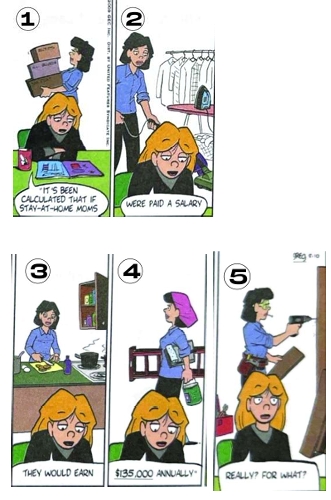
Text for question


EVANS, G.; EVANS, K. Luann. Go Comics, May 10th, 2009. Available at: https://www.gocomics.com/luann/2009/05/10

Which alternative best summarizes the main idea of the comic strip?
Alternativas
Respostas
401: C
402: E
403: E
404: C
405: E
406: C
407: B
408: B
409: E
410: E
411: C
412: C
413: A
414: B
415: B
416: C
417: B
418: E
419: D
420: C