Questões de Concurso Sobre interpretação de texto | reading comprehension em inglês

Foram encontradas 12.687 questões

Q3258842 Inglês
Text I


Shock of the old: Believe it or not, battery-powered vehicles
have been around since Victorian times.

   The history of the electric car is surprisingly enraging. If you imagine early electric vehicles at all (full disclosure: I didn’t until recently), it will probably be as the quixotic and possibly dangerous dream of a few eccentrics, maybe in the 1920s or 1930s, when domestic electrification became widespread. It’s easy to imagine some stiff-collared proto-Musk getting bored of hunting and affairs, eyeing his newly installed electric lights speculatively, then wreaking untold havoc and mass electrocutions. The reality is entirely different.

   By 1900, a third of all cars on the road in the US were electric; we’re looking at the history of a cruelly missed opportunity, and it started astonishingly early. The Scottish engineer Robert Anderson had a go at an electric car of sorts way back in the 1830s, though his invention was somewhat stymied by the fact rechargeable batteries were not invented until 1859, making his crude carriage something of a one-trick pony (and far less useful than an actual pony).

   It’s debatable whether or not Scotland was ready for this brave new world anyway: in 1842, Robert Davidson (another Scot, who had, a few years earlier, also tried his hand at an electric vehicle) saw his electric locomotive Galvani “broken by some malicious hands almost beyond repair” in Perth. The contemporary consensus was that it was attacked by railway workers fearful for their jobs.

   Despite this unpromising start, electric vehicles had entered widespread commercial circulation by the start of the 20th century, particularly in the US. Electric cabs crisscrossed Manhattan, 1897’s bestselling US car was electric and, when he was shot in 1901, President McKinley was taken to hospital in an electric ambulance. London had Walter Bersey’s electric taxis, and Berlin’s fire engines went electric in 1908; the future looked bright, clean and silent.

   By the 1930s, however, the tide had definitively turned against electric, cursed by range limitations and impractical charging times while petrol gained the upper hand thanks partly – and ironically – to the electric starter motor. The Horseless Age magazine, which vehemently backed the petrol non-horse, would have been delighted. There was a brief resurgence of interest in the late 1960s, when the US Congress passed a bill promoting electrical vehicle development, but nothing much actually happened until the Nissan Leaf sparked interest in 2009. Electric still isn’t quite there yet, battling infrastructure and battery problems that might have been familiar to Anderson and friends.


Adapted from The Guardian, Tuesday 24 October 2023, p. 6 https://www.theguardian.com/lifeandstyle/series/shock-of-the-old/2023/oct/24/all
The author’s account discloses an evolution that can be understood as being:
Alternativas
Q3258841 Inglês
Text I


Shock of the old: Believe it or not, battery-powered vehicles
have been around since Victorian times.

   The history of the electric car is surprisingly enraging. If you imagine early electric vehicles at all (full disclosure: I didn’t until recently), it will probably be as the quixotic and possibly dangerous dream of a few eccentrics, maybe in the 1920s or 1930s, when domestic electrification became widespread. It’s easy to imagine some stiff-collared proto-Musk getting bored of hunting and affairs, eyeing his newly installed electric lights speculatively, then wreaking untold havoc and mass electrocutions. The reality is entirely different.

   By 1900, a third of all cars on the road in the US were electric; we’re looking at the history of a cruelly missed opportunity, and it started astonishingly early. The Scottish engineer Robert Anderson had a go at an electric car of sorts way back in the 1830s, though his invention was somewhat stymied by the fact rechargeable batteries were not invented until 1859, making his crude carriage something of a one-trick pony (and far less useful than an actual pony).

   It’s debatable whether or not Scotland was ready for this brave new world anyway: in 1842, Robert Davidson (another Scot, who had, a few years earlier, also tried his hand at an electric vehicle) saw his electric locomotive Galvani “broken by some malicious hands almost beyond repair” in Perth. The contemporary consensus was that it was attacked by railway workers fearful for their jobs.

   Despite this unpromising start, electric vehicles had entered widespread commercial circulation by the start of the 20th century, particularly in the US. Electric cabs crisscrossed Manhattan, 1897’s bestselling US car was electric and, when he was shot in 1901, President McKinley was taken to hospital in an electric ambulance. London had Walter Bersey’s electric taxis, and Berlin’s fire engines went electric in 1908; the future looked bright, clean and silent.

   By the 1930s, however, the tide had definitively turned against electric, cursed by range limitations and impractical charging times while petrol gained the upper hand thanks partly – and ironically – to the electric starter motor. The Horseless Age magazine, which vehemently backed the petrol non-horse, would have been delighted. There was a brief resurgence of interest in the late 1960s, when the US Congress passed a bill promoting electrical vehicle development, but nothing much actually happened until the Nissan Leaf sparked interest in 2009. Electric still isn’t quite there yet, battling infrastructure and battery problems that might have been familiar to Anderson and friends.


Adapted from The Guardian, Tuesday 24 October 2023, p. 6 https://www.theguardian.com/lifeandstyle/series/shock-of-the-old/2023/oct/24/all
At the dawn of the 20th century in the United States of America, the use of electricity-powered vehicles seemed to be:
Alternativas
Q3258840 Inglês
Text I


Shock of the old: Believe it or not, battery-powered vehicles
have been around since Victorian times.

   The history of the electric car is surprisingly enraging. If you imagine early electric vehicles at all (full disclosure: I didn’t until recently), it will probably be as the quixotic and possibly dangerous dream of a few eccentrics, maybe in the 1920s or 1930s, when domestic electrification became widespread. It’s easy to imagine some stiff-collared proto-Musk getting bored of hunting and affairs, eyeing his newly installed electric lights speculatively, then wreaking untold havoc and mass electrocutions. The reality is entirely different.

   By 1900, a third of all cars on the road in the US were electric; we’re looking at the history of a cruelly missed opportunity, and it started astonishingly early. The Scottish engineer Robert Anderson had a go at an electric car of sorts way back in the 1830s, though his invention was somewhat stymied by the fact rechargeable batteries were not invented until 1859, making his crude carriage something of a one-trick pony (and far less useful than an actual pony).

   It’s debatable whether or not Scotland was ready for this brave new world anyway: in 1842, Robert Davidson (another Scot, who had, a few years earlier, also tried his hand at an electric vehicle) saw his electric locomotive Galvani “broken by some malicious hands almost beyond repair” in Perth. The contemporary consensus was that it was attacked by railway workers fearful for their jobs.

   Despite this unpromising start, electric vehicles had entered widespread commercial circulation by the start of the 20th century, particularly in the US. Electric cabs crisscrossed Manhattan, 1897’s bestselling US car was electric and, when he was shot in 1901, President McKinley was taken to hospital in an electric ambulance. London had Walter Bersey’s electric taxis, and Berlin’s fire engines went electric in 1908; the future looked bright, clean and silent.

   By the 1930s, however, the tide had definitively turned against electric, cursed by range limitations and impractical charging times while petrol gained the upper hand thanks partly – and ironically – to the electric starter motor. The Horseless Age magazine, which vehemently backed the petrol non-horse, would have been delighted. There was a brief resurgence of interest in the late 1960s, when the US Congress passed a bill promoting electrical vehicle development, but nothing much actually happened until the Nissan Leaf sparked interest in 2009. Electric still isn’t quite there yet, battling infrastructure and battery problems that might have been familiar to Anderson and friends.


Adapted from The Guardian, Tuesday 24 October 2023, p. 6 https://www.theguardian.com/lifeandstyle/series/shock-of-the-old/2023/oct/24/all

Based on the text, mark the statements below as TRUE (T) or FALSE (F).


( ) The history of electric cars has been fraught with flawed assumptions.

( ) Robert Anderson’s invention in the 1830s was triggered off by the launching of rechargeable batteries.

( ) The 19th century Scottish locomotive engineer is said to have quashed social resistance.


The statements are, respectively,

Alternativas
Q3246737 Inglês
Leia o texto para responder à questão.


What does a Theatrical Company Manager do?


    It’s difficult to pin down exactly what a theatrical company manager does simply because they do so much: negotiate contracts, organize payroll, pay for purchases of outside materials, organize rehearsals, arrange transportation and lodging for cast and crew, assist the director, and – of course – handle emergencies inside and outside of the theater. Crucially, company managers also act as the link between the general manager – their boss – and the rest of the company. A generalized problem solver with a focus on human resources and logistics, the company manager’s work is never over, and rarely the same from day to day.

Expected Professional Education

    The company manager is one of the highest-ranking professionals in any theater company or production, responsible for overseeing almost all logistical and administrative processes. While a company manager could possibly do well with no more than a bachelor’s degree, most theater companies prefer a master’s degree in theater management, business management, or arts administration. 

    Many company managers get started as stage managers, working directly with the director, actors, and designers in rehearsal and calling the show. Over time, they may move gradually towards the broader logistical duties of a company manager, perhaps progressing first to become the head of operations or audience services. As this is a high-ranking position, most company managers advance by seeking longterm positions with prestigious and well-funded companies. They can also progress to become general managers, or even choose to become production managers.

(https://www.berklee.edu. Adaptado)
The subtitle which best summarizes the content of the third paragraph is:
Alternativas
Q3246736 Inglês
Leia o texto para responder à questão.


What does a Theatrical Company Manager do?


    It’s difficult to pin down exactly what a theatrical company manager does simply because they do so much: negotiate contracts, organize payroll, pay for purchases of outside materials, organize rehearsals, arrange transportation and lodging for cast and crew, assist the director, and – of course – handle emergencies inside and outside of the theater. Crucially, company managers also act as the link between the general manager – their boss – and the rest of the company. A generalized problem solver with a focus on human resources and logistics, the company manager’s work is never over, and rarely the same from day to day.

Expected Professional Education

    The company manager is one of the highest-ranking professionals in any theater company or production, responsible for overseeing almost all logistical and administrative processes. While a company manager could possibly do well with no more than a bachelor’s degree, most theater companies prefer a master’s degree in theater management, business management, or arts administration. 

    Many company managers get started as stage managers, working directly with the director, actors, and designers in rehearsal and calling the show. Over time, they may move gradually towards the broader logistical duties of a company manager, perhaps progressing first to become the head of operations or audience services. As this is a high-ranking position, most company managers advance by seeking longterm positions with prestigious and well-funded companies. They can also progress to become general managers, or even choose to become production managers.

(https://www.berklee.edu. Adaptado)
No trecho do segundo parágrafo: “While a company manager could possibly do well with no more than a bachelor’s degree...”, a palavra em negrito introduz 
Alternativas
Q3246735 Inglês
Leia o texto para responder à questão.


What does a Theatrical Company Manager do?


    It’s difficult to pin down exactly what a theatrical company manager does simply because they do so much: negotiate contracts, organize payroll, pay for purchases of outside materials, organize rehearsals, arrange transportation and lodging for cast and crew, assist the director, and – of course – handle emergencies inside and outside of the theater. Crucially, company managers also act as the link between the general manager – their boss – and the rest of the company. A generalized problem solver with a focus on human resources and logistics, the company manager’s work is never over, and rarely the same from day to day.

Expected Professional Education

    The company manager is one of the highest-ranking professionals in any theater company or production, responsible for overseeing almost all logistical and administrative processes. While a company manager could possibly do well with no more than a bachelor’s degree, most theater companies prefer a master’s degree in theater management, business management, or arts administration. 

    Many company managers get started as stage managers, working directly with the director, actors, and designers in rehearsal and calling the show. Over time, they may move gradually towards the broader logistical duties of a company manager, perhaps progressing first to become the head of operations or audience services. As this is a high-ranking position, most company managers advance by seeking longterm positions with prestigious and well-funded companies. They can also progress to become general managers, or even choose to become production managers.

(https://www.berklee.edu. Adaptado)
In the fragment from the first paragraph “and – of course – handle emergencies inside and outside of the theater”, the word in bold means
Alternativas
Q3246734 Inglês
Leia o texto para responder à questão.


What does a Theatrical Company Manager do?


    It’s difficult to pin down exactly what a theatrical company manager does simply because they do so much: negotiate contracts, organize payroll, pay for purchases of outside materials, organize rehearsals, arrange transportation and lodging for cast and crew, assist the director, and – of course – handle emergencies inside and outside of the theater. Crucially, company managers also act as the link between the general manager – their boss – and the rest of the company. A generalized problem solver with a focus on human resources and logistics, the company manager’s work is never over, and rarely the same from day to day.

Expected Professional Education

    The company manager is one of the highest-ranking professionals in any theater company or production, responsible for overseeing almost all logistical and administrative processes. While a company manager could possibly do well with no more than a bachelor’s degree, most theater companies prefer a master’s degree in theater management, business management, or arts administration. 

    Many company managers get started as stage managers, working directly with the director, actors, and designers in rehearsal and calling the show. Over time, they may move gradually towards the broader logistical duties of a company manager, perhaps progressing first to become the head of operations or audience services. As this is a high-ranking position, most company managers advance by seeking longterm positions with prestigious and well-funded companies. They can also progress to become general managers, or even choose to become production managers.

(https://www.berklee.edu. Adaptado)
According to the first paragraph, the responsibilities of theatrical company managers
Alternativas
Q3237486 Inglês
Read with attention the sentence "John always gripes about the traffic during his commute to work.". Which of the following sentences uses a correct synonym for the verb "gripes" as used in the previous sentence?
Alternativas
Q3237481 Inglês

Imagem associada para resolução da questão


Disponível em: https://br.pinterest.com


Based on the image, how does the text illustrate the relationship between globalization and immigration?
Alternativas
Q3237479 Inglês
What is the primary role of the English language in Brazil's National Common Curricular Base (BNCC)?
Alternativas
Q3237478 Inglês

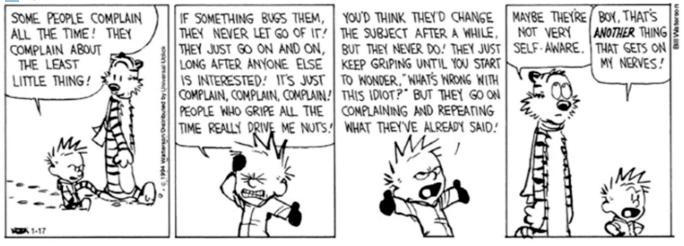
  Imagem associada para resolução da questão


What is Calvin criticizing in his rant in the comic strip?

Alternativas
Q3237476 Inglês

Read the text 2 to answers the question


Text 2


If children live with criticism, they learn to condemn. If children live with fear, they learn to be apprehensive. If children live with pity, they learn to feel sorry for themselves. If children live with ridicule, they learn to feel shy. If children live with tolerance, they learn patience. If children live with praise, they learn appreciation. If children live with acceptance, they learn to love. If children live with approval, they learn to like themselves. If children live with recognition, they learn it is good to have a goal. If children live with sharing, they learn generosity. If children live with fairness, they learn justice. If children live with kindness and consideration, they learn respect. If children live with friendliness, they learn the world is a nice place in which to live.


NOLTE, D. L. Disponível em: <https://www.americanfamilytraditions.com>. Acesso em: 30 jul. 2012. 

Which of the following sentences CORRECTLY reflects a conditional statement from the text?
Alternativas
Q3237474 Inglês

Read the text 1 to answers the question


Text 1


Education forSustainable Development


With a world population of 7 billion people and limited natural resources, we, as individuals and societies, need to learn to live together sustainably. We need to take action responsibly based on the understanding that what we do today can have implications on the lives of people and the planet in future. Education for Sustainable Development empowers people to change the way they think and work towards a sustainable future.


UNESCO aims to improve access to quality education on sustainable development at all levels and in allsocial contexts, to transform society by reorienting education and help people develop knowledge, skills, values and behaviours needed for sustainable development. It is about including sustainable development issues, such as climate change and biodiversity into teaching and learning. Individuals are encouraged to be responsible actors who resolve challenges, respect cultural diversity and contribute to creating a more sustainableworld.


(https://en.unesco.org. Adaptado.)

Why is promoting Education for Sustainable Development (ESD) important according to the text?
Alternativas
Q3229281 Inglês
Which of the following is the best introductory sentence for a formal letter requesting information about a job application process? 
Alternativas
Q3229279 Inglês
O texto seguinte servirá de base para responder à questão.


Exceptional Noise Cancellation

The AirPods Pro deliver excellent noise cancellation, but you might notice that the ANC seems weak initially. Simply wait a few seconds. The earphones first need to measure the surrounding noise and create a custom ANC profile appropriate for your current environment. And then, when it kicks in, it's exceptional. Another positive note—the ANC doesn't seem to introduce any noticeable hiss in quiet settings, which cheap earphones often use as a crutch.

In my tests, the AirPods Pro dramatically lowered powerful low-frequency rumble (like you hear on an airplane) after an initial adjustment period. In some of our deep rumble tests, the AirPods even matched the performance of the $299 Bose QuietComfort Earbuds, which is impressive.

What's even more impressive is that, in some tests, the AirPods Pro fare better than the QuietComfort Earbuds. The problem, if you can call it one, is consistency, and something I experienced with the AirPods Max as well. The latter are also capable of shockingly effective noise cancellation, but sometimes a slight head turn can reduce their efficacy. The AirPods Pro are more likely to remain effective after the initial adjustment, but sometimes the resulting profile didn't impress me. But, to their credit, a slight change to the in-ear fit can induce a far more competent noise cancellation profile. So don't be afraid to play around with how the earpieces sit in your ear if the ANC isn't initially impressive.


https://www.pcmag.com
What suggestion does the author give to improve the noise cancellation performance of the AirPods Pro when the ANC is not initially impressive? 
Alternativas
Q3229278 Inglês
O texto seguinte servirá de base para responder à questão.


Exceptional Noise Cancellation

The AirPods Pro deliver excellent noise cancellation, but you might notice that the ANC seems weak initially. Simply wait a few seconds. The earphones first need to measure the surrounding noise and create a custom ANC profile appropriate for your current environment. And then, when it kicks in, it's exceptional. Another positive note—the ANC doesn't seem to introduce any noticeable hiss in quiet settings, which cheap earphones often use as a crutch.

In my tests, the AirPods Pro dramatically lowered powerful low-frequency rumble (like you hear on an airplane) after an initial adjustment period. In some of our deep rumble tests, the AirPods even matched the performance of the $299 Bose QuietComfort Earbuds, which is impressive.

What's even more impressive is that, in some tests, the AirPods Pro fare better than the QuietComfort Earbuds. The problem, if you can call it one, is consistency, and something I experienced with the AirPods Max as well. The latter are also capable of shockingly effective noise cancellation, but sometimes a slight head turn can reduce their efficacy. The AirPods Pro are more likely to remain effective after the initial adjustment, but sometimes the resulting profile didn't impress me. But, to their credit, a slight change to the in-ear fit can induce a far more competent noise cancellation profile. So don't be afraid to play around with how the earpieces sit in your ear if the ANC isn't initially impressive.


https://www.pcmag.com
In the context of the text, what does the word "crutch" in the sentence "which cheap earphones often use as a crutch" most closely mean? 
Alternativas
Q3229276 Inglês
O texto seguinte servirá de base para responder à questão.


Exceptional Noise Cancellation

The AirPods Pro deliver excellent noise cancellation, but you might notice that the ANC seems weak initially. Simply wait a few seconds. The earphones first need to measure the surrounding noise and create a custom ANC profile appropriate for your current environment. And then, when it kicks in, it's exceptional. Another positive note—the ANC doesn't seem to introduce any noticeable hiss in quiet settings, which cheap earphones often use as a crutch.

In my tests, the AirPods Pro dramatically lowered powerful low-frequency rumble (like you hear on an airplane) after an initial adjustment period. In some of our deep rumble tests, the AirPods even matched the performance of the $299 Bose QuietComfort Earbuds, which is impressive.

What's even more impressive is that, in some tests, the AirPods Pro fare better than the QuietComfort Earbuds. The problem, if you can call it one, is consistency, and something I experienced with the AirPods Max as well. The latter are also capable of shockingly effective noise cancellation, but sometimes a slight head turn can reduce their efficacy. The AirPods Pro are more likely to remain effective after the initial adjustment, but sometimes the resulting profile didn't impress me. But, to their credit, a slight change to the in-ear fit can induce a far more competent noise cancellation profile. So don't be afraid to play around with how the earpieces sit in your ear if the ANC isn't initially impressive.


https://www.pcmag.com
Select the alternative that presents the type of text above: 
Alternativas
Q3229275 Inglês
O texto seguinte servirá de base para responder à questão.


Exceptional Noise Cancellation

The AirPods Pro deliver excellent noise cancellation, but you might notice that the ANC seems weak initially. Simply wait a few seconds. The earphones first need to measure the surrounding noise and create a custom ANC profile appropriate for your current environment. And then, when it kicks in, it's exceptional. Another positive note—the ANC doesn't seem to introduce any noticeable hiss in quiet settings, which cheap earphones often use as a crutch.

In my tests, the AirPods Pro dramatically lowered powerful low-frequency rumble (like you hear on an airplane) after an initial adjustment period. In some of our deep rumble tests, the AirPods even matched the performance of the $299 Bose QuietComfort Earbuds, which is impressive.

What's even more impressive is that, in some tests, the AirPods Pro fare better than the QuietComfort Earbuds. The problem, if you can call it one, is consistency, and something I experienced with the AirPods Max as well. The latter are also capable of shockingly effective noise cancellation, but sometimes a slight head turn can reduce their efficacy. The AirPods Pro are more likely to remain effective after the initial adjustment, but sometimes the resulting profile didn't impress me. But, to their credit, a slight change to the in-ear fit can induce a far more competent noise cancellation profile. So don't be afraid to play around with how the earpieces sit in your ear if the ANC isn't initially impressive.


https://www.pcmag.com
Based on the text, what is the role of the initial adjustment period in the effectiveness of the AirPods Pro's noise cancellation? 
Alternativas
Q3229274 Inglês
O texto seguinte servirá de base para responder à questão.


Exceptional Noise Cancellation

The AirPods Pro deliver excellent noise cancellation, but you might notice that the ANC seems weak initially. Simply wait a few seconds. The earphones first need to measure the surrounding noise and create a custom ANC profile appropriate for your current environment. And then, when it kicks in, it's exceptional. Another positive note—the ANC doesn't seem to introduce any noticeable hiss in quiet settings, which cheap earphones often use as a crutch.

In my tests, the AirPods Pro dramatically lowered powerful low-frequency rumble (like you hear on an airplane) after an initial adjustment period. In some of our deep rumble tests, the AirPods even matched the performance of the $299 Bose QuietComfort Earbuds, which is impressive.

What's even more impressive is that, in some tests, the AirPods Pro fare better than the QuietComfort Earbuds. The problem, if you can call it one, is consistency, and something I experienced with the AirPods Max as well. The latter are also capable of shockingly effective noise cancellation, but sometimes a slight head turn can reduce their efficacy. The AirPods Pro are more likely to remain effective after the initial adjustment, but sometimes the resulting profile didn't impress me. But, to their credit, a slight change to the in-ear fit can induce a far more competent noise cancellation profile. So don't be afraid to play around with how the earpieces sit in your ear if the ANC isn't initially impressive.


https://www.pcmag.com
Based on the passage, what can be inferred about the performance of the AirPods Pro's noise cancellation compared to the Bose QuietComfort Earbuds? 
Alternativas
Q3202709 Inglês
Read the following dialogue.

Ana: So, Jonas finally spoke about why he gave up on the project. What did you think of it?
Marcos: Well, as soon as I heard, I thought, “That’s such a farfetched statement.”
Ana: I know what you mean because it gave me the same impression.
Marcos: I believe it’s quite unlikely for anyone to buy that.
Ana: Yeah, tell me about it!

Based on this dialogue, mark the assertions below as True (T) or False (F).

( ) In Ana’s last line, she wants to know Marcos’ point of view again.
( ) By using the adjective “far-fetched”, Marcos expresses that Jonas’ statement was difficult to believe.
( ) “Unlikely” and “mean” are, respectively, an adverb and an adjective.
( ) The verb “buy”, used in its literal meaning by Marcos, changes to “brought” in the past simple and past participle form.

The assertions are, in the order presented, respectively:  

Alternativas
Respostas
2781: D
2782: E
2783: D
2784: C
2785: A
2786: E
2787: D
2788: B
2789: A
2790: C
2791: B
2792: E
2793: D
2794: A
2795: A
2796: D
2797: D
2798: B
2799: A
2800: B