Questões de Concurso
Sobre adjetivos | adjectives em inglês
Foram encontradas 776 questões


•Use Text I for question.
TEXT I
HOW TO COPE WITH THE SUNDAY
SCARIES
by Chantelle Lee
________(1) Sunday night, and you’re feeling sad and anxious about going back to work in the morning.
Say hello to the Sunday scaries
You’re not alone in your workweek dread: “They’re very, very common,” says Susanne Cooperman, a neuropsychologist and psychoanalyst at New York University Langone Huntington Medical Group. “There’s nothing wrong with a person if they feel sad that the weekend is over. It’s when it really interferes in your functioning—when you can’t focus, when you can’t sleep, when you feel yourself medicating with alcohol—then you need help.”
Here’s why people get the Sunday scaries and the best ways to combat those thoughts of doom and gloom.
__________(2) are the Sunday scaries? The Sunday scaries typically manifest in two ways: feelings of depression that the weekend is ending, feelings of anxiety about the week to come, or both. These feelings typically start on Sunday afternoon.
“It could be that you feel sad and irritable and you have difficulty concentrating and fatigue,”
Cooperman says. That collection of feelings is called anhedonia—basically a loss of enjoyment.
If you feel more dread for the work week ahead, that’s called “anticipatory anxiety,” she says.
Why people get them
The scaries strike for all kinds of reasons. They could be related to work—maybe you’re afraid of losing your job, or you’re dreading going to the office in person, or you’re simply having a hard time unplugging from work after hours, Cooperman says.
Or, she adds, it could also be that you overbooked yourself during the week and feel exhausted by the time Sunday comes around.
How to deal with the Sunday scaries
One of the best ways to deal with the Sunday scaries is to mentally plant yourself firmly in the present. One way to achieve this is to try a mediation or relaxation app, even if it’s only for 10 or 15 minutes, Cooperman says. “I think that’s probably the best out of all the tips: stay in the moment, really try to curtail that catastrophizing into the future,” she says. There are other paths away from the scaries, too: Unplug from your phone or social media, maintain a good work-life balance, do some exercise, or get some fresh air. Make sure to schedule fun activities for Sunday afternoon and evening and do things that reliably make you feel better or help you “refuel [your] batteries,” Cooperman says. Just as important is allowing yourself downtime to relax and unwind, she adds. She also recommends trying to split up errands throughout the week so you don’t feel like you wasted your entire Sunday doing them.
While the Sunday scaries are common, people should keep an eye on how they’re coping come the end of the weekend. “Use healthy, adaptive ways to self-soothe when you’re anxious and have the scaries,” Cooperman says. “A glass of wine is fine, but if it’s more than that and you need it every night, then that’s a problem.” If the scaries are so bad that it’s significantly impacting your life, Cooperman suggests talking about these feelings with a therapist or a psychologist. Some warning signs include being so anxious that it’s hard to get out of bed in the morning, having anxiety attacks, needing alcohol to calm down, not being able to focus or sleep, or failing to enjoy the weekend at all. “If you just can’t get out of that loop where you’re constantly unhappy, then I think you’re at a place where you should see a psychologist or a therapist,” Cooperman says. “Sometimes it’s hard to [deal with it] on your own. It’s good to talk to a professional.”
LEE, Chantelle. How to cope with the Sunday scaries. Time, New York, 6 Apr. 2025. Available at: https://time.com/7275089/what-are-sunday-scaries/. Accessed on: 11 Aug. 2025.
Question must be answered based on the following excerpt.
Still floating on her back, Alex opened her eyes, disoriented by the quick hit of sun. She righted herself with a glance at the shore: she was farther out than she’d imagined. Much farther. How had that happened? She tried to head back in, toward the beach, but she wasn’t seeming to get anywhere, her strokes eaten up by the water.
Source: Cline, Emma.The Guest. Penguin Books, 2024.
According to Halliday’s Introduction to Functional Grammar (IFG) (1985), the highlighted words above are considered

Read the sentence in the image:
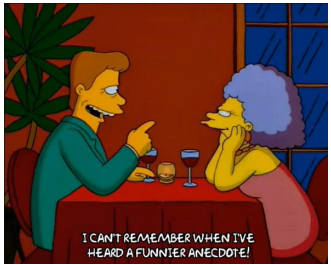
(Available on: https://giphy.com/gifs/. Accessed in: July 2025.)
Based on the sentence, the word “funnier” is:
The flight from Russia to France is usually ____________________ the flight from Italy to Mexico.
COLUMN 1
I. This
II. other
III. where
IV. many
V. substantial
COLUMN 2
1.Relative adverb
2.Adjective
3.Quantifier adjective
4.Demonstrative pronoun
5.Attributive adjective
The correct matching is:
Look at the comic strip below:
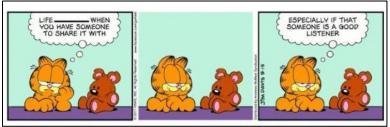
(Available on: https://militares.estrategia.com/. Accessed on: may 2025.)
According to the grammar rule, the alternative that contains the correct form of the adjective “easy” and explains its use is:

 Conheça nossos planos