Foram encontradas 147.125 questões

Resolva questões gratuitamente!

Junte-se a mais de 4 milhões de concurseiros!

Q4277330 Inglês
To Type or to Write, That Is the Question
At the highest level of learning, should you type or
write by hand?


[1] Research by Mueller and Oppenheimer (2014) compared students who typed lecture notes on laptops with those who wrote them by hand during the same time.

[2] In terms of immediate results, laptop users typed and recorded more words during the lectures, and their notes were aimost word-for-word transcripts of the lectures. The initial assumption was that this would ultimately be beneficial for these students compared with those who were handwriting their notes.

[3] After the lectures, the two groups of students in this study were tested on the information presented. The results showed that students who wrote by hand during lectures scored significantly higher on the tests than those who typed.

[4] The immediate question was: "Why was this the case?" Muelier and Oppenheimer (2014) found that students who handwrote their notes were consistently engaged in higherlevel thinking. This meant that throughout their lectures, these students were actively listening and intellectually analyzing what to record. This led to higher knowledge-based outcomes.

[5] Luo et al. (2018) found that handwritten notes contained more meaningful content (such as deeper thought and greater intellectual structure), resulting in higher scores on knowledge-based tests.

[6] Morehead et al. (2019) confirmed that the benefits of handwriting are most evident when students are assessed on higher-order conceptual understanding rather than on memorizing facts.

[7] These studies confirm that handwriting is an essential cognitive process and a highly beneficial intellectual activity that enhances learning at advanced levels of education and that begins from the first day of school and continues thereafter.


Handwriting Helps to Advance Knowledge and Enhance Ideas


[8] This evidence from university classrooms illustrates a broader principle: handwriting for note-taking is a deeper thinking skill. When students write by hand, they actively select and synthesize information.

[9] This process requires them to decide what is essential, how ideas connect, and how best to represent them in their own words. The research indicates that this type of engagement develops, advances, and enhances critical thinking (defined as the ability to analyze, evaluate, and make reasoned, detailed judgments), because handwriting forces students to process information conceptually rather than transcribe it verbatim.

[10] The research also indicates that this process helps to develop higher-order thinking, which involves analyzing, applying, synthesizing, and evaluating information. This then develops a deeper knowledge potential. Additionally, as confirmed by classroom studies and evidence from neuroscience, handwriting activates broader brain networks than typing.

[11] Building on this, some studies explain that the ongoing substitution of handwriting by typewriting in almost every educational setting may seem somewhat misguided, as it could negatively affect the learning process.

[12] However, Van der Weel and Van der Meer (2024) emphasise the importance of staying current in this everchanging digital world. With this in mind, they state that children must, first and foremost, learn handwriting. Only after they are absoiutely proficient, especially at complex narrative handwriting, should typing be considered.


(Adapted from: https://www.psychologytoday.com)
According to the text, Mueller and Oppenheimer discovered that:
Alternativas
Q4277329 Inglês
To Type or to Write, That Is the Question
At the highest level of learning, should you type or
write by hand?


[1] Research by Mueller and Oppenheimer (2014) compared students who typed lecture notes on laptops with those who wrote them by hand during the same time.

[2] In terms of immediate results, laptop users typed and recorded more words during the lectures, and their notes were aimost word-for-word transcripts of the lectures. The initial assumption was that this would ultimately be beneficial for these students compared with those who were handwriting their notes.

[3] After the lectures, the two groups of students in this study were tested on the information presented. The results showed that students who wrote by hand during lectures scored significantly higher on the tests than those who typed.

[4] The immediate question was: "Why was this the case?" Muelier and Oppenheimer (2014) found that students who handwrote their notes were consistently engaged in higherlevel thinking. This meant that throughout their lectures, these students were actively listening and intellectually analyzing what to record. This led to higher knowledge-based outcomes.

[5] Luo et al. (2018) found that handwritten notes contained more meaningful content (such as deeper thought and greater intellectual structure), resulting in higher scores on knowledge-based tests.

[6] Morehead et al. (2019) confirmed that the benefits of handwriting are most evident when students are assessed on higher-order conceptual understanding rather than on memorizing facts.

[7] These studies confirm that handwriting is an essential cognitive process and a highly beneficial intellectual activity that enhances learning at advanced levels of education and that begins from the first day of school and continues thereafter.


Handwriting Helps to Advance Knowledge and Enhance Ideas


[8] This evidence from university classrooms illustrates a broader principle: handwriting for note-taking is a deeper thinking skill. When students write by hand, they actively select and synthesize information.

[9] This process requires them to decide what is essential, how ideas connect, and how best to represent them in their own words. The research indicates that this type of engagement develops, advances, and enhances critical thinking (defined as the ability to analyze, evaluate, and make reasoned, detailed judgments), because handwriting forces students to process information conceptually rather than transcribe it verbatim.

[10] The research also indicates that this process helps to develop higher-order thinking, which involves analyzing, applying, synthesizing, and evaluating information. This then develops a deeper knowledge potential. Additionally, as confirmed by classroom studies and evidence from neuroscience, handwriting activates broader brain networks than typing.

[11] Building on this, some studies explain that the ongoing substitution of handwriting by typewriting in almost every educational setting may seem somewhat misguided, as it could negatively affect the learning process.

[12] However, Van der Weel and Van der Meer (2024) emphasise the importance of staying current in this everchanging digital world. With this in mind, they state that children must, first and foremost, learn handwriting. Only after they are absoiutely proficient, especially at complex narrative handwriting, should typing be considered.


(Adapted from: https://www.psychologytoday.com)
In the extract "the ongoing substitution of handwriting by typewriting in almost every educational setting may seem somewhat misquided" (paragraph 11), the word "misquided" means: 
Alternativas
Q4277328 Inglês
To Type or to Write, That Is the Question
At the highest level of learning, should you type or
write by hand?


[1] Research by Mueller and Oppenheimer (2014) compared students who typed lecture notes on laptops with those who wrote them by hand during the same time.

[2] In terms of immediate results, laptop users typed and recorded more words during the lectures, and their notes were aimost word-for-word transcripts of the lectures. The initial assumption was that this would ultimately be beneficial for these students compared with those who were handwriting their notes.

[3] After the lectures, the two groups of students in this study were tested on the information presented. The results showed that students who wrote by hand during lectures scored significantly higher on the tests than those who typed.

[4] The immediate question was: "Why was this the case?" Muelier and Oppenheimer (2014) found that students who handwrote their notes were consistently engaged in higherlevel thinking. This meant that throughout their lectures, these students were actively listening and intellectually analyzing what to record. This led to higher knowledge-based outcomes.

[5] Luo et al. (2018) found that handwritten notes contained more meaningful content (such as deeper thought and greater intellectual structure), resulting in higher scores on knowledge-based tests.

[6] Morehead et al. (2019) confirmed that the benefits of handwriting are most evident when students are assessed on higher-order conceptual understanding rather than on memorizing facts.

[7] These studies confirm that handwriting is an essential cognitive process and a highly beneficial intellectual activity that enhances learning at advanced levels of education and that begins from the first day of school and continues thereafter.


Handwriting Helps to Advance Knowledge and Enhance Ideas


[8] This evidence from university classrooms illustrates a broader principle: handwriting for note-taking is a deeper thinking skill. When students write by hand, they actively select and synthesize information.

[9] This process requires them to decide what is essential, how ideas connect, and how best to represent them in their own words. The research indicates that this type of engagement develops, advances, and enhances critical thinking (defined as the ability to analyze, evaluate, and make reasoned, detailed judgments), because handwriting forces students to process information conceptually rather than transcribe it verbatim.

[10] The research also indicates that this process helps to develop higher-order thinking, which involves analyzing, applying, synthesizing, and evaluating information. This then develops a deeper knowledge potential. Additionally, as confirmed by classroom studies and evidence from neuroscience, handwriting activates broader brain networks than typing.

[11] Building on this, some studies explain that the ongoing substitution of handwriting by typewriting in almost every educational setting may seem somewhat misguided, as it could negatively affect the learning process.

[12] However, Van der Weel and Van der Meer (2024) emphasise the importance of staying current in this everchanging digital world. With this in mind, they state that children must, first and foremost, learn handwriting. Only after they are absoiutely proficient, especially at complex narrative handwriting, should typing be considered.


(Adapted from: https://www.psychologytoday.com)
After tests were applied to students, the results demonstrated that students who wrote by hand during the lectures: 
Alternativas
Q4277327 Matemática

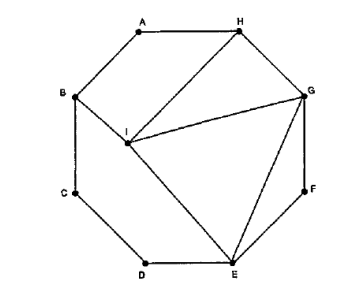
Considere a figura abaiхo. 


Imagem associada para resolução da questão


Sabendo que o octógono é regular de lado 8, tal que a reta que contém o segmento IH intersecta o ponto C, calcule a razão entre a área do triângulo IEG e a área do octógono regular ABCDEFGH e assinale a opção correta. 

Alternativas
Q4277326 Matemática

Seja f a função real definida por f(x) = cos(2 arc cos(x)), em que -1 ≤ x ≤ 1. Sendo assim, qual dos gráficos abaixo melhor representa g (x) = 1 / f (x) ?

Alternativas
Q4277325 Matemática
Um veículo custa atualmente R$ 150.000,00. O interessado na aquisição do veículo percebeu que este apresentou duas perdas sucessivas de 10% e 30% ao longo de dois anos sobre o valor adquirido. Tentando não ter tanta perda, propôs vender o seu veículo com um acréscimo de 40% do valor atual do veículo. Sendo assim, assinale a opção que apresenta por quanto o proprietário venderá o veículo.
Alternativas
Q4277323 Matemática
Sejam f e g duas funções definidas por f(x) = ax² -7 e g(x) =-x² + 1, a IR. Assinale a opção que apresenta o valor de a para que os gráficos de f e g se intersectem ortogonalmente.
Alternativas
Q4277322 Matemática

Os aspirantes da Escola Naval estavam estudando Série com a professora de Cálculo II, com o subtítulo de identidades algébricas. Dessa forma, foi proposta a simplificação do seguinte polinômio:


Imagem associada para resolução da questão


Sendo assim, após a simplificação, é correto afirmar que o aspirante deverá encontrar a seguinte simplificação:

Alternativas
Q4277321 Matemática
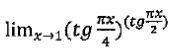
Assinale a opção que apresenta a valor de Imagem associada para resolução da questão
Alternativas
Q4277320 Estatística
Em um pleito eleitoral no Brasil, as eleições são divididas em dois turnos. Sabe-se que existem 5 (cinco) candidatos para a disputa para a presidência da República no Brasil. As pesquisas eleitorais são permitidas de acordo com as leis vigentes do país. Um instituto de pesquisa de notoriedade revelou que a probabilidade de um candidato "A" ganhar em primeiro turno da eleição é igual à probabilidade de "B" ganhar. A probabilidade de "C" ganhar é um terço desta probabilidade, enquanto a probabilidade de "D" ganhar é igual à de "E" ganhar, correspondendo ao dobro da probabilidade de "C" ganhar. Supondo que "A" e "D" tenham passado para o segundo turno da eleição, mantendo-se proporcionalmente as chances de ganhar, calcule a probabilidade de "A" vencer no segundo turno e assinale a opção correta.
Alternativas
Q4277319 Matemática
Sejam g e f funções reais definidas por f(x) = x4 - 3x² e g(x) = x². Assinale a opção que apresenta o valor da área delimitada pelas intersecções das curvas.
Alternativas
Q4277318 Matemática
Suponha que um ponto material desloca-se sobre a curva xy = 4 de modo que a velocidade de y tenha um valor constante igual a α ∈ R*. Assinale a opção que apresenta a aceleração da abscissa quando x = 2.
Alternativas
Q4277317 Matemática
Sejam f e g funções reais definidas por f(x) = 2x e g(x) = x². Calcule o volume do sólido de revolução, em torno do eixo x, com x ∈ [0; 5), a partir da área delimitada pelas intersecções dessas funções, e assinale a opção que apresenta o valor aproximado. Dado: In (2) ≅ 0.7 
Alternativas
Q4277316 Matemática
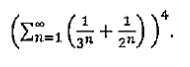
Calcule Imagem associada para resolução da questão e assinale a opção correta.
Alternativas
Q4277315 Raciocínio Lógico
Sabe-se que em matemática uma proposição ou sentença é toda oração declarativa que pode ser classificada em verdadeira ou falsa. Sejam "m" e "n" proposições lógicas, considere que (m⭢n) ⟺ (~n⭢~m). Assim, assinale a opção que apresenta a sequência lógica da relação (~ n ⭢ ~ m). 
Alternativas
Q4277314 Matemática

Seja f uma função real definida por f(x)= - x + 1 / x2-1. Qual dos gráficos abaixo melhor representa a função?

Alternativas
Q4277313 Matemática

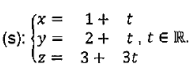
Considere as retas (r): x-1/1 = y-2 / 2 = z/3 e a reta


Imagem associada para resolução da questão


Calcule o cosseno do ângulo entre as retas e assinale a opção correta.

Alternativas
Q4277312 Matemática
Considere a equação da curva, no R²: x² +16y² + 2mxy - 1 =0. Qual é o valor estabelecido plenamente sobre "m" de modo que a curva represente uma hipérbole?
Alternativas
Q4277311 Matemática
Seja f uma função definida por f(x) = arcsen (2x-1 / x+2) + arccos (2x-1 / x+2). Assinale a opção que apresenta a área da região limitada pelo gráfico f, pelo eixo x e pelas retas verticais que delimitam o domínio da função.
Alternativas
Q4277310 Matemática

Sejam f e g funções reais definidas por f(x) = 2x e g(x) = x². Calcule o volume do sólido de revolução, em torno do eixo x, com x ∈ [0; 5), a partir da área delimitada pelas intersecções dessas funções, e assinale a opção que apresenta o valor aproximado.

Dado: In(2) ≅ 0.7

Alternativas
Respostas
821: E
822: C
823: B
824: D
825: E
826: D
827: A
828: A
829: D
830: B
831: B
832: C
833: X
834: B
835: E
836: A
837: A
838: A
839: B
840: E