Foram encontradas 4.651 questões
Resolva questões gratuitamente!
Junte-se a mais de 4 milhões de concurseiros!


Leia o texto a seguir:
O manifesto do Partido Comunista representa o mais perfeito
exemplo de divulgação do Materialismo Dialético, o coração da
doutrina marxista. De um lado, segundo Marx, a interpretação da
história exige a adoção de um critério materialista, pois o motor
do desenvolvimento histórico reside nas condições ideias, nas
normas jurídicas ou nas batalhas políticas. Por outro lado,
todavia, a evolução das estruturas produtivas não se dá segundo
esquemas mecanicistas, mas acompanhando as leis da dialética
descoberta por Hegel.
(NICOLA, Ubaldo. Antologia Ilustrada de Filosofia: das origens à
idade moderna. São Paulo: Globo, 2005.)
I - A mais-valia pode ser relativa ou absoluta, relaciona-se a horas não pagas ao trabalhador e o aumento da produção pela inclusão da tecnologia. II - A alienação é resultado da maneira em que os indivíduos se envolvem com o capitalismo. III - Segundo Karl Marx a mercadoria é um objeto externo, uma coisa que, por suas propriedades, satisfaz as necessidades humanas, seja qual for a natureza, a origem delas, provenham do estômago ou da fantasia. IV - Karl Marx analisou a história do ponto de vista da produção material de bens. O trabalho seria realizado apenas para dar satisfação ao indivíduo e não para pela necessidade e benefício alheio. Assinale a alternativa correta:

Na charge acima, Mafalda faz uma interpretação da palavra política. Agora, conforme os estudos filosóficos assinale a alternativa que possua uma interpretação correta sobre política:
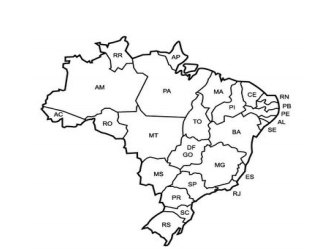
Agora responda. Quais são os estados que compõem a região Centro-Oeste do Brasil?
Com base nos conhecimentos sobre os mares e oceanos, marque a alternativa incorreta:
Observe a imagem:
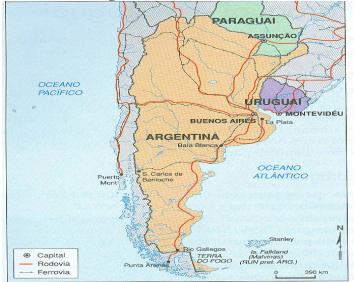
O mapa destaca três países localizados no continente sul-americano.
Assinale a alternativa que possua características
comuns desses países:
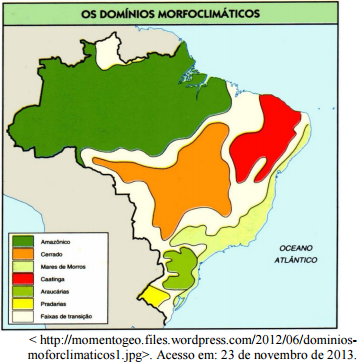
No Brasil, podemos reconhecer seis principais domínios morfoclimáticos, ou paisagens naturais. Com base no mapa e nos conhecimentos sobre estas paisagens, relacione as colunas: (a) Domínio Amazônico. (b) Domínio da Caatinga. (c) Domínio do Cerrado. (d) Domínio da Araucária. (e) Domínio das Pradarias. (f) Domínio dos Mares de Morros.
( ) Essa paisagem natural costuma receber inúmeras denominações, como, Zona das Coxilhas, Campanha Gaúcha, Região das Campinas Meridionais e Região dos Pampas. A vegetação é herbácea típica de climas temperados e a densidade demográfica é baixa. ( ) Corresponde, de maneira geral, ao clima tropical típico ou semiúmido, apresentando várias semelhanças coma as savanas africanas. ( ) Esse domínio paisagístico localiza-se na porção litorânea do país, desde o Nordeste até o Sul, penetrando mais para o interior no Sudeste, particularmente em São Paulo. ( ) Trata-se da região do clima subtropical e do Planalto Meridional do Brasil, de terrenos predominantemente sedimentares-basálticos. Nessa região tem planaltos e chapadas, revestidas de bosques de araucárias de diferentes extensões. ( ) Este domínio é formando, em sua maior extensão, por terras baixas. Apenas, em suas bordas, especialmente ao norte, na região serrana do planalto das Guianas. Possui uma hidrografia riquíssima. Além do enorme rio principal e dos grandes afluentes. ( ) Trata-se uma região semiárida coberta pela caatinga, vegetação adaptada ao clima com baixo índice de pluviosidade. Os solos são poucos profundos por causa das poucas chuvas e do predomínio do intemperismo físico. A sequência correta de preenchimento dos parênteses, de cima para baixo, é:
O texto acima cita o período conhecido como “Guerra Fria”. Com base nos conhecimentos sobre o assunto, assinale a alternativa incorreta:
Observe a imagem a seguir:
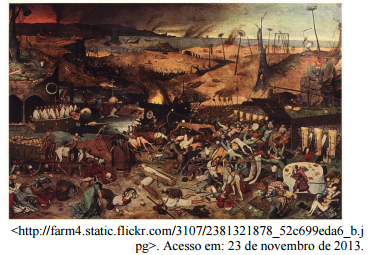
A imagem acima representa a tela O triunfo da morte (1592) de Pieter Brungel.
Com base na imagem e nos conhecimentos sobre período conhecido como Baixa Idade Média, entre os séculos X e XV, não é possível afirmar:
Leia o texto a seguir:
“Os diálogos de Platão são o longínquo eco de uma aventura filosófico-política na época das cidades gregas. Esse ateniense de origem nobre, conforme diríamos hoje, remonta, seguindo a linhagem de seu pai, a Codro, o último rei de Atenas, e, seguindo a linhagem de sua mãe, a Sólon. Sua família está próxima do poder e ele está assim naturalmente destinado a desempenhar um papel de primeira importância na vida política. Nessa época, o ponto de referência de todo homem livre é a cidade, centrada em seu domínio comum, a ágora. É ai que todos podem, ao menos em princípio, dar sua opinião sobre o rumo dos assuntos públicos, que interessam a todos. Mas a Grécia dessa época está fragmentada em estados rivais que vivem de acordo com instituições opostas: oligarquias e democracias. Esse cenário é atravessado pela rivalidade entre Esparta e Atenas: a primeira reúne as oligarquias e a segunda, as democracias.”
(JERPHAGNON, Lucien. Um nobre ateniense chamado Platão.
Revista História Viva – Grandes temas, São Paulo, n.3, p.26)
Assinale com V (verdadeiro) ou F (falso) as afirmações abaixo, referentes à organização política e social de Esparta e Atenas:
( ) Durante muito tempo, Atenas manteve um regime monárquico, até que o último basileu foi derrubado pela aristocracia proprietária de terras, a qual estabeleceu um regime oligárquico fundado no arcontado, órgão do poder formado por indivíduos com mandatos anuais e funções religiosas, jurídicas e militares.
( ) Diante quadros de tensões sociais em Atenas, Drácon eliminou a escravidão por dívidas, libertando todos aqueles que haviam se tornado escravos por este motivo e ainda dividiu a sociedade de forma censitária.
( ) Os periecos eram o principal grupo social e elite militar espartana, compostos pelos descendentes dos conquistadores dórios, detentores do poder econômico, concentravam também o poder político e religioso, marginalizando as demais categorias sociais e utilizando a força militar para manter seus privilégios.
( ) Os Hiliotas eram servos, propriedade da cidade-Estado que descendiam dos primitivos habitantes da Lacônia dominados pelos dórios. Não possuíam direitos políticos e seu trabalho era explorado pelos espartanos.
( ) Em 510 a.C. o estadista ateniense Clístenes liderou uma rebelião contra o último tirano, derrubando-o e iniciando reformas que culminaram na implantação da democracia e na pacificação da pólis.
A sequência correta de preenchimento dos parênteses, de cima para baixo, é:
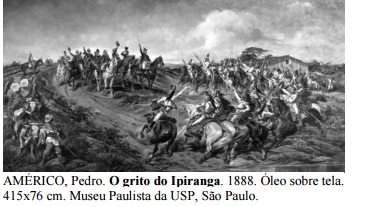
Qual é o acontecimento histórico representado na obra de Pedro Américo? Quais são as características que permaneceram no país após o acontecimento retratado?
Leia o texto a seguir:
“Três fatores ajudaram a consolidar o mito. O primeiro foi a morte prematura de Che, que eternizou sua imagem jovem. Aos 39 anos, ele estava longe de ser um adolescente quando foi abatido, mas a pinta de galã lhe garantia um aspecto juvenil.[...]
O segundo foi a ajuda involuntária de seus algozes. Preocupados em reunir provas convincentes de que o guerrilheiro célebre estava morto, os militares bolivianos mandaram lavar o corpo e aparar e pentear sua barba e seu cabelo. Também resolveram trocar a sua roupa imunda. Tudo isso para poder tirar fotos em que ele fosse facilmente identificado. O resultado é um retrato com espantosa semelhança com as pinturas barrocas do Cristo morto de expressão beatificada. A terceira contribuição recebida pelos esquerdistas na construção do mito veio do contexto histórico. Che morreu às vésperas dos grandes protestos em defesa dos direitos civis, da agitação dos movimentos estudantis e da contracultura – turbulências que marcaram o ano de 1968.”
(SCHELP, Diogo; TEIXEIRA, Duda. Che há quarenta anos morria
o homem e nascia a farsa. Revista Veja, São Paulo, a.40, n.39,
p.90-92, 2007.)
I - Após sua libertação no ano de 1955, Fidel Castro viajou ao México para organizar uma nova insurreição. Com seu irmão Raúl, Fidel iniciou o projeto para retornar a Cuba e depor Batista. No México, os irmãos Castro conheceram o médico argentino Ernesto Che Guevara, que aderiu ao movimento.
II - Em novembro de 1956, mais de cem homens embarcaram rumo a Cuba. A viagem atrasou três dias e as forças de Batista descobriram o plano revolucionário. Ao chegar à costa cubana, os insurgentes não foram alvos fáceis para os militares, visto que após o desembarque esconderam-se em Sierra Maestra e dividiram-se em grandes grupos para organizar novos ataques.
III - Em 1957, Fidel Castro assumiu o governo de Cuba, adotando imediatamente várias medidas de impacto na política interna e externa do país.
IV - No ano de 1961, norte-americanos e cubanos cortaram relações diplomáticas. Fidel então declarou um Estado socialista. No ano seguinte, o governo dos Estados Unidos impôs um severo embargo econômico.
Assinale a alternativa correta:
Leia o texto a seguir:
O voto nas eleições constituintes
“O recrutamento do eleitorado que deveria escolher os deputados à Constituinte seguiu os seguintes critérios:
[...] Concedia-se o direito de voto a todo cidadão casado ou solteiro de mais de vinte anos mais significativamente se excluíam os que recebessem salários ou soldadas. Destes, as únicas exceções eram os caixeiros de casas de comércio, os criados da Casa Real mais graduados e os administradores das fazendas rurais e das fábricas. Impedidos de votar ficavam os religiosos regulares (pertencentes a ordens religiosas), os estrangeiros não-naturalizados e os criminosos. Votavam, no entanto, os analfabetos, contingência evidente num país em que mesmo os senhores não sabiam ler. [...]”
(MARANHÃO, Ricardo et al. Brasil História. Texto & Consulta,
v.2. São Paulo, Brasiliense, 1982.)
I - O anteprojeto constitucional limitava os poderes do imperador, ao mesmo tempo em que assumia um caráter nitidamente elitista, mantendo o voto censitário para futuras eleições. II - A Constituição outorgada, que vigorou até o final do Império, conservou algumas disposições discutidas no anteprojeto. Tendo um caráter contraditório, pois ao mesmo tempo em que manteve as influências do liberalismo europeu, apresentou traços marcantes do autoritarismo. III - A Carta de 1824 estabelecia como forma de governo uma Monarquia Hereditária Constitucional e Representativa. Nessa estrutura centralizada e unitária, as províncias possuíam autonomia política, sendo administradas por presidentes escolhidos pelo voto direto. IV - Na Constituição de 1824 foram estabelecidos quatro poderes políticos: o Executivo, o Legislativo, o Judiciário e o Moderador. Assinale a alternativa correta:
By Nick Allen
9:04PM BST 16 Aug 2013
Climate scientists have concluded that temperatures could jump by up to 5°C and sea levels could rise by up to 82 cm by the end of the century, according to a leaked draft of a United Nations (UN) report.
The UN Intergovernmental Panel on Climate Change (IPCC) also said there was a 95 per cent likelihood that global warming is caused by human activities. That was the highest assessment so far from the IPCC, which put the figure at 90 per cent in a previous report in 2007, 66 per cent in 2001, and just over 50 per cent in 1995.
Reto Knutti, a professor at the Swiss Federal Institute of Technology in Zurich, said: “We have got quite a bit more certain that climate change is largely man-made. We’re less certain than many would hope about the local impacts.” The IPCC report, the first of three in 2013 and 2014, will face intense scrutiny particularly after errors in the 2007 study, which wrongly predicted that all Himalayan glaciers could melt by 2035.
Almost 200 governments have agreed to try to limit global warming to below 2°C above pre-industrial times, which is seen as a threshold for dangerous changes including more droughts, extinctions, floods and rising seas that could swamp coastal regions and island nations. Temperatures have already risen by 0.8°C since the Industrial Revolution.
The report will say there is a high risk global temperatures will rise by more than 2°C this century. They could rise anywhere from about 0.6°C to almost 5°C a wider range at both ends of the scale than predicted in the 2007 report. It will also say evidence of rising sea levels is “unequivocal”. The report projects seas will rise by between 30 cm and 82 cm by the late 21st century. In 2007 the estimated rise was between 18 cm and 58 cm, but that did not fully account for changes in Antarctica and Greenland.
Scientists say it is harder to predict local impacts. Drew Shindell, a Nasa scientist, said: “I talk to people in regional power planning. They ask, 'What’s the temperature going to be in this region in the next 20 to 30 years, because that’s where our power grid is?’ We can’t really tell.”
By Nick Allen
9:04PM BST 16 Aug 2013
Climate scientists have concluded that temperatures could jump by up to 5°C and sea levels could rise by up to 82 cm by the end of the century, according to a leaked draft of a United Nations (UN) report.
The UN Intergovernmental Panel on Climate Change (IPCC) also said there was a 95 per cent likelihood that global warming is caused by human activities. That was the highest assessment so far from the IPCC, which put the figure at 90 per cent in a previous report in 2007, 66 per cent in 2001, and just over 50 per cent in 1995.
Reto Knutti, a professor at the Swiss Federal Institute of Technology in Zurich, said: “We have got quite a bit more certain that climate change is largely man-made. We’re less certain than many would hope about the local impacts.” The IPCC report, the first of three in 2013 and 2014, will face intense scrutiny particularly after errors in the 2007 study, which wrongly predicted that all Himalayan glaciers could melt by 2035.
Almost 200 governments have agreed to try to limit global warming to below 2°C above pre-industrial times, which is seen as a threshold for dangerous changes including more droughts, extinctions, floods and rising seas that could swamp coastal regions and island nations. Temperatures have already risen by 0.8°C since the Industrial Revolution.
The report will say there is a high risk global temperatures will rise by more than 2°C this century. They could rise anywhere from about 0.6°C to almost 5°C a wider range at both ends of the scale than predicted in the 2007 report. It will also say evidence of rising sea levels is “unequivocal”. The report projects seas will rise by between 30 cm and 82 cm by the late 21st century. In 2007 the estimated rise was between 18 cm and 58 cm, but that did not fully account for changes in Antarctica and Greenland.
Scientists say it is harder to predict local impacts. Drew Shindell, a Nasa scientist, said: “I talk to people in regional power planning. They ask, 'What’s the temperature going to be in this region in the next 20 to 30 years, because that’s where our power grid is?’ We can’t really tell.”
( ) The IPCC made a wrong prediction about the Himalayas in the 2007 report.
( ) Himalayan glaciers will certainly disappear by 2035 because of global warming.
( ) The IPCC can now be sure of how climate change will impact different locations.
( ) IPCC's new report will be carefully examined after the errors committed in 2007.
( ) Global warming will have a huge impact in Swiss because of its large glaciers.
Mark the alternative which presents the correct sequence, from top to bottom.
By Nick Allen
9:04PM BST 16 Aug 2013
Climate scientists have concluded that temperatures could jump by up to 5°C and sea levels could rise by up to 82 cm by the end of the century, according to a leaked draft of a United Nations (UN) report.
The UN Intergovernmental Panel on Climate Change (IPCC) also said there was a 95 per cent likelihood that global warming is caused by human activities. That was the highest assessment so far from the IPCC, which put the figure at 90 per cent in a previous report in 2007, 66 per cent in 2001, and just over 50 per cent in 1995.
Reto Knutti, a professor at the Swiss Federal Institute of Technology in Zurich, said: “We have got quite a bit more certain that climate change is largely man-made. We’re less certain than many would hope about the local impacts.” The IPCC report, the first of three in 2013 and 2014, will face intense scrutiny particularly after errors in the 2007 study, which wrongly predicted that all Himalayan glaciers could melt by 2035.
Almost 200 governments have agreed to try to limit global warming to below 2°C above pre-industrial times, which is seen as a threshold for dangerous changes including more droughts, extinctions, floods and rising seas that could swamp coastal regions and island nations. Temperatures have already risen by 0.8°C since the Industrial Revolution.
The report will say there is a high risk global temperatures will rise by more than 2°C this century. They could rise anywhere from about 0.6°C to almost 5°C a wider range at both ends of the scale than predicted in the 2007 report. It will also say evidence of rising sea levels is “unequivocal”. The report projects seas will rise by between 30 cm and 82 cm by the late 21st century. In 2007 the estimated rise was between 18 cm and 58 cm, but that did not fully account for changes in Antarctica and Greenland.
Scientists say it is harder to predict local impacts. Drew Shindell, a Nasa scientist, said: “I talk to people in regional power planning. They ask, 'What’s the temperature going to be in this region in the next 20 to 30 years, because that’s where our power grid is?’ We can’t really tell.”
1. Scientists think it is 95% likely that human activity is causing global warming.
2. Temperatures could be 5°C warmer by the end of the current century.
3. Sea levels are not likely to be higher than today by the end of the century.
4. Scientists are surer now than in 2007 that humans are causing global warming.
5. 50% of the scientists believed humans were the cause of climate change in 1995.
Which of the statements above are TRUE, according to the text?
So, at the start of 2012, I set myself the challenge of trying to read a book from every country (well, all 195 United Nations (UN) recognised states plus former UN member Taiwan) in a year to find out what I was missing. With no idea how to go about this beyond a sneaking suspicion that I was unlikely to find publications from nearly 200 nations on the shelves of my local bookshop, I decided to ask the planet’s readers for help. I created a blog called A Year of Reading the World and put out an appeal for suggestions of titles that I could read in English.
But the effort was worth it. As I made my way through the planet’s literary landscapes, extraordinary things started to happen. In the hands of gifted writers, I discovered bookpacking offered something a physical traveller could hope to experience only rarely: it took me inside the thoughts of individuals living far away and showed me the world through their eyes. More powerful than a thousand news reports, these stories not only opened my mind to the nuts and bolts of life in other places, but opened my heart to the way people there might feel.
And that in turn changed my thinking. Through reading the stories shared with me by bookish strangers around the globe, I realised I was not an isolated person, but part of a network that stretched all over the planet. One by one, the country names on the list that had begun as an intellectual exercise at the start of the year transformed into vital, vibrant places filled with laughter, love, anger, hope and fear. Lands that had once seemed exotic and remote became close and familiar to me – places I could identify with. At its best, I learned, fiction makes the world real.
So, at the start of 2012, I set myself the challenge of trying to read a book from every country (well, all 195 United Nations (UN) recognised states plus former UN member Taiwan) in a year to find out what I was missing. With no idea how to go about this beyond a sneaking suspicion that I was unlikely to find publications from nearly 200 nations on the shelves of my local bookshop, I decided to ask the planet’s readers for help. I created a blog called A Year of Reading the World and put out an appeal for suggestions of titles that I could read in English.
But the effort was worth it. As I made my way through the planet’s literary landscapes, extraordinary things started to happen. In the hands of gifted writers, I discovered bookpacking offered something a physical traveller could hope to experience only rarely: it took me inside the thoughts of individuals living far away and showed me the world through their eyes. More powerful than a thousand news reports, these stories not only opened my mind to the nuts and bolts of life in other places, but opened my heart to the way people there might feel.
And that in turn changed my thinking. Through reading the stories shared with me by bookish strangers around the globe, I realised I was not an isolated person, but part of a network that stretched all over the planet. One by one, the country names on the list that had begun as an intellectual exercise at the start of the year transformed into vital, vibrant places filled with laughter, love, anger, hope and fear. Lands that had once seemed exotic and remote became close and familiar to me – places I could identify with. At its best, I learned, fiction makes the world real.
So, at the start of 2012, I set myself the challenge of trying to read a book from every country (well, all 195 United Nations (UN) recognised states plus former UN member Taiwan) in a year to find out what I was missing. With no idea how to go about this beyond a sneaking suspicion that I was unlikely to find publications from nearly 200 nations on the shelves of my local bookshop, I decided to ask the planet’s readers for help. I created a blog called A Year of Reading the World and put out an appeal for suggestions of titles that I could read in English.
But the effort was worth it. As I made my way through the planet’s literary landscapes, extraordinary things started to happen. In the hands of gifted writers, I discovered bookpacking offered something a physical traveller could hope to experience only rarely: it took me inside the thoughts of individuals living far away and showed me the world through their eyes. More powerful than a thousand news reports, these stories not only opened my mind to the nuts and bolts of life in other places, but opened my heart to the way people there might feel.
And that in turn changed my thinking. Through reading the stories shared with me by bookish strangers around the globe, I realised I was not an isolated person, but part of a network that stretched all over the planet. One by one, the country names on the list that had begun as an intellectual exercise at the start of the year transformed into vital, vibrant places filled with laughter, love, anger, hope and fear. Lands that had once seemed exotic and remote became close and familiar to me – places I could identify with. At its best, I learned, fiction makes the world real.
1. The blog was very successful in getting responses from people all over the world.
2. Some people posted books from their countries to Ann while others did hours of research.
3. Some writers sent her translations of their novels that had already been published in English.
4. Sixty-two per cent of the people that visited the blog and gave suggestions to Ann were British.
5. The blog made it quite easy for Ann Morgan to find books from all over the world.
Which of the statements above are TRUE, according to the text?

 Conheça nossos planos